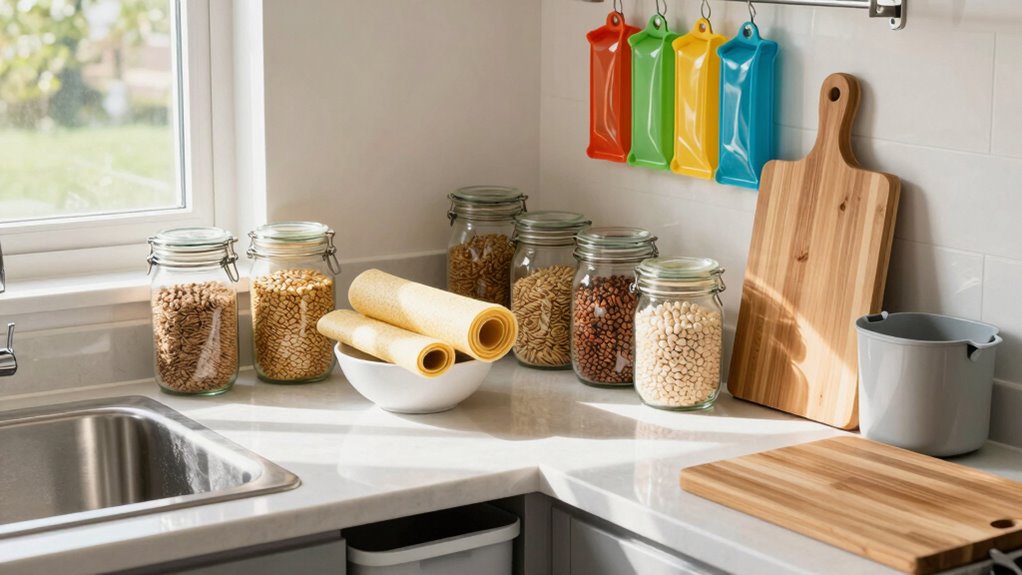

Setting up a zero-waste kitchen starts with swapping single-use plastics for reusable containers, shopping bulk at local stores, and using eco-friendly storage options like glass jars. Focus on minimizing food waste through proper preservation and composting, switch to sustainable utensils and cleaning products, and educate everyone in your household about sustainable habits. Regularly monitor your progress and refine your approach. Want to discover all 12 wins to make your kitchen truly eco-friendly? Keep exploring for expert tips.
Key Takeaways
- Prioritize reusable containers, bags, and wraps to eliminate single-use plastics and reduce waste.
- Shop in bulk using sustainable, packaging-free options and bring your own containers for maximum waste reduction.
- Organize pantry and fridge efficiently to prevent spoilage and minimize food waste.
- Implement composting for organic waste to enrich soil and divert waste from landfills.
- Use eco-friendly cleaning products and tools to maintain a sustainable, zero-waste kitchen environment.
What Is a Zero-Waste Kitchen and Why It Matters
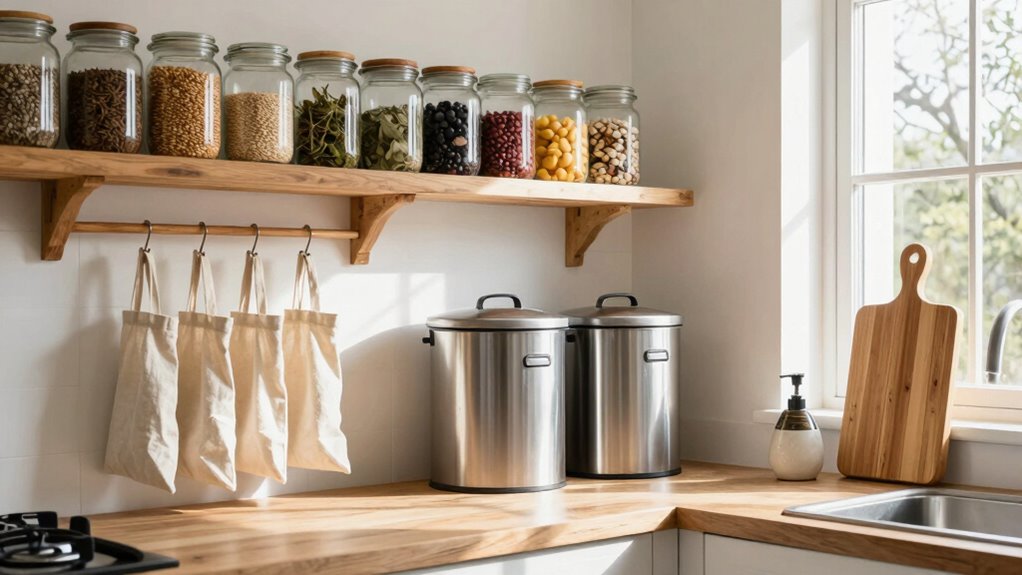
Have you ever wondered what makes a kitchen truly zero-waste? It’s about more than just reducing trash; it’s a mindset that prioritizes sustainable living. A zero-waste kitchen minimizes waste by using reusable, compostable, and eco-friendly kitchen essentials. It encourages you to cut down on single-use plastics, packaging, and disposable items. Instead, you focus on durable containers, cloth produce bags, and bulk buying to cut waste at the source. This setup not only helps protect the environment but also promotes healthier habits and saves money over time. Embracing a zero-waste approach transforms your kitchen into a space of mindful consumption, where every item serves a purpose and waste is kept at a minimum. Incorporating sustainable kitchen systems like composting and water-saving devices further enhances your efforts toward eco-friendliness. Utilizing energy-efficient appliances can significantly reduce your household’s carbon footprint and make your kitchen more sustainable. Incorporating reusable alternatives for everyday items can further minimize your environmental impact and support your zero-waste goals. Additionally, adopting mindful shopping habits can help you make more sustainable choices from the start, reducing unnecessary waste and packaging. Making informed decisions about local and seasonal produce can also drastically reduce the carbon footprint associated with food transportation and packaging. It’s a simple yet powerful step toward sustainability.
How to Assess Your Current Waste and Food Expenses
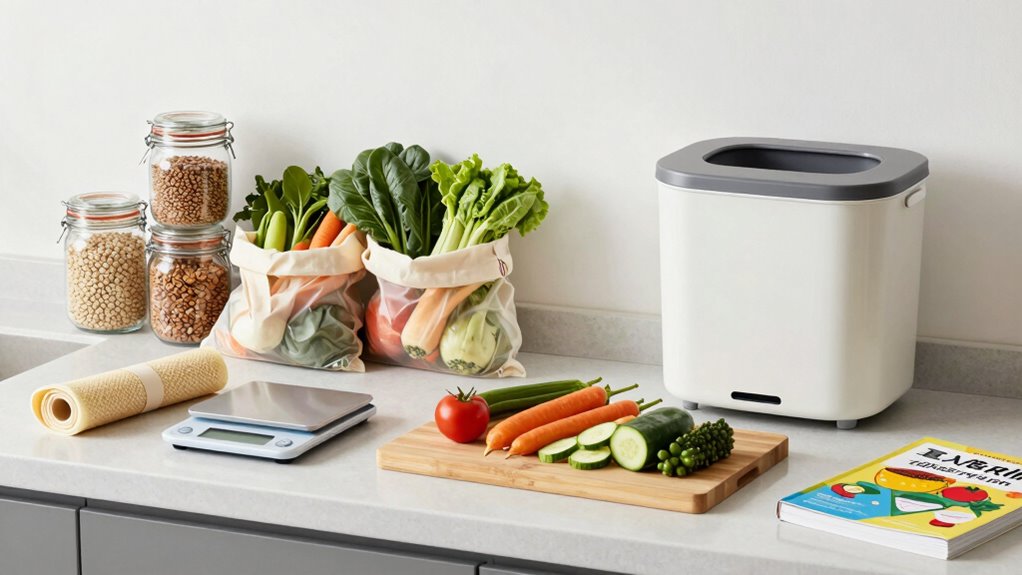
To effectively shift to a zero-waste kitchen, start by evaluating your current waste and food expenses. Track your waste to identify how much food packaging, scraps, and non-recyclable items you generate. Review your spending on groceries to spot areas where you can reduce waste and cut costs. Understanding your waste patterns helps you choose better recycling programs and composting methods, minimizing landfill contributions. Use this simple table to analyze your habits:
| Waste Type | Monthly Expense / Volume |
|---|---|
| Plastic & Packaging | $ |
| Food Scraps | Volume in pounds |
| Non-recyclables | $ |
| Compostables | Volume in pounds |
This assessment guides you toward smarter shopping and waste management strategies. Incorporating recycling and composting practices can significantly reduce your environmental impact and support your zero-waste goals. Additionally, exploring sustainable packaging options can further enhance your efforts to minimize waste. Being aware of waste management techniques helps you make informed choices that align with your zero-waste objectives. For example, choosing products with minimal essential oils and avoiding unnecessary packaging can further reduce your waste footprint. Recognizing the presence of ear wax odor can also inform personal hygiene routines that contribute to overall cleanliness and waste reduction.
Learn the Basics of a Zero-Waste Kitchen
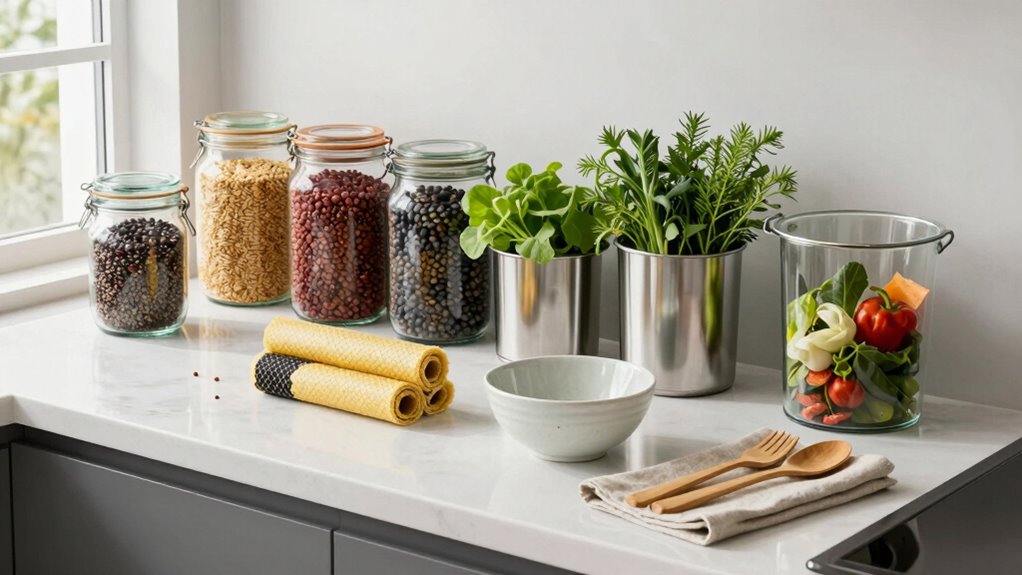
What exactly makes a kitchen zero-waste? It’s about minimizing waste through intentional choices. Start with zero waste shopping by bringing your own bags, avoiding packaging, and choosing bulk or package-free items. Focus on buying only what you need to prevent excess. An essential part of a zero-waste kitchen is using eco-friendly storage options—think glass jars, stainless steel containers, or beeswax wraps—so you reduce reliance on single-use plastics. Keep food fresh and prevent spoilage by organizing your pantry and fridge efficiently. Additionally, maintaining a well-sourced Equity Buyers ensures that your zero-waste efforts are supported by reliable information and resources. Incorporating waste reduction habits can further enhance your sustainability goals while streamlining your kitchen routines. Developing a reusable container system for leftovers and shopping can significantly cut down on disposable waste. Emphasizing the importance of energy-efficient appliances can also help reduce your kitchen’s overall environmental footprint. By adopting these habits, you create a more sustainable, clutter-free space that aligns with zero-waste principles and helps you reduce your environmental impact daily.
Switch to Reusable Containers and Zero-Waste Storage Solutions
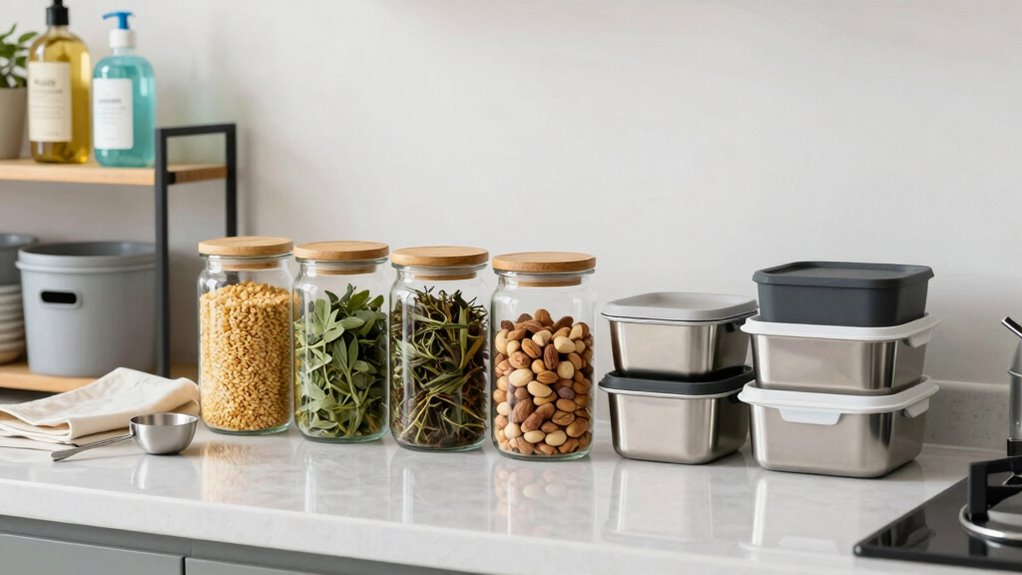
Switching to reusable containers and zero-waste storage solutions is a straightforward way to cut down on single-use plastics in your kitchen. By replacing disposable bags and containers with durable, reusable options, you reduce waste and save money over time. Use glass or stainless steel containers for leftovers, bulk items, and snacks, ensuring they’re airtight and easy to clean. Zero waste storage also involves repurposing jars and containers you already have, minimizing the need for new packaging. These solutions not only help the environment but also keep your kitchen organized and clutter-free. Make a habit of washing and reusing containers, and label them if needed. Incorporating environmentally friendly storage practices can further enhance your efforts and maximize waste reduction. Additionally, choosing sustainable materials for containers can improve durability and reduce environmental impact. Incorporating biodegradable options for packaging can also help lessen long-term waste. Using reusable packaging aligns with zero-waste principles and encourages mindful consumption. Embracing zero-waste kitchen principles can lead to a more sustainable and clutter-free cooking space, making your efforts even more effective.
Find Bulk and Package-Free Groceries Near You
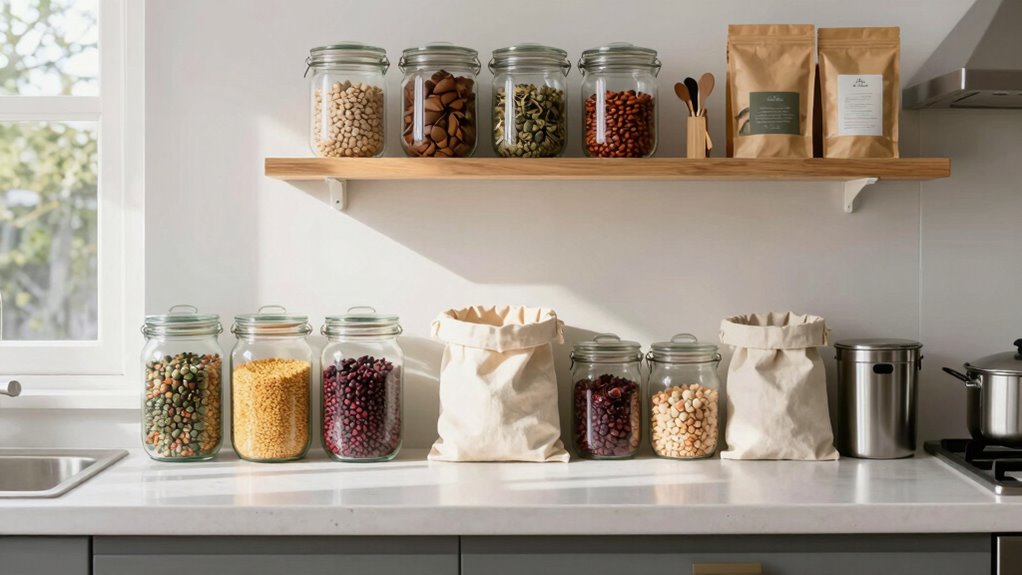
Start by checking out local stores that offer bulk options, so you can bring your own containers and reduce packaging waste. Many online platforms now specialize in package-free groceries, making it easier to shop sustainably from home. Exploring these options helps you cut down on waste and supports eco-friendly shopping habits. Incorporating smart design principles into your kitchen setup can also enhance organization and reduce clutter, making your zero-waste efforts more effective. Implementing space-saving storage solutions can further optimize your kitchen for sustainability and ease of use. Additionally, utilizing modular storage can help customize your space to better accommodate bulk and package-free items, maximizing efficiency and reducing clutter. Understanding media literacy can also help you identify trustworthy sources for sustainable products and tips.
Local Stores Offering Bulk Options
Finding bulk and package-free groceries nearby is easier than you might think, thanks to a growing number of local stores committed to zero-waste shopping. Many of these stores offer bulk shopping options, allowing you to bring your own reusable storage containers for grains, nuts, spices, and more. This not only reduces packaging waste but also helps you buy exactly what you need, minimizing leftovers. Look for specialty stores, co-ops, or farmers’ markets that prioritize sustainable practices. Staff are often happy to guide you on how to weigh and fill your containers efficiently. By choosing these local options, you support your community and cut down on plastic waste, making your kitchen setup more eco-friendly and aligned with your zero-waste goals. Be sure to check if the store offers halal-certified products to ensure your food choices meet your dietary needs.
Online Platforms for Package-Free
Are online platforms making it easier to shop for bulk and package-free groceries? Absolutely. Many apps and websites connect you with local stores that prioritize eco friendly packaging and reusable bags, simplifying your zero-waste journey. You can browse options, compare prices, and order directly from your phone. These platforms often feature:
- Search filters for package-free or bulk items
- Delivery or curbside pickup options
- Listings of stores that accept reusable bags
- Tips for reducing waste in your shopping routine
- Reviews highlighting store sustainability practices
Replace Single-Use Items With Eco-Friendly Alternatives
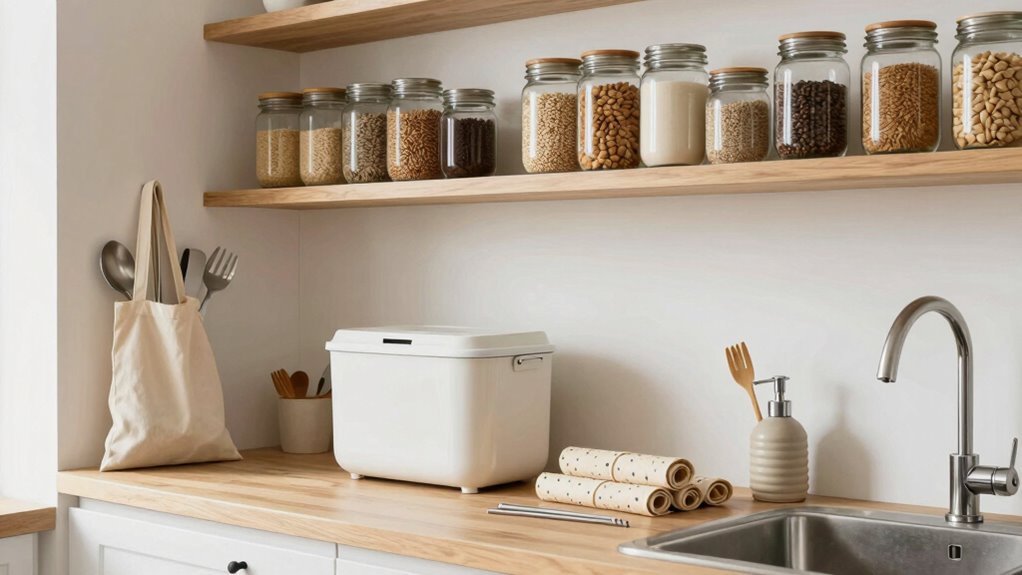
Switching from single-use items to eco-friendly alternatives is one of the simplest ways to reduce waste in your kitchen. Start by replacing plastic bags with reusable shopping bags, which can be used dozens of times and cut down on plastic waste. Swap out disposable plastic wrap with beeswax wraps or silicone lids to keep food fresh sustainably. Choose products packaged in compostable packaging instead of traditional plastic. For utensils, opt for stainless steel or bamboo options instead of plastic ones. Using these alternatives not only minimizes waste but also decreases your reliance on items that end up in landfills or oceans. Small changes like these make a significant impact over time, helping you create a more sustainable and eco-friendly kitchen environment.
How to Reduce Food Waste With Proper Planning and Preservation
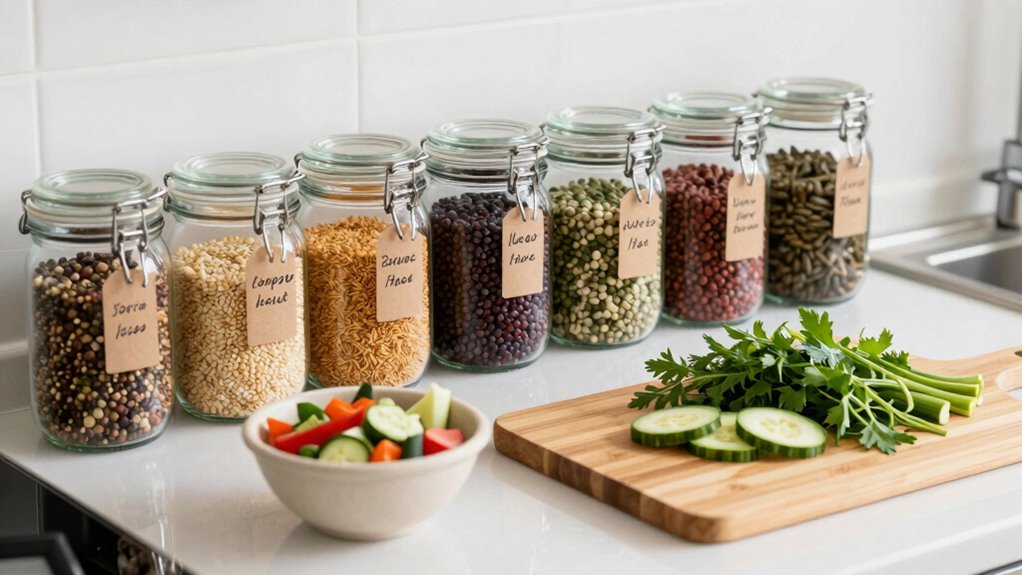
To effectively reduce food waste in your kitchen, proper planning and preservation are essential. By practicing efficient meal planning, you can buy only what you need, preventing excess that often goes to waste. Food preservation techniques like freezing, canning, and pickling help extend the life of your ingredients. This way, you can enjoy leftovers later and avoid throwing away spoiled food.
Proper planning and preservation prevent waste and extend your ingredients’ life.
Consider these strategies:
- Create a weekly meal plan to minimize impulse purchases
- Use airtight containers for freezing leftovers
- Label stored food with dates for better tracking
- Preserve seasonal produce through canning or pickling
- Store items properly to prevent spoilage and mold
Implementing these steps helps you cut down on waste and makes your kitchen more sustainable.
Compost Organic Waste to Cut Down Landfill Trash
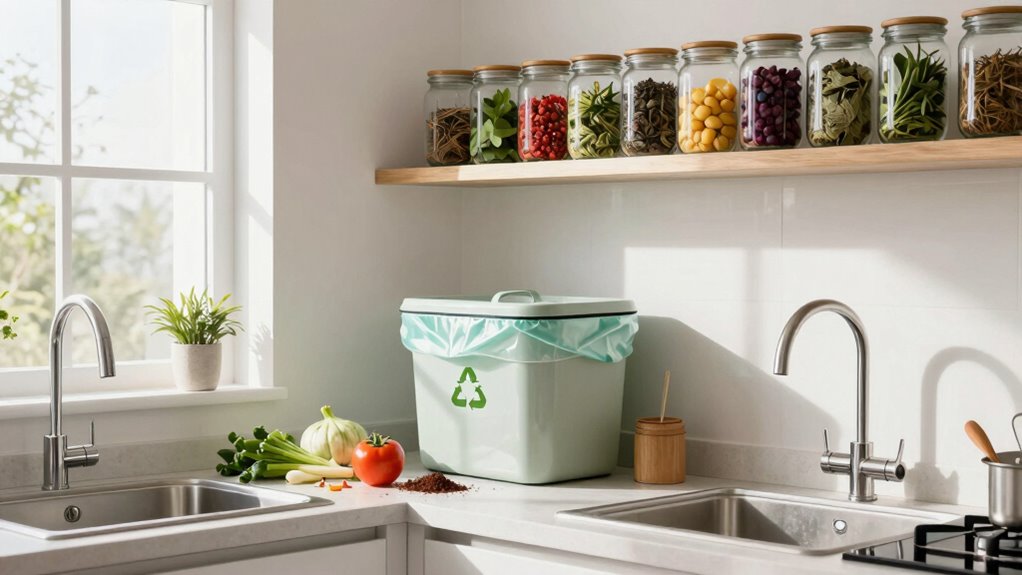
Proper food preservation reduces waste, but it’s also important to address organic scraps that still end up in the trash. Compost organic waste to naturally break down food scraps and yard debris, turning them into nutrient-rich soil. By composting, you actively reduce landfill trash, preventing organic material from taking up space and generating methane emissions. You can start composting with a simple bin or subscribe to a local compost pickup service if space is limited. Be sure to balance green and brown materials and avoid adding meats or dairy to maintain a healthy compost. Incorporating composting into your kitchen routine is an effective way to minimize waste and support sustainable waste management practices, making your kitchen truly zero-waste.
Choose Sustainable Kitchen Tools and Utensils for Eco-Conscious Cooking
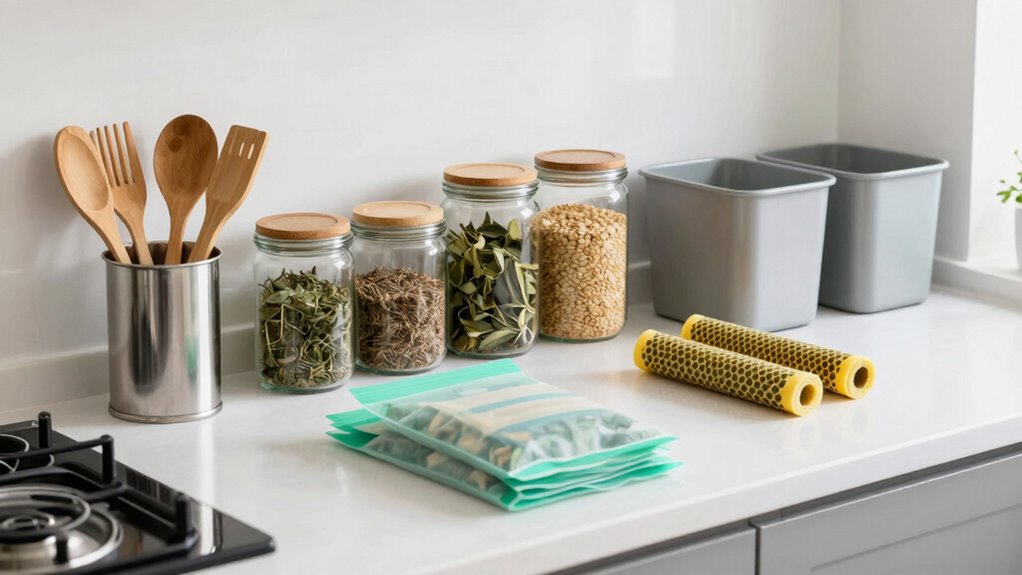
When selecting kitchen tools, your material choices can make a big difference in sustainability. Opt for multi-use items that reduce waste and replace single-purpose gadgets. Additionally, sourcing locally and ethically supports eco-friendly practices and strengthens your community.
Material Choices Matter
Choosing sustainable kitchen tools and utensils is essential for reducing your environmental impact. Material choices directly affect the longevity and eco-friendliness of your kitchen setup. Opt for items made from recycled materials, such as recycled glass or metal, which help divert waste from landfills. Look for products with eco-friendly packaging, minimizing unnecessary waste. Prioritize durable tools that last longer, reducing the need for replacement. Consider bamboo or responsibly sourced wood for utensils, as they’re renewable and biodegradable. Avoid plastics labeled with recycling codes that are difficult to recycle, and choose alternatives that support a circular economy. Making mindful material choices not only lowers your carbon footprint but also promotes a more sustainable, zero-waste kitchen.
- Recycled glass containers for storage
- Bamboo utensils and cutting boards
- Stainless steel cookware
- Eco-friendly packaging for cleaning supplies
- Reusable silicone lids
Multi-Use Tools Encourage Sustainability
Using multi-use tools in your kitchen is one of the most effective ways to promote sustainability. Multi use tools reduce the need for multiple single-purpose items, cutting down on waste and clutter. Opt for sustainable utensils made from durable, eco-friendly materials like bamboo, stainless steel, or silicone. These tools last longer and can be used for various tasks, from chopping to stirring, minimizing the need to buy replacements. By choosing versatile, sustainable utensils, you not only save money but also lessen your environmental impact. Investing in high-quality multi-use tools encourages mindful consumption and reduces landfill waste. Incorporating these items into your kitchen makes eco-conscious cooking easier and more efficient, aligning your daily habits with your zero-waste goals.
Local and Ethical Sourcing
Opting for kitchen tools and utensils sourced locally and ethically enhances your sustainability efforts by supporting responsible manufacturing and reducing environmental impact. Choosing items from ethical brands ensures fair labor practices and eco-friendly materials. When selecting sustainable kitchen tools, look for products made from bamboo, reclaimed wood, or recycled metals. Supporting local food and artisans reduces transportation emissions and promotes community resilience. Additionally, prioritize brands transparent about their sourcing and manufacturing processes. This way, you’re not just reducing waste but also encouraging a more sustainable supply chain. Incorporate tools that last longer and can be repaired easily. By making mindful choices, you help create a zero-waste kitchen that aligns with your eco-conscious values. Every small step counts toward a healthier planet.
Use Eco-Friendly Cleaning Products and Practices
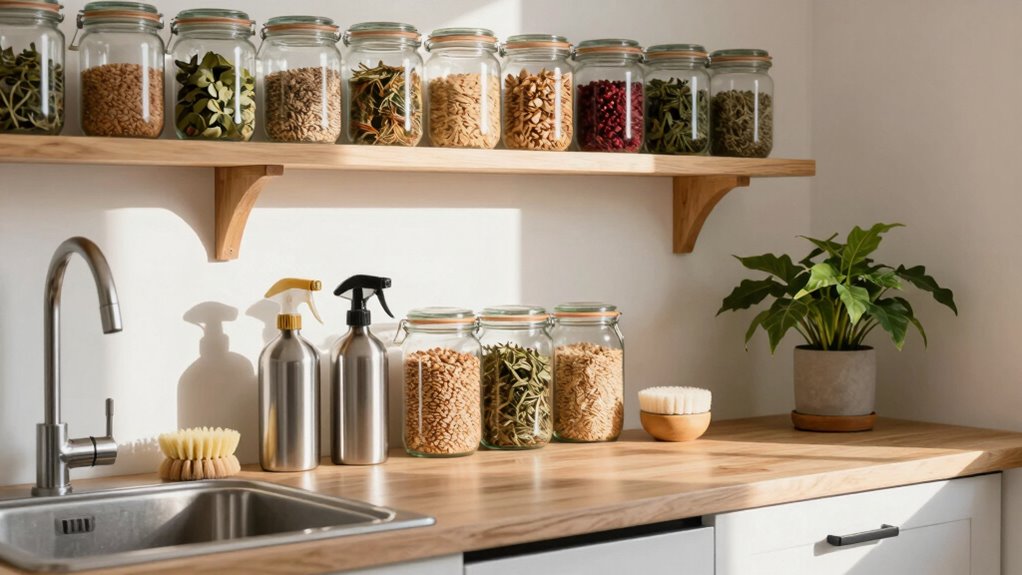
Switching to eco-friendly cleaning products and practices is a simple yet impactful way to reduce waste and minimize your kitchen’s environmental footprint. Choose cleaning solutions made from natural ingredients like vinegar, baking soda, and lemon, which are effective and biodegradable. These eco-friendly cleaning options eliminate the need for plastic bottles and chemical-laden cleaners, supporting waste reduction techniques. Additionally, opt for reusable cloths or brushes instead of disposable wipes and scrubbers. By avoiding single-use cleaning supplies, you cut down on unnecessary waste and toxins. Incorporating these practices not only keeps your kitchen clean but also aligns with your zero-waste goals. Small changes like these make a significant difference in creating a healthier, greener kitchen environment.
Build Sustainable Habits by Educating Your Household
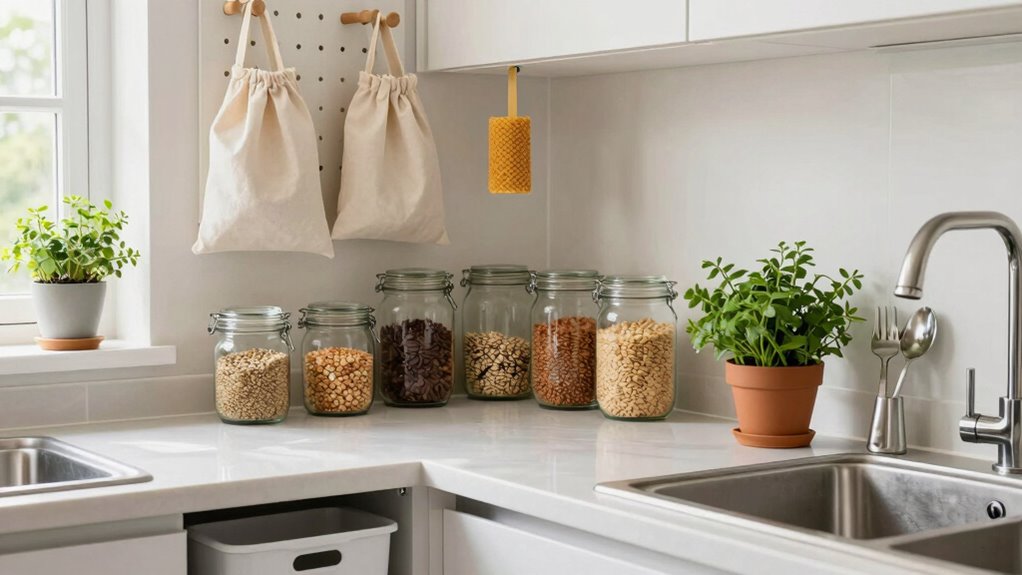
Educating your household members is essential for building sustainable habits that support your zero-waste kitchen goals. When everyone understands the importance of reducing waste, they’re more likely to participate actively and consistently. Household education empowers everyone to make mindful choices, from shopping to composting. To encourage sustainable habits, consider sharing simple tips and routines, like reusing containers or avoiding single-use plastics. Make it a team effort by involving everyone in decision-making and setting shared goals. Use visual aids or quick reminders to reinforce habits. Clear communication helps create a unified approach, making zero-waste living easier and more effective for everyone involved. Remember, fostering understanding is key to maintaining long-term sustainable habits in your kitchen.
Track Your Progress and Adjust Your Zero-Waste Strategy
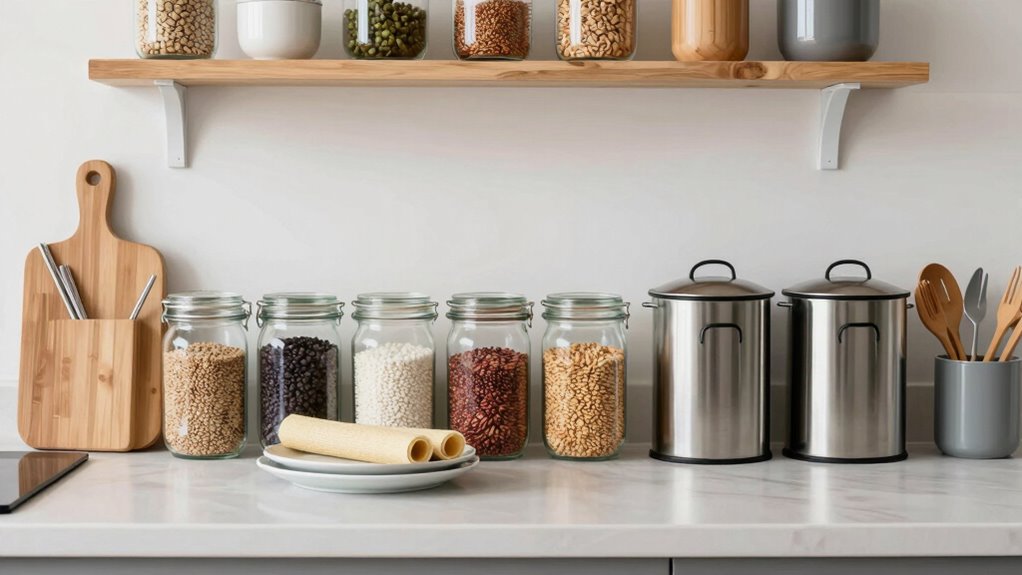
To improve your zero-waste efforts, you need to keep track of your waste patterns regularly. This helps you identify areas where you’re creating more waste than necessary. By refining your strategies based on this data, you’ll make continuous progress toward a more sustainable kitchen.
Monitor Waste Patterns
How can you guarantee your zero-waste efforts are making a real impact? By monitoring waste patterns regularly, you gain insight into where waste occurs and how your habits influence it. Tracking your waste helps you identify trends, such as overproduction or spoilage. This awareness allows you to adjust your strategies effectively. Develop monitoring habits like recording waste types, quantities, and timing. Use simple tools like bins with labels or a waste journal. Regular review keeps you accountable and highlights progress.
- Keep a waste log to track types and amounts
- Identify recurring sources of waste
- Set measurable waste reduction goals
- Note changes after adjusting habits
- Celebrate milestones to stay motivated
Refine Strategies Regularly
Regularly tracking your waste data allows you to see what’s working and what needs adjustment. Conduct periodic waste audits to identify common sources of waste, and refine your strategies accordingly. Incorporate meal planning to reduce overproduction and leftovers, minimizing waste before it occurs. To stay on track, review your progress regularly and adapt your approach. Consider this table to guide your adjustments:
| Strategy | Outcome |
|---|---|
| More precise meal planning | Less waste from spoilage |
| Regular waste audits | Better insight into waste sources |
| Adjust shopping list accordingly | Reduced packaging waste |
| Composting/repurposing | Diverts waste from landfills |
Frequently Asked Questions
How Can I Involve My Family in Maintaining a Zero-Waste Kitchen?
You can involve your family in maintaining a zero-waste kitchen by encouraging shared responsibilities and making it fun. Assign tasks like composting, recycling, and shopping together. Educate everyone on waste reduction and celebrate small wins. Create family challenges or reward systems to keep motivation high. When everyone feels involved and responsible, your family will work together to uphold your zero-waste goals effortlessly.
What Are Some Budget-Friendly Zero-Waste Kitchen Upgrades?
Imagine transforming your kitchen into a zero-waste haven without breaking the bank. Start with budget-friendly upgrades like reusable containers for leftovers and bulk shopping, which cut packaging waste. Incorporate simple composting tips to recycle food scraps naturally. These small changes not only save money but also make your kitchen more sustainable, proving that eco-friendly living is accessible and impactful—one smart upgrade at a time.
How Do I Handle Waste Reduction in Small or Shared Kitchens?
In small or shared kitchens, you handle waste reduction by doing a quick waste audit to identify major waste sources. Then, set up a compost bin for food scraps, encouraging everyone to use it consistently. Clear labeling and communication help guarantee shared responsibility. You might also implement simple practices like limiting packaging and reusing containers, making waste reduction practical and collaborative for all users.
Are There Specific Certifications to Look for in Eco-Friendly Kitchen Products?
Imagine a gentle green glow on your kitchen products—these are often your cue for eco label recognition. Look for certifications like USDA Organic, FSC, or Green Seal, which meet strict certification standards. These labels guarantee your eco-friendly kitchen products are genuinely sustainable. By choosing items with recognized certification standards, you confidently reduce your environmental impact and support responsible manufacturing practices, making your kitchen truly eco-conscious.
How Can I Integrate Zero-Waste Principles Into a Busy Lifestyle?
You can integrate zero-waste principles into your busy lifestyle by planning ahead with meal prep, using reusable containers, and buying in bulk to reduce packaging waste. Incorporate composting tips by setting up a simple compost bin for food scraps, making it easy to dispose of waste responsibly. Prioritize quick, eco-friendly swaps and stay consistent, so waste reduction becomes second nature even during hectic days.
Conclusion
By embracing these simple, sustainable swaps, you’ll transform your kitchen into a waste-free wonderland. Commit to conscious choices, cut clutter, and cultivate a climate of care for your home and the planet. With consistent effort and clever changes, you’ll create a clean, clutter-free, and conscientious culinary space. Start small, stay steady, and see how your zero-waste journey blossoms into a better, brighter, and more balanced kitchen—one eco-friendly step at a time.