To choose the right Dutch oven size, consider your household size, typical recipes, and storage space. Smaller households or quick meals usually need 4-5 quarts, while larger families or slow-cooked stews benefit from 7-9 quarts. Think about how you cook and what dishes you plan to make. Material and lid design also matter for durability and moisture retention. Keep these factors in mind to pick the perfect fit, and you’ll discover more helpful tips below.

Get kitchen staples and gadgets delivered free with Prime
- Fast, free delivery on millions of items
- Prime Video, Amazon Music and more included
- Member-only deals all year
Key Takeaways
- Assess household size and typical recipes to determine appropriate capacity, such as 4-5 quarts for small households or 7-8 quarts for large gatherings.
- Consider the types of dishes you cook most often, like stews, roasts, or side dishes, and choose a size that fits those recipes.
- Evaluate your kitchen storage space and portability needs; compact or stackable models may be ideal for limited areas.
- Select a material and lid design that match your cooking style, durability preferences, and maintenance capabilities.
- Balance your budget with desired features and size, ensuring the Dutch oven accommodates your routine while offering good value.
Products Worth Considering

Le Creuset Signature 6.5-Quart Deep Round Dutch Oven with Light Gold Crucible Knob, Enameled Cast Iron, Bleu Riviera

Le Creuset Signature Enameled Cast Iron Round Dutch Oven, 5.5 qt, Deep Teal

Le Creuset Enameled Cast Iron Round Dutch Oven, 5.5 Qt, Flame
As an affiliate, we earn on qualifying purchases.
How to Determine the Right Dutch Oven Size for Your Cooking Needs
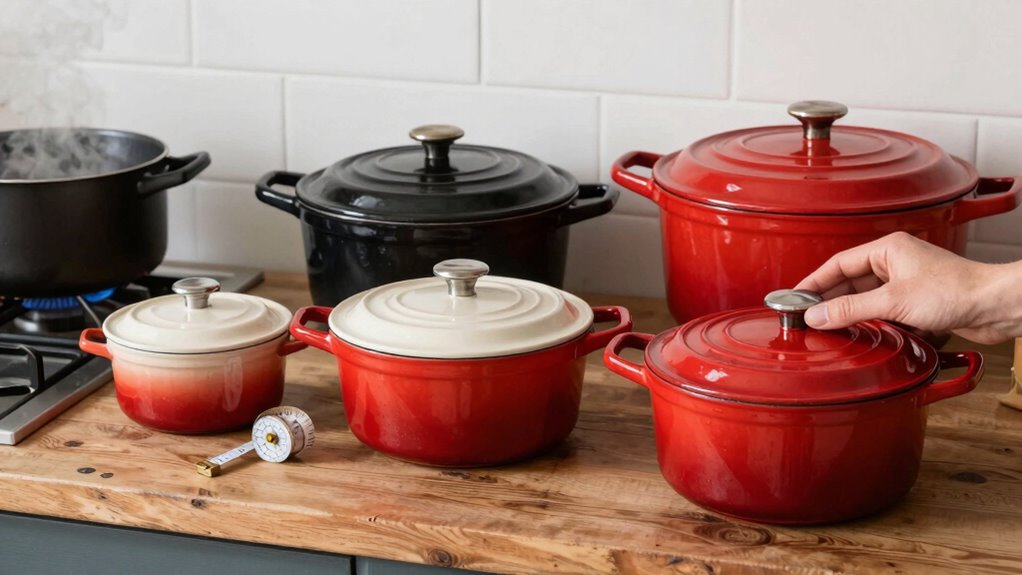
Choosing the right Dutch oven size depends on how many people you typically cook for and the types of dishes you prepare. Consider your usual recipes—if you often make stews or roasts for family gatherings, a larger size like 7-8 quarts might be best. For everyday meals or smaller households, a 4-5 quart Dutch oven usually suffices. When selecting size, think about your cooking techniques, as some dishes require more space for even heat distribution. Additionally, explore Dutch oven accessories that can expand its versatility, such as lids with steam vents or racks. Properly matching size to your needs guarantees you optimize your cookware, making it easier to prepare delicious meals without overcrowding or underutilizing your Dutch oven. Understanding your cooking needs helps ensure you choose the most suitable size for your culinary adventures. Considering pot capacity can further assist in matching your cookware to your typical recipes and household size. Incorporating professional guidance can also help you select the ideal size based on your cooking style and preferences. For example, understanding home kitchen space can influence your choice to ensure storage and handling are convenient. Additionally, evaluating your cooking frequency can help determine whether a smaller or larger Dutch oven better suits your lifestyle.
What Size Dutch Oven Do I Need for My Recipes?
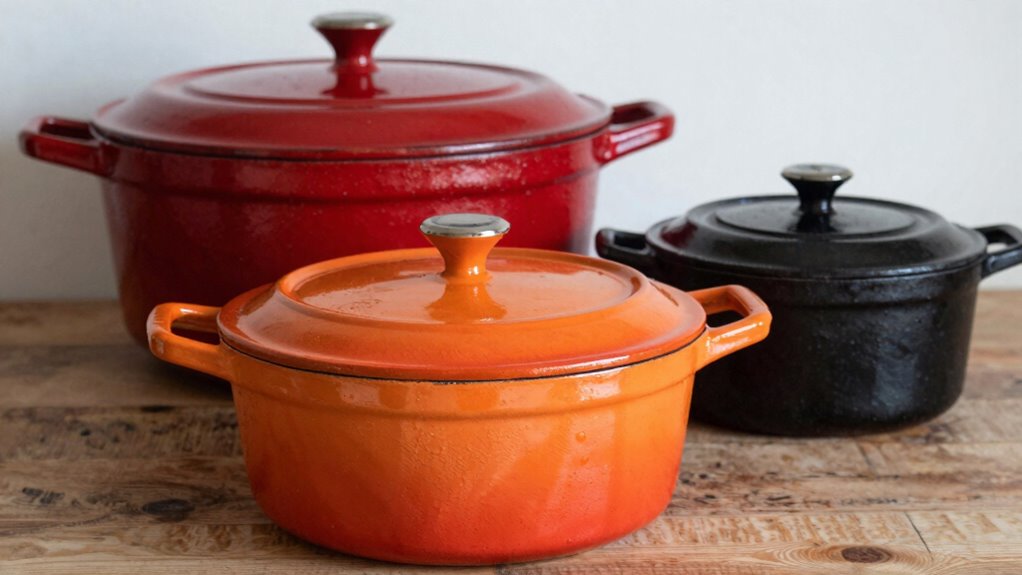
Understanding the size of Dutch oven you need starts with the types of recipes you plan to make. If you often cook hearty stews or large batches, a 6- to 8-quart oven offers plenty of space. For campfire cooking, consider a size that balances portability with capacity—around 4 to 6 quarts works well. Smaller sizes, like 2- to 4-quarts, suit side dishes or quick meals. Think about Dutch oven accessories, such as trivets or lids, to enhance your cooking experience. Keep in mind that larger models are great for entertaining, but may be cumbersome for outdoor adventures. Proper sizing ensures you select the right oven for your specific cooking needs and prevents unnecessary hassle. Matching your Dutch oven size to your recipe needs guarantees efficient cooking and minimizes cleanup, whether at home or around the campfire. Additionally, understanding oven capacity can help you plan meals more effectively and avoid under- or over-purchasing. Considering smart home integrations, such as smart kitchen appliances, can further optimize your cooking process. Being aware of modern kitchen technology can help you choose versatile equipment that adapts to various cooking styles and preferences.
How Household Size Affects Your Dutch Oven Choice
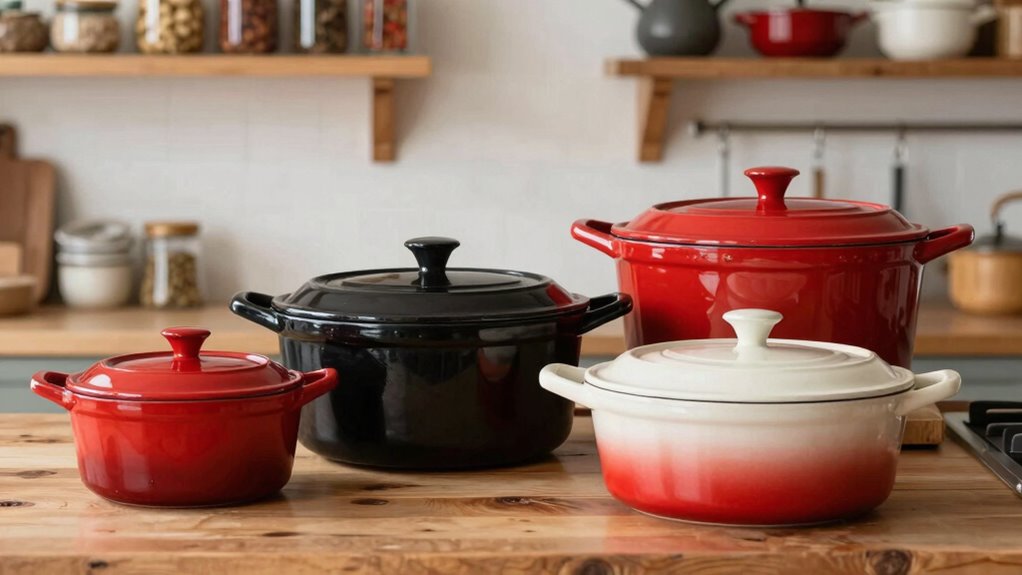
The size of your household plays a crucial role in selecting the right Dutch oven, as it directly impacts how much food you’ll prepare and how often you’ll cook. For small families or singles, a 4- to 5-quart oven suits daily meals and seasonal cooking. Larger households benefit from 7- to 9-quart sizes, perfect for big roasts or batch cooking. Some use their Dutch oven decoratively, showcasing it during gatherings or seasonal celebrations. Visualize how your Dutch oven fits into your kitchen routine: Chain of custody is an important concept in ensuring the integrity and proper handling of your cookware during storage or transportation. Incorporating traditional practices can also help you select a Dutch oven that aligns with your cultural heritage and cooking style. Considering your kitchen storage space is essential to ensure your Dutch oven fits comfortably and remains accessible when needed. Additionally, understanding proper maintenance can extend the lifespan of your Dutch oven and keep it performing at its best. Being aware of material composition can help you choose a Dutch oven that suits your cooking preferences and durability needs.
What Are the Common Dutch Oven Sizes and Which Is Best for You?
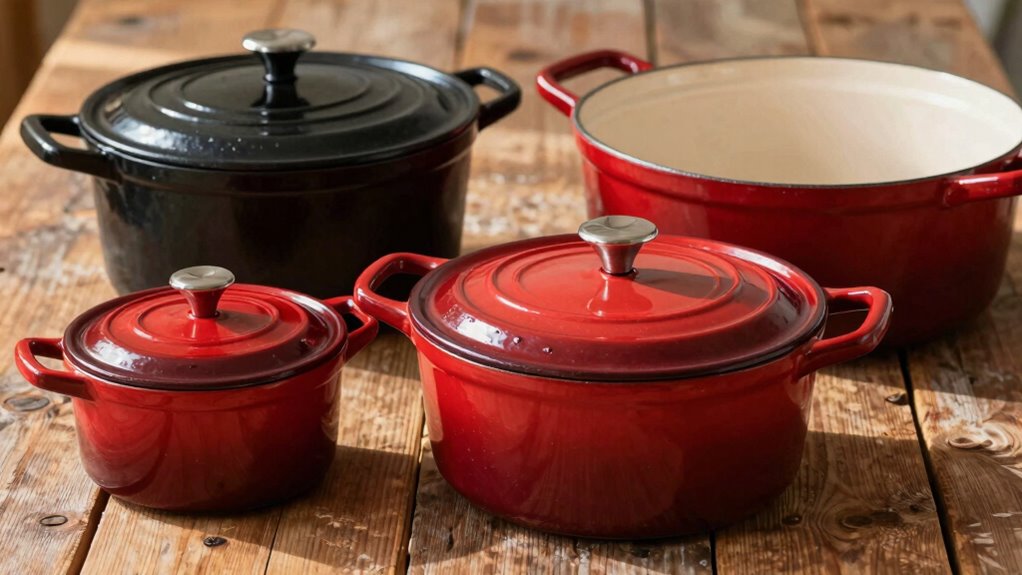
Dutch ovens come in a variety of sizes, catering to different cooking needs and household sizes. Common options include 3- to 4-quart models for singles or small families, 5- to 6-quart sizes for medium households, and 7-quart or larger for big families or batch cooking. Choosing the right size depends on what you cook most often. Smaller sizes are perfect for side dishes and quick meals, while larger ones excel at roasts and stews. Consider your cooking habits and storage space. To keep your Dutch oven in top shape, use proper cleaning tips—avoid harsh abrasives and hand wash when possible. Additionally, explore accessories like trivets or lids to enhance functionality and longevity. Picking the right size makes cooking easier and enjoyable. Understanding your cooking needs can help you select the most suitable Dutch oven size for your lifestyle. Being aware of storage options can also help you manage your kitchen space efficiently, especially when considering the size and capacity of your cookware collection. Additionally, considering mammography guidelines can be important for health-conscious individuals who want to stay informed about preventive care options.
How Material and Lid Design Impact Your Size Selection
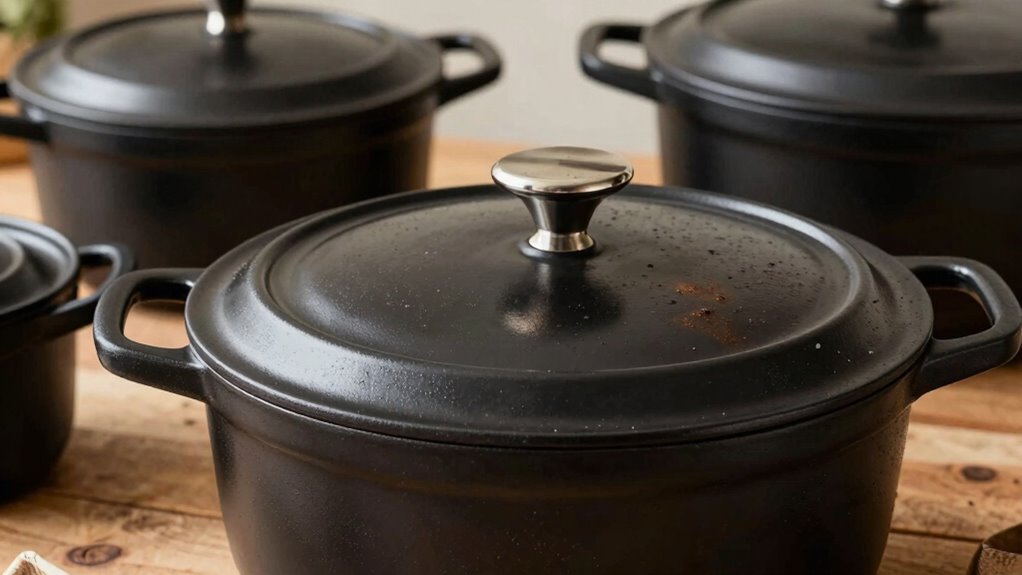
The material of your Dutch oven affects how durable it is and how well it retains heat, which can influence the size you need for even cooking. The lid design also plays a role, as a tight-fitting lid improves cooking efficiency and moisture retention. Considering these factors helps you choose a size that matches your cooking style and kitchen needs. Additionally, selecting a Dutch oven with high-quality construction can ensure better heat distribution and longevity over time. Proper maintenance and understanding of the air purifier features can extend the lifespan of your cookware and maintain optimal performance. Being aware of home energy integration concepts can also help in optimizing your overall kitchen setup for energy efficiency and sustainability.
Material Durability and Heat Retention
When choosing a Dutch oven size, considering material durability and lid design is essential because these factors directly influence how well your cookware retains heat and withstands daily use. For durability, cast iron is renowned for its strength and longevity, making it ideal for frequent use. Ceramic coatings offer a non-reactive surface that resists scratches and stains, extending the lifespan of your Dutch oven. Additionally, the lid design impacts heat retention: tight-fitting lids trap moisture and heat more effectively, which is vital for slow cooking or braising. Consider these points: 1. Cast iron provides superior heat retention and durability, but may be heavier. 2. Ceramic coatings improve ease of cleaning and resistance to wear. 3. A well-designed lid enhances heat and moisture retention, saving energy and improving cooking results. Material durability and lid design are also important considerations in preserving the quality and appearance of your Dutch oven over time. For example, heat retention can be significantly affected by the material and lid construction, influencing your overall cooking experience.
Lid Design and Cooking Efficiency
Because lid design directly affects heat and moisture retention, it plays a crucial role in selecting the right size for your Dutch oven, especially if you’re aiming for efficient cooking. A well-fitting lid with good lid tightness traps heat and moisture, reducing cooking time and enhancing flavors. If the lid is loose, steam escapes too quickly, leading to uneven cooking and longer times. Conversely, a tight-fitting lid promotes even heat distribution and moisture retention. Consider how the lid’s steam release features, such as vents or holes, impact pressure and moisture control. Proper lid design ensures you maintain consistent temperatures and moisture levels, helping you choose a size that accommodates your cooking style while maximizing efficiency.
Can Your Budget and Storage Limit Your Dutch Oven Choices?
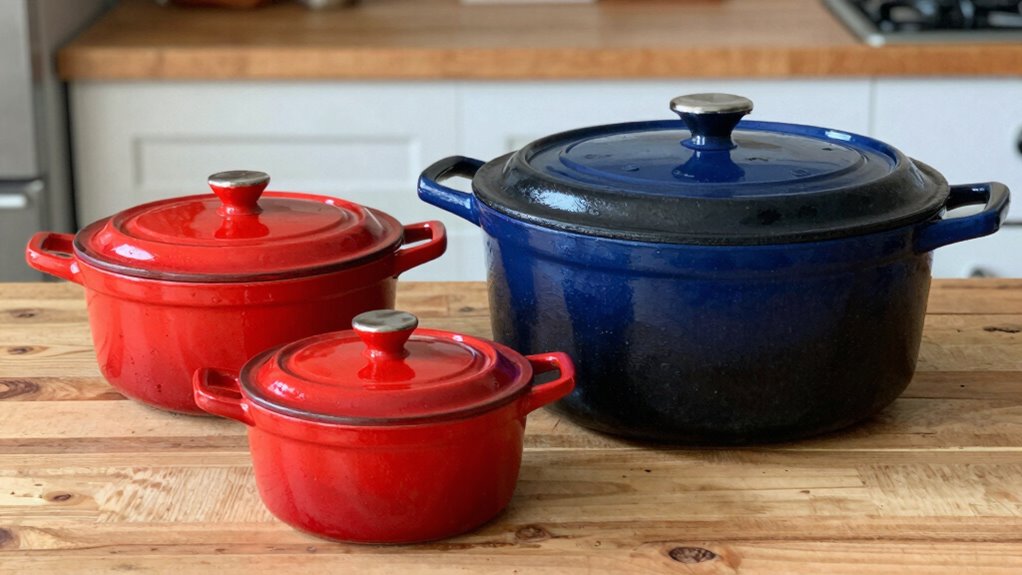
Your budget influences which Dutch oven sizes and features are within reach, so it’s important to weigh costs carefully. Limited storage space may also restrict your options, especially if you prefer larger models. Fortunately, there are cost-effective materials that offer durability without breaking the bank, helping you make the best choice within your constraints.
Budget Constraints and Options
Budget constraints can considerably influence your Dutch oven choices, often dictating which sizes and materials are accessible. To make the most of your budget, you should perform a price comparison across brands and materials, as costs can vary markedly. Keep in mind that brand reputation affects durability and performance, so investing in a reputable brand might save you money long-term. Consider these options:
- Opt for affordable, well-reviewed brands with good reputations to balance price and quality.
- Choose a size that fits your typical cooking needs without overspending on unnecessary capacity.
- Look for sales or discounts on popular models, which can make higher-quality options more accessible.
Being mindful of your budget helps you select a Dutch oven that offers value without sacrificing essential features.
Storage Space Considerations
Limited storage space can considerably influence your Dutch oven choices, especially if your budget restricts you from buying larger or additional kitchen equipment. Proper pan storage and efficient kitchen organization are essential. A smaller Dutch oven may fit comfortably in your cabinets or pantry, freeing up space for other essentials. If storage is tight, consider stackable options or multifunctional cookware that doubles as serving ware. To help visualize your options, here’s a quick comparison:
| Dutch Oven Size | Storage Consideration |
|---|---|
| 4-5 quarts | Fits small cabinets, easy to store |
| 6-7 quarts | Slightly larger, requires more space |
| 8+ quarts | Best for spacious storage, bulk cooking |
| Compact models | Ideal for limited spaces |
| Multi-use options | Save space & optimize kitchen organization |
Cost-Effective Material Choices
Choosing a Dutch oven made from cost-effective materials can help you get the most value without sacrificing quality. Your choice impacts material costs and longevity considerations, affecting how long your investment lasts.
- Enameled Cast Iron: Slightly higher upfront cost but offers durability and easy cleaning, balancing cost and longevity.
- Enameled Aluminum: More affordable, lightweight, and resistant to rust, but may not last as long as cast iron.
- Bare Cast Iron: Usually the most economical, with excellent longevity if maintained properly, but requires seasoning and care to prevent rust.
Which Dutch Oven Size Fits Your Cooking Style and Preferences?
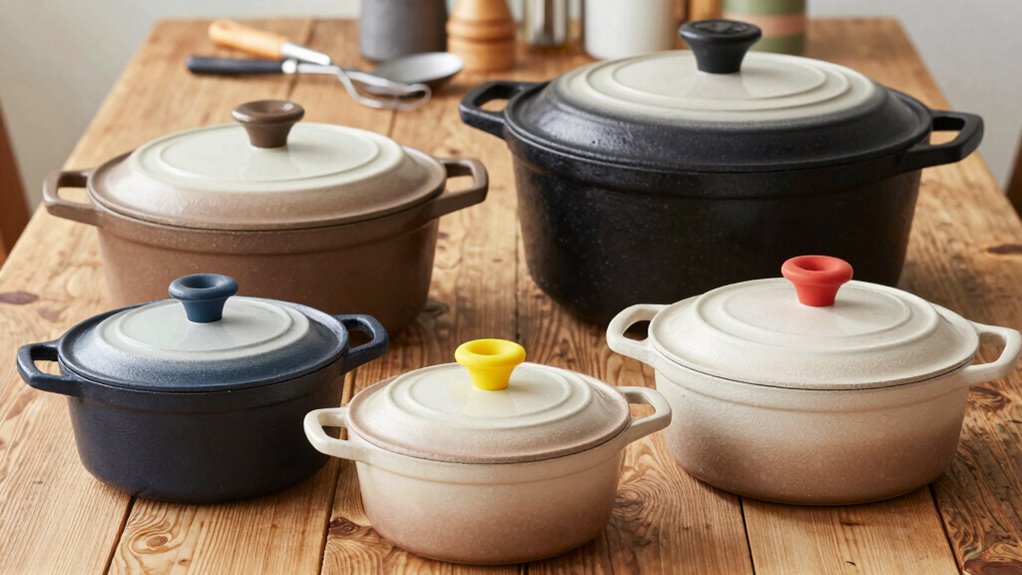
Selecting the right Dutch oven size depends on your cooking habits and the dishes you enjoy preparing. If you often cook for family or guests, a larger size offers more flexibility. For everyday meals or small portions, a smaller size is ideal. Consider your preferred cooking vessel styles and whether you’ll use Dutch oven accessories like trivets, lids, or racks. Here’s a quick overview:
| Size Range | Suitable For | Typical Dishes |
|---|---|---|
| 3-4 quarts | Small households, side dishes | Soups, stews, beans |
| 5-6 quarts | Medium families | Roasts, casseroles |
| 7-9 quarts | Large gatherings | Braised meats, bread |
| 10+ quarts | Commercial use, big parties | Large batches, canning |
| Specialty | Unique cooking styles | Baking, deep frying |
Choose a size that matches your cooking style to maximize your Dutch oven’s versatility.
Tips for Choosing the Perfect Dutch Oven Size: Make Your Decision Confidently
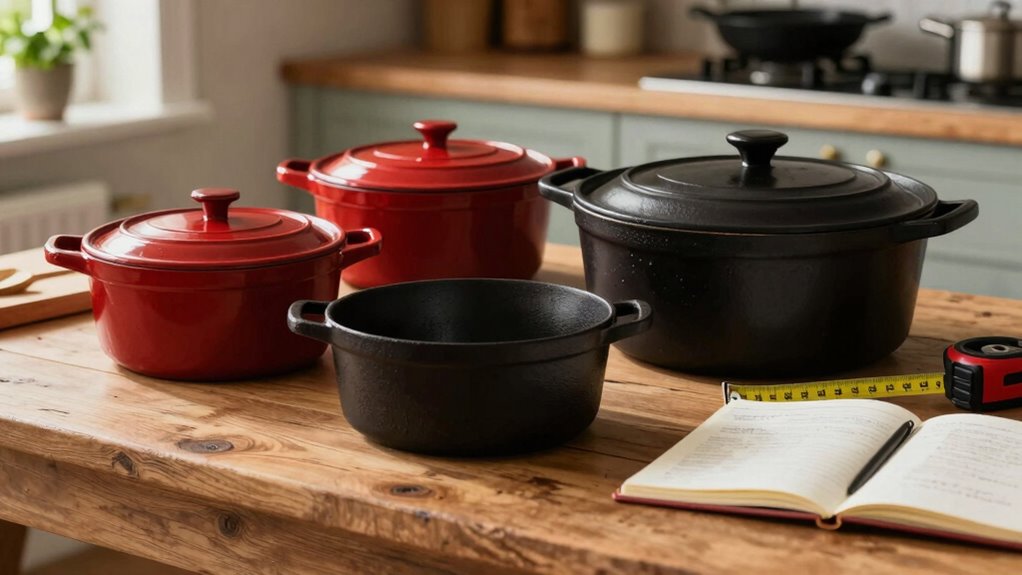
To choose the perfect Dutch oven size with confidence, start by evaluating your typical cooking routines and the number of people you usually serve. Consider how often you cook large batches or small meals. Keep in mind that larger sizes offer more flexibility for recipe adaptations and leftovers, while smaller ones are easier to handle and clean.
Here are some tips to help you decide:
- Match the size to your main dishes—opt for a 5-6 quart for family meals, or an 8-quart for bigger gatherings.
- Think about cleaning techniques—smaller Dutch ovens are easier to clean and maintain.
- Assess your storage space—avoid oversized models if storage is limited.
Confidently selecting the right size ensures you’ll enjoy both efficient cooking and easy maintenance.
Frequently Asked Questions
Can I Use a Larger Dutch Oven for Smaller Recipes?
Yes, you can use a larger Dutch oven for smaller recipes, but keep in mind the capacity and oven material. A bigger Dutch oven may heat unevenly or dry out your food if the recipe doesn’t require that much space. make certain your dish fits comfortably without overcrowding, and consider how the oven material affects heat retention. Using a larger size can work, but it’s best to match it to your recipe’s needs.
How Does Oven Size Affect Cooking Times?
Imagine your dish simmering gently in a cozy Dutch oven; a larger size lets heat distribute evenly, slightly extending cooking times. The extra space retains more dish moisture, so you might need to adjust oven heat or cooking duration. Smaller sizes heat faster, concentrating heat and reducing cooking times. Always monitor your dish closely, as oven size influences heat circulation, affecting both timing and moisture retention.
Are Certain Sizes Better for Outdoor Cooking?
Yes, certain sizes are better for outdoor cooking. Smaller Dutch ovens, around 4-6 quarts, are great for campfire cooking since they heat quickly and are easy to handle. Larger sizes, like 8-12 quarts, offer outdoor versatility for feeding bigger groups or making stews and roasts over open flames. Choose a size based on your typical outdoor meals, ensuring you can efficiently manage heat and space while cooking outdoors.
Can I Cook Multiple Dishes in One Dutch Oven Size?
Yes, you can cook multiple dishes in one Dutch oven size, making batch preparation easy, like a chef juggling several ingredients in one pan. For example, you might prepare a hearty stew with vegetables, then add rice directly in the same pot for a one-pot meal. Choosing the right size guarantees enough space for multi-dish cooking, so you save time and effort while creating flavorful, multi-layered dishes.
How Does Cooking Style Influence the Ideal Dutch Oven Size?
Your cooking style, including techniques and recipe complexity, influences the ideal Dutch oven size. If you often braise or make complex, large recipes, opt for a bigger size to accommodate ingredients and allow room for stirring. For quick, simple dishes, a smaller Dutch oven works better, offering better heat retention and easier handling. Choose a size that matches your preferred cooking techniques and the complexity of your recipes for best results.
Conclusion
Choosing the right Dutch oven size might seem tricky, but with your household needs and cooking style in mind, it’s easier than you think. Don’t worry if you’re unsure—start with a versatile size like 5-7 quarts, and you can always add smaller or larger ones later. Remember, investing in the right size enhances your cooking experience and makes cleanup a breeze. Trust your instincts, and you’ll find the perfect fit for your kitchen adventures.