To prepare sprouted and fresh raw dishes, start by sourcing organic seeds, grains, nuts, and vegetables to guarantee maximum freshness and nutrients. Rinse and soak seeds or grains to sprout them, activating enzymes and increasing bioavailability. Incorporate fermented vegetables like sauerkraut or kimchi for probiotics, and combine everything into vibrant salads or wraps. Proper storage and cleanliness maximize flavor and safety. Keep exploring to discover more tips for creating delicious, nutrient-packed raw meals.
Key Takeaways
- Incorporate sprouted grains, nuts, and seeds to boost nutrient absorption and add crunch to raw dishes.
- Use organic, fresh ingredients to enhance flavor, preserve enzymes, and ensure safety in raw food prep.
- Combine fermented foods like sauerkraut or kimchi with fresh produce for added probiotics and flavor complexity.
- Properly store ingredients in optimal conditions to maintain freshness, prevent spoilage, and preserve nutritional quality.
- Follow careful fermentation and sprouting techniques to maximize probiotic benefits and create vibrant, flavorful raw meals.
Preparing raw food meals can be a simple and nutritious way to boost your diet, but it requires some planning to guarantee everything stays fresh and safe. One key step is understanding fermentation techniques, which not only preserve food but also enhance its probiotic qualities. Fermentation transforms simple ingredients into flavorful, digestible dishes that support your gut health. Whether you’re making sauerkraut, kimchi, or fermented vegetables, mastering these techniques allows you to extend the shelf life of your raw foods while boosting their nutritional value. It’s essential to keep your fermentation process clean—use sterilized jars and utensils—and monitor the fermentation environment closely to prevent spoilage. Incorporating fermentation into your raw food prep means paying attention to timing, temperature, and salt levels, which create the ideal environment for beneficial bacteria to thrive.
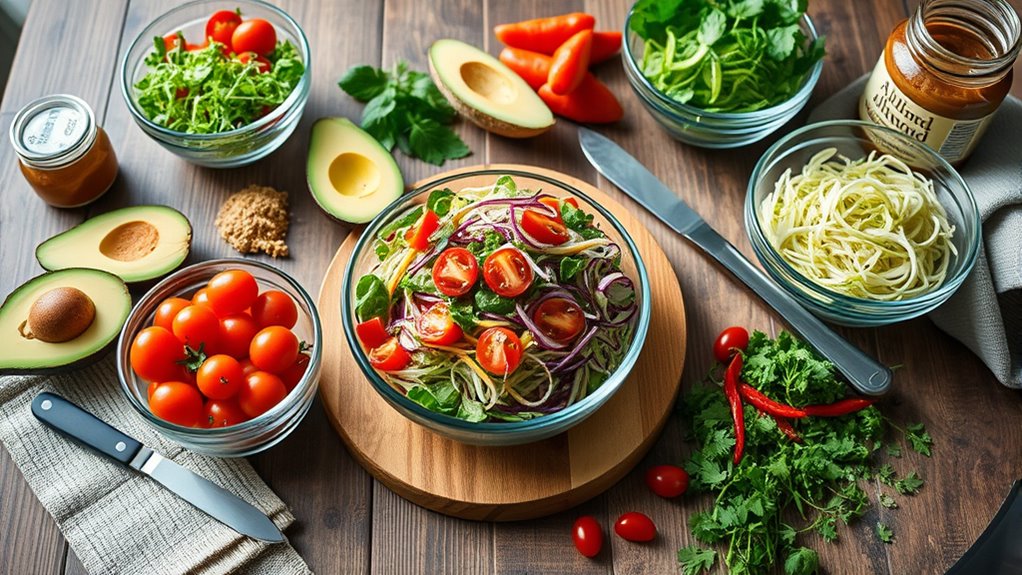
Another critical aspect is sourcing organic ingredients. When you start with organic produce, you reduce your exposure to pesticides and synthetic chemicals, making your raw dishes healthier and more flavorful. Organic ingredients tend to retain more nutrients and enzymes, which are often preserved during raw and sprouted preparations. Shopping at farmers’ markets or trusted organic suppliers ensures you’re selecting the freshest, highest-quality produce. Fresh, organic ingredients also mean your meals will taste better and have a more vibrant appearance. Remember, the key to successful raw food prep is not just the ingredients but also how you handle and store them. Proper storage—keeping produce in appropriate conditions—further guarantees your raw dishes stay fresh longer and retain their nutritional integrity.
Sprouting is another vital technique in raw meal prep, unlocking nutrients in seeds, nuts, and grains. When you sprout, you activate enzymes that make nutrients more bioavailable, boosting your meal’s health benefits. To do this properly, you’ll need to rinse and soak your seeds and grains in filtered water, then drain and keep them in a warm, dark place until sprouted. This process is straightforward but requires attentive sourcing of organic seeds free from chemicals and contaminants. Once sprouted, you can incorporate them into salads, wraps, or bowls, adding a crunch and freshness that elevates your raw dishes. Combining sprouted ingredients with fermented elements creates a powerhouse of live enzymes and probiotics, making your raw food meal prep both nutritious and delicious.
Frequently Asked Questions
How Long Can Sprouted Raw Dishes Be Stored Safely?
You can store sprouted raw dishes safely for about 1 to 3 days in the refrigerator. To prevent spoilage, keep them in airtight containers and maintain a consistent cold temperature. Always check for signs of spoilage, like bad odors or sliminess, before eating. Proper storage duration and spoilage prevention help make sure your dishes stay fresh, nutritious, and safe to enjoy within this timeframe.
What Are the Best Tools for Prepping Raw Meals Efficiently?
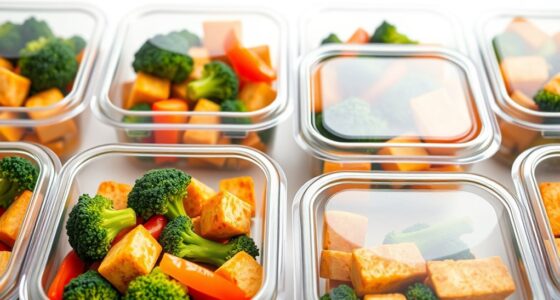
Think of prepping raw meals as assembling a puzzle; the right tools make it seamless. You’ll want sharp knives and graters to chop and zest efficiently, saving you time and effort. Use sturdy food storage containers to keep your sprouted and fresh dishes fresh and organized. These tools streamline your prep process, helping you create beautiful, nutritious raw meals with ease and precision, like a master chef in your own kitchen.
Are There Any Common Allergens in Raw Sprouted Dishes?
You should be aware that raw sprouted dishes can contain common allergens like nuts, which pose a nut allergy risk, and gluten if grains like wheat are sprouted. Always check ingredient labels and ask about preparation methods to avoid cross-contamination. If you have allergies or gluten concerns, choose recipes that exclude these ingredients or use substitutes to enjoy raw sprouted dishes safely.
How Do I Prevent Spoilage During Raw Food Meal Prep?
Did you know that improper storage causes 20% of food spoilage? To prevent spoilage during raw food meal prep, follow essential storage tips like keeping dishes refrigerated below 40°F and using airtight containers. Always check spoilage indicators like unpleasant odors or slimy textures before eating. Proper storage slows bacterial growth and maintains freshness, ensuring your sprouted and fresh dishes stay safe and delicious longer.
Can Raw Food Prep Be Scaled for Large Groups or Events?
Yes, you can scale raw food prep for large groups or events by adjusting batch sizing to meet demand. Focus on prepping ingredients in larger quantities and organizing efficient assembly lines for event catering. Keep ingredients chilled and stored properly to prevent spoilage. Planning ahead allows you to maintain freshness while ensuring the entire group gets healthy, raw, sprouted, and fresh dishes without compromising quality or safety.
Conclusion
Now, armed with these raw food meal prep tips, you’ll transform your kitchen into a vibrant jungle of sprouted magic and fresh, bursting flavors. Imagine your plates overflowing with colors so vivid, they could outshine a rainbow, and textures so crisp, they sing with every bite. You’re not just preparing meals—you’re releasing a powerhouse of nutrients that could make even the most sluggish creature leap with energy. Get ready to revolutionize your eating game—your body will thank you!