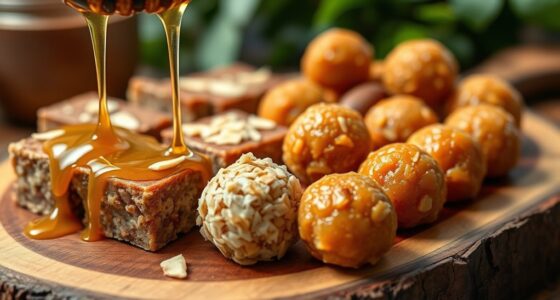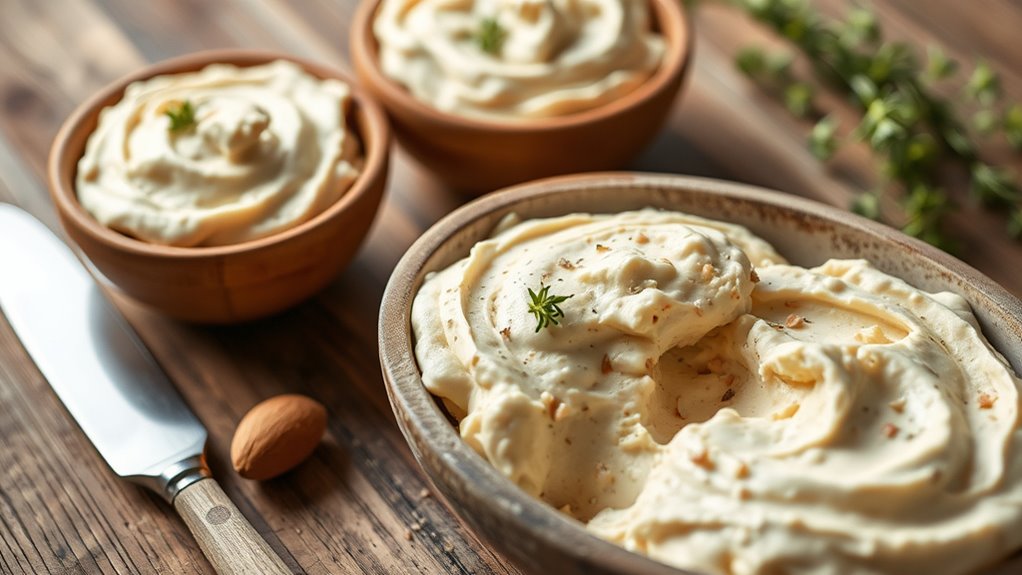
To make raw vegan cheese from nuts, start by soaking your choice of nuts like cashews or almonds to soften them. Blend the nuts with water, herbs, and flavorings, then ferment the mixture to develop tangy notes and improve digestibility. After fermentation, shape and age the cheese in a controlled environment to deepen flavors and achieve the desired texture. To master this craft and access more tips, keep exploring the fermentation and aging techniques involved.
Key Takeaways
- Use soaked and blended nuts like cashews or almonds as a base for a creamy cheese texture.
- Ferment the nut mixture with probiotic cultures to develop tangy, cheese-like flavors.
- Control temperature and humidity during aging to deepen flavor and improve texture.
- Incorporate flavor enhancers such as nutritional yeast, herbs, or spices for customized taste.
- Adjust fermentation and aging times to achieve desired creaminess, tanginess, and complexity.
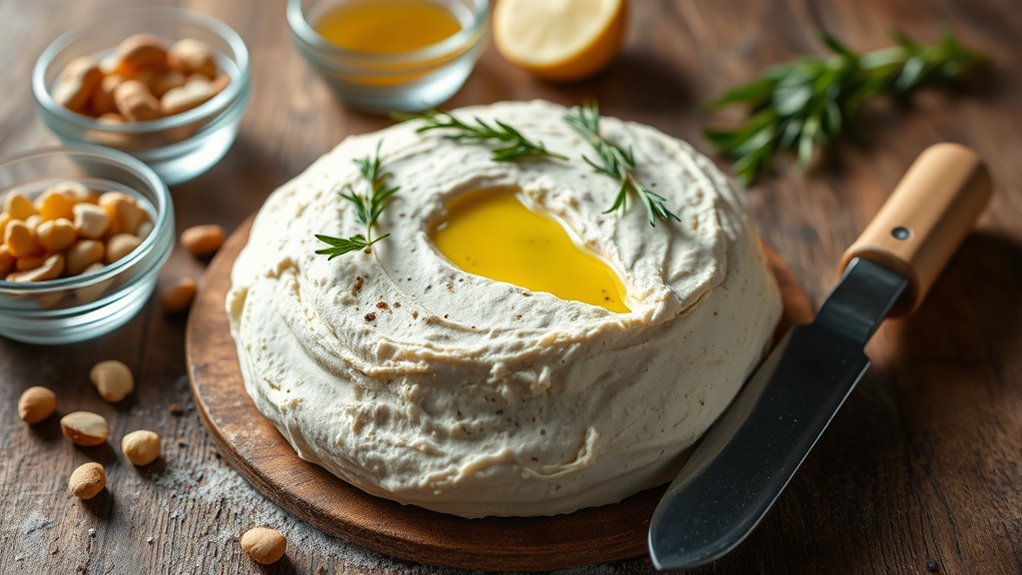
Have you ever wondered if you can enjoy cheesy flavors without dairy? The good news is, you absolutely can, and one of the most exciting ways to do so is by making raw vegan cheese from nuts. This process taps into the fascinating world of nut fermentation and cheese aging techniques, transforming simple ingredients into rich, tangy, and complex flavors that rival traditional cheese. Nut fermentation is a key step, as it kickstarts the development of savory notes and enhances the cheese’s digestibility. By allowing the nuts to ferment naturally, you promote the growth of beneficial bacteria, which break down the nuts’ sugars and fats, creating a deeper flavor profile. This fermentation process is similar to what happens in traditional cheese aging, where microbes develop on the surface, contributing to the cheese’s aroma and taste.
Once your nuts have fermented, you can move on to shaping and aging your vegan cheese. Cheese aging techniques involve controlling temperature and humidity to encourage the growth of specific molds or bacteria that develop flavor and texture over time. You might not be aging your nut cheese in a cellar, but keeping it in a warm, dark place can mimic those conditions. The aging process allows the flavors to deepen, creating that complex, cheesy umami characteristic you’re craving. During this time, you’ll notice the texture firming up and the flavors becoming more pronounced, similar to traditional aging methods used in dairy cheese. This step is essential; patience results in a more authentic and satisfying final product.
Making raw vegan cheese from nuts isn’t just about blending ingredients until smooth. It’s about understanding and applying the principles behind fermentation and aging to coax out the best flavors. You can experiment with different nuts, like cashews or almonds, and incorporate flavor-enhancing ingredients such as nutritional yeast, herbs, or spices. As you develop your cheese, pay attention to fermentation times and aging conditions, adjusting them to suit your taste preferences. The more you learn about nut fermentation and cheese aging techniques, the better your nut cheeses will become. Over time, you’ll develop a keen sense of how to balance acidity, creaminess, and flavor intensity to create a cheese that’s truly your own.
Enjoying cheesy flavors without dairy isn’t just possible—it’s an art. By mastering nut fermentation and cheese aging techniques, you can craft delicious, dairy-free cheeses that are as complex and satisfying as traditional varieties.
Frequently Asked Questions
How Long Does Homemade Raw Vegan Cheese Last?
You can typically store homemade raw vegan cheese from nuts for about 3 to 5 days in the fridge. To preserve its freshness, keep it in an airtight container and avoid exposing it to heat or sunlight. If you want it to last longer, consider freezing it for up to a month, but note that this may affect its texture. Regularly check for any signs of spoilage before consuming.
Can I Substitute Different Nuts in the Recipe?
Sure, go ahead and substitute different nuts in your recipe—who’s stopping you? Just realize that nut substitutions might change the flavor and texture, so you’ll want to make some flavor adjustments along the way. Almonds, cashews, or macadamias? Each brings something unique, so experiment and taste as you go. After all, cooking’s about personal touch, even when it means tweaking your raw vegan cheese to perfection.
Is Raw Vegan Cheese Suitable for Nut Allergies?
Raw vegan cheese isn’t suitable if you have nut allergies, as it’s typically made from nuts. You should look for nut allergy alternatives like seeds or soy-based options. To prevent cross contact, always thoroughly clean utensils and surfaces when preparing allergy-friendly foods. This way, you reduce the risk of allergic reactions and enjoy safe, plant-based cheese alternatives tailored to your dietary needs.
What Are the Best Tools for Making Nut Cheese?
If you want to make nut cheese, you’ll need a good blender or food processor to blend soaked nuts smoothly. For example, I once used a high-speed blender to create a creamy cashew cheese. Nut soaking softens the nuts, making blending easier. Cheese molds help shape your cheese into perfect rounds or blocks. These tools guarantee your nut cheese turns out smooth, firm, and visually appealing every time.
How Do I Adjust the Flavor for Different Cheeses?
To adjust the flavor for different nut cheeses, experiment with flavor variations like herbs, spices, or nutritional yeast. You can also make ingredient substitutions, such as using lemon juice instead of vinegar for a tangier taste or adding miso for umami depth. Taste as you go, and don’t hesitate to tweak the seasoning to suit your preference. This way, you create a variety of delicious, personalized raw vegan cheeses.
Conclusion
As you savor your homemade raw vegan cheese, imagine the creamy richness melting effortlessly on your tongue, the subtle nutty aroma lingering softly. Each bite transports you to a sun-dappled grove, where freshly harvested nuts whisper promises of wholesome goodness. With your hands, you’ve crafted a dairy-free delight that not only nourishes your body but also elevates your senses. Enjoy this simple, pure pleasure—your culinary artistry now a delicious, nourishing masterpiece.