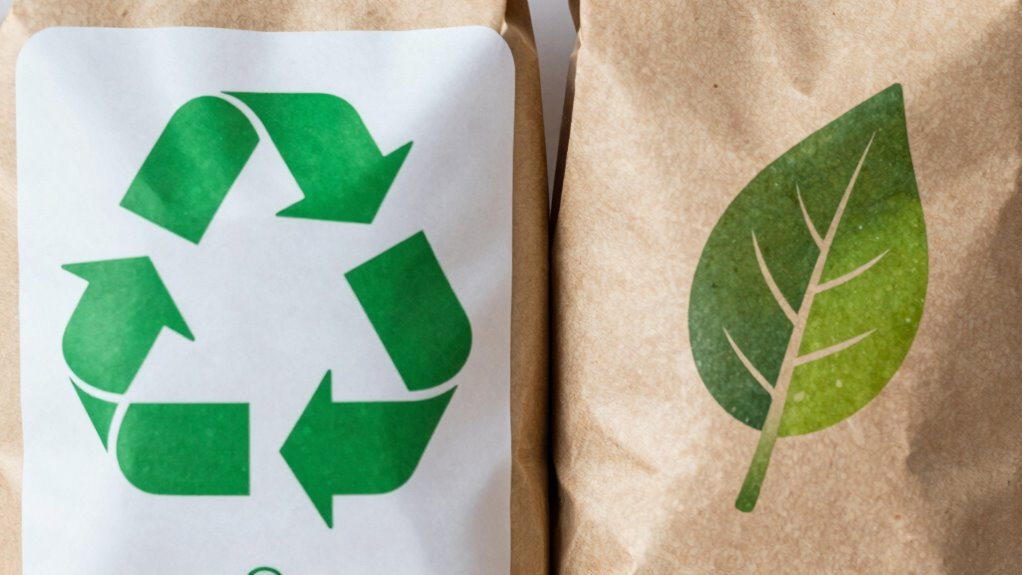

Food packaging labels show whether products are recyclable or compostable, helping you dispose of them correctly. Recyclable labels mean you can process the packaging for reuse, but check if local facilities support recycling. Compostable labels indicate the packaging breaks down into natural elements in composting environments, usually within a certain timeframe. Understanding these labels and standards can help you make eco-friendly choices and reduce waste. Keep exploring to learn how these labels impact the environment and your habits.

Get kitchen staples and gadgets delivered free with Prime
- Fast, free delivery on millions of items
- Prime Video, Amazon Music and more included
- Member-only deals all year
Key Takeaways
- Recyclable packaging can be processed and reused, depending on local recycling facilities, while compostable packaging breaks down into natural elements in compost environments.
- Certification standards verify environmental claims, ensuring recyclable and compostable labels meet safety and breakdown criteria.
- Proper disposal of recyclable and compostable packaging maximizes environmental benefits and reduces waste contamination.
- Recyclable labels indicate the packaging can be reused, whereas compostable labels mean the material decomposes naturally within a specific timeframe.
- Informed consumers can make eco-friendly choices by understanding label meanings, supporting sustainable waste management practices.
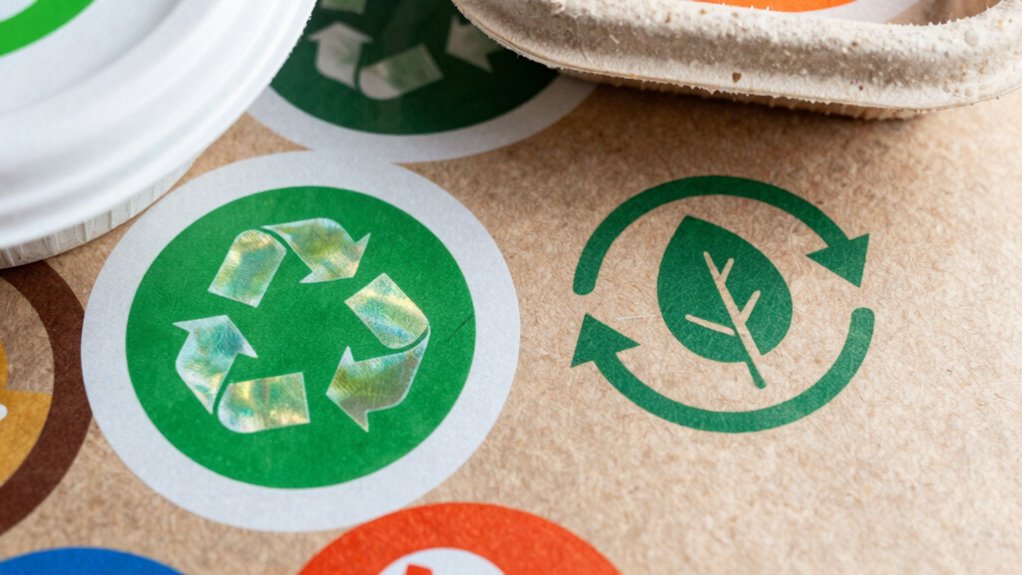
Food packaging labels are essential tools that provide consumers with vital information about the products they buy. They help you make informed choices, especially when it comes to understanding how packaging affects the environment. Two common labels you’ll encounter are “recyclable” and “compostable,” each indicating different ways to dispose of packaging materials. Knowing the difference can guide you toward more sustainable habits. Recyclable labels mean the packaging can be processed and reused in manufacturing, but whether you can recycle it depends on local facilities. Compostable labels, on the other hand, indicate that the packaging can break down into natural elements in a compost environment within a certain timeframe. It’s not just about the label, though; it’s about understanding what these labels mean in practice. Additionally, label certification standards are crucial because they verify whether a product truly meets environmental claims and ensures you’re making eco-friendly choices. Understanding the environmental safety standards behind these labels is vital because they set the benchmarks for what qualifies as recyclable or compostable. For example, some labels might claim “biodegradable plastics” without any certification, which can be confusing or misleading. Certified labels, however, guarantee that the product has undergone testing and meets specific criteria for environmental safety. This way, you can trust that when you see a package with a certified compostable label, it will break down properly in a composting environment, provided you dispose of it correctly. Additionally, awareness of disposal guidelines helps ensure that you follow proper procedures for recycling or composting, maximizing environmental benefits. Knowing the life cycle of packaging can also help you make more sustainable choices from production to disposal. Moreover, understanding how consumer behavior influences waste management practices can further enhance your eco-friendly efforts.
recyclable food storage containers
As an affiliate, we earn on qualifying purchases.
As an affiliate, we earn on qualifying purchases.
Frequently Asked Questions
How Do I Verify if a Label Is Genuinely Recyclable or Compostable?
You verify if a label is genuinely recyclable or compostable by checking for official label certification symbols from recognized organizations, like the FSC or the ASTM. Also, examine the material identification on the packaging, such as resin codes or compostability logos. If you’re unsure, research the specific label, or visit the certifying agency’s website to confirm authenticity. This way, you guarantee the packaging aligns with your sustainability goals.
Are All Recyclable Labels Accepted in Curbside Recycling Programs?
Ever wonder if all recyclable labels are accepted in curbside programs? Not necessarily. Many labels feature recycling symbols, but acceptance depends on the label design and local recycling rules. Check your area’s guidelines, as some programs only accept specific materials or labels. Always look for clear recycling symbols and confirm with your local recycling facility to avoid contaminating the recycling stream. Wouldn’t you prefer to recycle correctly and reduce waste?
What Is the Environmental Impact of Compostable Packaging?
Compostable packaging benefits the environment by supporting soil health through its biodegradation process, which breaks down materials into natural elements. Unlike traditional plastics, compostable items decompose faster and return nutrients to the soil, reducing landfill waste. By choosing compostable packaging, you help lower pollution and promote sustainable waste management. This positive impact encourages healthier ecosystems and minimizes the harmful effects of plastic pollution on our planet.
How Long Does It Take for Compostable Packaging to Decompose?
Think of compostable packaging as a speedy traveler on a time-traveling train. Under ideal composting conditions, it can biodegrade within 90 to 180 days, turning back into nourishing soil. However, if the composting environment isn’t perfect—lacking proper moisture, oxygen, or temperature—the biodegradation timeline may stretch longer. To see quick, eco-friendly results, guarantee your composting conditions are just right for this natural process to flourish.
Can Recyclable and Compostable Labels Be Used Together on One Product?
Yes, you can use recyclable and compostable labels together on one product. When designing the label, focus on clear, distinct label design to avoid confusion, and guarantee consumers understand the different disposal methods. Promoting consumer awareness is vital; include simple instructions or icons that explain whether to recycle or compost. This approach helps consumers make informed choices, reduces waste, and supports eco-friendly practices.
Conclusion
Now that you know the difference between recyclable and compostable labels, you’re basically a superhero in disguise—armed with the power to save the planet one package at a time! Don’t let confusing labels fool you; your choices can turn the tide against pollution and waste. Every time you pick the right label, you’re not just making a smart decision—you’re revolutionizing the way we protect our Earth. Get out there and be the hero we all need!
Halloween Picks
halloween
As an affiliate, we earn on qualifying purchases.