
If your oven isn’t cooking at the right temperature, it’s likely due to calibration issues, faulty sensors, or worn heating elements. To fix this yourself, use an oven-safe thermometer to check if the oven’s internal temperature matches the display. If not, calibrate the sensor or replace damaged parts. Keeping your oven clean and sealing the door properly helps maintain accurate temps. For step-by-step solutions, continue exploring how to troubleshoot and correct these common problems.

Get kitchen staples and gadgets delivered free with Prime
- Fast, free delivery on millions of items
- Prime Video, Amazon Music and more included
- Member-only deals all year
Key Takeaways
- Use an oven-safe thermometer to verify actual temperature against the oven’s display.
- Check and calibrate the oven sensor or thermostat if readings are inconsistent.
- Inspect and replace worn heating elements and door seals to ensure proper heat retention and distribution.
- Ensure electrical connections and control components are functioning correctly.
- Regularly clean the oven and schedule professional maintenance for complex issues.
oven-safe thermometer for baking
As an affiliate, we earn on qualifying purchases.
As an affiliate, we earn on qualifying purchases.
Why Does My Oven’s Temperature Drift Out of Calibration?
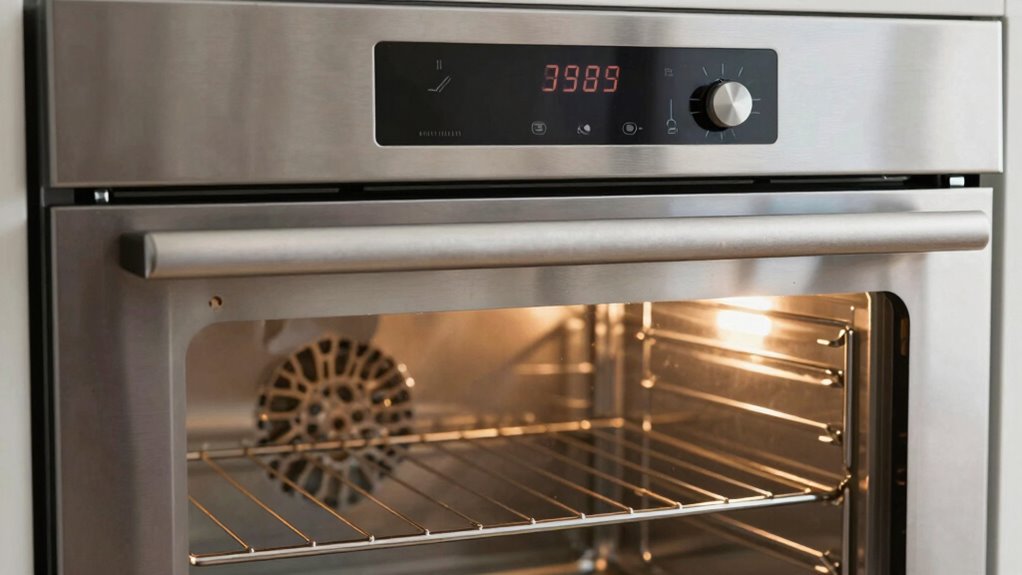
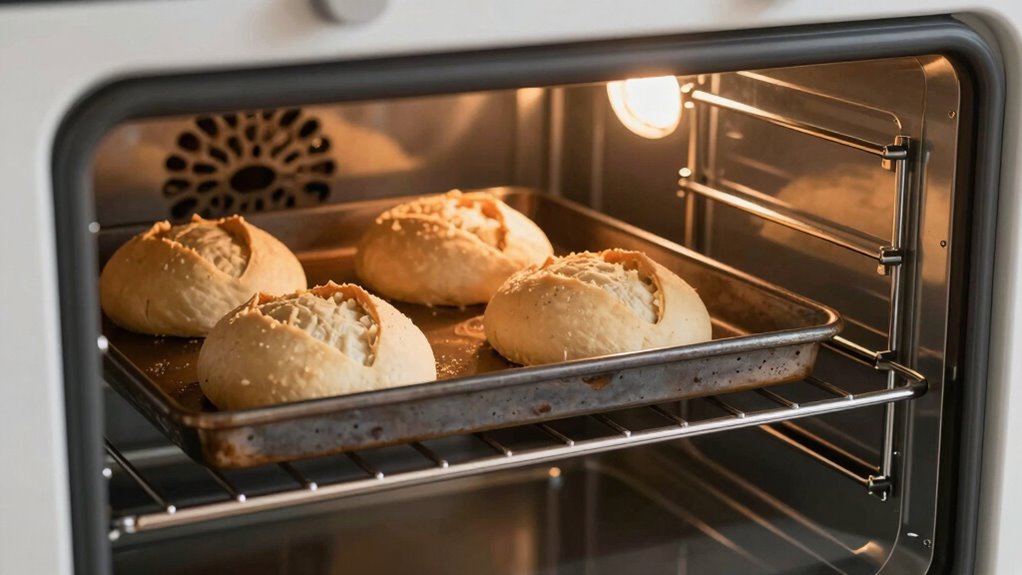
Ovens often drift out of calibration over time, which means their displayed temperature no longer matches the actual heat inside. This discrepancy happens because the sensor that measures temperature can become inaccurate or faulty, leading to incorrect readings. When your oven’s calibration is off, it might cook food unevenly or burn it, making adjustments necessary. The solution often involves oven calibration, which can sometimes be achieved through a simple reset or recalibration process. However, if the sensor has become damaged or worn out, replacing it is essential. Sensor replacement ensures your oven provides precise temperature readings, restoring proper calibration. Regular maintenance and timely Sensor replacement help keep your oven accurate, so you can trust the temperature and achieve consistent baking results. Additionally, understanding oven calibration and how to properly perform it can prevent future issues and improve overall cooking performance. Proper calibration techniques can extend your oven’s lifespan and ensure more reliable results, especially when combined with accurate temperature measurement.
How Can I Test My Oven’s Temperature at Home?
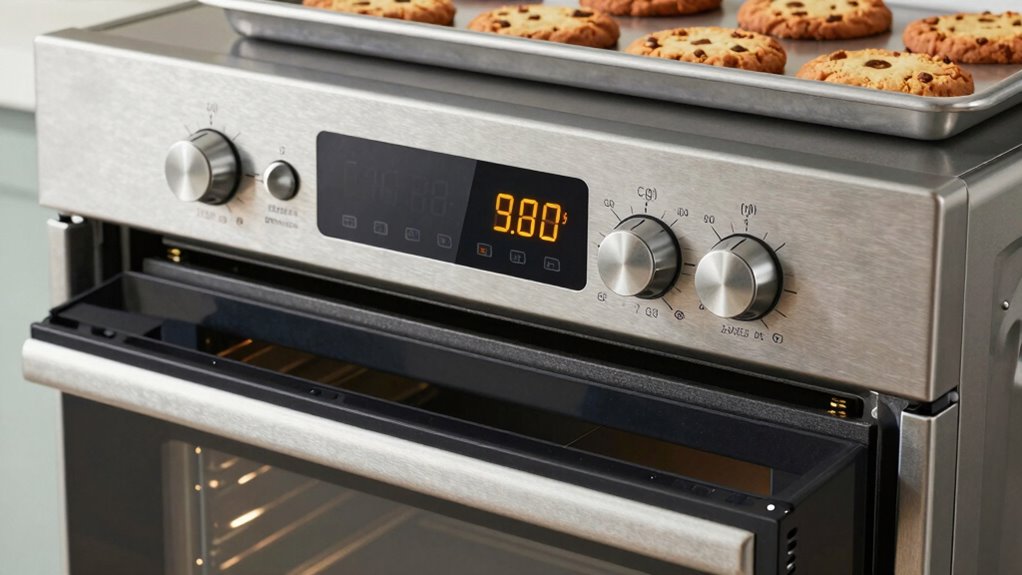
Wondering if your oven’s temperature is accurate? To test your oven’s baking accuracy at home, grab a reliable oven thermometer. Here’s what to do:
Test your oven’s accuracy using a reliable thermometer and simple steps for perfect baking results.
- Place the thermometer in the center of an empty oven, ideally on a baking sheet.
- Set your oven to a specific temperature, like 350°F (175°C), and let it preheat for 15-20 minutes.
- Check the thermometer reading once the oven signals it’s ready.
- Be aware that European cloud servers are increasingly used to monitor and optimize smart kitchen appliances, including ovens, for better accuracy and safety. Additionally, some modern ovens come with built-in calibration features that make this process easier.
- Regularly testing your oven’s temperature helps identify potential calibration issues, ensuring consistent cooking results.
- Investing in accurate cooking tools can further improve your baking precision.
- If your oven consistently shows inaccuracies, consider consulting a professional technician to perform oven calibration for optimal performance.
Compare the thermometer’s reading to your oven’s setting. If they differ markedly, it indicates your oven may need calibration. Regular testing helps maintain baking accuracy and ensures you’re not baking with a faulty temperature. This simple step is key to fixing inaccurate oven temperatures and achieving perfect results every time.
What Are the Common Causes of Inaccurate Oven Temperatures?
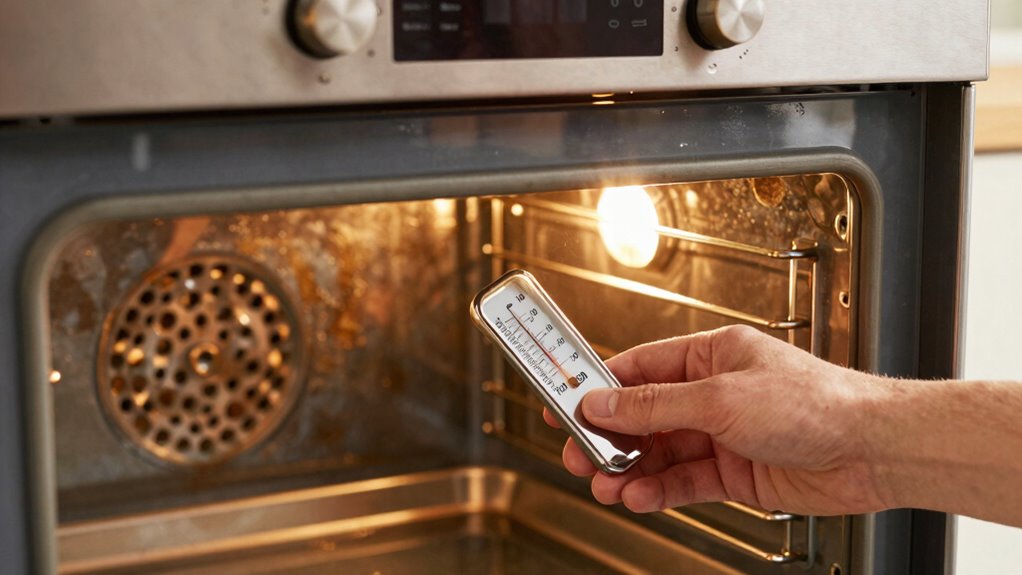
Inaccurate oven temperatures often stem from various mechanical and calibration issues. One common cause is oven calibration problems, where the oven’s thermostat isn’t set correctly or has drifted over time. This miscalibration causes the oven to heat either too high or too low, making your baked goods unpredictable. Additionally, faulty or worn temperature sensors can give inaccurate readings, preventing the oven from reaching or maintaining the desired temperature. If these sensors are damaged or dirty, they won’t communicate properly with the control board, leading to temperature inaccuracies. Proper oven maintenance and periodic calibration checks can help prevent these issues. Sometimes, sensor calibration can be adjusted to improve accuracy without replacing parts. Other causes include broken heating elements, malfunctioning thermostats, or loose wiring. Identifying these issues can help you understand why your oven’s temperature isn’t accurate and guide you in troubleshooting or seeking repairs. Regular oven calibration ensures that your appliance provides consistent and accurate temperatures, which is essential for successful baking outcomes. Ensuring your oven has proper filtration and pump protection can also prevent dust and debris from affecting internal components, maintaining more reliable temperature readings. Incorporating smart sensors into your oven system can further enhance temperature accuracy and responsiveness.
How to Calibrate or Fix Your Oven’s Temperature Sensor Yourself

If you suspect your oven’s temperature sensor is causing inaccurate readings, you can attempt to calibrate or replace it yourself with some basic tools and careful steps. Start by locating the sensor, usually near the oven’s top or side wall. Next, turn off power and remove the sensor using a screwdriver. Then, follow these steps for DIY adjustment:
Calibrate or replace your oven’s temperature sensor for more accurate cooking results.
- Use a multimeter to test the sensor’s resistance at room temperature.
- Compare your reading to the manufacturer’s specifications.
- If needed, gently bend the sensor’s wire to adjust its position or replace it if faulty. Proper sensor calibration can help you better interpret your readings and troubleshoot more effectively. Additionally, understanding the oven temperature sensor can help you identify when it’s malfunctioning or needs replacement.
- Understanding oven temperature sensors can help you better interpret your readings and troubleshoot more effectively.
Sensor calibration can often resolve temperature inaccuracies, saving you from costly repairs. Carefully following these steps helps ensure your oven heats accurately and consistently.
Tips to Keep Your Oven Temperate Accurate and Your Bakes Perfect
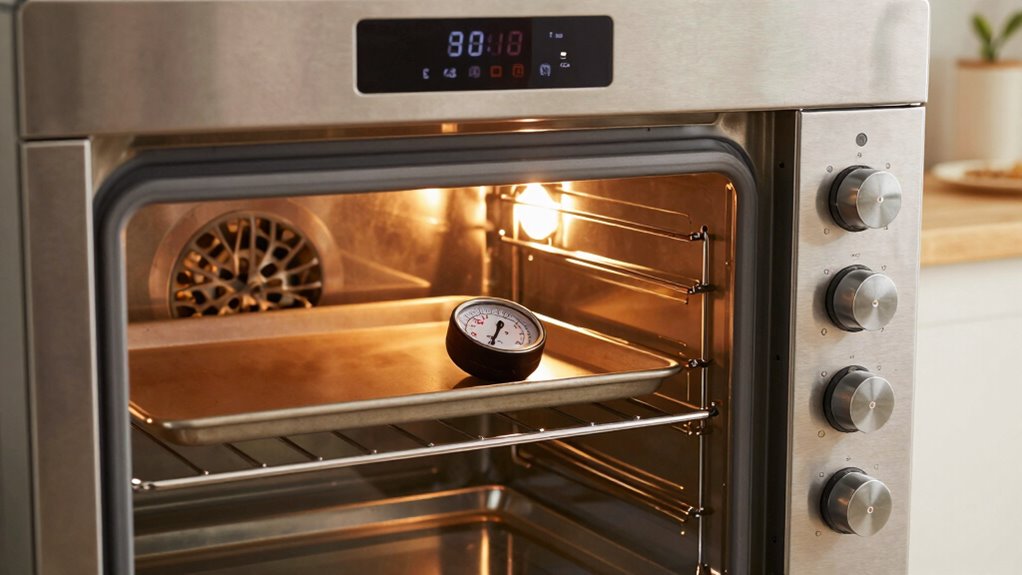
To keep your oven’s temperature accurate and guarantee perfect bakes, regular maintenance and mindful practices are essential. Start by routinely checking your oven’s calibration, especially if you notice uneven or inconsistent results. Use an oven thermometer to verify the actual temperature and adjust the calibration or consider professional oven repair if needed. Keep the oven door sealed tightly to prevent heat loss, and avoid opening it frequently during baking. Clean the oven regularly to prevent buildup that can affect temperature accuracy. Additionally, ensure the heating elements are functioning properly and replace any faulty parts promptly. Proper oven maintenance helps maintain consistent heat, reducing the need for frequent adjustments and ensuring your baked goods turn out just right every time. Incorporating ventilation considerations can also improve oven performance by reducing excess moisture and heat buildup. Regularly inspecting and maintaining your oven’s thermal sensors can further enhance temperature stability and baking results. Also, consider air circulation within the oven to promote even heat distribution, which is crucial for consistent baking outcomes. Maintaining good kitchen airflow can help regulate internal oven temperatures and improve overall performance.
Frequently Asked Questions
How Often Should I Recalibrate My Oven for Optimal Accuracy?
You should recalibrate your oven for maximum accuracy every six months or if you notice inconsistent baking results. Regular oven maintenance includes checking the calibration frequency, especially if your baked goods aren’t turning out right. Keep an eye on temperature inconsistencies, and don’t wait too long to recalibrate. Proper oven maintenance ensures your appliance stays precise, helping you bake perfectly every time.
Can External Factors Affect My Oven’s Temperature Calibration?
External influences like drafts, ambient temperature, and humidity can affect your oven’s temperature calibration. These factors create calibration challenges because they cause fluctuations that make your oven seem inaccurate. To get the most precise results, keep your kitchen environment stable and avoid opening the oven door during baking. Regularly recalibrate your oven to account for these external influences, ensuring consistent and accurate baking temperatures every time.
Are There Specific Brands or Models More Prone to Temperature Issues?
Back in the day, you might’ve thought all ovens were created equal, but today’s brands vary in reliability. Some brands and models are more prone to temperature issues due to design flaws or quality control. Generally, high-end brands tend to be more consistent, but always check reviews for specific models. Remember, model variations within brands can also impact accuracy, so don’t assume one oven is the same as another.
What Tools Are Best for Testing Oven Temperature at Home?
You should choose a digital instant-read thermometer for accurate oven temperature testing. Look for models with a wide temperature range and quick response time. Use calibration techniques like placing the thermometer in boiling water or ice water to check accuracy. If your thermometer is off, follow the manufacturer’s instructions to calibrate it, ensuring precise readings. Regularly testing and calibrating your thermometer helps maintain consistent, perfect baking results at home.
When Should I Consider Replacing My Oven Rather Than Repairing It?
When your oven’s lifespan is nearing or repair costs pile up, it’s time to cut your losses. If repairs cost more than half the price of a new one or if it’s consistently misbehaving, you’re fighting a losing battle. Think of it as throwing good money after bad—sometimes replacing the oven is the smarter move, ensuring safety and efficiency without endless repairs.
Conclusion
Think of your oven as a loyal compass, guiding your baking journey. When it drifts off course, your delicious destination suffers. By understanding its quirks and tuning its sensors, you keep your culinary voyage true. With a little care and attention, you can steer your oven straight, ensuring every dish reaches its perfect port. Remember, a well-calibrated oven is the steady captain of your kitchen adventures, leading you to consistently perfect bakes.
Fall Picks
fall essentials
As an affiliate, we earn on qualifying purchases.