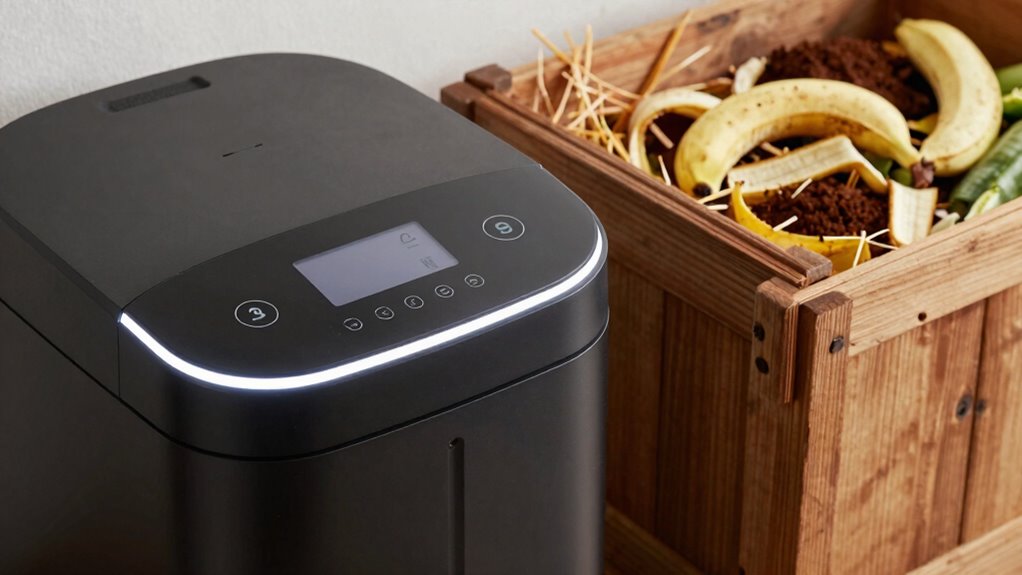

Electric composters are quick and easy to use, often turning food scraps into compost within 24 hours with minimal effort, thanks to built-in heat and aeration. They’re compact, ideal for busy urban lifestyles with limited outdoor space, and fit seamlessly into kitchens. Traditional composting takes longer, requires manual effort, and involves bigger outdoor bins with yard waste. If you want to discover more about which option suits your needs, keep exploring the details ahead.

Get kitchen staples and gadgets delivered free with Prime
- Fast, free delivery on millions of items
- Prime Video, Amazon Music and more included
- Member-only deals all year
Key Takeaways
- Electric composters offer quick, automated breakdown of food waste, typically within 24 hours, while traditional composting takes weeks or months.
- They are compact, countertop devices suited for indoor use, whereas traditional composting requires outdoor space and larger bins.
- Electric models use heat and aeration to accelerate decomposition, unlike traditional methods relying solely on microbial activity and manual mixing.
- Electric composting requires minimal effort, making it ideal for busy lifestyles; traditional composting involves manual turning and material management.
- Both methods reduce waste and support sustainability, but electric composters are more convenient for urban, indoor environments.
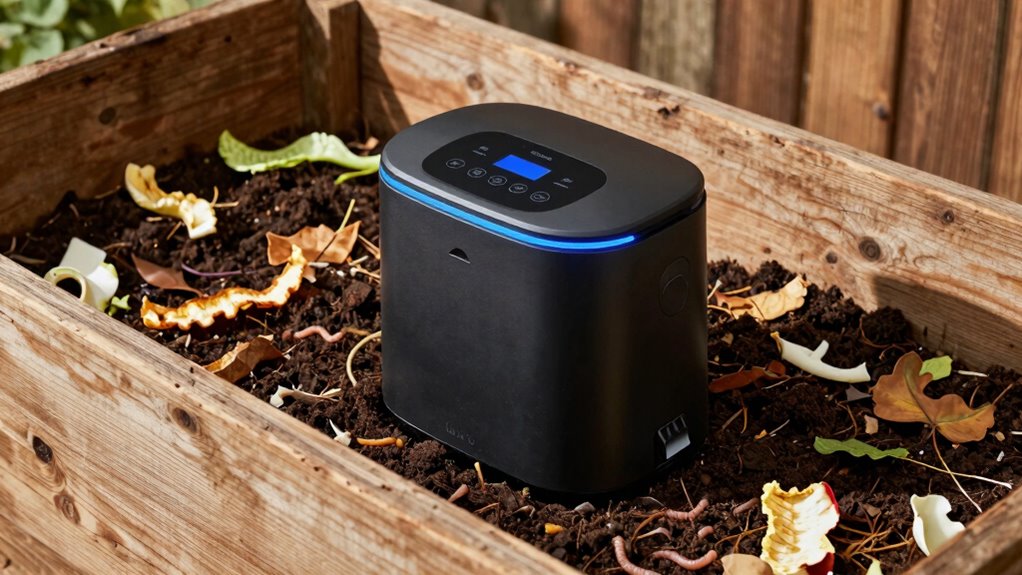
Deciding between electric and traditional composters depends on your specific needs and lifestyle. If you’re into indoor gardening or want a more streamlined way to reduce waste, understanding the differences can help you choose the best option. Electric composters, often called countertop or kitchen composters, are designed for convenience and speed. They typically use built-in heating elements and aeration systems, breaking down food scraps quickly—sometimes in as little as 24 hours. This makes them ideal if you’re short on outdoor space or prefer a tidy, odor-free method to manage your kitchen waste. Plus, because they’re compact and easy to use, electric composters fit seamlessly into busy urban lifestyles. They also promote waste reduction by encouraging you to compost food scraps that might otherwise end up in the trash, reducing landfill contributions and greenhouse gases. If you’re passionate about indoor gardening, these devices provide nutrient-rich compost that can be used directly in your plants, enhancing growth without needing to venture outside. Additionally, electric composters often incorporate microbial activity to accelerate decomposition, making them highly efficient. A compact design also ensures they occupy minimal space in your kitchen or pantry. In contrast, traditional composting allows for more natural decomposition processes, which some find more satisfying and environmentally aligned with natural cycles. They often require more effort, such as turning or mixing materials, but this hands-on approach can provide a deeper understanding of the composting process and foster a connection with nature.
Traditional composters, on the other hand, are usually larger and require more effort but are highly effective for outdoor use. They often involve turning or mixing organic materials like yard waste, vegetable scraps, and leaves to facilitate decomposition. These composters foster a natural process that relies on microbial activity, which takes longer—often several months—to produce mature compost. If you have a garden or yard and enjoy engaging with the composting process, traditional bins or piles might suit you better. They’re also great for waste reduction on a larger scale, handling more substantial amounts of organic waste without the need for electricity. Plus, traditional composting encourages a diverse mix of materials, resulting in a richer, more balanced compost. For indoor gardening enthusiasts with access to outdoor space, traditional composting offers a sustainable way to turn kitchen and yard waste into valuable soil amendment. Both methods contribute to environmental sustainability, but your lifestyle and garden size will determine which one aligns best with your needs. Whether you prefer the modern ease of electric composters or the hands-on approach of traditional methods, both help you reduce waste and support healthier indoor or outdoor plants. Understanding composting methods can help you select the most suitable approach for your ecological and practical goals.
electric countertop food compost bin
As an affiliate, we earn on qualifying purchases.
As an affiliate, we earn on qualifying purchases.
Frequently Asked Questions
How Energy-Efficient Are Electric Composters Compared to Traditional Ones?
Electric composters are generally more energy-efficient than traditional ones because they use less energy to speed up the composting process. Their energy consumption is often minimal, making them a better choice for reducing environmental impact. You’ll find that electric models require less manual effort and produce compost faster, which means you save energy overall. This efficiency helps you minimize your carbon footprint while enjoying fresh, eco-friendly compost.
Can Electric Composters Handle Larger Household Waste Volumes?
Yes, electric composters can handle larger household waste volumes, including kitchen scraps and yard waste. They are designed to process waste quickly and efficiently, making them suitable for households with more debris. You’ll find that electric composters can manage higher quantities of kitchen scraps and yard waste without clogging or slowing down. This makes them a convenient option if you generate a lot of organic waste regularly.
What Is the Typical Lifespan of an Electric Composter?
An electric composter typically lasts around 5 to 10 years, depending on usage and maintenance. When you consider the cost comparison, electric composters tend to be pricier upfront but save you money over time by reducing waste disposal costs. They also have a lower environmental impact since they produce compost quickly and efficiently, minimizing methane emissions from organic waste in landfills. Proper care can extend your electric composter’s lifespan considerably.
Are Electric Composters Suitable for All Types of Organic Waste?
You can feel confident using electric composters for most types of organic waste, including kitchen scraps. They’re designed to handle a variety of materials, turning everyday leftovers into rich compost effortlessly. However, some electric models may have limitations with certain items like oily or dairy products. So, while they’re versatile, it’s good to check your specific composter’s guidelines to verify it’s suitable for your entire range of organic waste.
Do Electric Composters Require Special Maintenance or Cleaning?
You’ll need to perform regular maintenance on your electric composter to keep it running smoothly. This includes cleaning the internal components and ensuring proper odor control, which prevents unpleasant smells. Keep in mind, some models can be noisy, so consider noise levels if your space is sensitive. Regular cleaning helps maintain efficiency, odor control, and minimizes noise, ensuring your electric composter stays in good condition and continues to compost effectively.
Conclusion
Choosing between electric and traditional composters boils down to convenience versus control. While electric options offer effortless efficiency, traditional composters provide time-tested tranquility. Both promise a greener glow, but your choice depends on your gardening goals and your groove. So, whether you prefer quick and quiet or slow and steady, remember: your decision makes a difference. Immerse yourself in the dirt and decide which device will delight your eco-enthusiasm and elevate your environment!
NFL season / tailgating Picks
team gear
As an affiliate, we earn on qualifying purchases.