Pulses are nutritious, plant-based seeds from the legume family, including lentils, chickpeas, beans, and peas. They’re rich in protein, fiber, vitamins, and minerals, supporting digestion, blood sugar control, and heart health. To prepare them, soak dry pulses, then cook by boiling, pressure-cooking, or slow simmering until tender. With simple tips and techniques, you can easily incorporate pulses into your meals, and if you look further, you’ll discover even more delicious ways to enjoy them.
Key Takeaways
- Pulses include lentils, chickpeas, beans, and peas, offering high plant-based protein and essential nutrients.
- Proper soaking and boiling or pressure-cooking improve digestibility and reduce cooking time.
- Pulses support digestion, blood sugar regulation, and heart health due to their fiber and nutrient content.
- They can be incorporated into various dishes like salads, stews, and spreads for a versatile, nutritious meal base.
- To maximize nutrition, avoid overcooking pulses and pair them with vegetables, grains, and spices.
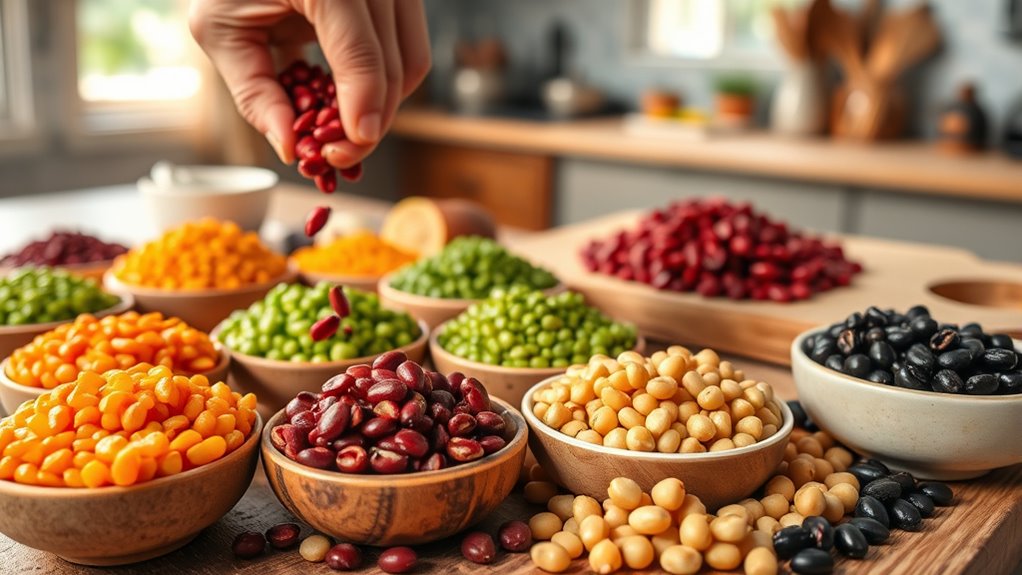
Have you ever wondered what pulses are and why they’re such a nutritious addition to your diet? Pulses are edible seeds from the legume family, including lentils, chickpeas, beans, and peas. They’re packed with nutritional benefits that make them a smart choice for anyone looking to boost their health. Rich in plant-based protein, fiber, vitamins, and minerals, pulses support digestion, help regulate blood sugar, and promote heart health. Incorporating them into your meals can be simple and versatile, fitting easily into a variety of dishes. To get the most out of pulses, understanding the best cooking methods is essential. Proper preparation not only enhances their flavor and texture but also preserves their nutritional value.
When it comes to cooking pulses, there are several effective methods you can try. Most dry pulses require soaking before cooking, which reduces cooking time and improves digestibility. For instance, you might soak beans or chickpeas overnight in cold water, then drain and rinse them before boiling. Boiling is the most common method; simmering pulses in water or broth until tender usually takes 30 minutes to an hour, depending on the type. Using a pressure cooker can considerably cut down cooking time, making weeknight meals quicker to prepare. Alternatively, pulses can be incorporated into slow cooker recipes, where they simmer gently over several hours, developing rich flavors. You can also roast certain pulses like chickpeas for a crunchy snack or blend cooked lentils into soups and smoothies for added nutrition.
Cooking methods also influence the nutritional benefits of pulses. For example, boiling or pressure-cooking helps make their nutrients more bioavailable while reducing anti-nutrients that can interfere with mineral absorption. Avoid overcooking, as it can lead to nutrient loss, especially of water-soluble vitamins. So, it’s best to cook pulses just until they’re tender but not mushy. Once cooked, pulses can be seasoned and used in salads, stews, curries, or even spreads like hummus. Pairing pulses with vegetables, grains, or spices not only enhances their flavor but also creates well-rounded, nutritious meals.
Frequently Asked Questions
Are Pulses Suitable for Gluten-Free Diets?
Yes, pulses are suitable for gluten-free cooking. You can use them as excellent pulse substitutions in gluten-free recipes, providing protein and fiber without gluten. Just make sure to check labels and avoid cross-contamination. Incorporate lentils, chickpeas, or beans into soups, salads, or stews for a nutritious, gluten-free meal. Pulses are naturally gluten-free and versatile, making them an ideal choice for anyone following a gluten-free diet.
How Do Pulses Affect Blood Sugar Levels?
Did you know pulses can lower your glycemic response? When you eat pulses, they release sugar slowly, helping with blood sugar regulation and preventing spikes. This makes them a smart choice if you’re managing diabetes or aiming for steady energy. Their high fiber content slows digestion, leading to a more balanced blood sugar level. Incorporating pulses into your meals can support long-term health and better blood sugar control.
Can Pulses Be Sprouted for Additional Nutrition?
Yes, you can sprout pulses for extra nutrition. Sprouting benefits include increased vitamins, minerals, and improved digestibility. To do this, you’ll need to start the germination process by soaking pulses in water, then rinsing and draining them regularly. Over a few days, they’ll sprout tiny shoots. This germination process enhances their nutrient profile and makes them easier to digest, giving you a nutritious addition to your meals.
What Are the Best Storage Methods for Pulses?
Storing pulses properly prolongs their perfect potential. Store them securely in airtight containers to keep pests and moisture out. Keep these containers in a cool, dry, and dark place for the best shelf life. Avoid humidity and sunlight, which can compromise quality. These simple storage tips help pulses stay fresh and flavorful longer, ensuring you have wholesome, nutritious pulses ready whenever you need them.
Are Canned Pulses as Nutritious as Dried Ones?
Canned pulses are quite nutritious, though they may have slightly lower fiber and nutrient levels compared to dried ones because some nutrients leach out during processing. Nutritional comparison shows canned pulses are convenient and retain many benefits, but flavor differences can be noticeable—canned pulses tend to be softer and saltier, whereas dried ones offer a fresher taste and better texture. Both are healthy options, so choose based on your taste and convenience preferences.
Conclusion
By exploring the world of pulses, you’re not just adding nutritious ingredients to your diet—you’re embracing a sustainable, eco-friendly food source supported by scientific evidence linking pulses to reduced greenhouse gases. Incorporating a variety of pulses can boost your health and support environmental efforts. So, next time you cook, remember that these humble legumes are more than just tasty; they’re essential for a healthier planet and a balanced diet.