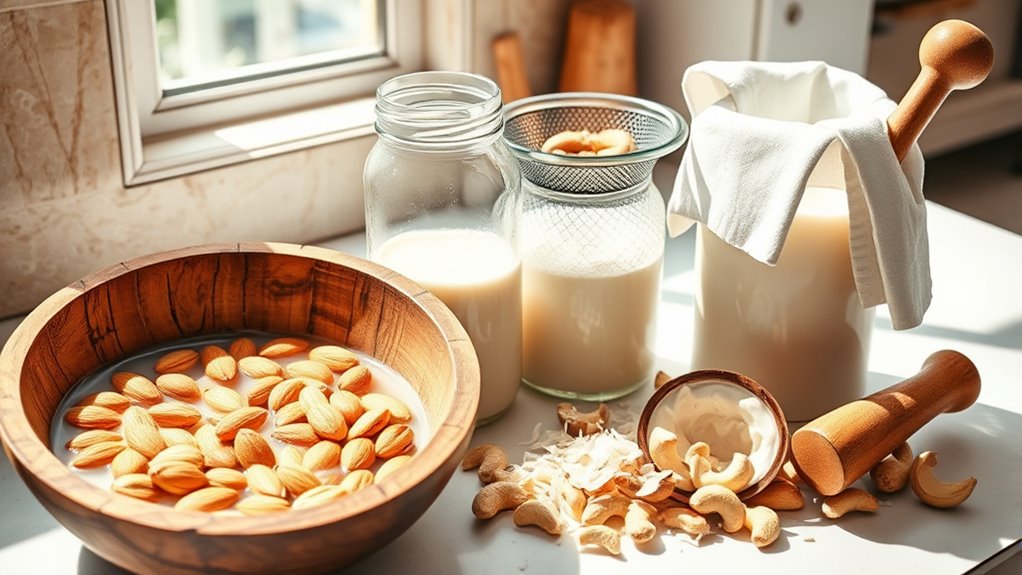
Making your own plant milks at home is easy, affordable, and highly customizable. Start by soaking nuts, seeds, or grains, then blend them with water until smooth. Strain out the pulp to get a creamy liquid, and add natural sweeteners or flavors if you like. This way, you control the ingredients and reduce waste while enjoying fresh, nutrient-rich drinks. Whether you’re new to it or want tips, there’s plenty more to discover to perfect your homemade plant milks.
Key Takeaways
- Start by soaking nuts, seeds, or grains overnight to soften them for blending.
- Blend soaked ingredients with water, then strain through a nut milk bag or fine cloth for a smooth milk.
- Customize flavor with natural sweeteners like dates, vanilla, or spices for personalized taste.
- Use leftover pulp in baking, smoothies, or cereals to reduce waste and maximize nutrients.
- Experiment with different ingredients and ratios to create your preferred taste, texture, and nutritional profile.
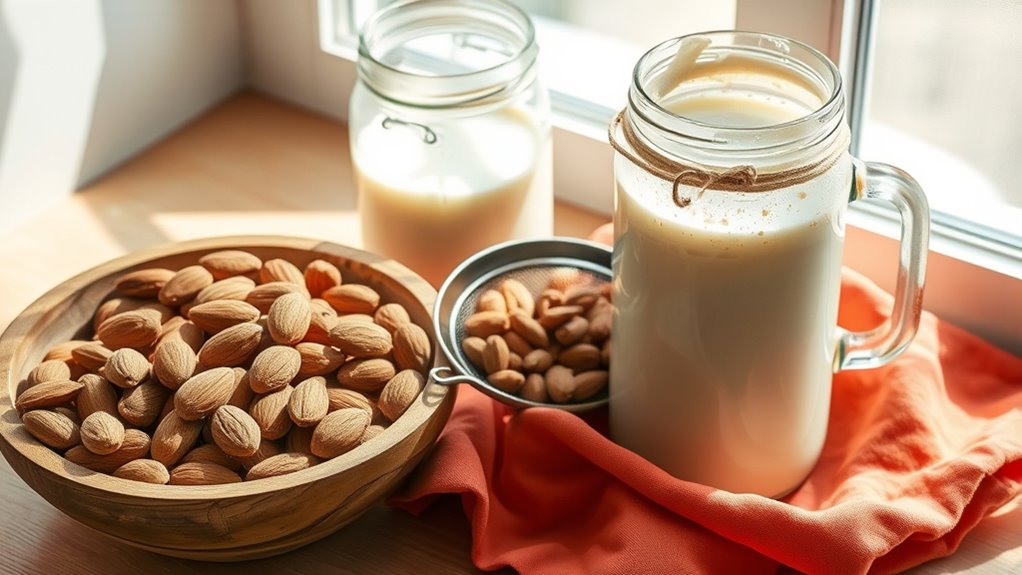
Homemade plant milks are a simple and cost-effective way to enjoy dairy alternatives tailored to your taste and dietary needs. When you make your own, you gain control over the ingredients, ensuring no unnecessary additives or preservatives. Plus, you can customize flavors and textures to suit your preferences. One of the main advantages of DIY plant milks is their nutritional benefits. Unlike many store-bought versions that can contain added sugars and stabilizers, homemade recipes allow you to preserve the natural nutrients of the base ingredients. For instance, almond milk retains healthy fats, vitamin E, and antioxidants, while oat milk provides fiber and beta-glucans that support heart health. By choosing nutrient-dense ingredients, you can create plant milks that not only taste great but also boost your overall well-being.
Making plant milk at home is also an eco-friendly practice. Commercial dairy production has a significant environmental footprint, involving water-intensive farming, greenhouse gas emissions, and waste from packaging. In contrast, homemade plant milks typically require less water and energy, especially when you reuse ingredients and minimize waste. You can use leftover pulp in baking or smoothies, reducing food waste and maximizing resource efficiency. Additionally, selecting locally sourced or organic ingredients further lowers your environmental impact. By preparing your own plant milks, you’re actively reducing your reliance on packaged products and supporting sustainable living practices.
The process itself is straightforward. You soak your chosen nuts, seeds, or grains, then blend them with water, strain out the solids, and enjoy. This simplicity means you can experiment with different ingredients like hemp seeds, cashews, or rice to find your perfect blend. Each offers unique nutritional benefits—hemp seeds are rich in omega-3 fatty acids, while rice provides a mild, easily digestible option. You can also tailor the sweetness and flavor by adding natural sweeteners like dates or vanilla, making your homemade plant milk a personalized, wholesome beverage.
Frequently Asked Questions
How Long Does Homemade Plant Milk Last in the Refrigerator?
Homemade plant milk typically lasts about 3 to 5 days in your refrigerator. To extend its shelf life, store it in an airtight container and keep it cold. Always give it a sniff or a quick taste before using—if it smells sour or shows signs of separation, discard it. Following proper storage tips helps make sure your plant milk stays fresh and safe to enjoy for as long as possible.
Can I Use Leftover Plant Pulp in Other Recipes?
Think of leftover plant pulp as a treasure chest waiting to be opened. You can recycle plant pulp in many ways, like adding it to smoothies, baking muffins, or making veggie burgers. Its versatility makes it perfect for reducing waste and boosting nutrition. So, don’t toss it out—explore creative plant pulp uses and turn your recycling efforts into delicious, eco-friendly recipes that keep your kitchen sustainable and flavorful.
Are Homemade Plant Milks Suitable for Infants?
Homemade plant milks aren’t typically suitable for infants due to concerns about nutritional adequacy and allergen risks. You might find they lack essential nutrients infants need and could contain allergens like nuts or soy. It’s best to stick with breast milk or formula for your baby’s first year. Before trying any homemade milk, consult with a pediatrician to guarantee it’s safe and nutritionally appropriate for your infant’s growth and health.
How Do I Prevent Separation in Homemade Plant Milk?
To prevent separation in homemade plant milk, you should add natural emulsifiers like lecithin or a small amount of lecithin granules, which act as stabilizing agents. Blending your ingredients thoroughly helps distribute these agents evenly. You can also refrigerate the milk and shake it before use to maintain consistency. Using a fine mesh strainer during blending guarantees a smooth, well-emulsified milk without separation.
What Are the Best Storage Containers for Homemade Plant Milk?
Imagine your homemade plant milk as a precious gem, needing a secure, clear vessel. Use glass containers with airtight lids for the best storage tips, as they prevent odors and keep your milk fresh. Avoid plastic that may stain or impart flavors. Choose BPA-free options, and always refrigerate. These container materials symbolize purity and safety, ensuring your plant milk stays fresh, delicious, and ready for your next cup.
Conclusion
Making your own plant milk is simple, cost-effective, and customizable. Plus, did you know that the plant milk market has grown by over 20% in the last five years? This surge shows how many people are turning to homemade options for healthier, eco-friendly alternatives. So go ahead, experiment with different nuts and grains—you’ll not only enjoy fresh, tasty milk but also reduce waste and support sustainable choices. Cheers to your dairy-free journey!