
To build a budget-friendly plant-based pantry, focus on affordable staples like lentils, chickpeas, oats, and rice. Shop in bulk and choose seasonal, local produce to save money and enjoy fresher ingredients. Store everything properly to prevent waste and freeze surplus items. Planning your meals helps reduce impulse buys and leftovers. With these tips, you’ll create a versatile pantry that supports healthy eating without overspending. Keep exploring to discover more smart strategies.

Get kitchen staples and gadgets delivered free with Prime
- Fast, free delivery on millions of items
- Prime Video, Amazon Music and more included
- Member-only deals all year
Key Takeaways
- Focus on affordable, nutrient-dense staples like lentils, beans, oats, rice, and canned vegetables to start your plant-based pantry.
- Buy in bulk and choose store brands to save money and ensure a variety of versatile ingredients.
- Plan meals and prep ingredients ahead to avoid waste and make healthy, budget-friendly plant-based meals easier.
- Incorporate seasonal and local produce for freshness, cost savings, and supporting sustainable agriculture.
- Store ingredients properly and freeze surplus items to extend shelf life and reduce food waste.
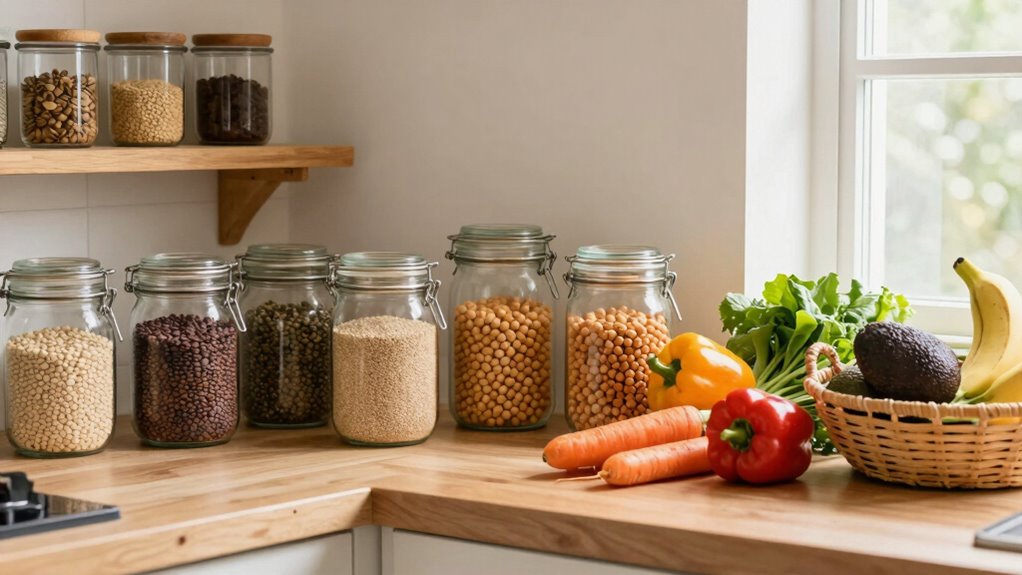
Starting a plant-based pantry doesn’t have to break the bank. You can build a well-stocked collection of ingredients that support your healthy eating goals without overspending. The key is to focus on versatile staples that can be used in multiple recipes and to develop efficient food storage habits that minimize waste. When you plan your meals, you’ll find it easier to buy in bulk and avoid impulse purchases, saving money in the long run. Meal prep becomes your best friend because it allows you to organize ingredients ahead of time, portion out meals, and make the most of what you have. By prepping your food in advance, you reduce the temptation to buy takeout or processed foods, which can be more expensive and less nutritious.
Build a budget-friendly, versatile plant-based pantry with smart meal planning and efficient storage habits.
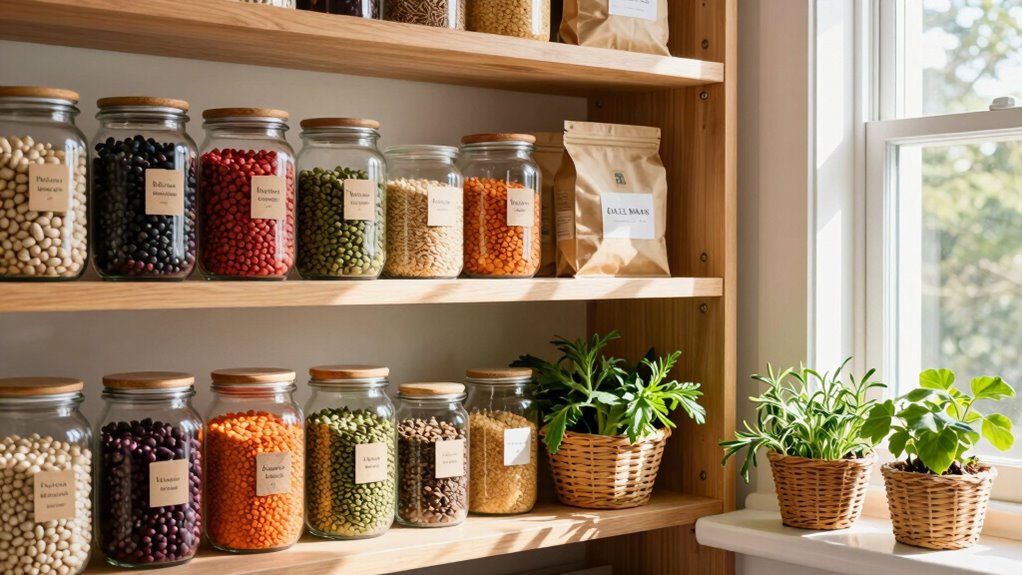
Food storage is essential. Investing in airtight containers and proper storage solutions keeps your ingredients fresh longer, helping you cut down on waste and save money. Keep dried beans, grains, and nuts in cool, dry places, and use clear containers so you can see what you have at a glance. For fresh produce, consider local farmers’ markets or discount grocery stores, which often offer cheaper prices on seasonal fruits and vegetables. Freezing surplus items is another smart way to extend their shelf life and ensure nothing goes to waste. For example, if you buy a large bag of spinach or berries, wash and portion them into freezer bags—then add to your meal prep routine later. Incorporating biodiversity into your shopping choices can also support local ecosystems and promote sustainable agriculture. Additionally, choosing seasonal produce can significantly reduce costs while enhancing the freshness and flavor of your meals. Using seasonal and local foods not only benefits your budget but also encourages a connection to your community’s harvest cycles. Being mindful of food waste reduction strategies can further stretch your grocery dollars and minimize environmental impact.
Building a plant-based pantry on a budget also involves choosing ingredients that are affordable and nutrient-dense. Lentils, chickpeas, oats, and rice are inexpensive and form the foundation of countless meals. Incorporate canned goods like tomatoes, beans, and coconut milk, which are budget-friendly, shelf-stable, and easy to incorporate into various dishes. When shopping, compare prices and buy store brands or bulk options whenever possible. Planning your meals around these staples reduces the need for costly specialty items and allows you to experiment with flavors without overspending.
Ultimately, your goal is to create a system where meal prep and food storage work together seamlessly. This approach not only saves money but also makes it easier to enjoy healthy, plant-based meals daily. Keep an eye out for sales, buy in bulk, and stay organized—these simple steps will help you build a sustainable pantry that supports your lifestyle and budget.
bulk lentils and beans for pantry
As an affiliate, we earn on qualifying purchases.
As an affiliate, we earn on qualifying purchases.
Frequently Asked Questions
How Do I Store Perishable Plant-Based Items Long-Term?
To store perishable plant-based items long-term, focus on food preservation techniques like freezing, drying, and fermenting. Use effective storage solutions such as airtight containers, vacuum sealers, or freezer bags to prevent spoilage. Label everything clearly, and keep your fridge and freezer at ideal temperatures. Regularly check stored items, and rotate stock to guarantee freshness. These methods help extend shelf life and reduce waste, saving you money and keeping your pantry stocked.
Are There Affordable Protein Sources for Beginners?
Think of affordable plant proteins as the building blocks of your pantry. Budget-friendly legumes like lentils, chickpeas, and black beans pack a punch and are easy to store. You can also find other affordable plant proteins such as tofu, edamame, and quinoa. These options are versatile, nutritious, and wallet-friendly, making them perfect for beginners looking to add quality protein to their meals without breaking the bank.
How Can I Add Flavor Without Expensive Spices?
You can add flavor without expensive spices by trying herb infusions like simmering garlic, onion, or fresh herbs in your dishes. Use flavor boosters like lemon juice, vinegar, or nutritional yeast to enhance taste without breaking the bank. Incorporate these simple techniques to make your meals more vibrant and satisfying, all while staying budget-friendly. Experimenting with herbs and natural acids can considerably elevate your plant-based dishes.
What Are Quick and Easy Plant-Based Meal Ideas?
You can whip up quick, easy plant-based meals like smoothies, hearty salads, or veggie stir-fries—delicious yet simple. Pair these with grab-and-go snacks like roasted chickpeas or fruit, making busy days manageable. For quick breakfasts, try overnight oats or banana with nut butter. These options blend convenience with nutrition, helping you stay energized. Embrace minimal prep and fresh ingredients to keep your meals effortless and flavorful.
How Do I Plan Meals to Minimize Waste and Save Money?
To minimize waste and save money, plan your meals ahead by doing meal prep and creating a detailed grocery list. Focus on versatile ingredients that can be used in multiple dishes, and buy in bulk when possible. Stick to your list to avoid impulse purchases, and use leftovers creatively to prevent spoilage. This approach keeps your pantry organized and guarantees you get the most value from your plant-based ingredients.
Conclusion
Building a plant-based pantry on a budget is entirely doable and rewarding. With some smart shopping and simple staples, you can enjoy nutritious meals without overspending. Did you know that plant-based diets can reduce grocery costs by up to 25%? So, start small, stay consistent, and watch your pantry—and your health—thrive. Embrace this budget-friendly journey, and you’ll soon reap the benefits of delicious, wholesome plant-based eating every day.
Columbus Day / Indigenous Peoples' Day Picks
long weekend sales
As an affiliate, we earn on qualifying purchases.