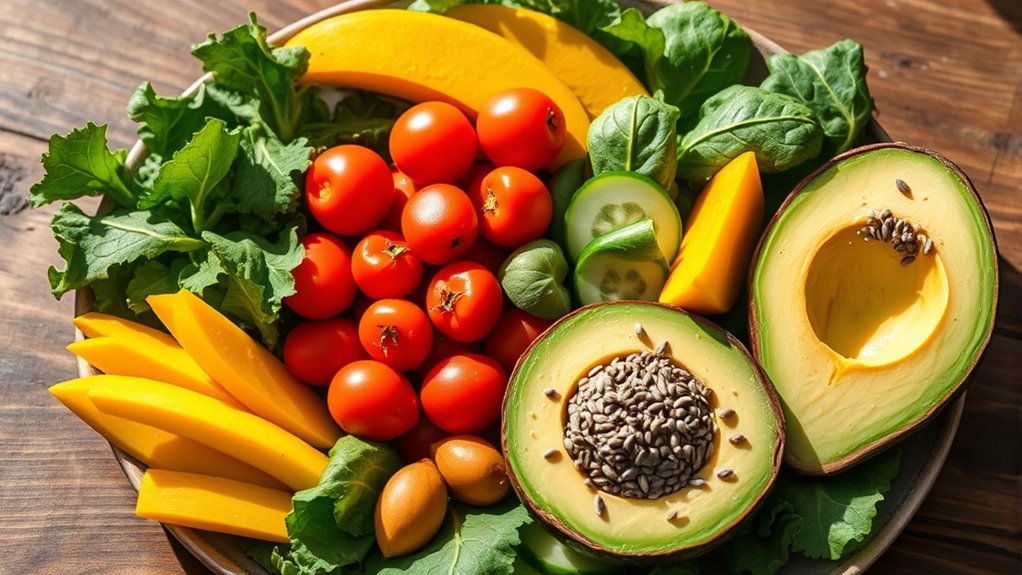

To balance nutrition on a raw food diet, focus on proper food combining to improve digestion and nutrient absorption. Eat fruits separately or before meals, and pair heavier foods thoughtfully. Address potential nutrient gaps like B12, vitamin D, omega-3s, and calcium with targeted supplements or fortified foods. Combining good eating habits with smart supplementation helps prevent deficiencies and discomfort. Keep exploring these strategies to develop a sustainable, nourishing raw food lifestyle that supports your health goals.
Key Takeaways
- Practice proper food combining by eating fruits separately from heavy vegetables, nuts, and grains to improve digestion and nutrient absorption.
- Incorporate targeted supplements such as B12, omega-3s, and vitamin D to address common nutritional gaps in raw diets.
- Prioritize eating fruits on an empty stomach or before meals to enhance digestion and maximize nutrient uptake.
- Include a variety of raw plant foods to ensure a broad spectrum of nutrients and prevent deficiencies.
- Consult healthcare professionals to tailor supplement use and dietary adjustments suited to individual nutritional needs.
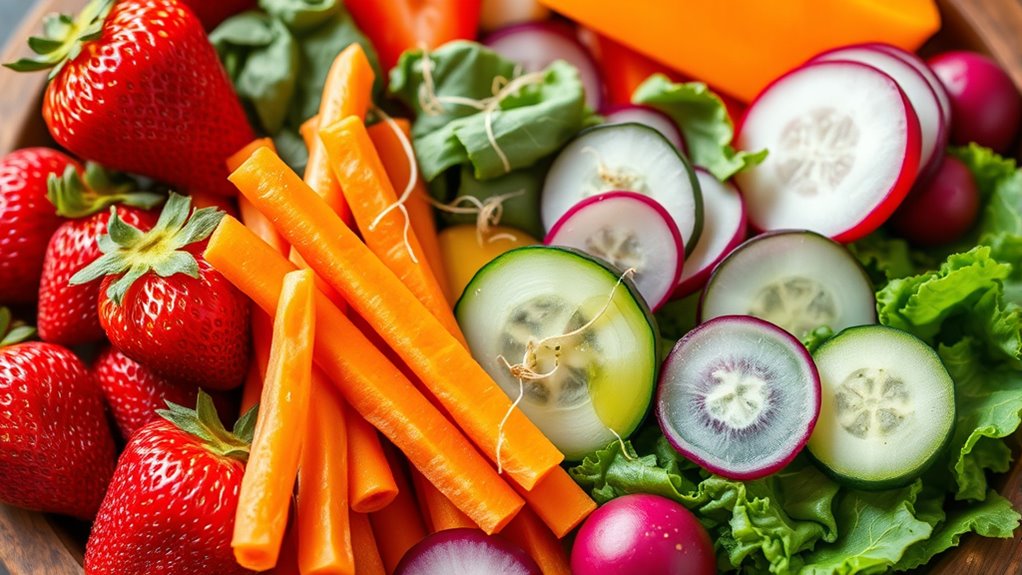
A raw food diet can offer numerous health benefits, but maintaining proper balance is vital to prevent nutritional gaps. When you commit to eating mostly raw fruits, vegetables, nuts, and seeds, it’s easy to overlook certain nutrients that are more bioavailable in cooked foods or harder to obtain from raw sources alone. To maximize your diet, you need to focus on food combining and supplement strategies that guarantee you’re meeting your nutritional needs without over-relying on any single food group.
Food combining is essential because some raw foods require different digestion conditions. For example, eating fruits separately from heavier vegetables or nuts can improve digestion and nutrient absorption. Fruits digest quickly, so consuming them on an empty stomach or before meals helps prevent fermentation and bloating. Conversely, starchy vegetables and nuts digest more slowly, so pairing them appropriately ensures your digestive system isn’t overwhelmed or slowed down. By paying attention to how you combine foods, you can maximize nutrient uptake and avoid discomfort, which keeps your raw food journey sustainable and enjoyable.
Proper food combining enhances digestion and nutrient absorption in a raw food diet.
Despite careful food combining, certain nutrients like vitamin B12, vitamin D, iron, omega-3 fatty acids, and calcium can be challenging to obtain from raw foods alone. This is where supplement strategies come into play. You might consider taking a high-quality B12 supplement or fortified foods if you’re on a long-term raw diet, especially since B12 is primarily found in animal products. For omega-3s, incorporating flaxseed oil or algae-based supplements can help balance your intake of essential fatty acids. Calcium and vitamin D are also important; consider fortified plant milks or supplements if your diet lacks enough leafy greens or sunlight exposure. These supplement strategies serve as safety nets, preventing deficiencies that could compromise your health.
Balancing a raw food diet isn’t just about what you eat but also how you eat it. Proper food combining improves digestion, making your nutrients more accessible and reducing gastrointestinal discomfort. Meanwhile, strategic supplementation fills in nutritional gaps, especially for nutrients that are scarce or absent in raw plant foods. Keep in mind, it’s wise to consult with a healthcare provider or a nutritionist familiar with raw diets to tailor your supplement strategies appropriately. Together, these approaches help you sustain a nutritious, vibrant raw food lifestyle without risking deficiencies. By paying close attention to both how you combine foods and supplement wisely, you can enjoy the benefits of a raw food diet while maintaining ideal health.
Additionally, understanding the optimal angles for pinball machines can enhance your recreational experience, similar to how proper food combining can improve your health outcomes.
Frequently Asked Questions
How Can I Ensure Adequate Calcium Intake on a Raw Food Diet?
To guarantee adequate calcium intake, focus on calcium-rich raw foods like leafy greens, almonds, and sesame seeds. Combine this with dairy alternatives such as raw almond or coconut milk, which often have added calcium to boost absorption. Remember, calcium absorption is enhanced when you include vitamin D-rich foods or get sunlight exposure. Incorporating these strategies helps you meet your calcium needs while staying true to your raw food lifestyle.
What Are the Best Sources of Plant-Based Omega-3s?
You can get the best plant-based omega-3s from plant oils like flaxseed oil and chia seeds, which are rich in ALA. Flax seeds are especially versatile—you can add ground flax to smoothies or sprinkle them on salads. Incorporate these sources regularly into your diet to boost your omega-3 intake naturally, supporting overall health and reducing inflammation without compromising your raw food principles.
How Do I Prevent Nutrient Deficiencies While Eating Raw?
To prevent nutrient deficiencies while eating raw, focus on food safety and smart meal planning. Always wash fruits and vegetables thoroughly to avoid contaminants. Incorporate a variety of raw foods, including greens, nuts, seeds, and fruits, to guarantee you get essential nutrients. Plan your meals to cover all food groups, and consider supplements if you’re lacking key nutrients like B12 or omega-3s. Staying organized helps maintain a balanced raw diet.
Can a Raw Food Diet Support My Energy Needs?
Sure, a raw food diet can support your energy needs—if you don’t mind living on raw snacks and constantly battling dehydration remedies. You’ll find that fresh fruits, nuts, and veggies give you quick bursts, but beware, long-term energy might suffer without proper balance. Keep hydrated, diversify your raw choices, and you’ll keep the energy flowing—at least until your body protests.
How Do I Balance Protein Intake Without Cooked Foods?
You can balance your protein intake by focusing on protein diversity and smart meal planning. Incorporate a variety of raw plant-based sources like nuts, seeds, sprouts, and leafy greens to guarantee you get all essential amino acids. Combining different foods in each meal helps maximize protein absorption. Planning your meals ahead of time ensures you’re consistently meeting your protein needs without cooked foods, making your raw diet both nutritious and sustainable.
Conclusion
Balancing nutrition on a raw food diet is achievable when you include a variety of fruits, vegetables, nuts, and seeds. Remember, about 75% of raw food enthusiasts report increased energy and better digestion within just a few months. Keep your meals diverse and watch your health improve. Staying mindful of your nutrient intake guarantees you enjoy all the benefits this lifestyle offers without risking deficiencies. Embrace variety, and your body will thank you!