
To plan vegetarian meals for busy weeks, pick a specific day for planning, browse seasonal recipes, and create a grocery list. Prepare grains, chop vegetables, and portion meals ahead of time to save weekdays. Focus on fresh, in-season ingredients for flavor and budget benefits. Flexibility is key—use leftovers and adapt recipes as needed. Keep essentials stocked and consider online shopping to streamline. If you continue, you’ll discover even smarter tips to make your week easier.
Key Takeaways
- Establish a weekly planning routine, selecting a specific day to browse recipes, check seasonal ingredients, and create a flexible grocery list.
- Prepare staple components like grains and chopped vegetables in advance to streamline weekday cooking.
- Incorporate seasonal produce for flavor, nutrition, and cost savings, adapting recipes based on availability.
- Batch cook large portions of versatile dishes and use leftovers to minimize daily meal prep.
- Use online shopping and stick to a pre-made list to save time and reduce reliance on processed foods.
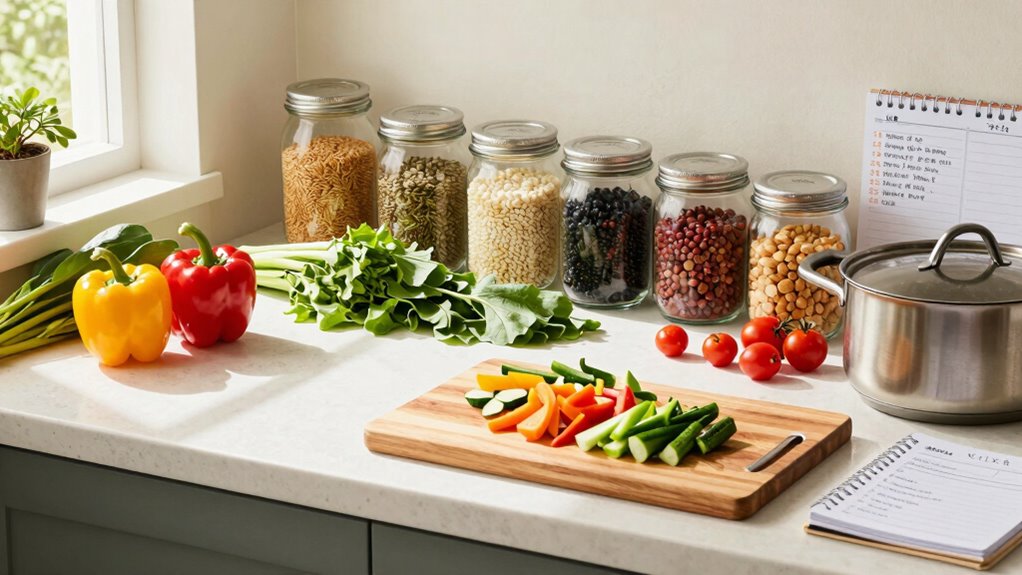
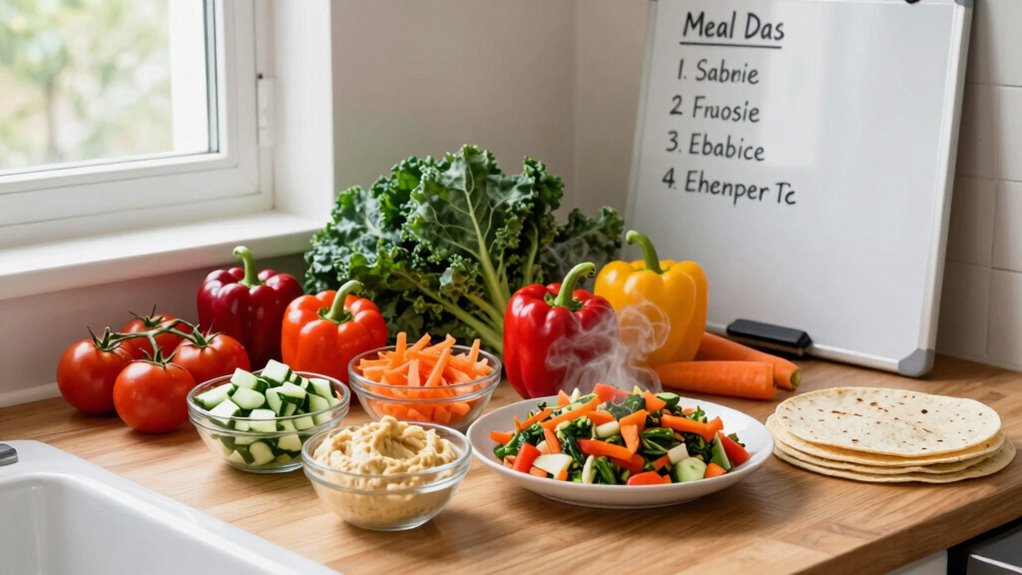
Planning vegetarian meals can be both simple and rewarding when you know how to balance nutrition and flavor. When you’re busy all week, having a streamlined system for meal planning makes a huge difference. Start by setting aside a specific time each week—maybe Sunday afternoon—to plan your meals. During this time, browse your favorite recipes, check what seasonal ingredients are available, and make a grocery list. Using seasonal ingredients not only enhances flavor but also keeps your meals fresh and budget-friendly. Incorporate a variety of vegetables, fruits, grains, and plant-based proteins to guarantee your diet stays balanced and satisfying.
Streamline your vegetarian meal planning weekly with seasonal ingredients, balanced nutrition, and prep for busy days.
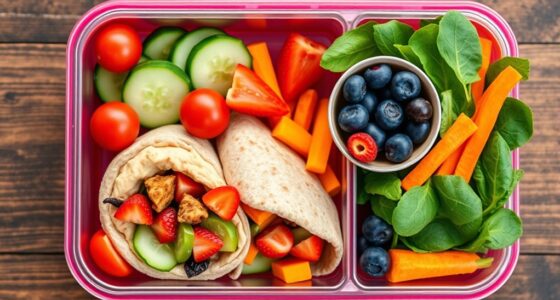
To make your week smoother, consider preparing some components in advance. Cook grains like rice, quinoa, or oats in bulk, and chop vegetables or wash greens ahead of time. This prep work speeds up your cooking process during busy weekdays. Keep a stash of plant-based snacks—think trail mix, roasted chickpeas, or sliced veggie sticks with hummus—that you can grab quickly when you need a boost. These snacks help keep your energy steady and prevent unhealthy temptations.
Create a flexible meal plan that allows for leftovers. For example, cook a large batch of veggie stir-fry or chili on Sunday, then portion it out for multiple dinners. Leftovers are a lifesaver on nights when you’re exhausted or short on time. Mix and match ingredients based on what’s fresh and available, giving you the freedom to adapt without overhauling your entire plan. This flexibility makes sticking to your vegetarian goals easier, even on hectic days.
Incorporate seasonal ingredients into your weekly menu to maximize flavor and nutrition. For instance, if it’s spring, include asparagus or peas; in summer, opt for tomatoes and zucchini; during fall, prioritize squash and apples; and in winter, embrace hearty greens and root vegetables. These ingredients often require minimal preparation and taste best when in season, making your meals both delicious and nourishing. Being mindful of seasonal ingredients can also help you learn more about what’s naturally available at different times of the year, which can improve your meal variety and overall cooking skills. Additionally, understanding indoor air quality can contribute to a healthier environment where you prepare and enjoy your meals. Regularly meal planning strategies can help you stay organized and prevent last-minute stress, making your vegetarian journey more enjoyable and sustainable.
Lastly, keep your grocery shopping efficient by sticking to your list and shopping at stores that prioritize fresh produce. Use online shopping or delivery services if that saves you time. When you’re organized, you’re less likely to resort to takeout or processed foods. With a systematic approach—planning ahead, preparing components, leveraging seasonal ingredients, and keeping nutritious snacks—you’ll find vegetarian meal planning becomes second nature, even during your busiest weeks.

VERONES 5 Pack Glass Meal Prep Containers 3 Compartment Set, 36OZ Airtight Glass Lunch Containers, Glass Food Storage Containers with Lids, for Microwave, Oven, Freezer & Dishwasher Friendly,Grey
- High-Quality Borosilicate Glass: Oven, microwave, dishwasher, freezer safe
- 3-Compartment Design: 36oz containers for meal prep and storage
- Airtight Locking Lids: Leak-proof, BPA-free snap-lock lids
As an affiliate, we earn on qualifying purchases.
As an affiliate, we earn on qualifying purchases.
Frequently Asked Questions
How Can I Incorporate Variety Into Vegetarian Meals Weekly?
You can incorporate variety into your vegetarian meals by experimenting with different flavor combinations and spice variations. Mix herbs like basil, cilantro, and thyme to create new taste profiles. Try adding cumin, smoked paprika, or turmeric to your dishes for depth. Rotating grains, vegetables, and legumes also keeps things fresh. This approach keeps your meals exciting and guarantees you get diverse nutrients without getting bored, even during busy weeks.
What Are Quick Protein Sources for Busy Vegetarian Days?
On busy days, you can quickly boost your protein intake with plant-based snacks like nuts, seeds, and hummus with veggies. Protein-rich smoothies are also a great option; blend together plant-based protein powder, bananas, spinach, and almond milk for a quick, nourishing meal. These options are fast, portable, and packed with essential nutrients, helping you stay energized without sacrificing time or variety in your vegetarian diet.
How Do I Manage Meal Prep With Limited Kitchen Time?
Manage your mealtime mess efficiently by mastering meal portioning and storage techniques. Prepare portions in advance, sealing them in containers to save time later. Use clear, stackable storage to organize leftovers and prepped ingredients, making quick grabs effortless. Limit your kitchen time by batch-cooking staples like grains, beans, and chopped veggies. This simple system streamlines your schedule, ensuring you enjoy nutritious, homemade vegetarian meals without the hassle or haste.
What Budget-Friendly Vegetarian Ingredients Are Best for Planning?
You should focus on budget-friendly vegetarian ingredients like beans, lentils, rice, and seasonal vegetables. These staples are versatile for snacks, desserts, and main dishes, helping you save money. Use simple cooking techniques like boiling, sautéing, or roasting to prepare these ingredients quickly. Incorporate spices and herbs to add flavor without extra cost, making your meal planning efficient and delicious even on a tight budget.
How Can I Ensure Balanced Nutrition in My Meal Plan?
To guarantee balanced nutrition, focus on meal timing and portion control. Spread your meals evenly throughout the day to maintain energy levels and avoid overeating. Incorporate a variety of vegetarian proteins, whole grains, fruits, and vegetables in your portions. Avoid large, heavy meals late at night, and aim for balanced plates with appropriate portions of carbs, protein, and healthy fats. This approach keeps your nutrition on track despite busy schedules.
Conclusion
As you embrace this simple meal planning system, remember that even the busiest weeks can be like a well-orchestrated symphony—each note, or meal, harmonizing effortlessly. With a little preparation, you’ll find yourself savoring hearty, vegetarian dishes without the stress. Like a skilled artist, you’re crafting a vibrant, nourishing canvas of flavors and health. So, step into your kitchen with confidence, knowing you’re creating a masterpiece every day.