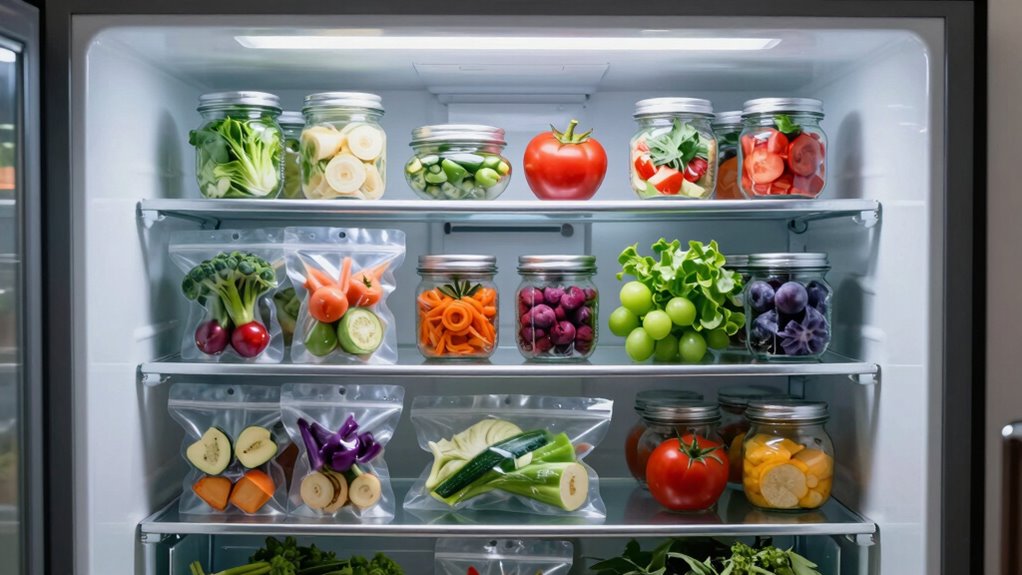
Freezing helps you enjoy fine dining while reducing food waste by preserving leftovers, ingredients, and peak ripeness foods for later use. By freezing smartly, you can cut down on unnecessary trips to the store and avoid tossing spoiled items. It also supports sustainability by minimizing packaging waste and lowering your carbon footprint. Developing a consistent freezing routine allows you to manage food efficiently and make environmentally friendly choices. Keep exploring how freezing can boost your eco-conscious lifestyle.
Key Takeaways
- Freezing preserves leftovers and ingredients, preventing spoilage and reducing overall food waste in households.
- Batch freezing enables meal prep, minimizing last-minute shopping and impulse buys that often lead to waste.
- Proper labeling and timing ensure foods are consumed at peak quality, extending shelf life sustainably.
- Freezing supports sustainable practices by decreasing the need for disposable packaging and frequent store trips.
- Organizing frozen foods encourages mindful consumption, reducing unnecessary purchases and environmental impact.
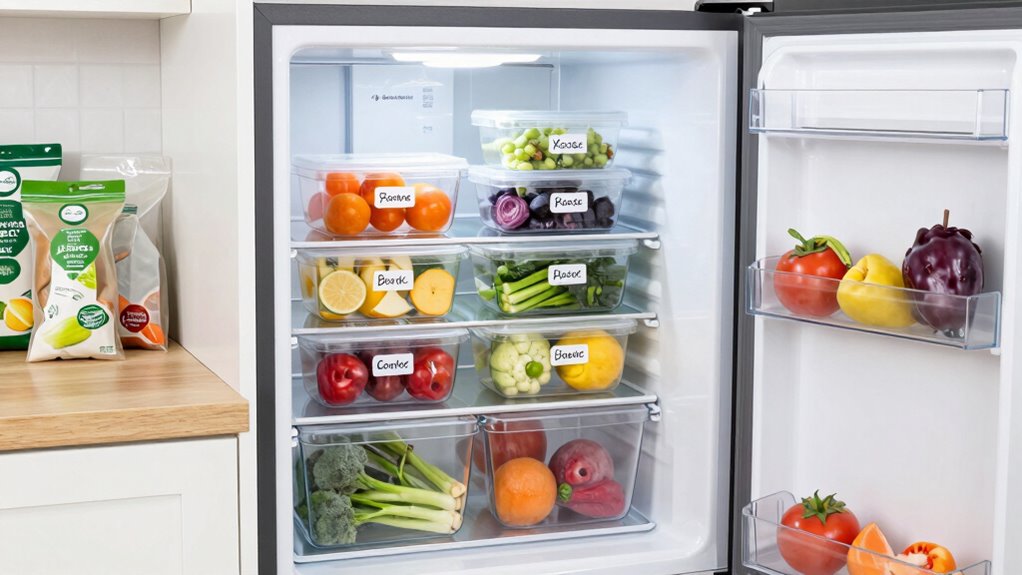
Freezing is a simple yet effective way to reduce food waste and extend the shelf life of your groceries. When you freeze food properly, you can get ahead of spoilage and save ingredients for later use. This is especially helpful when you’re juggling busy schedules and want to make meal prep easier. Instead of letting leftovers or partially used items go bad, you can freeze them to maintain freshness and have ready-to-eat options on hand. This approach not only minimizes waste but also encourages more thoughtful shopping, as you’ll be less inclined to buy more than you need, knowing you can preserve excess for future meals.
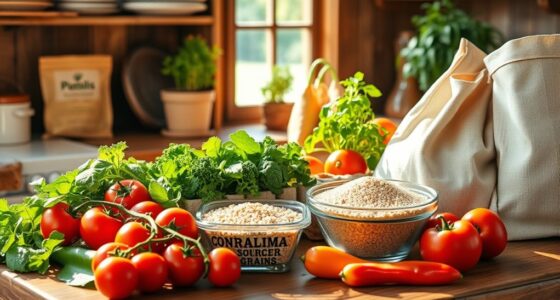
Your freezer becomes a versatile storage space where you can keep a variety of foods fresh for longer periods. Meat, vegetables, fruits, bread, and even prepared meals can all be frozen to extend their shelf life. When you plan your grocery trips, you can buy in bulk and freeze what you don’t immediately need. This not only saves money but also reduces trips to the store, cutting down on packaging waste and emissions. Plus, by having ingredients ready in your freezer, meal prep becomes more efficient—you can throw together healthy, homemade dishes without last-minute runs to the store. Just remember to label everything with dates, so you know exactly when it was frozen and how long it’s good for.
Freezing also helps you avoid throwing away food that’s about to spoil. Instead of rushing to use ingredients before they go bad, you can freeze them at their peak freshness. For instance, ripe berries or leftover cooked rice can be frozen for future smoothies or stir-fries. This practice not only minimizes waste but also makes it easier to stick to healthier eating habits, since you have nutritious ingredients readily available. It’s a sustainable cycle—by extending the shelf life of your groceries, you’re reducing the amount of food that ends up in the trash. Additionally, understanding food preservation techniques can help you maximize the benefits of freezing and other methods. Developing a freezing routine also enhances your ability to plan meals and reduce impulsive shopping. Incorporating proper freezing methods ensures your food remains safe and maintains quality over time.
Plus, you’re contributing to less environmental impact from food production and disposal. In the end, mastering the art of freezing can transform your approach to food and sustainability. It allows you to save money, reduce waste, and streamline your meal prep routine. When you see your freezer as a tool for smarter shopping and better food management, you’re making a positive impact on the planet while enjoying delicious, home-cooked meals. Freezing isn’t just about preservation; it’s about creating a more sustainable, efficient way to enjoy food without waste.
food storage containers with lids
As an affiliate, we earn on qualifying purchases.
As an affiliate, we earn on qualifying purchases.
Frequently Asked Questions
Does Freezing Affect the Nutritional Value of Food?
Freezing generally preserves the nutritional value of food well, especially with proper freezing methods. It helps maintain nutrient retention by slowing down enzyme activity and preventing spoilage. However, some nutrients like vitamin C and B vitamins can degrade over time, even in the freezer. To maximize nutrient retention, use quick freezing techniques and consume frozen foods within recommended periods. Proper packaging also minimizes nutrient loss and preserves flavor.
How Long Can Food Be Safely Stored in the Freezer?
You can safely store most foods in the freezer for several months, typically 3-6 months for meat and fish, and 2-3 months for fruits and vegetables. To maximize shelf life, practice good Freezer organization by labeling and dating items. Use proper Freezing techniques like airtight packaging to prevent freezer burn. Regularly check your freezer’s temperature to make certain it stays at 0°F, keeping your food safe and fresh longer.
Are There Foods That Shouldn’T Be Frozen?
Certain foods are like delicate flowers—they don’t fare well in the freezer. You should avoid freezing fresh fruits and vegetables with high water content, as they turn mushy upon thawing. Frozen desserts can be stored safely, but soft cheeses and cooked eggs might change texture or spoil. For meat preservation, always freeze raw meats properly. Steer clear of these, and your freezer will be a treasure chest, not a wasteful abyss.
How Does Freezing Impact the Texture of Fresh Produce?
Freezing can change the texture of fresh produce because of ice crystal formation, which causes cell wall damage. When you freeze fruits and vegetables, large ice crystals can puncture cell walls, making them mushy upon thawing. To minimize this, use rapid freezing techniques or blanch produce beforehand. This helps preserve their firmness and flavor, ensuring you enjoy fresh-tasting, well-textured produce even after freezing.
Can Freezing Eliminate Bacteria Completely?
Freezing can’t eliminate bacteria completely, especially bacterial spores, which survive low temperatures. While freezing halts bacterial growth, it doesn’t kill all bacteria, so proper cooking is essential to guarantee safety. Be aware of freezer burn, which damages food’s texture and quality but doesn’t affect safety. So, to fully eliminate bacteria, always cook frozen foods thoroughly, and store them properly to prevent freezer burn and maintain freshness.
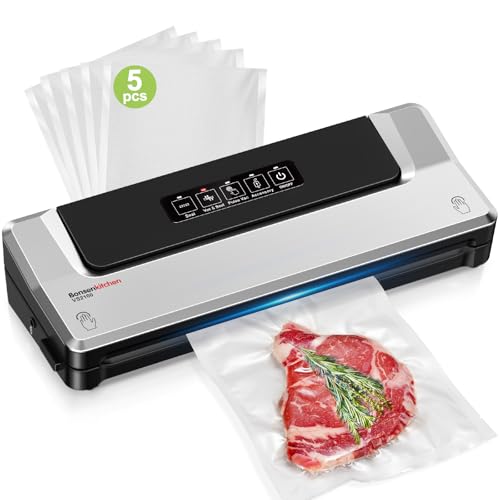
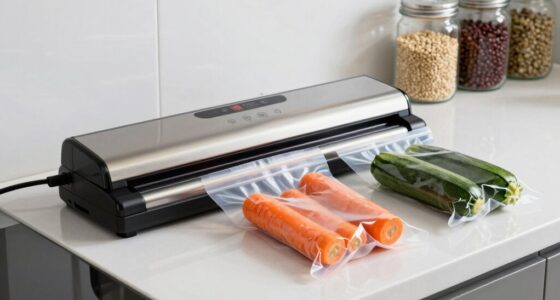
Bonsenkitchen Vacuum Sealer Machine | Compact Food Sealer for Kitchen Storage & Meal Prep | Multiple Modes | External Vacuum System | 5 Bags, Silver
4 Modes : 'Vac & Seal' – one-touch automatic vacuum and seal, perfect for food that does not…
As an affiliate, we earn on qualifying purchases.
As an affiliate, we earn on qualifying purchases.
Conclusion
Next time you stash leftovers or buy in bulk, remember—freezing isn’t just about convenience; it’s a secret weapon against food waste. Imagine a future where your freezer becomes a catalyst for sustainability, transforming how we think about leftovers and excess. But what if the true potential of freezing is still hidden? Stay tuned—because revealing this mystery could change everything you thought you knew about saving food and saving the planet.
freezer labels and marker
As an affiliate, we earn on qualifying purchases.
As an affiliate, we earn on qualifying purchases.
large capacity upright freezer
As an affiliate, we earn on qualifying purchases.
As an affiliate, we earn on qualifying purchases.