
Vacuum sealing helps your zero-waste kitchen by preventing food spoilage and extending freshness, which reduces overall waste. By removing air, it slows bacteria growth, prevents freezer burn, and keeps produce and leftovers fresh longer. This allows you to buy in bulk, portion meals, and store ingredients efficiently. Proper sealing techniques and choosing eco-friendly materials make your efforts even more sustainable. Keep exploring how this simple tool can transform your eco-conscious kitchen and save you money in the long run.
Key Takeaways
- Extends food shelf life, reducing spoilage and preventing unnecessary waste.
- Creates airtight storage that prevents freezer burn and dehydration.
- Allows portioning and meal prep, minimizing leftovers and impulse purchases.
- Supports eco-friendly packaging options, decreasing single-use plastics.
- Facilitates better inventory management, reducing overall food waste.
vacuum sealer machine for food preservation
As an affiliate, we earn on qualifying purchases.
As an affiliate, we earn on qualifying purchases.
Why Food Waste Is a Big Kitchen Issue and How Vacuum Sealing Helps
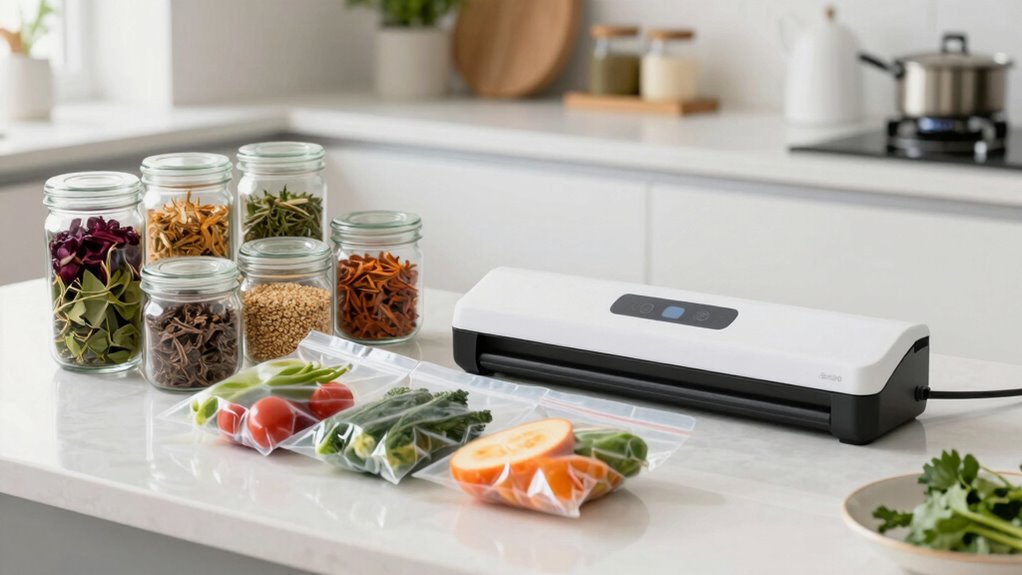
Food waste is one of the biggest challenges in modern kitchens, wasting not only money but also valuable resources. When you throw away unused or spoiled food, you lose nutrients, time, and effort spent shopping and preparing. This impacts the environment through increased landfill waste and unnecessary energy use. To combat this, effective food preservation is essential. Vacuum sealing helps extend the freshness of your produce, meats, and leftovers, preventing spoilage and mold growth. By reducing waste, you save money and decrease your ecological footprint. Implementing vacuum sealing in your kitchen makes it easier to store food properly and plan meals efficiently. Ultimately, it’s a practical way to promote waste reduction and support a more sustainable, zero-waste lifestyle.
What Is Vacuum Sealing and How Does It Work?
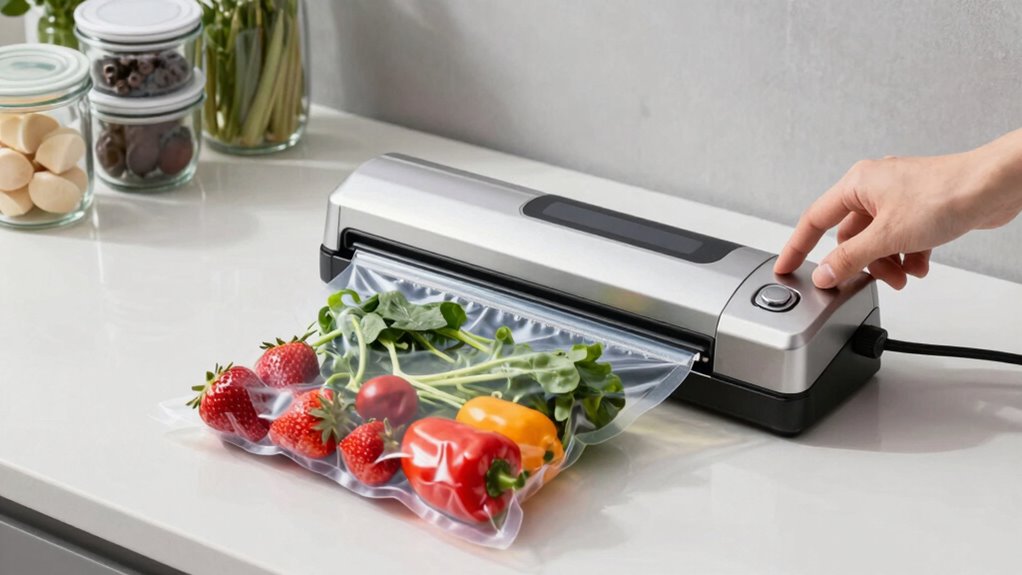
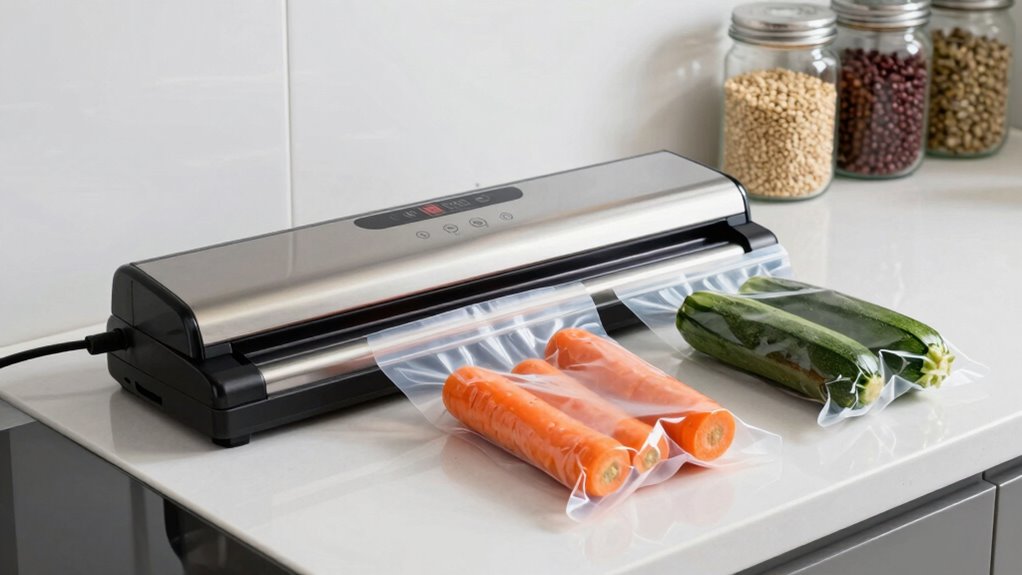
Vacuum sealing is a straightforward yet highly effective method for preserving your food. It works by removing air from specially designed bags or containers, slowing down bacteria growth and oxidation. To vacuum seal, you use a machine that sucks the air out and then seals the bag tightly. There are various vacuum sealing techniques, such as dry or moist sealing, depending on your food type. When it comes to sealing material options, you can choose from heat-sealable plastic bags, rolls, or reusable silicone containers. The sealing process creates an airtight environment, which considerably extends freshness and prevents freezer burn. Incorporating proper sealing techniques ensures optimal preservation and minimizes waste. Additionally, understanding food storage safety can help prevent spoilage and ensure your food stays fresh longer. Using the right sealing methods can also help you better organize your pantry and keep track of food expiration dates. Moreover, selecting high-quality vacuum sealers, like those used in commercial settings, can enhance food preservation efficiency and ensure consistent results.
How Vacuum Sealing Extends Food Freshness and Reduces Waste

Ever wondered how vacuum sealing keeps your produce fresh longer? It’s a key food preservation technique that slows down spoilage by removing air, which contains bacteria and mold. This process substantially extends the life of fruits, vegetables, and leftovers, reducing waste. Thanks to packaging innovations, modern vacuum sealers create an airtight barrier that prevents freezer burn and dehydration. This means you can store food for weeks or even months without losing quality or flavor. Not only does this cut down on frequent grocery trips, but it also helps you plan meals better and minimize waste. By sealing your food properly, you’re making the most of what you buy, saving money, and contributing to a zero-waste kitchen.
Which Vacuum Sealer Is Best for Your Eco-Friendly Kitchen?
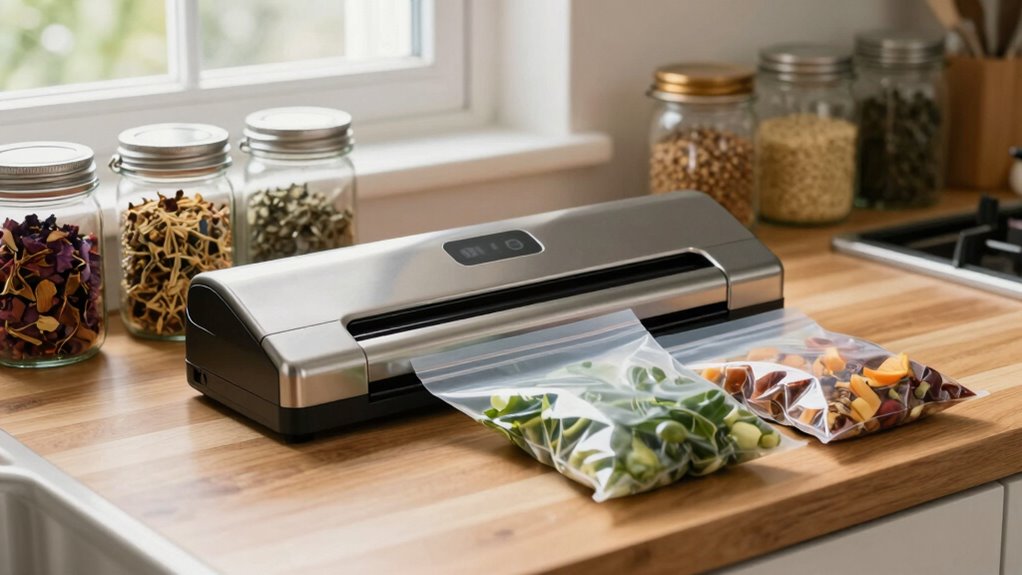
Choosing the right vacuum sealer can make a significant difference in maintaining an eco-friendly kitchen. Look for models that prioritize sustainable packaging and use eco-friendly materials. These sealers often have features like adjustable settings to reduce energy use and compatibility with reusable bags. Consider whether you want a handheld or countertop unit, depending on your space and needs. Some sealers are designed with biodegradable or recyclable bags, supporting your zero-waste goals. Additionally, check for durability and ease of use to guarantee long-term sustainability. Incorporating eco-conscious design can further enhance your commitment to reducing waste and conserving resources. To maximize your efforts, select a sealer that offers energy-saving features, which can significantly reduce your environmental footprint. Being aware of reusable materials and their proper care can extend the life of your packaging and reduce waste. Understanding molecular-scale circuits and their potential for innovative, eco-friendly manufacturing processes can inspire new ways to approach sustainable packaging solutions. Staying informed about environmentally friendly manufacturing practices can help you choose products that align with your zero-waste goals. Here’s a quick comparison:
| Feature | Eco-Friendly Material | Sustainable Packaging | Ease of Use |
|---|---|---|---|
| Handheld Sealer | Yes | Reusable Bags | Moderate |
| Countertop Sealer | Yes | Biodegradable Bags | Easy |
| Compact Design | Recyclable Components | Reusable & Recyclable | Very easy |
| Energy Saving | Yes | Eco-friendly Films | User-friendly |
How to Properly Vacuum Seal Fruits, Vegetables, and Baked Goods
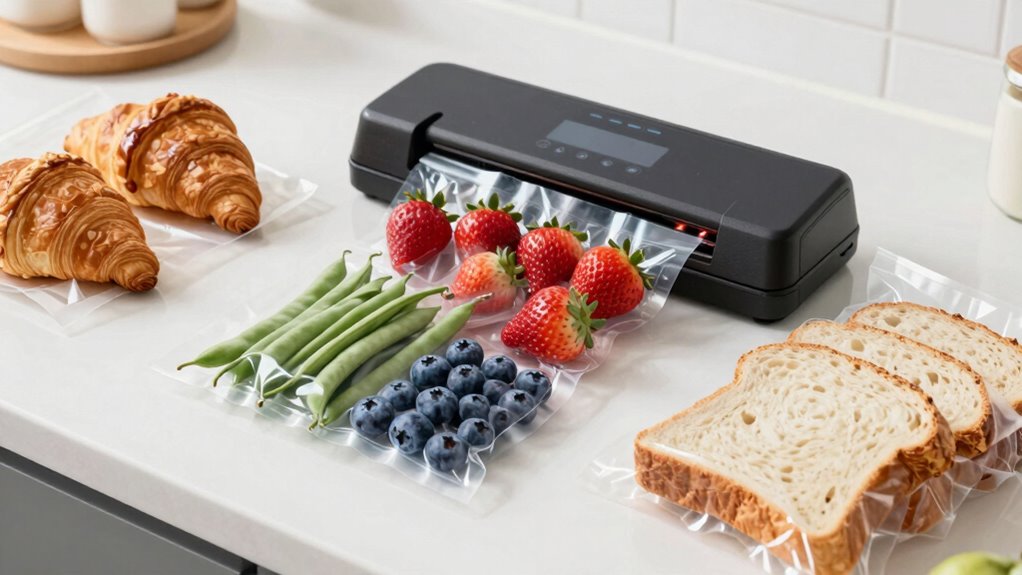
To guarantee your fruits, vegetables, and baked goods stay fresh longer, mastering the proper vacuum sealing technique is essential. For fresh produce, ensure you remove as much air as possible without crushing the items. Use the vacuum sealer’s gentle or delicate setting if available. For baked goods, let them cool completely before sealing to prevent moisture buildup. Wrap baked items tightly with parchment paper or place them in a bag designed for baked goods before vacuum sealing. Be careful not to puncture the bag, especially with sharp or uneven surfaces. For fruits and vegetables, peel and chop as needed, then seal in portion-sized bags. Proper sealing minimizes exposure to air, preserving freshness and preventing freezer burn or spoilage. Incorporating air removal techniques during sealing can further enhance recovery and HRV by reducing stress on the food and maintaining optimal freshness. Additionally, selecting the right storage containers can help prevent punctures and ensure a secure seal, especially when handling items with irregular shapes.
How Vacuum Sealing Minimizes Freezer Burn and Food Spoilage

Vacuum sealing effectively reduces freezer burn and extends the shelf life of your food by removing air from storage bags. When you use proper storage containers and guarantee seal integrity, your food stays fresher longer. By eliminating air pockets, vacuum sealing prevents moisture loss and prevents oxidation, which causes spoilage and freezer burn. Sealed packages are less exposed to temperature fluctuations, reducing the risk of ice crystals forming on food surfaces. To maximize benefits, always check that the seal is secure before storing. This method not only preserves taste and texture but also minimizes waste by allowing you to store food for longer periods without spoilage. Proper sealing and good storage containers are key to keeping your food fresh and waste-free. Additionally, understanding the importance of airtight seals can help ensure your food remains protected from spoilage and freezer burn. Incorporating measurement tools like vacuum sealers can help you achieve consistent and reliable results in your food preservation efforts. Using quality storage containers can further enhance the effectiveness of vacuum sealing by preventing leaks and ensuring the integrity of the seal. Furthermore, choosing containers made from sustainable materials aligns with a zero-waste kitchen approach and enhances overall eco-friendliness.
Troubleshooting Common Vacuum Sealer Problems
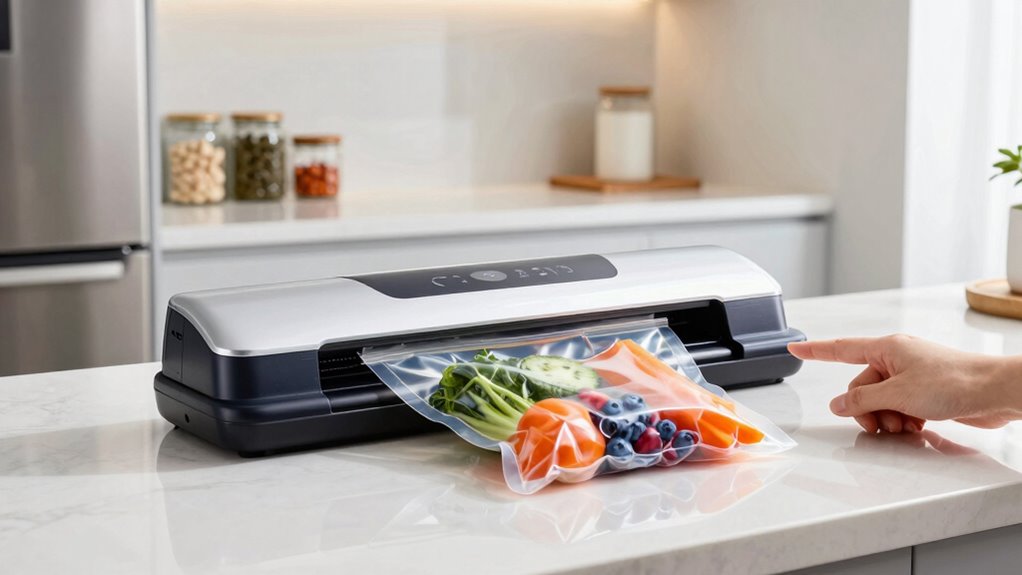
Even with proper sealing techniques, you might encounter issues that prevent your vacuum sealer from working smoothly. Common problems often stem from sealing maintenance or machine calibration. If bags aren’t sealing correctly, check the gasket for dirt or damage and clean or replace it as needed. Confirm the machine is properly calibrated—sometimes, the vacuum pressure isn’t enough to remove all air, leading to weak seals. Adjust the calibration settings if your sealer allows it. Also, verify that the bag’s open end is clean and free of wrinkles before sealing. Regular sealing maintenance minimizes these issues, keeps your machine functioning efficiently, and helps you avoid wasted effort or spoiled food. Proper calibration and maintenance are key to trouble-free vacuum sealing. Additionally, understanding personal data privacy concerns related to smart appliances can help you better protect your information while maintaining kitchen technology. Regularly reviewing your device’s security settings can further enhance your privacy and prevent unauthorized access. Incorporating quality assurance practices in your maintenance routine can also ensure consistent sealing performance and prolong your device’s lifespan.
Incorporating Vacuum Sealing Into Your Zero-Waste Meal Planning
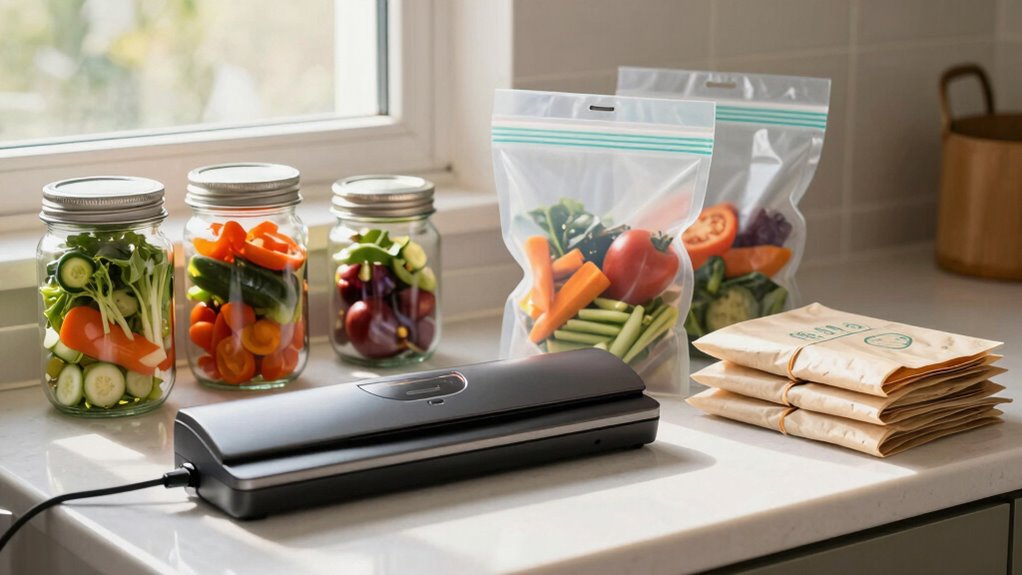
Integrating vacuum sealing into your zero-waste meal planning can markedly reduce food waste and save money. Use reusable storage containers or silicone bags with your vacuum sealer to extend freshness and prevent spoilage. When sealing leftovers or bulk purchases, opt for compostable packaging when possible, aligning with eco-friendly principles. This approach minimizes reliance on single-use plastics and keeps your pantry organized. Plan meals ahead to portion ingredients into vacuum-sealed servings, making it easier to grab just what you need and reduce impulse waste. Label packages with dates to track freshness and make sure you consume items before they spoil. Incorporating vacuum sealing into your routine helps you stick to zero-waste goals while maintaining a practical, efficient meal plan. Additionally, understanding the environmental impact of different packaging options can help you make more sustainable choices. Being aware of the store return policies and hours for popular retailers can also help you plan purchases and returns more effectively, reducing waste from unnecessary or failed transactions. Using proper sealing techniques can further optimize freshness and minimize waste.
Frequently Asked Questions
Can Vacuum Sealing Be Used for Non-Food Items in a Zero-Waste Kitchen?
Yes, vacuum sealing can be used for non-food items in your zero-waste kitchen. You can seal reusable containers, cloths, or small tools to keep them protected and organized. This reduces waste and extends their lifespan. Incorporate vacuum sealing into your zero waste tips by storing spare parts or delicate items safely. It’s an efficient way to minimize clutter, prevent damage, and support your eco-friendly lifestyle.
How Eco-Friendly Are the Materials Used in Vacuum Sealing Bags?
Did you know that many vacuum sealing bags are made from plastics that take hundreds of years to decompose? Their material durability guarantees your food stays fresh, but it also raises concerns about environmental impact. To be eco-friendly, look for bags made from biodegradable or compostable materials. These options reduce waste and lessen your kitchen’s footprint, making vacuum sealing a smarter, greener choice for your zero-waste lifestyle.
Is Vacuum Sealing Suitable for Preserving Herbs and Delicate Greens?
Vacuum sealing is suitable for preserving herbs and delicate greens, helping maintain herb preservation and greens freshness. You should gently prepare your herbs and greens before sealing, removing excess moisture and avoiding crushing. Use appropriate bags designed for delicate produce, and don’t over-pack to prevent damage. This method extends shelf life, keeps flavors vibrant, and reduces waste, making it a smart choice for keeping your herbs and greens fresh longer in a zero-waste kitchen.
What Safety Precautions Should Be Taken When Vacuum Sealing Liquids?
When vacuum sealing liquids, you should take sealing safety precautions to prevent liquid spillage, which can damage your machine. Always freeze liquids beforehand to reduce spillage risk during sealing. Use a damp cloth to clean any spills immediately and make certain the bag’s opening remains dry. Avoid overfilling bags, and check for leaks before sealing. These steps help keep your vacuum sealer in good condition and guarantee safe, effective sealing.
How Does Vacuum Sealing Impact Food Packaging Waste and Recycling Options?
You’ll find vacuum sealing reduces packaging waste by extending food freshness, cutting down on single-use containers. However, it impacts recycling options because most vacuum bags are made from multi-layer plastics, which pose recycling challenges and often end up in landfills. Notably, about 91% of plastics aren’t recycled, highlighting the need for durable, recyclable packaging. Vacuum-sealed packaging offers durability but also emphasizes the importance of using recyclable materials to minimize waste.
Conclusion
Vacuum sealing is like a trusty sidekick in your zero-waste kitchen, helping you cut down on food waste and save money. By keeping your produce fresh and preventing spoilage, it’s a simple tool that makes your eco-friendly efforts more effective. Embrace vacuum sealing, and watch your kitchen run smoother than a well-oiled machine—saving resources and reducing waste, one sealed bag at a time.