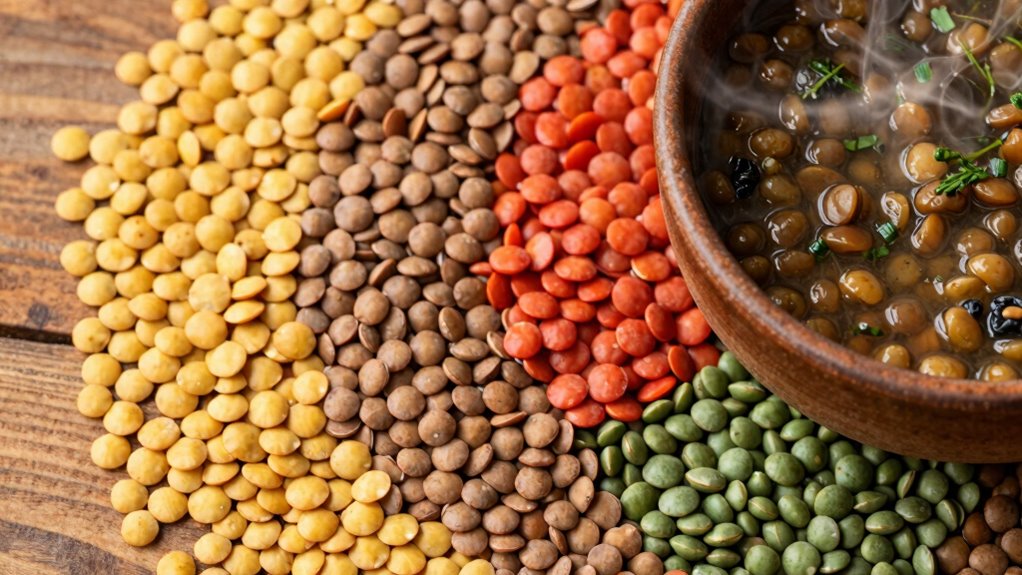

Lentils come in various types: green and brown stay firm for salads and stews, while red and yellow break down quickly for soups and purees. Black lentils, like beluga, add elegance to dishes. Cooking times range from 15 to 40 minutes depending on the variety. To get perfect results, rinse well, cook until tender, and add flavorings. Explore these tips further to master lentil cooking and maximize their nutrition and flavor.
Key Takeaways
- Green and brown lentils are versatile and hold their shape, ideal for salads and stews; red and yellow lentils cook quickly and break down for soups.
- Cooking times vary: red lentils (15-20 min), green/brown lentils (20-40 min), black lentils (25-30 min); rinsing and soaking can improve texture.
- Select lentil types based on dishes: Puy lentils for firm texture, red lentils for quick soups, black lentils for gourmet presentations.
- Proper preparation includes rinsing, optional soaking, and cooking in a 2:1 water ratio; add salt after boiling to prevent tough skins.
- Store lentils in airtight containers in a cool, dark place for up to one year, ensuring freshness and preventing spoilage.

TILUCK Stainless Steel Measuring Cups & Spoons Set, Cups and Spoons
- Includes Multiple Sizes: 4 cups and 6 spoons for all needs
- Premium Food-Grade Steel: Rust-resistant, non-toxic stainless steel
- Easy to Clean: Dishwasher safe, stackable design
As an affiliate, we earn on qualifying purchases.
As an affiliate, we earn on qualifying purchases.
What Are the Main Types of Lentils?

Lentils come in several main types, each with unique flavors and textures that suit different dishes. Understanding their lentil history and cultural significance helps you appreciate their diversity. Green and brown lentils are the most common; they hold their shape well, making them perfect for salads and stews. Red and yellow lentils cook quickly and tend to break down, ideal for soups and purees. Black lentils, also called beluga, are small and glossy, valued in gourmet recipes. These varieties have played crucial roles in various cultures—green lentils in Mediterranean cuisine, red lentils in Indian dishes, and black lentils in Middle Eastern cooking. Recognizing the differences allows you to select the right type for your recipe and appreciate their historical importance worldwide.
How Do You Prepare and Cook Lentils Perfectly?
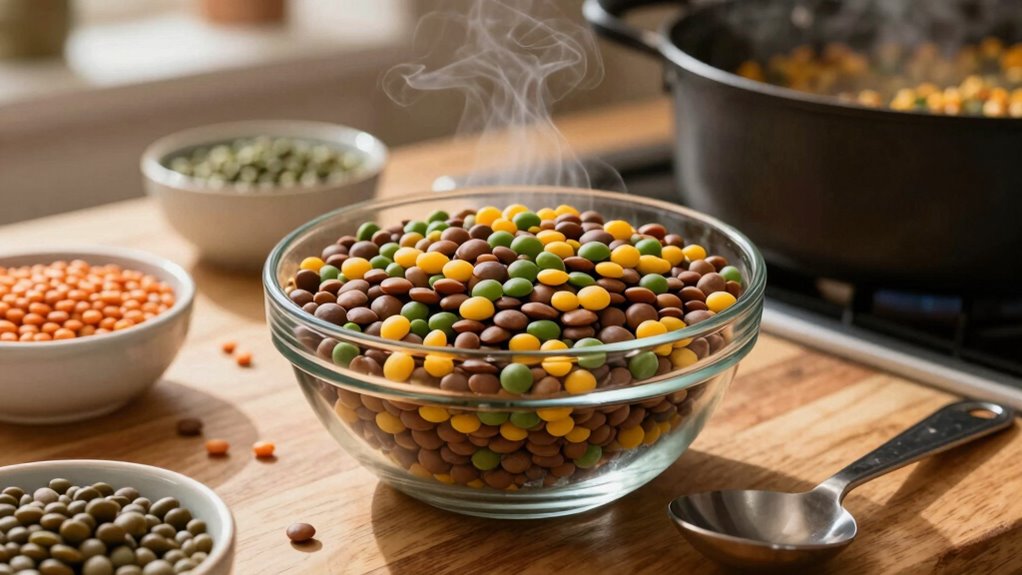
To cook lentils perfectly, start by rinsing them thoroughly under cold water to remove any dirt or debris. Don’t fall for common lentil myths that they always need soaking; most cook quickly without it. Here are four cooking tips to ensure success:
Rinse lentils thoroughly and cook without soaking for quick, perfect results.
- Use a 2-to-1 water-to-lentil ratio for tender results.
- Add a pinch of salt only after they start to soften—salt can toughen the skins.
- Keep the water at a gentle simmer, not a rolling boil, to prevent splitting.
- Taste and check for doneness regularly—overcooked lentils can become mushy.
Following these tips helps you avoid pitfalls and guarantees perfectly cooked lentils every time. Mastering these basics makes all the difference in creating delicious meals.
How Long Do Different Lentil Types Take to Cook?
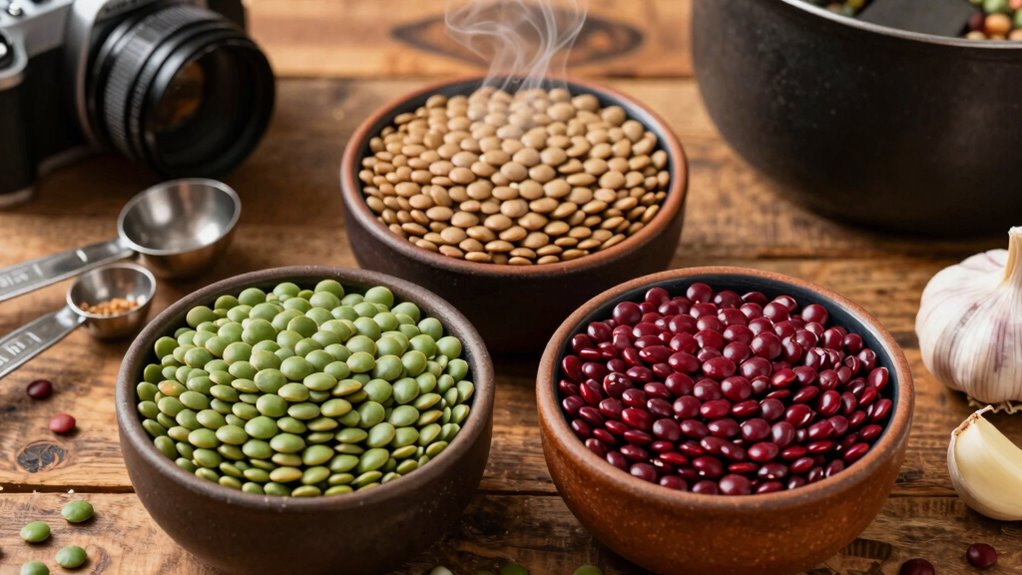
When cooking lentils, you’ll notice that different types vary in how long they take. Red lentils cook quickly, often in 15 to 20 minutes, while green lentils need about 30 to 45 minutes. Brown lentils fall somewhere in between, taking around 30 minutes to reach perfect tenderness.
Red Lentils: Fast Cooking
Red lentils are known for their quick cooking time, making them a convenient choice for busy cooks. They typically cook in about 15-20 minutes, saving you time in the kitchen. Their fast-cooking nature is perfect for creating hearty soups and stews quickly. When exploring different lentil varieties, red lentils stand out because they soften easily without pre-soaking. Using simple cooking techniques like simmering in broth or water helps preserve their vibrant color and smooth texture.
Here are some reasons to love red lentils:
- Speedy meal prep—ready in a flash.
- Versatile—perfect for purees and soups.
- Easy to cook—minimal attention needed.
- Nutrient-rich—packed with protein and fiber.
Green Lentils: Moderate Time
Green lentils typically take about 20 to 30 minutes to cook, making them a moderate-speed option among lentil varieties. Their cooking time balances well with their firm texture, which holds up in salads and side dishes. Besides their versatility, green lentils offer impressive lentil health benefits, including high protein, fiber, and essential minerals that support digestion and heart health. Understanding lentil harvesting seasons can help you select the freshest, most flavorful options. Green lentils are usually harvested in late summer or early fall, ensuring peak freshness and nutrient content. Their moderate cook time makes them convenient for quick meals, while their health benefits contribute to a balanced diet. Additionally, their color accuracy is notable, providing vibrant and appealing dishes that are as visually pleasing as they are nutritious. The availability of fresh green lentils can also be influenced by harvesting seasons, which impacts their flavor and nutritional quality. Proper storage methods can extend their shelf life, maintaining their nutritional value over time. Whether used in soups or salads, green lentils are a nutritious, adaptable choice.
Brown Lentils: Slightly Longer
Brown lentils generally take a bit longer to cook than their green counterparts, usually requiring about 30 to 40 minutes. When considering a lentil varieties comparison, this slight delay can impact your meal prep. To achieve perfect results, use proper cooking techniques for lentils, such as rinsing and simmering without excessive stirring. Additionally, choosing the right type of lentil can influence cooking time and texture. Here’s what you can expect: 1. Rich, hearty texture that holds up well in soups and stews. 2. Absorbs flavors easily, making them versatile for various recipes. 3. Consistent cooking time allows for reliable meal planning. 4. Nutrient-packed and satisfying, perfect for plant-based dishes. Proper wave and wind conditions can also enhance cooking efficiency by maintaining consistent heat and moisture. This longer cook time adds depth, ensuring your lentils are tender and flavorful every time.
Which Lentils Are Best for Soups and Stews?
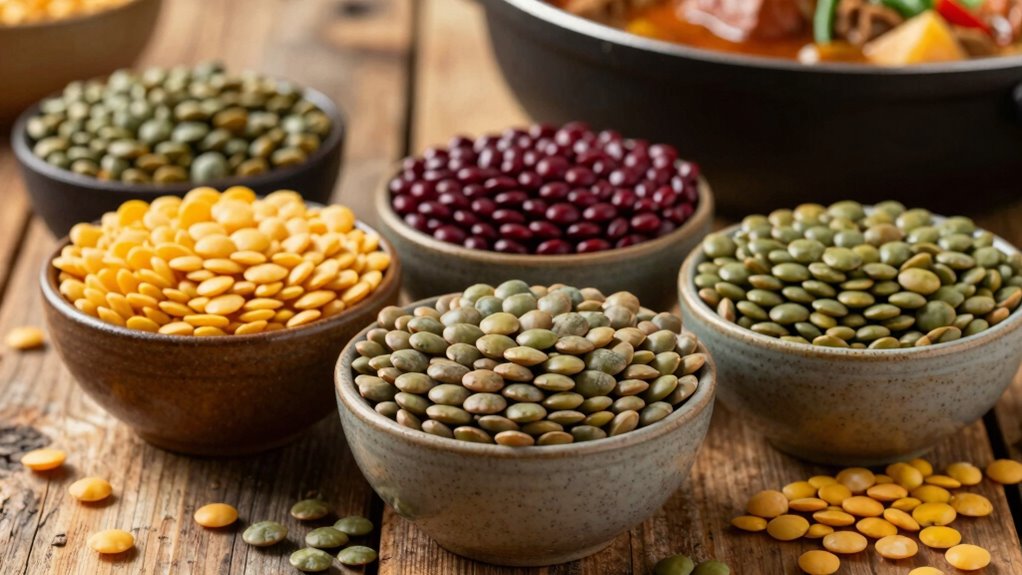
When choosing lentils for soups and stews, opt for varieties that hold their shape and cook down to create a hearty texture. French green lentils, also called Puy lentils, are ideal because of their firm structure and nutty flavor profiles, which add depth to your dish. Brown lentils are another good choice; they soften nicely and absorb flavors well, making them versatile for hearty stews. Keep in mind, proper lentil storage tips include keeping them in an airtight container in a cool, dark place to maintain freshness and prevent spoilage. These varieties are less likely to turn mushy prematurely, ensuring your soups stay hearty and flavorful. Selecting the right lentils enhances both texture and taste, making your soups and stews more satisfying.
How Can You Use Red Lentils in Your Cooking?
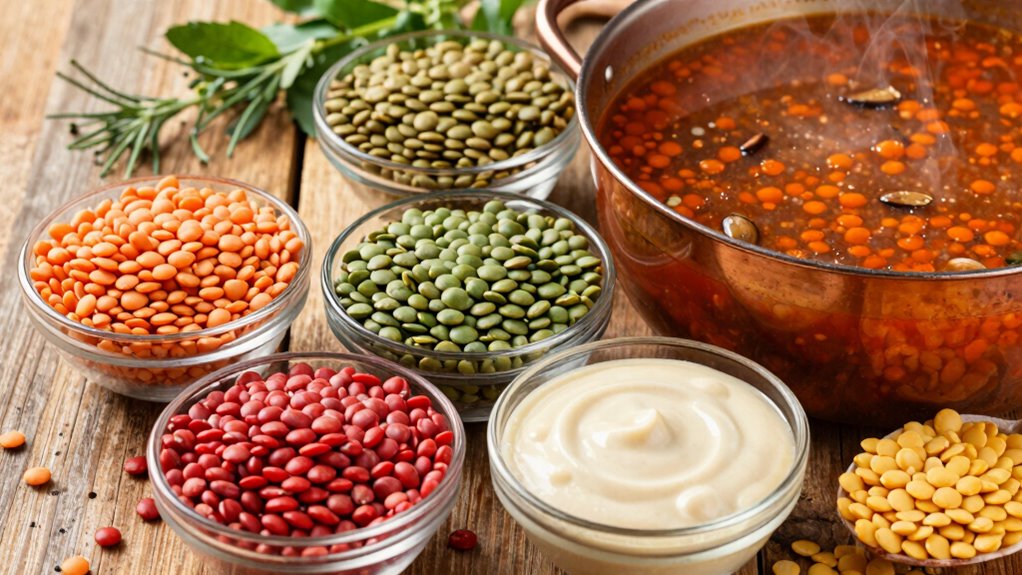
Have you considered how versatile red lentils can be in your cooking? These tiny pulses are perfect for quick, nutritious meals. You can create delicious red lentil recipes like hearty soups, creamy dals, or flavorful stews that come together in no time. Their quick cook time makes them ideal for busy weeknights. Plus, red lentils are packed with red lentil nutrition, offering high protein, fiber, and essential minerals. Here are some ways to use them: 1. Make a comforting red lentil soup seasoned with spices. 2. Blend into a smooth, protein-rich dip or spread. 3. Add to curries for a hearty, filling dish. 4. Incorporate into veggie patties or veggie burgers for extra nutrition. Red lentils are a versatile ingredient that elevates any meal with minimal effort, especially since quick cook time makes them suitable for busy schedules. Additionally, understanding nutritional benefits can help you appreciate their role in a healthy diet. Using sound science in cooking techniques can also enhance the flavor and texture of your lentil dishes. Recognizing cooking methods that preserve nutrients can further improve your culinary results. Furthermore, employing modern kitchen technology such as programmable pressure cookers can significantly reduce cooking time while maintaining nutrient integrity.
How to Incorporate Green and Brown Lentils Into Salads and Sides?

Red and green lentils are fantastic additions to salads and side dishes, offering both texture and flavor. To incorporate them, start by cooking the lentils until tender but still firm, then let them cool. Toss cooked lentils into salads for added protein and a hearty bite, making them excellent salad toppings. For side dish ideas, mix lentils with fresh herbs, chopped vegetables, or a tangy vinaigrette to create vibrant, nutritious accompaniments. You can also serve them warm as a side, seasoned with spices or lemon juice. Their mild earthiness pairs well with greens, grains, and roasted vegetables. Incorporating green and brown lentils into your meals easily boosts nutrition while providing a satisfying, versatile element to your salad and side dish repertoire.
Are Black Lentils Good for Elegant Main Dishes?
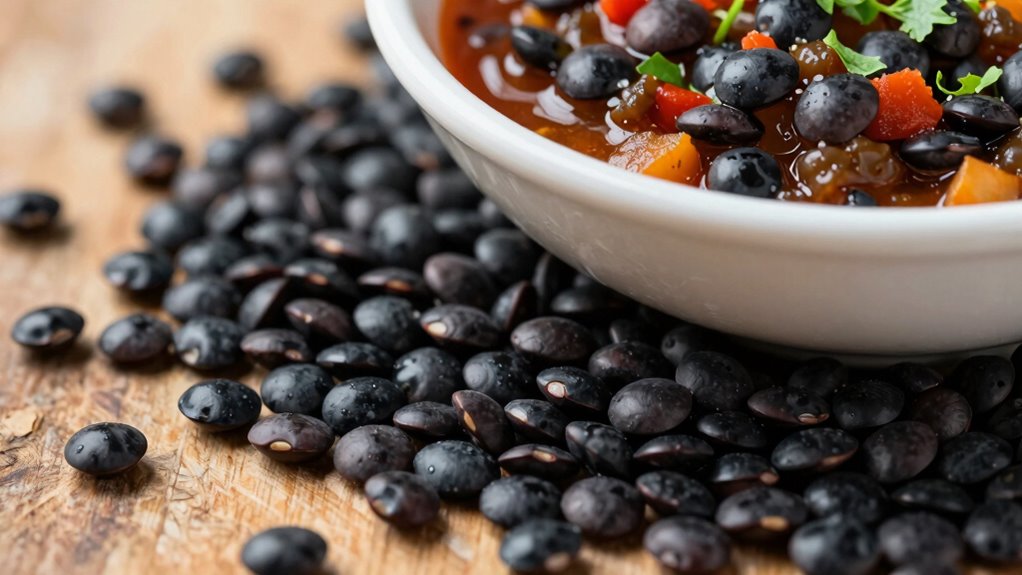
Black lentils, with their sleek appearance and firm texture, are an excellent choice for creating elegant main dishes. They elevate your presentation, transforming everyday meals into gourmet experiences. Their dark, glossy exterior makes for an eye-catching, sophisticated plate. Using black lentils allows you to craft dishes that impress guests and showcase your culinary skills. These lentils are versatile, pairing well with rich sauces and vibrant vegetables. Their firm texture holds up beautifully, ensuring a refined, polished look. Incorporating timeless culinary techniques can help you maximize their potential in gourmet recipes. Proper cooking methods are key to achieving the ideal texture and flavor when preparing black lentils. Paying attention to precise cooking times ensures they remain firm and retain their shape, which is essential for elegant presentations. Incorporate black lentils for an elegant presentation that highlights your attention to detail. They’re perfect for crafting memorable, gourmet main courses that combine visual appeal with exceptional taste. Truly, black lentils make your dishes stand out as refined, artful creations.
How Do You Prepare Lentils for Maximum Nutrition and Flavor?
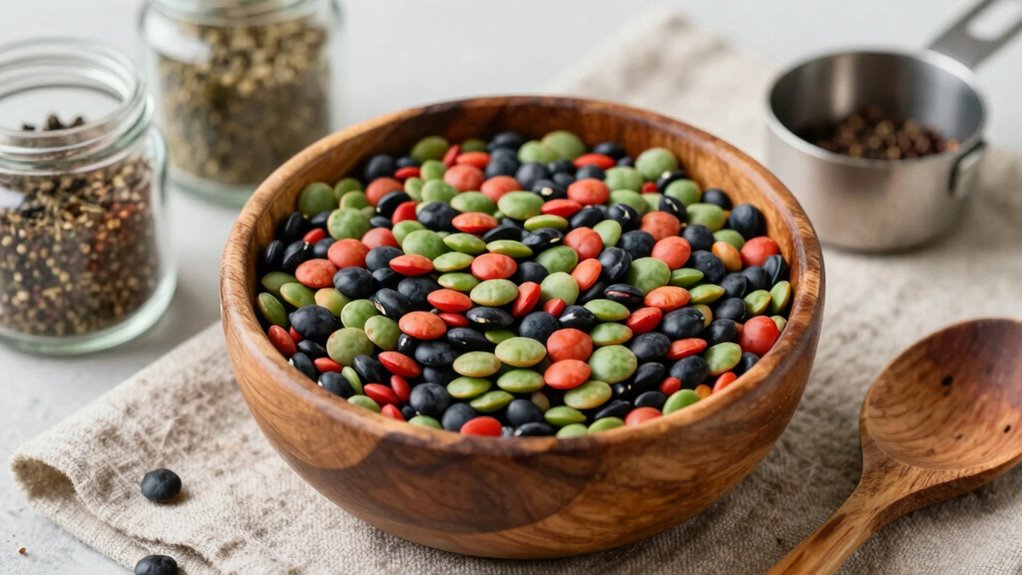
To get the most nutrition and flavor from your lentils, start by rinsing and soaking them to remove impurities and reduce cooking time. Then, enhance their taste by adding flavor boosters like herbs, spices, or broth. These simple steps guarantee your lentils are both nutritious and delicious. Incorporating proper cooking techniques can also help preserve their healthy nutrients and improve digestibility. Additionally, selecting the right air filtration methods can help create a healthier environment that supports your overall well-being while preparing your meals. Using specialized cookware designed for legumes can also promote even cooking and better nutrient retention.
Rinse and Soak
Before cooking lentils, it’s essential to rinse them thoroughly to remove dirt and debris. This step guarantees you get the purest flavor and maximum nutrition. Rinsing is especially important for different lentil varieties, which can have varying levels of dirt or dust. Soaking benefits include reducing cook time and improving digestibility, making your lentils easier on your stomach. To prepare them perfectly:
- Rinse under cold water until clear.
- Soak for 15-30 minutes to enhance texture and nutritional absorption to maximize health benefits.
- Drain and discard soaking water.
- Use fresh water for cooking to preserve flavor and nutrients.
Proper preparation helps preserve the delicate nutrients and ensures optimal taste.
Taking these simple steps elevates your lentil game, unlocking their full potential for taste and health benefits.
Use Flavor Enhancers
Wondering how to boost the flavor and nutrition of your lentils? Start by using seasoning tips like adding garlic, onions, or herbs during cooking to enhance their flavor profiles. Toasting spices beforehand can deepen their aroma and complexity. Incorporating a splash of acid, such as lemon juice or vinegar, at the end to brighten the dish. Using broth instead of water adds richness and extra nutrients. Avoid over-salting early; instead, season gradually to find the perfect balance. Consider adding a pinch of spices like cumin, turmeric, or paprika to boost both flavor and health benefits. Proper seasoning techniques can significantly elevate your dish and improve overall enjoyment. Additionally, nutrient retention strategies like gentle cooking methods help preserve the vitamins and minerals in lentils. Following air purifier maintenance guidelines, such as regular filter checks and deep cleaning techniques tailored to your specific brand, can help ensure your kitchen air remains healthy and free of dust and allergens. With these simple tricks, you’ll elevate your lentil dishes effortlessly.
What Common Mistakes Should You Avoid When Cooking Lentils?
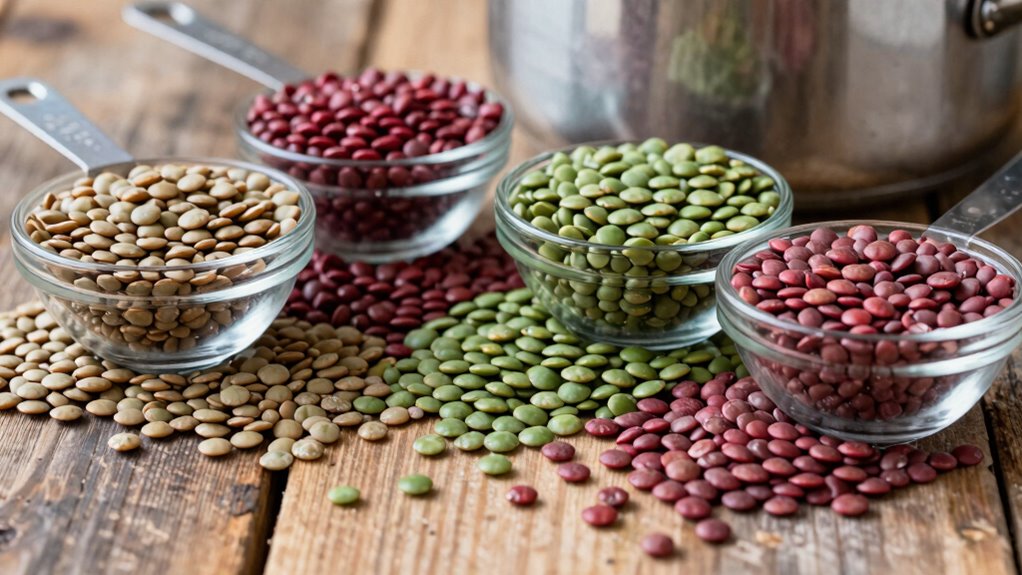
One common mistake when cooking lentils is not rinsing them properly before cooking, which can leave dirt or debris in your dish. Skipping this step can ruin the texture and flavor. Another mistake is neglecting to balance your seasonings, leading to common seasoning mistakes that make your lentils bland or overpowering. Overcooking is also a major pitfall—your lentils can turn mushy, losing their structure and appeal. Be mindful of these issues:
- Rushing the rinse without thorough cleaning
- Over-seasoning, which masks natural flavor
- Ignoring recommended cook times, risking overcooking pitfalls
- Forgetting to taste and adjust seasoning during cooking
- Not understanding how to organize your kitchen tools to streamline your cooking process
- Failing to consider cooking times for different lentil types ensures perfect texture every time
- Additionally, failing to properly store lentils can lead to spoilage or loss of quality before cooking
- A common mistake is not soaking lentils when required, which can affect cooking time and digestibility
Avoid these errors to keep your lentils perfectly cooked, flavorful, and enjoyable every time.
How Should You Store Lentils to Keep Them Fresh?
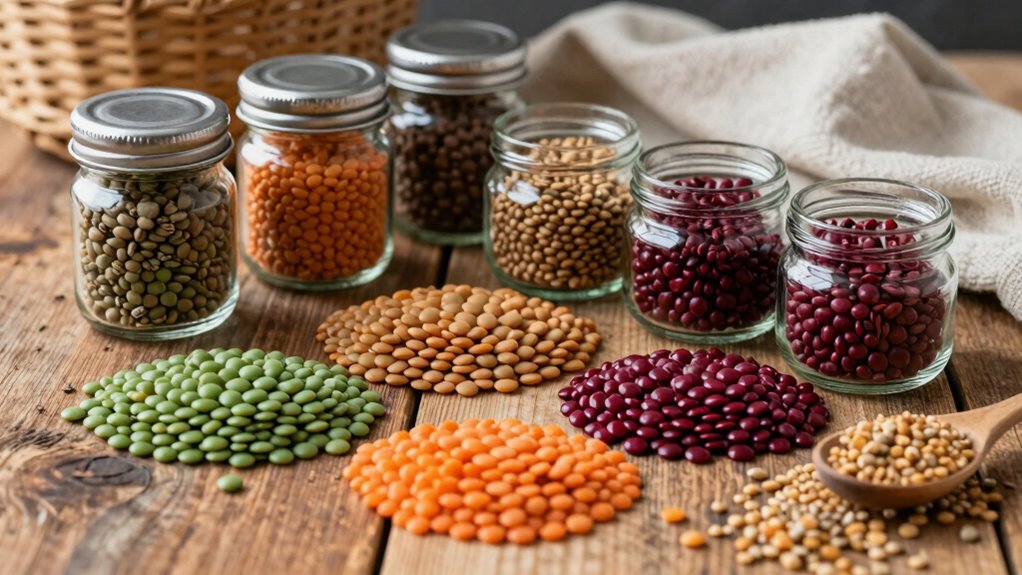
To keep lentils fresh and flavorful, store them in an airtight container in a cool, dry place away from direct sunlight. Proper storage tips help prevent moisture and pests, which can spoil the lentils or reduce their shelf life. Keep them in a pantry or cupboard, ensuring the container is sealed tightly after each use. Avoid storing lentils near strong-smelling foods, as they can absorb odors. When stored correctly, dried lentils can last up to a year, maintaining their quality and nutritional value. Check your stored lentils periodically for signs of spoilage, such as discoloration or a musty smell. Following these simple storage tips helps ensure your lentils stay fresh and ready for your next delicious meal.
Frequently Asked Questions
Can Lentils Be Frozen for Long-Term Storage?
Yes, you can freeze lentils for long-term storage. To do so, let the cooked lentils cool completely, then transfer them to airtight containers or freezer bags. Be sure to remove excess air and label with the date. Freezing lentils helps preserve their freshness and flavor, making it easy to enjoy them later. For the best quality, use frozen lentils within 6 months and follow these simple storage tips.
Are There Any Health Benefits Specific to Certain Lentil Types?
You’ll love knowing that red lentils are packed with antioxidants, helping fight free radicals. Green and brown lentils boast higher mineral content, supporting your bone health and energy levels. Notably, each lentil type offers unique health benefits, so mixing them can maximize nutrient intake. Choosing the right type based on your health goals allows you to enjoy their full benefits while adding variety to your meals.
How Do You Reduce Cooking Time for Tougher Lentil Varieties?
To reduce cooking time for tougher lentil varieties, you should soak them using techniques like overnight soaking or quick soak methods. This softens the lentils, making them cook faster. Additionally, using a pressure cooker markedly cuts down cooking time by applying high pressure and heat. Combining soaking with pressure cooking is the most effective way to quickly prepare tougher lentils, saving you time while ensuring they cook thoroughly.
What Are Some Creative Ways to Incorporate Lentils Into Breakfast Dishes?
Imagine waking up to a protein-packed sunrise—lentils can make that happen. Blend cooked lentils into smoothies for a creamy, savory boost, or fold them into batter for hearty, savory pancakes. These ideas transform your breakfast into a nourishing adventure, turning everyday eggs into something extraordinary. Lentils add texture and flavor, making your morning meal both satisfying and inventive, like a warm hug to start your day.
Are Organic Lentils More Nutritious Than Non-Organic Options?
Organic lentils aren’t necessarily more nutritious than non-organic ones, but they often have higher nutrient density because they’re grown without synthetic pesticides or fertilizers. Organic certification guarantees these standards, which can help you avoid chemical residues. While nutrient content may be similar, choosing organic supports sustainable farming practices. Ultimately, both options provide valuable nutrients, but organic lentils might give you extra peace of mind regarding environmental and health considerations.
Conclusion
Now that you know the different types of lentils and how to cook them perfectly, you’re ready to turn your kitchen into a vibrant pantry of flavor. Think of lentils as tiny treasures waiting to unseal hearty soups, elegant salads, and nourishing stews. With a little practice, you’ll master their secrets, transforming simple ingredients into culinary masterpieces. So, grab a bag, and let your cooking adventures bloom like a garden in full bloom.