

To make warm vegan soups with seaweed and pulses, combine hearty ingredients like lentils or chickpeas with savory seaweed such as wakame or nori. Use vegetable broth infused with miso or tamari for extra umami, then add fresh herbs, ginger, and lemon for brightness. Toss in chopped seaweed toward the end to preserve texture. If you explore further, you’ll discover how to balance flavors and boost nutrition with simple, nourishing ingredients.
Key Takeaways
- Combine pulses like lentils or chickpeas with dried seaweed (wakame or nori) for rich, umami-infused vegan soups.
- Use vegetable broth, miso, or tamari to deepen flavor, and add herbs like cilantro or dill for brightness.
- Incorporate ginger, garlic, or spices to create warm, comforting textures suitable for vegan, plant-based diets.
- Add fresh seaweed towards the end of cooking to preserve texture and enhance oceanic flavor.
- These soups are nutritious, boosting immune health with fiber, minerals, and antioxidants from pulses and seaweed.
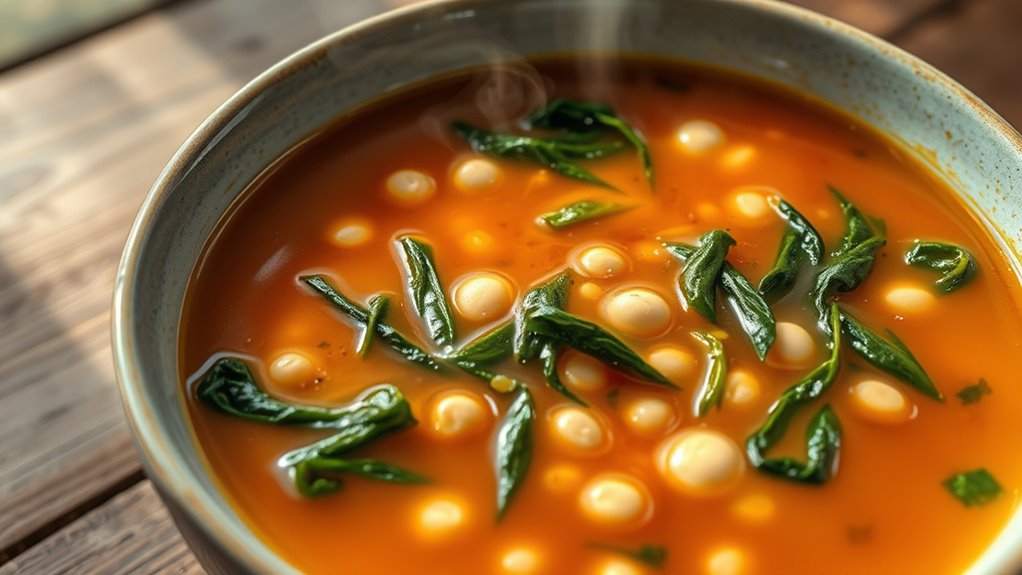
Vegan soups that feature seaweed and pulses are a delicious way to nourish your body with nutrient-rich ingredients. When you combine these elements, you create a meal packed with flavor and health benefits. Seaweed adds a subtle umami richness, balancing the hearty earthiness of pulses like lentils, chickpeas, or black beans. Together, they form a versatile base for exploring various soup flavor combinations, from smoky and spicy to light and herbal. These combinations not only enhance taste but also maximize nutritional benefits.
Seaweed and pulses create flavorful, nutrient-rich vegan soups full of umami and health benefits.
You can craft a soup with a savory broth infused with dried wakame or nori, which imparts a deep oceanic flavor. Pair this with red lentils and ginger for a warm, spicy kick. The ginger not only complements the seaweed’s briny notes but also offers anti-inflammatory properties. Alternatively, you might blend mellow chickpeas with seaweed and fresh herbs like cilantro or dill, creating a bright, herbaceous profile. This kind of flavor combination elevates the soup, making it both satisfying and fresh. Incorporating ingredients like miso or tamari can deepen the umami, enhancing the soup’s flavor complexity.
When it comes to nutritional benefits, seaweed is a standout ingredient. It’s rich in iodine, which supports thyroid health, and contains antioxidants, vitamins, and minerals that bolster your immune system. Pulses contribute significant protein, fiber, and complex carbohydrates, keeping you full longer and aiding digestion. By combining these ingredients, you’re not just creating a tasty meal—you’re delivering a potent dose of nutrients that support overall well-being. The fiber from pulses helps regulate blood sugar levels, while the minerals in seaweed aid in maintaining healthy skin and energy levels. Additionally, understanding the potential impact of AI advancements on food sustainability can inspire innovative ways to produce and enjoy plant-based meals.
Preparing these soups is straightforward. Start with a flavorful broth, whether vegetable-based or seasoned with miso or soy sauce. Add your choice of pulses and let them simmer until tender. Incorporate chopped seaweed in the last few minutes to preserve its delicate texture and flavor. Finish with herbs, spices, or a squeeze of lemon for brightness. These soups are highly adaptable, allowing you to experiment with different flavor combinations and ingredients based on what you have on hand.
In the end, you’ll find that vegan soups with seaweed and pulses are more than just warm comfort food—they’re a nourishing, customizable way to enjoy a balanced meal. With their rich flavors and impressive nutritional profile, they make a perfect addition to your healthy eating routine, especially when you want something hearty yet light, satisfying yet packed with essential nutrients.
Frequently Asked Questions
Can These Soups Be Frozen for Later Use?
Yes, you can freeze these soups for later. Follow freezing tips by letting the soup cool completely before transferring it to airtight containers or freezer bags. Use storage guidelines to label each with the date, ensuring you consume them within 3-4 months for the best flavor and quality. When ready to eat, thaw in the fridge overnight and reheat thoroughly. This way, you preserve their taste and texture efficiently.
Are There Gluten-Free Options Included in These Soups?
Yes, these soups include gluten-free ingredients, making them suitable for gluten sensitivities. However, you should watch out for cross-contamination risks, especially if prepared in shared kitchens or with processed ingredients. Always check labels or ask about preparation methods to guarantee your soup remains safe. By choosing carefully, you can enjoy warm, nutritious vegan soups with seaweed and pulses without worrying about gluten.
How Long Do These Soups Typically Take to Prepare?
These soups usually take around 30 to 45 minutes to prepare. The cooking time depends on the complexity of your preparation steps, such as soaking pulses or simmering seaweed. You’ll start by gathering ingredients, then sautéing or boiling them, and finally blending or simmering until tender. Keep an eye on the timing to guarantee the soup isn’t overcooked, and enjoy a nutritious, warming meal in just half an hour or so.
Can I Substitute Different Pulses or Seaweeds?
They say variety is the spice of life, so yes, you can definitely substitute different pulses or seaweed in your soup. For pulse variations, chickpeas, lentils, or kidney beans work well. For seaweed substitutes, try nori, wakame, or kelp. Just keep in mind that different pulses and seaweeds may alter the cooking time and flavor, but experimenting keeps your soup exciting and personalized.
Are These Soups Suitable for Children?
Yes, these soups can be suitable for children if you guarantee they have child-friendly textures, like pureed or softly cooked ingredients. Be mindful of hidden allergens in seaweed or pulses, and check labels or prepare from scratch to avoid them. You might also modify seasoning to suit kids’ taste buds. Always introduce new ingredients gradually and observe for any reactions, making sure the soup remains safe and enjoyable.
Conclusion
As you ladle the steaming soup into your bowl, the gentle aroma of seaweed and pulses wraps around you like a cozy blanket. With each spoonful, your taste buds dance to the briny freshness of the sea and hearty pulse goodness, filling you with warmth and comfort. These vibrant, nourishing soups turn simple ingredients into a soothing symphony, inviting you to savor the moment and feel truly grounded in every comforting sip.