
Vegan omega-3 sources like flax, chia, hemp, and algae can boost your intake of essential fatty acids, but they work differently. Flax, chia, and hemp provide ALA, which your body must convert into EPA and DHA, though this process is often inefficient—sometimes as low as 5%. Algae offers direct EPA and DHA, making it a more potent option. Keep exploring to discover how you can optimize your omega-3s for better health.

Get kitchen staples and gadgets delivered free with Prime
- Fast, free delivery on millions of items
- Prime Video, Amazon Music and more included
- Member-only deals all year
Key Takeaways
- Flaxseeds and chia are rich plant-based sources high in ALA, but require conversion to EPA and DHA.
- Hemp seeds provide a balanced mix of omega-3 and omega-6 fatty acids for vegans.
- Algae oil supplies direct EPA and DHA, offering an efficient, plant-based alternative to fish oil.
- Conversion of ALA from flax, chia, and hemp into active EPA and DHA is often inefficient.
- Algae-based supplements ensure consistent, bioavailable omega-3 intake suitable for vegans and vegetarians.
Have you ever wondered how to get enough omega-3 fatty acids without consuming fish? Many people turn to fish oil supplements because they believe it’s the easiest way to meet their omega-3 needs. However, if you’re vegan or prefer plant-based options, you can still obtain these essential fats through sources like flax, chia, hemp, and algae. The key lies in understanding how your body converts plant-based omega-3s into the active forms it needs and how these alternatives compare to traditional fish oil.
Fish oil is rich in EPA and DHA, the two most crucial types of omega-3 fatty acids. When you consume fish oil, your body directly absorbs these fats, making it an efficient source. But if you’re relying on plant-based foods, you’re mainly getting ALA, or alpha-linolenic acid, which your body needs to convert into EPA and DHA. The omega conversion process isn’t always highly efficient; some people convert ALA to EPA at rates as low as 5%, and DHA conversion can be even lower. That’s why choosing foods rich in ALA, like flax and chia, is just part of the solution—supplementing with algae-based sources of EPA and DHA can help bridge the gap.
Fish oil provides direct EPA and DHA, but plant sources mainly offer ALA, which requires inefficient body conversion.
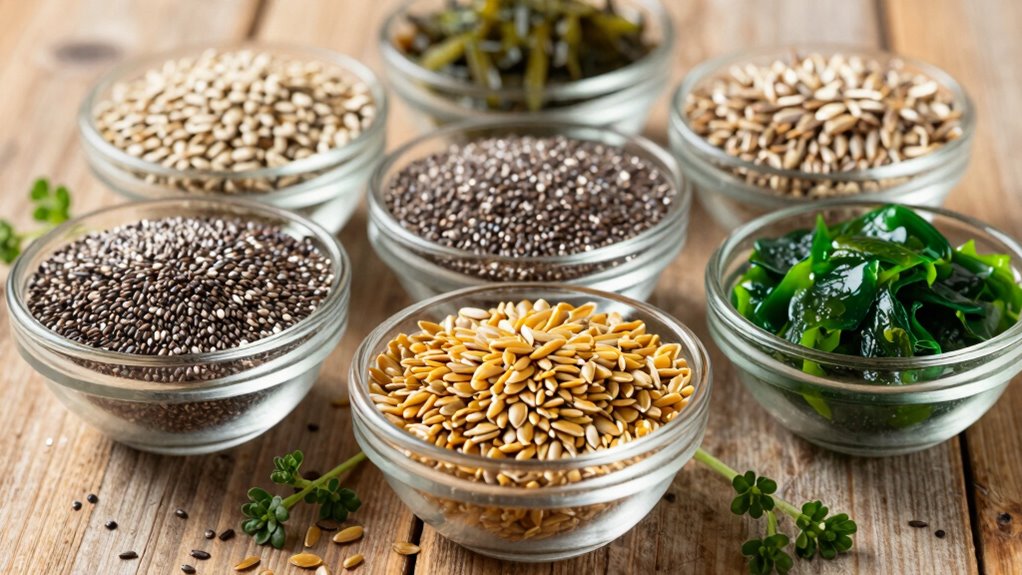
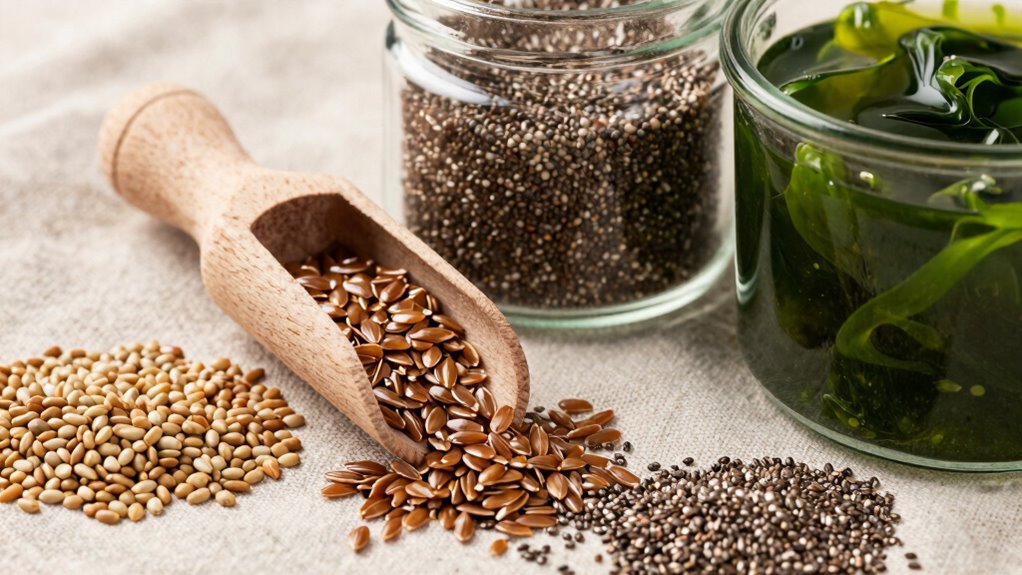
Flaxseeds are among the most popular vegan sources of omega-3s, providing a high amount of ALA. Incorporating ground flax into your diet ensures you get a steady supply of this essential fatty acid. Chia seeds are another excellent option, high in ALA and easy to add to smoothies, oatmeal, or baked goods. Hemp seeds offer a balanced profile, containing both omega-3s and omega-6s, which support overall health. While these sources are packed with ALA, they rely on your body’s ability to convert it into the active EPA and DHA. To guarantee you’re getting enough of these, many vegans turn to algae-based supplements, which provide direct sources of EPA and DHA similar to fish oil but without the fish.
Algae oil is a game-changer for vegans seeking the benefits of fish oil without the fish. It contains high concentrations of EPA and DHA, making it a potent alternative. Since algae are the original source of omega-3s in the marine food chain, taking algae supplements means you bypass the need for conversion entirely. This direct supply of EPA and DHA ensures your body receives these essential fats efficiently, supporting brain health, heart health, and overall wellness. Understanding the bioavailability of different omega-3 sources can help you make informed dietary choices and optimize your health.
Products Worth Considering

De'Longhi La Specialista Opera Espresso Machine with Coffee Grinder

KitchenAid KF6 Fully Automatic Espresso Machine, Stainless Steel

Vitamix 64 oz Low-Profile Blender Container with SELF-DETECT, BPA-Free
As an affiliate, we earn on qualifying purchases.
Frequently Asked Questions
Are Vegan Omega-3 Supplements as Effective as Fish Oil?
Yes, vegan omega-3 supplements like marine algae and flaxseed oil can be just as effective as fish oil. Marine algae provide EPA and DHA directly, similar to fish oil, while flaxseed oil offers ALA, which your body can convert. Though conversion rates vary, these plant-based options deliver essential fatty acids that support your heart, brain, and overall health effectively when taken consistently.
How Do Vegan Omega-3s Impact Environmental Sustainability?
Vegan omega-3s positively impact environmental sustainability by supporting sustainable farming practices like organic cultivation, reducing reliance on overfished marine sources. They also promote marine conservation by decreasing fishing pressures on wild fish populations. By choosing plant-based options, you help lower ocean pollution and habitat destruction, making a meaningful difference for the planet. Your choice encourages eco-friendly farming methods and helps protect marine ecosystems for future generations.
Can Vegan Omega-3s Prevent Heart Disease?
Vegan omega-3s can help prevent heart disease by providing essential plant-based fats that support cardiovascular health. Including sources like flax, chia, hemp, and algae in your diet promotes a dietary balance of healthy fats, reducing inflammation and lowering blood pressure. By regularly consuming these omega-3s, you actively contribute to heart health, making it a smart choice for anyone aiming to prevent heart-related issues naturally.
What Are the Best Vegan Sources for Omega-3s?
You should focus on plant-based fatty acids like flaxseeds, chia seeds, hemp seeds, and algae oil for the best vegan omega-3 sources. These foods provide alpha-linolenic acid (ALA), which your body converts into the active forms, EPA and DHA, though conversion efficiency varies. Incorporate these into your diet regularly to guarantee sufficient omega-3 intake and support overall health.
Are Vegan Omega-3s Suitable for Children and Pregnant Women?
Vegan omega-3s are generally safe for children and pregnant women when consumed appropriately, but you should consider vegan omega 3 safety and nutrient absorption efficiency. You need to guarantee you get enough EPA and DHA, which are essential during pregnancy and childhood development. It’s best to consult with a healthcare provider to confirm your intake meets your specific needs, and consider high-quality sources to maximize nutrient absorption efficiency.
Conclusion
Now that you know about vegan omega-3 sources like flax, chia, hemp, and algae, you can easily incorporate them into your diet. Think of these nutrients as tiny but powerful boats sailing through your bloodstream, delivering essential fats for your health. Embracing these plant-based options is like planting a garden inside your body—thriving, vibrant, and full of life. Start today, and watch your well-being flourish just like a lush, green landscape after rain.