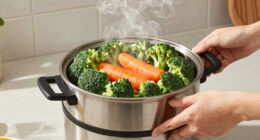
To store cooked beans and grains safely, cool them quickly and transfer to airtight containers. Keep them in the refrigerator within two hours of cooking and consume within 3-4 days. For longer storage, freeze in portioned containers for several months. Always label with dates and keep raw ingredients separate from cooked foods. Proper organization and hygiene reduce contamination risks. If you’re looking for more tips on safe storage, there’s plenty more to discover.

Get kitchen staples and gadgets delivered free with Prime
- Fast, free delivery on millions of items
- Prime Video, Amazon Music and more included
- Member-only deals all year
Key Takeaways
- Store cooked beans and grains in airtight containers to prevent contamination and spoilage.
- Cool cooked foods quickly and refrigerate within two hours to inhibit bacterial growth.
- Label containers with dates and consume within 3-4 days for optimal safety.
- Freeze in portioned containers for extended shelf life and preserved quality.
- Keep raw and cooked foods separate and maintain proper kitchen organization to prevent cross-contamination.
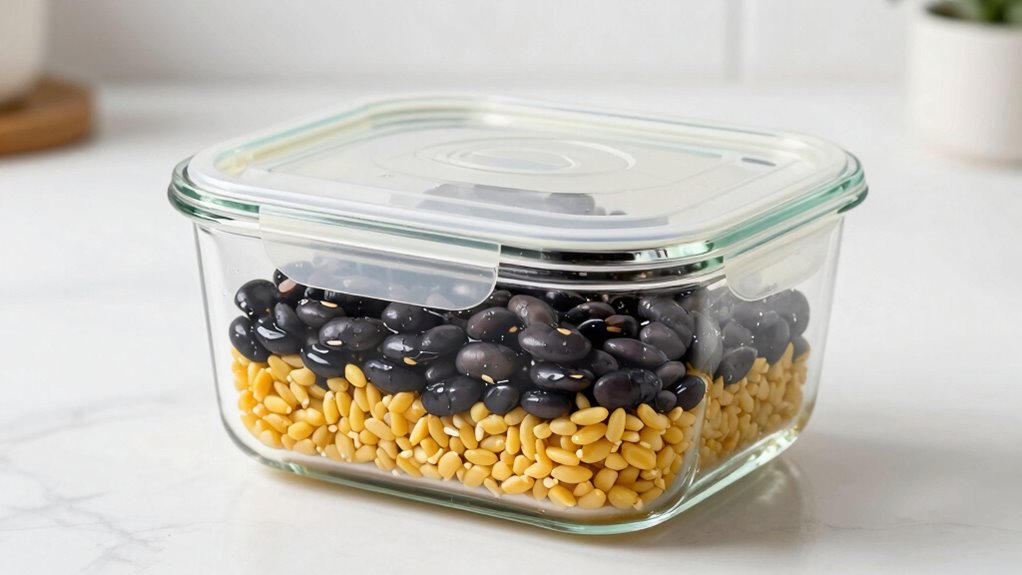
Switching to a vegan diet can be a healthy choice, but it also requires paying close attention to food safety. When it comes to storing cooked beans and grains, proper handling is essential to prevent foodborne illnesses. These foods are often staples in vegan diets, and mishandling can lead to bacterial growth or spoilage. You need to understand not just how to store them, but also how fermentation practices can influence their safety and flavor. Fermentation is a popular method among vegans for preserving foods and enhancing nutrients, but it must be done with care. If you’re fermenting beans or grains at home, maintain clean utensils and containers to prevent unwanted microbes from contaminating your ferment. Always follow tested recipes and guidelines, as improper fermentation can lead to the growth of harmful bacteria or molds. Proper food handling practices are crucial to maintaining safety during fermentation and storage. Additionally, understanding microbial growth is essential for safe fermentation and storage practices.
Cross contamination prevention is a critical aspect of storing cooked beans and grains. You should always use separate cutting boards, utensils, and storage containers for different foods to avoid transferring bacteria from raw or contaminated items. After cooking, allow beans and grains to cool quickly and store them in airtight containers in the refrigerator. Keeping them at the right temperature slows bacterial growth and extends their shelf life. Be mindful of how long cooked foods sit out at room temperature; the general rule is to refrigerate within two hours. When reheating, ensure the foods reach a safe internal temperature to eliminate any lingering pathogens. This practice minimizes the risk of foodborne illness and keeps your meals safe to enjoy.
Another key point is how you store cooked beans and grains to avoid cross contamination in your kitchen. Store raw ingredients separately from cooked foods, and always wash your hands thoroughly after handling raw or contaminated items. When organizing your fridge, place cooked beans and grains on different shelves from raw produce or meats to prevent any accidental transfer of bacteria. Label containers with dates, so you consume leftovers within a safe window—usually three to four days for cooked foods. If you plan to store beans or grains longer, consider freezing them in portioned containers, which can preserve quality and safety for up to several months.
Frequently Asked Questions
How Long Can Cooked Beans and Grains Be Stored Safely?
You can store cooked beans and grains safely in the refrigerator for up to 4-5 days. To maximize nutritional preservation and flavor retention, store them in airtight containers and cool them quickly. Avoid leaving them at room temperature for extended periods. For longer storage, freeze them for up to 3 months, which helps maintain their nutritional value and flavor quality while reducing spoilage risks.
What Is the Best Way to Reheat Stored Cooked Beans and Grains?
To reheat stored cooked beans and grains, use the microwave on medium power to guarantee even heating and avoid hot spots. Cover them with a microwave-safe lid or damp paper towel to retain moisture and prevent splattering. Stir halfway through to promote uniform reheating. Always check that the internal temperature reaches at least 165°F for microwave safety, and reheat in small, manageable portions for best reheating tips.
Can I Freeze Cooked Beans and Grains for Later Use?
Yes, you can freeze cooked beans and grains for later use. To preserve flavor and nutrition, let them cool completely before storing in airtight containers or freezer bags. Label and date your packages to keep track. Freezing helps retain nutrients and enhances flavor when reheated, making your meals more convenient and nutritious later on. Just remember to thaw thoroughly before reheating for the best taste and safety.
How Do I Prevent Mold Growth on Stored Cooked Beans and Grains?
To prevent mold growth on stored cooked beans and grains, guarantee proper mold prevention by cooling them quickly before refrigeration. Store them in airtight containers to control storage humidity and reduce moisture exposure. Keep the fridge at a consistent, cold temperature, ideally below 40°F (4°C). Regularly check for any signs of mold, and discard any affected portions immediately. Proper storage practices help keep your cooked beans and grains fresh and safe.
Are There Any Specific Containers Recommended for Storing Cooked Beans and Grains?
You should use reusable containers with airtight storage when storing cooked beans and grains. These containers keep moisture out, preventing mold growth and spoilage. Look for glass or BPA-free plastic containers with tight-fitting lids, ensuring a secure seal. Properly storing your cooked foods in these containers in the fridge helps maintain freshness and safety, making it easier to enjoy your vegan meals later without worry.
Conclusion
Storing cooked beans and grains isn’t just about keeping your food fresh; it’s about safeguarding your health. While these plant-based staples may seem simple, improper storage can turn them into hidden hazards. Think of your kitchen as a fortress—each container and method shields you from bacteria and spoilage. So, next time you store your vegan favorites, remember: careful handling isn’t just routine, it’s your first line of defense in enjoying safe, delicious meals.
NFL season / tailgating Picks
team gear
As an affiliate, we earn on qualifying purchases.