
TL;DR

Get kitchen staples and gadgets delivered free with Prime
- Fast, free delivery on millions of items
- Prime Video, Amazon Music and more included
- Member-only deals all year
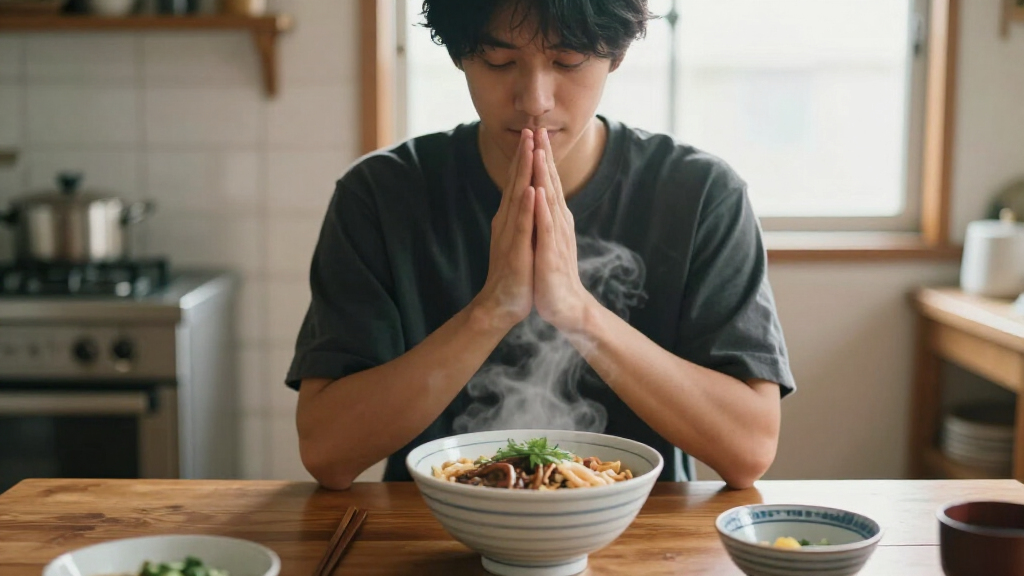
Recent discussions clarify that the Japanese phrase ‘Itadakimasu’ is said before eating to thank the food itself, not the cook. Experts confirm this cultural nuance, which has implications for understanding Japanese dining etiquette.
The phrase ‘Itadakimasu’ is confirmed to be a traditional Japanese expression said before meals to express gratitude to the food itself, not the chef or cook, according to cultural experts. This clarification aims to correct widespread misconceptions about its usage and significance, impacting how Japanese dining etiquette is understood globally.
Recent discussions among linguists and cultural scholars have reaffirmed that ‘Itadakimasu’ is a phrase rooted in expressing appreciation to the ingredients and effort involved in preparing the meal. This contrasts with common assumptions that it is directed at the chef or cook. Experts from Japan’s cultural institutions explained that the phrase originates from Buddhist practices of gratitude and humility, emphasizing respect for the food.
While many non-Japanese learners and media outlets have historically interpreted ‘Itadakimasu’ as a thank you to the cook, authoritative sources clarify that the phrase’s primary purpose is to acknowledge and thank the food itself. This distinction is considered important for accurate cultural understanding and respectful practice of Japanese dining customs.
Cultural Clarification Affects Dining Etiquette Understanding
This clarification matters because it deepens the understanding of Japanese cultural practices and promotes respectful appreciation of local customs. Misinterpretation of ‘Itadakimasu’ could lead to misunderstandings about Japanese etiquette, especially among foreigners and educators. Recognizing that the phrase is directed at the food underscores a broader cultural value of humility and gratitude in Japanese society.
As an affiliate, we earn on qualifying purchases.
Historical and Cultural Roots of ‘Itadakimasu’
‘Itadakimasu’ has been part of Japanese dining for centuries, rooted in Buddhist teachings emphasizing humility, gratitude, and respect for all living things. Traditionally, it is said before meals to acknowledge the effort involved in bringing food to the table, from cultivation to preparation. In recent years, debates have arisen over its precise meaning, especially in multicultural settings and language education, prompting clarifications from cultural authorities.
“‘Many people mistakenly believe ‘Itadakimasu’ is said to thank the chef, but it actually acknowledges the food and its origins.'”
— Professor Kenji Saito, Japanese language expert
Clarifications Still Evolving in Global Understanding
While experts confirm the primary meaning of ‘Itadakimasu’, some cultural nuances and regional variations remain less documented. It is also unclear how widespread this clarification is among the general public and in Japanese language education outside Japan. Further outreach may be needed to ensure accurate understanding globally.
Efforts to Promote Accurate Cultural Understanding
Educational campaigns and cultural exchanges are expected to include clarifications about ‘Itadakimasu’ to promote correct usage. Language teachers and cultural institutions may update teaching materials to reflect this understanding. Additionally, media outlets are likely to continue emphasizing the phrase’s true meaning in articles and broadcasts about Japanese customs.
Key Questions
Is ‘Itadakimasu’ ever used to thank the chef?
Traditionally, no. It is primarily said to express gratitude to the food itself, though some modern contexts may include thanking the chef indirectly through appreciation of the meal.
Does saying ‘Itadakimasu’ mean I am thanking everything involved in making the food?
Yes, it reflects gratitude for the ingredients, effort, and the process that brought the food to the table, rooted in humility and respect.
Has this clarification changed how Japanese people say ‘Itadakimasu’?
Most Japanese people already understand the phrase’s traditional meaning, but this clarification helps non-Japanese learners and foreigners better grasp its cultural significance.
Are there regional differences in how ‘Itadakimasu’ is used?
Some regional variations exist, but the core meaning of expressing gratitude to the food remains consistent across Japan.
Will this affect Japanese language teaching abroad?
It is likely that language curricula will incorporate this clarification to promote accurate cultural understanding.
Source: hn
Halloween Picks
halloween
As an affiliate, we earn on qualifying purchases.