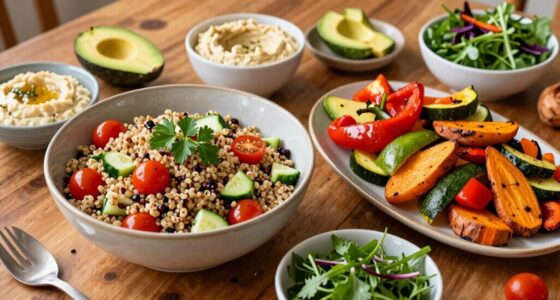
You can meet your vegan calcium needs without fortified foods by choosing calcium-rich plant foods like leafy greens, legumes, and tofu made with calcium sulfate. Pair these with vitamin C-rich foods to improve absorption and include fermented options to reduce phytates. Sun exposure or vegan vitamin D supplements help boost absorption further. Paying attention to your overall diet and incorporating a variety of sources will maximize your calcium intake and absorption—stick around to discover more tips.

Get kitchen staples and gadgets delivered free with Prime
- Fast, free delivery on millions of items
- Prime Video, Amazon Music and more included
- Member-only deals all year
Key Takeaways
- Include a variety of calcium-rich plant foods like leafy greens, legumes, and tofu to naturally boost intake.
- Pair calcium sources with vitamin C-rich foods to enhance calcium absorption.
- Consume fermented foods to reduce phytates and improve calcium bioavailability.
- Ensure adequate vitamin D levels through sunlight or vegan supplements to optimize calcium absorption.
- Consider plant-based calcium supplements, especially if dietary sources alone are insufficient.
If you’re following a vegan diet, getting enough calcium can seem challenging, but plenty of plant-based sources can meet your needs. The key is understanding how calcium absorption works and choosing the right foods and supplements to optimize your intake. Calcium absorption isn’t just about consuming calcium-rich foods; it also depends on factors like vitamin D levels, presence of oxalates and phytates, and overall gut health. Many plant foods contain calcium, but some also contain compounds that inhibit absorption, so it’s important to select sources that maximize bioavailability. Leafy greens like collard greens, bok choy, and turnip greens are excellent choices because they have high calcium content and are easier for your body to absorb compared to foods like spinach or Swiss chard, which are high in oxalates that reduce calcium absorption.
Legumes, tofu made with calcium sulfate, and fortified plant milks can significantly contribute to your daily calcium needs. Just make sure to check labels to ensure they’re fortified and to understand how much calcium they contain. Fortified foods are a convenient way to meet your target, but relying solely on them can be limiting, especially if you want to avoid fortified foods altogether. That’s where vegan supplement options come in. Calcium supplements derived from plant sources such as algae are becoming popular among vegans because they offer a bioavailable form of calcium without animal products. These supplements are often formulated to enhance absorption and can help bridge the gap if your diet alone isn’t enough.
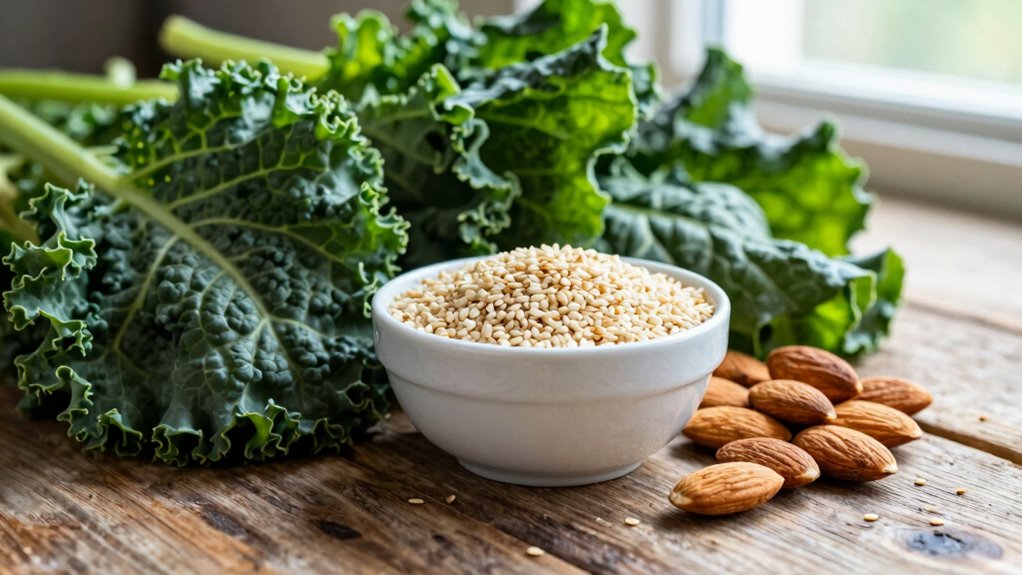
Incorporating a variety of calcium-rich plant foods into your meals not only boosts your intake but also improves your chances of absorption. For example, adding tahini or almonds to your diet provides calcium along with healthy fats and other nutrients. Also, maintaining adequate vitamin D levels supports calcium absorption, so consider sun exposure or vegan vitamin D supplements if needed. Keep in mind that balancing your overall diet is essential—high phytate or oxalate foods shouldn’t be avoided entirely, but they should be consumed in moderation or combined with vitamin C-rich foods that enhance mineral absorption. Additionally, understanding calcium absorption factors can help you make more informed dietary choices for optimal health. Incorporating plant-based calcium sources with other nutrients can further improve your calcium status. Being aware of bioavailability can help you select foods that maximize your calcium intake more effectively.
Furthermore, staying informed about absorption enhancers can help you optimize your calcium uptake through dietary strategies. Including fermented foods in your diet can sometimes reduce phytate levels, thereby increasing calcium bioavailability. Ultimately, hitting your calcium target on a vegan diet involves a combination of choosing the right plant foods, understanding calcium absorption, and potentially using vegan supplement options. With thoughtful planning and a varied diet, you can meet your calcium needs without relying heavily on fortified foods.
As an affiliate, we earn on qualifying purchases.
Frequently Asked Questions
Can Vegans Get Enough Calcium Without Supplements?
Yes, vegans can get enough calcium without supplements by focusing on plant sources with high bioavailability, like bok choy, broccoli, and kale. Calcium absorption varies depending on the source, so choosing foods with better bioavailability guarantees efficient intake. Also, include vitamin D-rich foods or sunlight exposure to enhance calcium absorption, making it easier to meet your daily calcium needs naturally without relying on fortified foods or supplements.
Are Plant-Based Calcium Sources as Effective as Dairy?
Plant-based calcium sources can be effective, but absorption rates often differ from dairy. While dairy provides highly bioavailable calcium, some plant sources like kale, broccoli, and fortified plant milks offer good alternatives. You should focus on variety and include foods rich in vitamin D to enhance plant-based calcium absorption. Overall, with proper planning, you can meet your calcium needs through plant sources, though dairy comparison shows slightly lower absorption in some cases.
How Much Calcium Do Vegans Need Daily?
You need about 1,000 milligrams of calcium daily to support your bone health and optimize calcium absorption. Think of your body as a finely tuned engine—without enough calcium, it can’t run smoothly or keep your bones strong. As a vegan, focus on plant-based sources like leafy greens, tahini, and fortified foods to hit your target. Proper intake guarantees your bones stay resilient and your calcium absorption stays efficient.
Do Cooking Methods Affect Calcium Levels in Foods?
Cooking impacts calcium retention in foods, so your methods matter. Boiling or overcooking vegetables can cause calcium to leach into water, reducing its levels in the food. Steaming, sautéing, or roasting helps preserve more calcium, ensuring you get the most from your meals. To maximize calcium intake, choose cooking techniques that minimize nutrient loss, and avoid excessive heat or too much water when preparing calcium-rich plant foods.
Are There Any Side Effects of High Calcium Intake From Plants?
Consuming too much plant-based calcium can impact your health, leading to side effects like kidney stones and affecting bone health. Excess calcium might cause mineral imbalances, resulting in discomfort or health issues over time. To avoid these risks, balance your intake, stay within recommended limits, and include a variety of calcium-rich foods. Regular check-ups can help monitor your calcium levels, ensuring you support your bones without risking kidney stones.
Conclusion
You might think avoiding fortified foods limits your calcium options, but nature offers plenty of plant-based sources to meet your needs. Embrace leafy greens, seeds, and beans, and you’ll find that nourishing your bones doesn’t require synthetic supplements. While some see simplicity as inadequate, you see it as true strength—trusting the real, unprocessed foods to fulfill your body’s demands. In this way, your vegan journey becomes a demonstration of resilience and authenticity, not deficiency.
NFL season / tailgating Picks
team gear
As an affiliate, we earn on qualifying purchases.