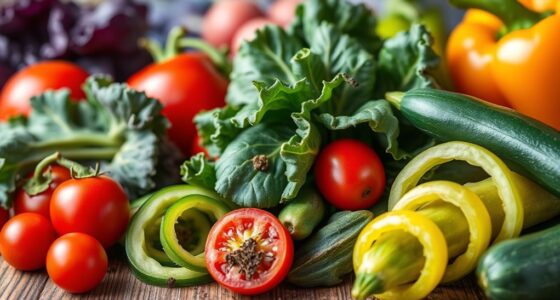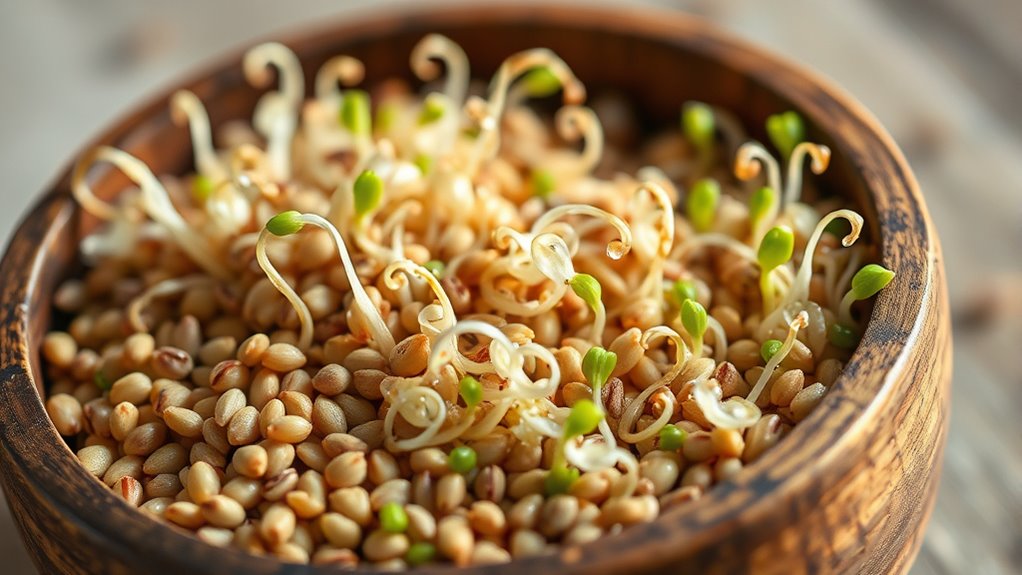

Sprouted ancient grains are a great addition to your raw diet because they boost nutrient absorption and digestion. Sprouting reduces anti-nutrients like phytic acid, making minerals more accessible and increasing vitamins and antioxidants. They have a milder flavor and chewier texture, perfect for salads and wraps. Plus, they support your goal of eating minimally processed, natural foods. Keep exploring how sprouted grains can enhance your raw diet with their health benefits and versatile uses.
Key Takeaways
- Sprouted ancient grains enhance nutrient bioavailability, increasing vitamins, antioxidants, and minerals vital for raw diet benefits.
- They improve digestion by reducing starch and increasing soluble fiber, making raw grains easier to process.
- Suitable for raw diets, sprouted grains can be added to salads, wraps, or eaten as snacks, enriching variety and flavor.
- Natural fermentation during sprouting boosts flavor, texture, and nutritional content, aligning with raw, minimally processed food principles.
- Choosing certified organic sprouted grains ensures safety, minimal processing, and maximum nourishment in raw diet practices.
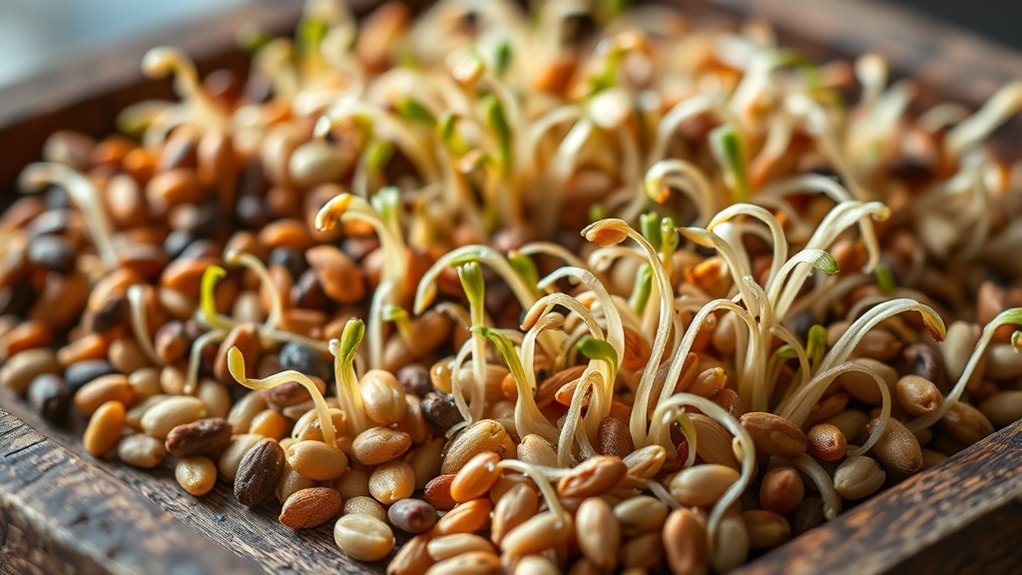
Sprouted ancient grains have gained popularity for their enhanced nutritional benefits and improved digestibility. When you incorporate sprouted grains into your raw diet, you’re tapping into a process that naturally boosts their health benefits. Grain fermentation plays a key role here, as it helps break down anti-nutrients like phytic acid, which can hinder mineral absorption. By sprouting grains, you initiate a natural fermentation process that not only reduces these compounds but also enhances the bioavailability of essential nutrients. This makes sprouted ancient grains a superior choice for those seeking maximum nutritional value from their foods.
The sprouting process activates enzymes within the grains, leading to a significant nutritional enhancement. You get more vitamins, such as B-vitamins and vitamin C, along with increased levels of antioxidants. These nutrients are critical for supporting your immune system, energy production, and overall health. Because sprouting reduces starch content and increases soluble fiber, your digestion becomes smoother, and you’re less likely to experience bloating or discomfort common with heavily processed grains. As a result, sprouted ancient grains become more compatible with raw diets, which emphasize minimally processed, nutrient-dense foods.
In addition to their nutritional benefits, sprouted grains are easier for your body to digest. The fermentation process begins during sprouting, breaking down complex carbohydrates and proteins into simpler forms that your digestive system can handle more efficiently. This means you not only absorb more nutrients but also reduce the load on your gut, which can be especially beneficial if you’re following a raw or plant-based diet. You’ll notice that sprouted grains can be incorporated into salads, sprouted grain wraps, or eaten on their own as a snack, all while nourishing your body with their increased bioavailability.
Moreover, sprouted ancient grains tend to have a milder flavor and chewier texture, making them versatile for various raw food recipes. Their improved digestibility ensures you get the most out of every bite, supporting your goal of maintaining a raw diet rich in unprocessed, nutrient-dense foods. The natural fermentation that occurs during sprouting not only amplifies their nutritional profile but also enhances their taste and texture, making them a satisfying addition to your meals. Additionally, selecting sprouted grains that are certified organic can further ensure you are consuming minimally processed and chemical-free foods, aligning with the principles of raw diets. As you explore raw diets, embracing sprouted ancient grains can help you maximize nourishment while staying aligned with principles of minimal processing and natural food preparation.
Frequently Asked Questions
Are Sprouted Ancient Grains Suitable for Gluten-Sensitive Individuals?
If you have gluten intolerance, sprouted ancient grains might be suitable because the sprouting process reduces gluten levels, making them easier to digest. However, they still contain gluten, so they may not be ideal during a grain detox or for strict gluten sensitivities. Always listen to your body and consult a healthcare professional to determine if sprouted ancient grains fit your gluten-sensitive diet.
How Long Does It Take to Sprout Ancient Grains Properly?
You can sprout ancient grains in about 2 to 3 days with proper techniques. Start by rinsing the grains thoroughly to remove debris, then soak them for 8-12 hours to activate enzymes. Use sprouting techniques like draining and rinsing twice daily to keep them moist. This process releases grain nutrition, making nutrients more bioavailable. Keep it in a dark, warm spot, and you’ll have fresh sprouted grains ready in just a few days.
Can Sprouted Ancient Grains Be Stored Long-Term?
Yes, you can store sprouted ancient grains long-term, but proper grain storage is essential. After sprouting, guarantee they are fully dried to extend their shelf life. Keep the dried sprouted grains in airtight containers in a cool, dark place to maximize their shelf life. Typically, sprouted grain shelf life ranges from several months to a year, depending on storage conditions. Regularly check for signs of spoilage to keep them safe and tasty.
Are There Any Risks Associated With Eating Raw Sprouted Grains?
Eating raw sprouted grains can be riskier than you think—they might cause food poisoning if contaminated, and the enzyme inhibitors can block digestion, turning your meal into a stomach nightmare. While sprouting reduces some risks, lurking bacteria and anti-nutrients still pose threats. So, if you’re not careful, you could end up dealing with serious health issues. Always wash thoroughly or cook to stay safe from these hidden dangers.
What Are the Best Ways to Incorporate Sprouted Grains Into a Raw Diet?
To incorporate sprouted grains into your raw diet, start with grain soaking to initiate sprouting. Keep an eye on sprout timing, ensuring they reach a tender, edible length without overgrowing. Rinse thoroughly and add sprouted grains to salads, smoothies, or raw wraps for added texture and nutrition. This simple process preserves enzymes and nutrients, making your raw meals more wholesome and flavorful.
Conclusion
Incorporating sprouted ancient grains into your raw diet can boost nutrient absorption and digestion. Did you know that sprouting increases mineral bioavailability by up to 20%? This means your body can better utilize essential nutrients like iron, magnesium, and zinc. By choosing sprouted grains, you’re not only enhancing flavor and texture but also supporting paramount health. So, give these nutrient-packed grains a try — your body will thank you for the added nourishment and vitality.