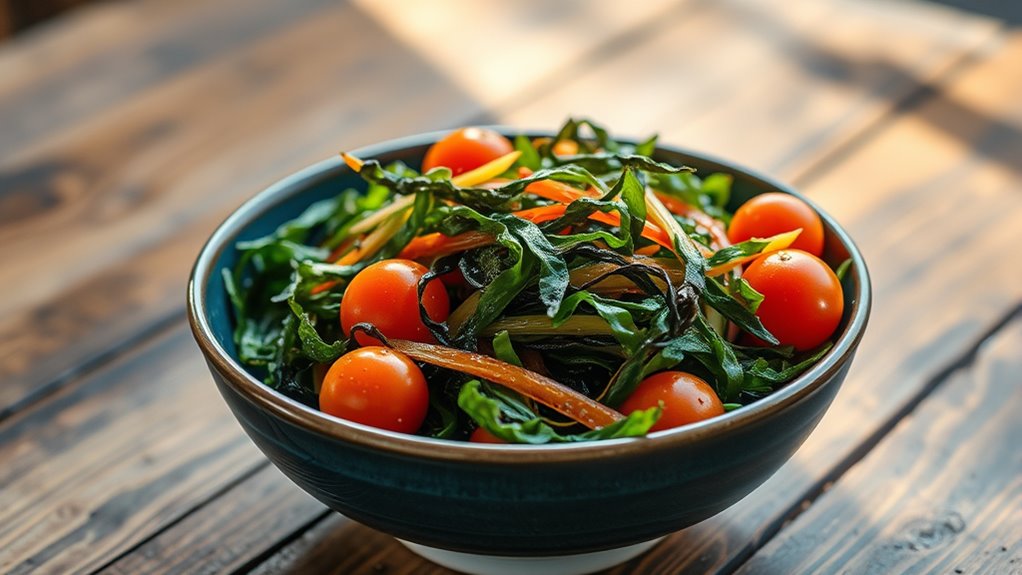

Adding seaweed to your vegetarian recipes boosts flavor, nutrition, and sustainability. You can incorporate dried nori strips into salads, blend wakame or kelp into smoothies, stir it into soups for umami richness, or enjoy it as a healthy snack. Responsible harvesting guarantees these benefits won’t harm marine ecosystems. If you explore more, you’ll discover creative ways to incorporate sustainably sourced seaweed into your dishes, making them both tasty and eco-friendly.
Key Takeaways
- Incorporate dried seaweed like nori or kelp into salads, wraps, or rice bowls for added umami flavor.
- Blend seaweed into smoothies or soups to boost mineral content and enhance taste.
- Use seaweed flakes or powder as a seasoning for veggie dishes, providing oceanic depth.
- Add rehydrated wakame or hijiki to stews and stir-fries for nutritional benefits.
- Experiment with seaweed-based snacks or wraps to combine flavor, nutrition, and sustainability.
Have you ever wondered how to add a savory, umami boost to your vegetarian dishes? Seaweed is a fantastic ingredient that can elevate your meals with its rich, oceanic flavor. The key to incorporating seaweed into your recipes responsibly lies in understanding sustainable harvesting and seaweed farming techniques. When you choose seaweed, look for sources that prioritize environmental health and responsible cultivation, ensuring this vibrant ocean plant continues to thrive without damaging marine ecosystems. Sustainable harvesting involves collecting seaweed in a way that allows it to regenerate naturally, avoiding overharvesting that could harm delicate underwater habitats. Many seaweed farmers use careful, selective harvesting methods, cutting only mature plants and leaving enough behind to promote regrowth. This approach maintains healthy populations and supports the overall balance of marine life. Additionally, Free Floating techniques help ensure that seaweed harvesting remains environmentally friendly and sustainable for future generations.
Seaweed farming techniques have advanced considerably, making it easier for you to access high-quality, responsibly cultivated products. Many farms cultivate seaweed using sustainable methods, such as long-line systems or net enclosures, which minimize environmental impact. These techniques allow for controlled growth, reducing the risk of pollution and habitat destruction. When shopping for seaweed, look for labels that specify sustainable practices or certifications indicating responsible farming. This not only helps protect marine environments but also ensures you’re getting fresh, nutritious seaweed free of contaminants. Incorporating seaweed into your vegetarian recipes can be simple and rewarding; you might add dried nori strips to salads, blend seaweed into smoothies for a boost of minerals, or stir in wakame or kelp into soups and stews. The umami flavor from seaweed enhances the taste profile of your dishes, making them more satisfying and complex.
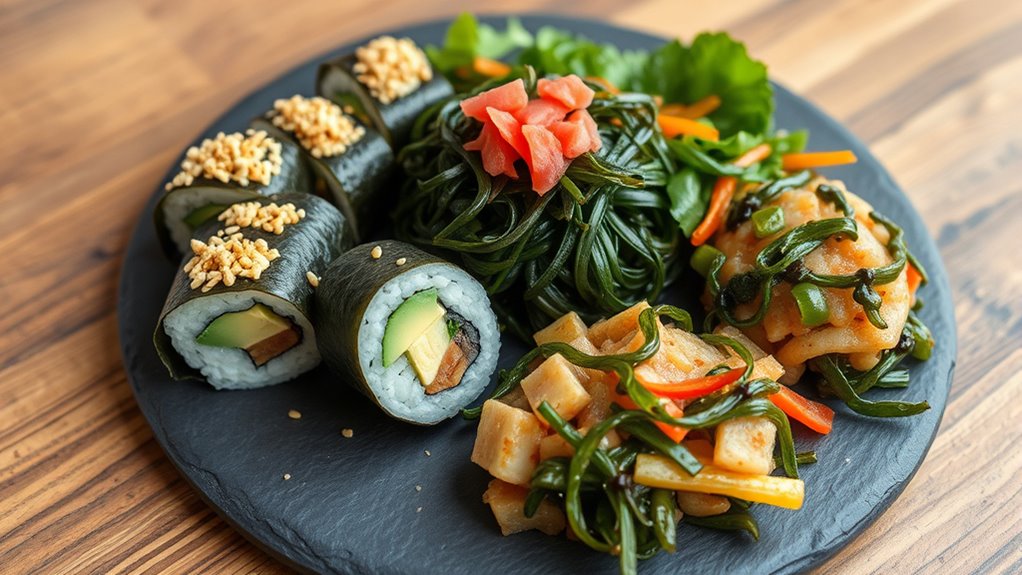
Using responsibly harvested and sustainably farmed seaweed ensures your culinary adventures don’t contribute to environmental degradation. Plus, it supports a growing industry committed to protecting ocean health. By choosing seaweed products from reputable sources, you help promote sustainable harvesting practices and encourage more seaweed farms to adopt eco-friendly techniques. The benefits extend beyond flavor—seaweed is packed with nutrients, including iodine, calcium, and antioxidants, making it a nutritious addition to vegetarian diets. As you experiment with different recipes, keep in mind that the quality and origin of your seaweed can influence flavor and safety. Opt for organic or certified sustainable options whenever possible. Whether you’re making a hearty soup, a savory snack, or a plant-based sushi roll, seaweed offers a versatile, eco-friendly way to enrich your vegetarian meals with depth, flavor, and health benefits.
Frequently Asked Questions
Can Seaweed Recipes Be Suitable for People With Shellfish Allergies?
Yes, seaweed recipes can be suitable for people with shellfish allergies, but you need to be cautious. Seaweed allergy risk is generally low, yet cross reactivity concerns exist because seaweed shares allergens with shellfish. Always check labels and source your seaweed from reputable suppliers to avoid contamination. If you’re unsure, consult an allergist to confirm that seaweed is safe for your specific allergy.
How Do Seaweed Flavors Vary Across Different Types?
Imagine tasting nori in sushi, offering a mild umami boost, versus wakame’s subtly sweet, briny flavor. Different seaweed types vary widely in flavor profiles, from the earthy richness of kelp to the sharp saltiness of dulse. These variations enhance dishes with unique umami qualities, allowing you to tailor flavor profiles to your taste. Each type’s distinct taste adds depth, making seaweed versatile for vegetarian recipes and beyond.
Are There Any Storage Tips for Leftover Seaweed Ingredients?
To keep your leftover seaweed fresh, store it in an airtight container in the refrigerator. Follow refrigeration tips by ensuring the container is sealed tightly to prevent moisture loss and contamination. Consume within a few days for ideal flavor and texture. If you have dried seaweed, keep it in a cool, dark, airtight bag or jar, away from direct sunlight, to maintain freshness for longer periods.
Can Seaweed Be Incorporated Into Gluten-Free Vegetarian Dishes?
Did you know seaweed is a superfood with over 10,000 varieties worldwide? You can easily incorporate gluten-free seaweed into vegetarian-friendly dishes by adding it to rice bowls, salads, or wraps. Seaweed’s natural umami flavor enhances taste without gluten, making it perfect for gluten-free vegetarian meals. So, next time you cook, try experimenting with gluten-free seaweed for a nutritious, flavorful upgrade that’s both plant-based and allergy-friendly.
What Are the Nutritional Benefits of Seaweed in Vegetarian Diets?
You’ll benefit from seaweed’s high iodine content, which supports your thyroid health and hormone balance. Its antioxidant properties help protect your cells from damage, boosting your immune system. Incorporating seaweed into your vegetarian diet can improve your overall nutrition, providing essential minerals and vitamins. Plus, it’s versatile and easy to add to soups, salads, or wraps, making it a delicious way to enhance your health naturally.
Conclusion
As you savor these vibrant seaweed-infused vegetarian dishes, imagine the gentle sway of ocean waves in every bite. The briny aroma mingles with fresh herbs, creating a symphony of flavors that transport you to seaside breezes. With each mouthful, you’re not just enjoying a meal—you’re tasting the ocean’s embrace, nourishing your body and soul. Let these recipes inspire you to explore the endless, delicious depths of seaweed’s culinary magic.