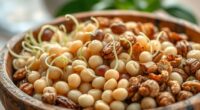
To balance nutrients on a vegetarian diet, focus on combining different plant-based foods to guarantee you get complete proteins, like pairing rice and beans. Include fortified foods or supplements for vitamin B12, and eat a variety of fruits, vegetables, whole grains, nuts, and seeds to cover vitamins and minerals. Incorporate sources of omega-3s like flaxseeds or walnuts, and enhance iron absorption with vitamin C-rich foods. Keep these tips in mind as you explore how to create a nutritious vegetarian plan.

Get kitchen staples and gadgets delivered free with Prime
- Fast, free delivery on millions of items
- Prime Video, Amazon Music and more included
- Member-only deals all year
Key Takeaways
- Combine various plant protein sources like beans, grains, nuts, and seeds to ensure complete amino acid intake.
- Incorporate fortified foods and consider supplements for nutrients like vitamin B12 and iron to prevent deficiencies.
- Enhance iron absorption by consuming vitamin C-rich foods alongside non-heme iron sources such as spinach and lentils.
- Include omega-3 rich foods like flaxseeds, chia seeds, and walnuts to support brain health.
- Plan diverse, balanced meals and regularly monitor nutrient levels with healthcare guidance for optimal health.

Adopting a vegetarian diet can be a healthy choice, but it requires careful planning to guarantee you’re getting all the essential nutrients your body needs. One of the main challenges is ensuring you consume enough plant-based protein, which is vital for muscle repair, immune function, and hormone production. Unlike animal products, many plant sources of protein are not complete proteins on their own, meaning they lack one or more essential amino acids. To address this, you should include a variety of plant-based foods like beans, lentils, tofu, tempeh, quinoa, nuts, and seeds. Combining different protein sources throughout the day helps ensure you obtain all necessary amino acids. For example, pairing rice with beans or hummus with whole-grain bread creates a complete protein profile, supporting your body’s needs effectively.
Including a variety of plant proteins and combining foods ensures complete amino acid intake.
Another critical nutrient to focus on is vitamin B12, which primarily comes from animal products. Since you avoid these, it’s essential to find reliable vitamin B12 sources to prevent deficiency, which can lead to fatigue, neurological issues, and anemia. Fortified foods like plant-based milks, breakfast cereals, and nutritional yeast are excellent options. You might also consider taking a B12 supplement, but consult with a healthcare provider to determine the right dosage for your needs. Regularly monitoring your B12 levels through blood tests can help you stay on top of your health and adjust your intake if necessary.
Balancing your vegetarian diet involves more than just protein and B12. You need to include a diverse range of fruits, vegetables, whole grains, nuts, and seeds to ensure you’re getting enough fiber, vitamins, and minerals. Iron, for example, is another nutrient you should pay attention to, as plant sources like spinach, lentils, and fortified cereals contain non-heme iron, which isn’t absorbed as efficiently as heme iron from animal sources. Consuming vitamin C-rich foods alongside iron-rich plants boosts absorption, so include citrus fruits, bell peppers, or tomatoes with your meals. Incorporating diverse food choices and understanding nutrient absorption can significantly improve your nutritional intake.
In addition, omega-3 fatty acids, essential for brain health, can be obtained from flaxseeds, chia seeds, walnuts, and algae-based supplements. By planning your meals carefully—diversifying your food choices, incorporating fortified products, and considering supplements—you can maintain a nutritious vegetarian diet that supports your overall health. Staying informed about your nutritional intake and seeking professional guidance when needed ensures you meet all your body’s requirements without relying on animal products.
As an affiliate, we earn on qualifying purchases.
Frequently Asked Questions
Can Vegetarians Get Enough Omega-3 Fatty Acids?
Yes, you can get enough omega-3 fatty acids as a vegetarian. You should include alternative omega-3 sources like flaxseeds, chia seeds, and walnuts in your diet. Additionally, consider vegetarian omega-3 supplements derived from algae, which are a great way to guarantee you’re meeting your needs. Combining these sources helps you maintain ideal omega-3 levels for your overall health and well-being.
How Do Vegetarians Maintain Adequate Vitamin B12 Levels?
You can maintain adequate vitamin B12 levels by regularly consuming fortified foods like cereals, plant-based milk, or nutritional yeast, which are enriched with B12. Additionally, taking B12 supplements helps guarantee you meet your daily needs, especially if your diet lacks animal products. Combining fortified foods and supplements provides a reliable way to prevent deficiency and support your overall health on a vegetarian diet.
Are Plant-Based Proteins Complete Proteins?
Think of plant-based proteins as a colorful tapestry—each strand adds to the whole, but not every thread is complete alone. While many plant proteins lack all essential amino acids, diversifying your plant protein sources creates a full amino acid profile. By combining beans, grains, nuts, and seeds, you guarantee your diet has complete proteins, nourishing your body with the essential amino acids it needs to thrive.
What Are the Best Iron Sources for Vegetarians?
You can boost your iron intake by including plant-based sources like lentils, spinach, and fortified cereals. To improve iron absorption, pair these with vitamin C-rich foods such as citrus fruits or bell peppers. If needed, consider plant-based supplements to meet your needs. Reducing tea and coffee around meals also helps, as they can inhibit iron absorption, ensuring you get the most from your vegetarian iron sources.
How Can Vegetarians Prevent Calcium Deficiency?
You can prevent calcium deficiency by incorporating dairy alternatives like fortified plant milks and yogurts into your diet. Additionally, consider calcium supplements if you’re not getting enough from food sources. Eating calcium-rich foods such as leafy greens, almonds, and sesame seeds also helps. Regularly check your calcium intake and talk to a healthcare professional about supplements if needed to guarantee you’re meeting your daily requirements.
Conclusion
Balancing nutrients on a vegetarian diet keeps you healthy and energized. Did you know that plant-based eaters often have lower cholesterol levels and a reduced risk of heart disease? By including a variety of foods like beans, nuts, and leafy greens, you guarantee your body gets all essential nutrients. Stay mindful of your intake, and you’ll enjoy the benefits of a balanced vegetarian lifestyle that supports long-term well-being.
Fall Picks
fall essentials
As an affiliate, we earn on qualifying purchases.