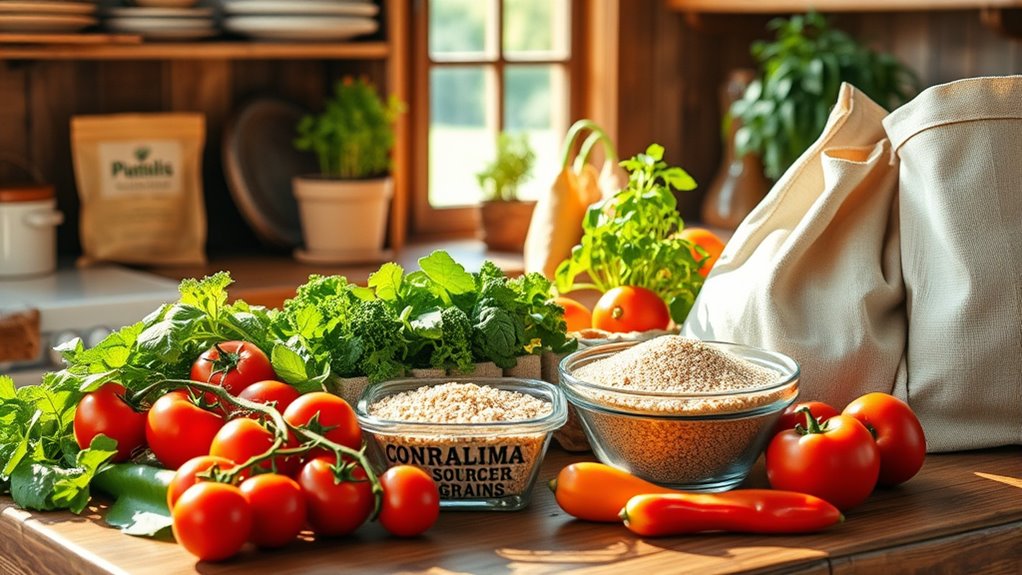

To reduce your food carbon footprint, make mindful choices about packaging and sourcing. Opt for products with minimal or recyclable packaging, and buy locally to cut transportation emissions. Supporting farms that use sustainable methods also helps lower environmental impact. Combining local sourcing with eco-friendly packaging amplifies benefits and promotes responsible consumption. Small, consistent actions can lead to significant change, and exploring more ways can help you make even greater eco-friendly habits part of daily life.
Key Takeaways
- Choose locally sourced foods to minimize transportation emissions and support sustainable farming practices.
- Opt for products with minimal, recyclable, or compostable packaging to reduce waste and environmental impact.
- Support farmers and vendors who use eco-friendly packaging and sustainable farming methods.
- Ask about packaging and sourcing to encourage stores and markets to adopt greener practices.
- Incorporate seasonal, local produce into your diet to reduce packaging needs and environmental footprint.

Reducing your food carbon footprint is a practical way to lower your overall impact on the environment. One effective step is paying attention to how your food is packaged and sourced. Opting for sustainable packaging helps minimize waste and reduces the carbon emissions associated with producing and disposing of plastic and other non-biodegradable materials. Look for products that use recyclable, compostable, or minimal packaging. By choosing brands committed to sustainable packaging, you directly support practices that are better for the planet. This small change can considerably cut down on the waste you contribute to landfills and decrease the energy used in packaging production.
Prioritize sustainable packaging to reduce waste and lower your food-related carbon footprint.
Another impactful move is focusing on local food sourcing. When you buy locally grown produce and products, you reduce the energy required for transportation, which is a major contributor to the carbon footprint of food. Shopping at farmers’ markets or joining community-supported agriculture (CSA) programs ensures you’re getting fresh, seasonal foods that haven’t traveled long distances. Local food sourcing also supports regional farmers and promotes sustainable farming practices, which often have a lower environmental impact compared to large-scale industrial agriculture. It’s easier to verify how your food is grown and handled when it comes from nearby sources, giving you confidence that you’re making environmentally responsible choices.
Combining these practices amplifies your impact. When you choose local foods that come with minimal, sustainable packaging, you’re actively reducing the entire lifecycle emissions of your meals. It’s not just about what you eat but how it gets to your table. For example, selecting fruits and vegetables in season from local farms generally means less packaging is needed to preserve or transport them. Many local farmers use eco-friendly packaging options or even encourage customers to bring their own reusable bags and containers, further cutting down waste.
Being mindful of your food choices extends beyond what you buy. It’s about supporting systems that prioritize sustainability at every step. When shopping, ask questions about how the food is packaged and where it’s sourced. Seek out stores and vendors that promote sustainable packaging and local sourcing. By doing so, you’re encouraging a market shift that values environmentally friendly practices. Additionally, supporting sustainable farming techniques can further reduce the environmental impact of your food choices. Over time, these small, consistent actions can lead to a notable reduction in your overall food-related carbon footprint, helping protect the environment for future generations.
Frequently Asked Questions
How Can I Measure My Current Food Carbon Footprint Accurately?
To measure your current food carbon footprint accurately, start with carbon footprint calculation tools or apps that focus on food-related emissions. Track your food consumption daily by noting what you eat, including portion sizes. This data helps you estimate the emissions associated with your diet. Regular food consumption tracking provides a clear picture of your impact, enabling you to identify areas for improvement and make more sustainable choices.
What Are the Best Plant-Based Protein Sources for Reducing Emissions?
You should try legume varieties like lentils, chickpeas, and black beans, which are excellent plant-based protein sources that lower emissions. Soy alternatives such as tofu, tempeh, and edamame also pack a punch in reducing your carbon footprint. These options are versatile, nutrient-rich, and sustainable, making them ideal choices to incorporate into your diet for a greener, healthier lifestyle.
How Does Food Transportation Impact Overall Food-Related Carbon Emissions?
You might think food transportation has little impact, but food miles considerably contribute to your overall food-related carbon emissions. When food travels long distances, transportation emissions increase, raising your carbon footprint. By choosing locally sourced foods, you reduce transportation emissions and support your community. Cutting down on food miles makes a real difference, helping you lower your environmental impact while still enjoying fresh, nutritious meals.
Are Organic Foods Always Better for Reducing My Carbon Footprint?
Organic foods aren’t always better for reducing your carbon footprint. Organic farming generally uses fewer pesticides and synthetic fertilizers, which can lower pollution, but it may also require more land and water, increasing emissions. If minimizing pesticide use is your goal, organic options help. However, consider transportation emissions and local sourcing too. Balancing organic choices with local and seasonal foods can make a bigger difference in reducing your overall carbon footprint.
What Are Simple Daily Habits to Lower My Food-Related Carbon Impact?
Think of your daily habits like planting seeds for a greener future. You can lower your food-related carbon impact by meal planning to avoid waste and choosing local sourcing to cut emissions from transportation. Incorporate more plant-based meals into your routine, and buy seasonal produce whenever possible. These small changes, done consistently, can make a big difference in reducing your overall food footprint.
Conclusion
You might think small changes won’t make a difference, but studies show that reducing your meat consumption and choosing local foods can substantially cut your carbon footprint. Some experts argue that individual actions alone won’t solve climate change, but history shows collective efforts start with personal choices. By being mindful of what you eat, you not only help the planet but also inspire others to join the movement. Your choices truly do matter—start making a difference today.