
To reduce single-use plastics in your kitchen, switch to reusable containers, beeswax wraps, or silicone covers instead of plastic wrap and bags. Opt for products with biodegradable or recyclable packaging, and support brands prioritizing sustainable options. Refill household products using refillable bottles, and buy in bulk to cut down on packaging waste. Small changes like these can make a big difference—keep exploring for more tips to make your kitchen eco-friendly.
Key Takeaways
- Switch to reusable containers like glass or silicone instead of plastic wrap and single-use bags.
- Choose products with biodegradable or recyclable packaging to minimize plastic waste.
- Replace plastic bottles with refillable options for cleaning and household liquids.
- Use beeswax wraps, silicone covers, or reusable bowl covers for food storage.
- Support bulk purchasing and eco-friendly brands to reduce packaging and plastic consumption.
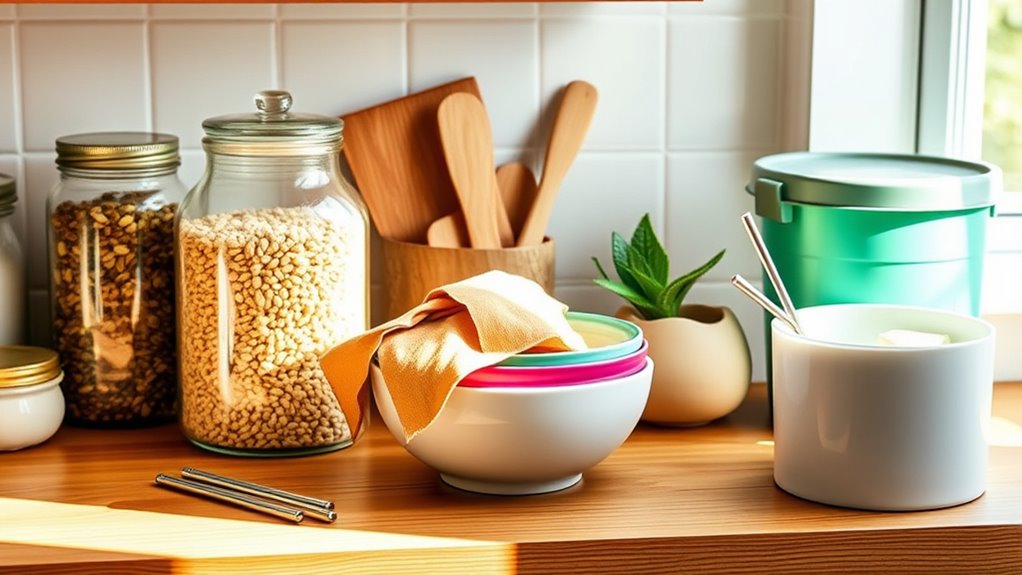
Have you ever wondered how your daily choices impact the environment? Every time you reach for a plastic bag or container, you’re contributing to a growing problem of waste and pollution. But the good news is, you can take simple steps to reduce single-use plastics in your kitchen. One of the most effective ways is by switching to reusable storage options. Instead of tossing out flimsy plastic wrap or single-use bags, invest in glass or silicone containers that you can wash and use again and again. These containers not only cut down on waste but also keep your food fresh longer. Plus, they’re durable and look great on your countertop. Using reusable storage also means you won’t have to buy disposable options constantly, saving money over time.
In addition to reusable storage, pay attention to the packaging of the products you buy. Eco friendly packaging options are becoming more common, and choosing products wrapped in biodegradable or recyclable materials makes a difference. Look for brands that prioritize sustainable packaging, such as paper, cardboard, or compostable materials, rather than plastic. By making this shift, you’re encouraging companies to adopt greener practices and reducing the amount of plastic waste that ends up in landfills and oceans. Whenever possible, buy in bulk to minimize waste from individual packaging, and bring your own containers to stores that allow it. This not only cuts down on single-use plastic waste but also supports a more sustainable shopping habit.
Another simple change you can make is to replace plastic wrap with eco friendly packaging alternatives. Beeswax wraps, silicone covers, or reusable bowl covers are excellent options that seal in freshness without creating waste. These products are designed to last for months or even years when cared for properly, making them a smart investment. Additionally, consider using refillable bottles for liquids like dish soap or cleaning products instead of constantly buying new plastic bottles. This reduces the amount of plastic you throw away and minimizes the environmental footprint of your household. Incorporating high-quality, home theatre projectors, such as those with high contrast ratios and accurate color reproduction, can also enhance your entertainment experience at home.
Frequently Asked Questions
What Are the Best Reusable Alternatives for Plastic Wrap?
You should try beeswax wraps and silicone food covers as top reusable alternatives for plastic wrap. Beeswax wraps mold around bowls and sandwiches easily, providing an eco-friendly seal. Silicone food covers stretch over containers, creating a tight, durable barrier. Both options are reusable, washable, and help cut down on waste. These alternatives are stylish, practical, and perfect for keeping food fresh without relying on single-use plastics.
How Can I Encourage Family to Reduce Plastic Use?
Think of your family as a garden where habits grow; you can nurture sustainable choices by planting seeds of plastic awareness. To encourage reduction, lead by example, share the benefits of eco-friendly alternatives, and make it a team effort. Discuss the impact of plastic waste, set achievable goals, and celebrate progress. Engaging family members in projects like composting or reusable shopping bags fosters lasting habits and collective responsibility.
Are Biodegradable Plastics a Sustainable Solution?
Biodegradable plastics can be a more sustainable option, but they aren’t a perfect solution. They break down faster than traditional plastics, reducing environmental impact if properly disposed of. However, their sustainability depends on factors like composting facilities and temperature conditions. You should consider using biodegradable plastics as part of a broader strategy, including recycling and reducing overall plastic use, to truly minimize environmental impact.
How Do I Dispose of Plastic Waste Responsibly?
Your plastic waste can pile up faster than a mountain, so you need a plan. Start by recycling plastic bags properly at designated centers, ensuring they don’t end in landfills. Compost food scraps to reduce waste and create nutrient-rich soil. Always rinse plastics before recycling, and avoid throwing plastics in the trash. Responsible disposal keeps our planet cleaner and healthier for future generations.
What Are Some Budget-Friendly Eco-Friendly Kitchen Swaps?
You can switch to plastic bag alternatives like reusable cloth bags or silicone containers for shopping and storage. Use eco-friendly cleaning supplies such as vinegar, baking soda, and natural soaps instead of plastic-packaged cleaners. These swaps are budget-friendly and help reduce plastic waste. Incorporate these small changes into your routine, and you’ll make a positive impact on the environment while saving money.
Conclusion
By cutting out single-use plastics, you’re not just making a small change—you’re transforming your entire kitchen into a plastic-free paradise! Imagine a world where your countertops stay pristine, oceans are free of countless plastic debris, and future generations breathe cleaner air. Every plastic-free choice you make is like a giant leap for the planet. So, don’t wait—embrace these habits today and become a hero in the fight against plastic pollution!