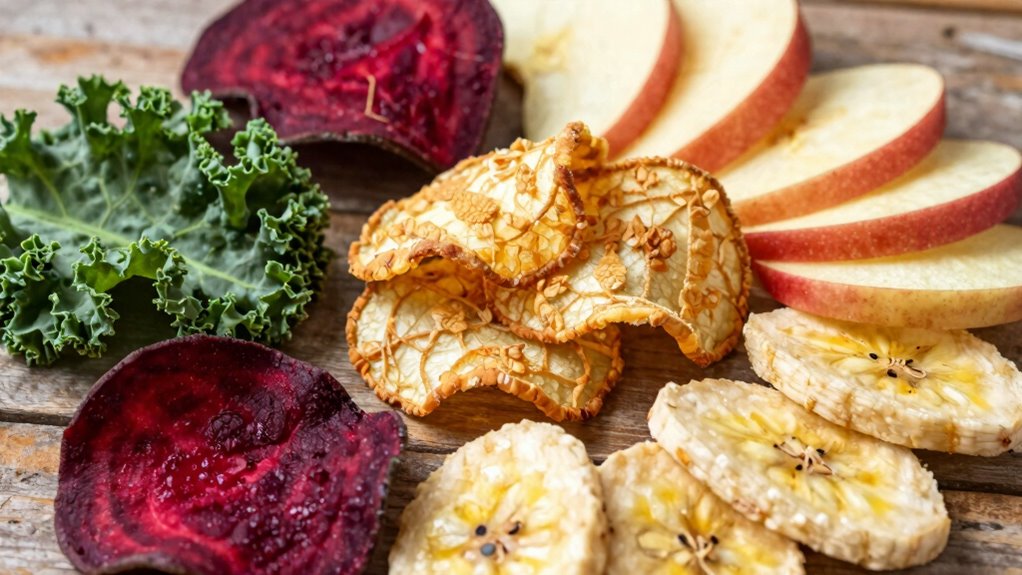

To make raw snacks that don’t taste like cardboard, focus on selecting ripe, seasonal produce and season them evenly with fresh herbs and spices before dehydrating at the right temperature and duration. Proper preparation and careful monitoring guarantee snacks stay flavorful, crunchy, and vibrant. Avoid over- or under-drying, which can dull flavor or create rubbery textures. Mastering these dehydration techniques can turn ordinary ingredients into delicious, satisfying treats—keep exploring to discover more tips and tricks.
Key Takeaways
- Use ripe, seasonal produce to maximize natural sweetness and vibrant flavor in dehydrated snacks.
- Maintain proper dehydration temperature (115-125°F) and airflow to ensure even drying without flavor loss.
- Season ingredients evenly with fresh herbs and spices, layering flavors gradually for enhanced taste.
- Properly prepare and store ingredients to preserve nutrients, freshness, and natural flavors.
- Store dehydrated snacks in airtight, cool, dark environments to retain crunch and vibrant flavor over time.
Why Dehydration Is Essential for Flavorful Raw Snacks
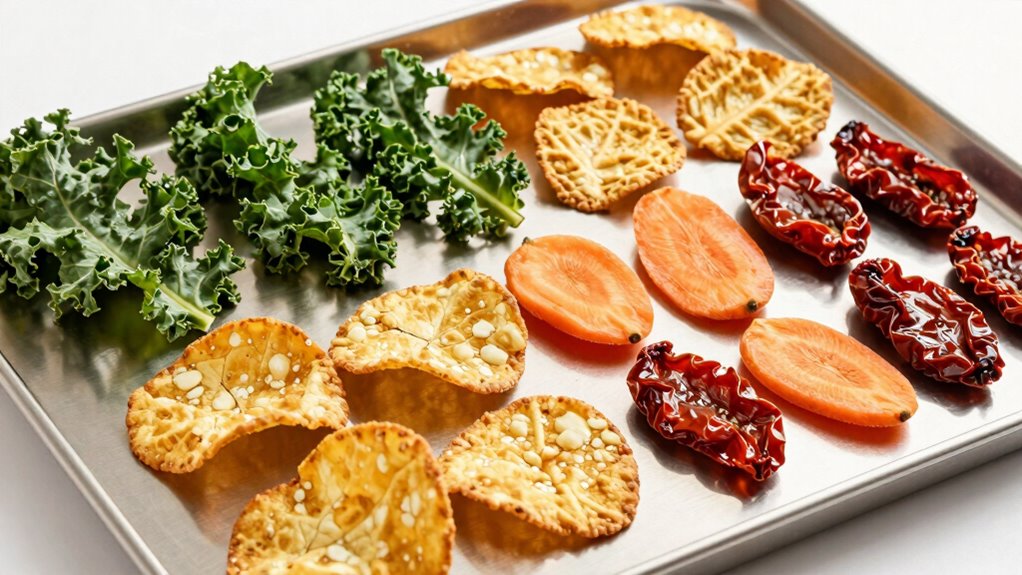
Dehydration is essential for revealing the full flavor of raw snacks because it concentrates their natural sugars and aromas. When you remove moisture, you enhance the taste, making fruits and vegetables sweeter and more vibrant. Many believe dehydration diminishes nutritional benefits, but that’s a dehydration myth—properly dried snacks retain most nutrients. Dehydration liberates concentrated flavors without adding preservatives or sugars, making your snacks healthier. It also improves texture, giving a satisfying crunch. By understanding how dehydration works, you can create snacks that are both flavorful and nutritious. Proper dehydration techniques maximize flavor retention and understanding how different ingredients respond to heat are key to successful results. Skipping this step often results in bland or soggy results, diminishing the overall experience. Embracing dehydration helps you enjoy raw snacks with richer taste and maximum health benefits, turning simple ingredients into delightful treats. Recognizing dehydration methods allows you to tailor the process to various ingredients for optimal flavor and texture. Using the right temperature and timing can further preserve nutrients while enhancing flavor profiles. Additionally, mastering temperature control ensures that you avoid over-drying or under-drying your snacks, which can compromise quality.
Choosing Fruits and Vegetables That Maximize Flavor
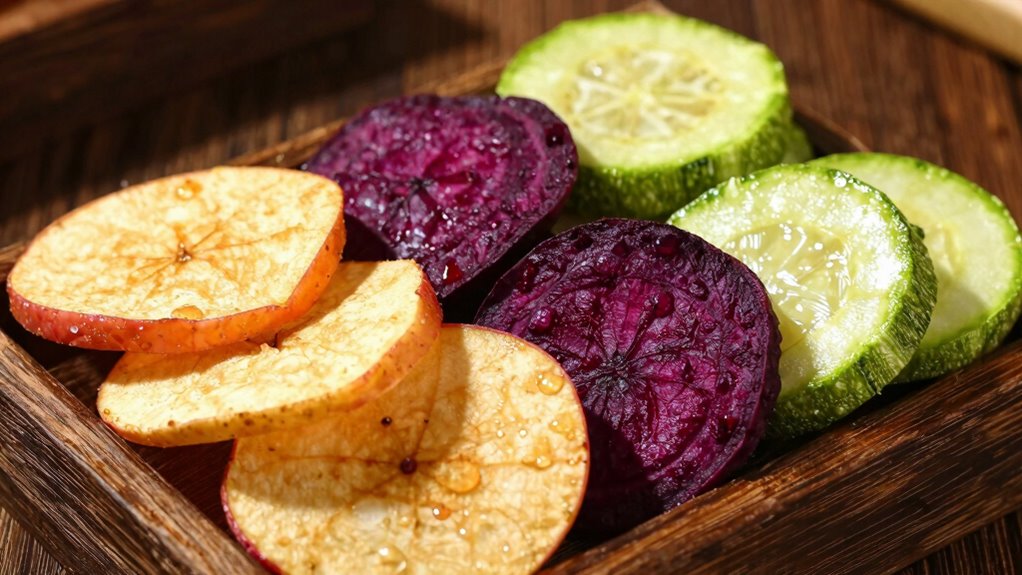
To get the best flavor in your raw snacks, choose ripe fruits and seasonal vegetables that are at their peak freshness. Pay attention to ideal dehydration timing to preserve their natural taste and texture. By selecting the right produce and timing, you’ll enhance the flavors and enjoy more vibrant snacks. Additionally, incorporating freshly harvested ingredients can significantly boost the overall taste and nutritional value of your dehydrated treats. Properly prepping your produce can also ensure more consistent and flavorful results, especially when using dehydrators with efficient airflow features to maintain even drying. Utilizing market trend insights can help you select produce that is in high demand and at the peak of its flavor, further elevating your snacks. Using the correct dehydrator techniques can further enhance flavor retention during the drying process.
Ripe Fruit Selection
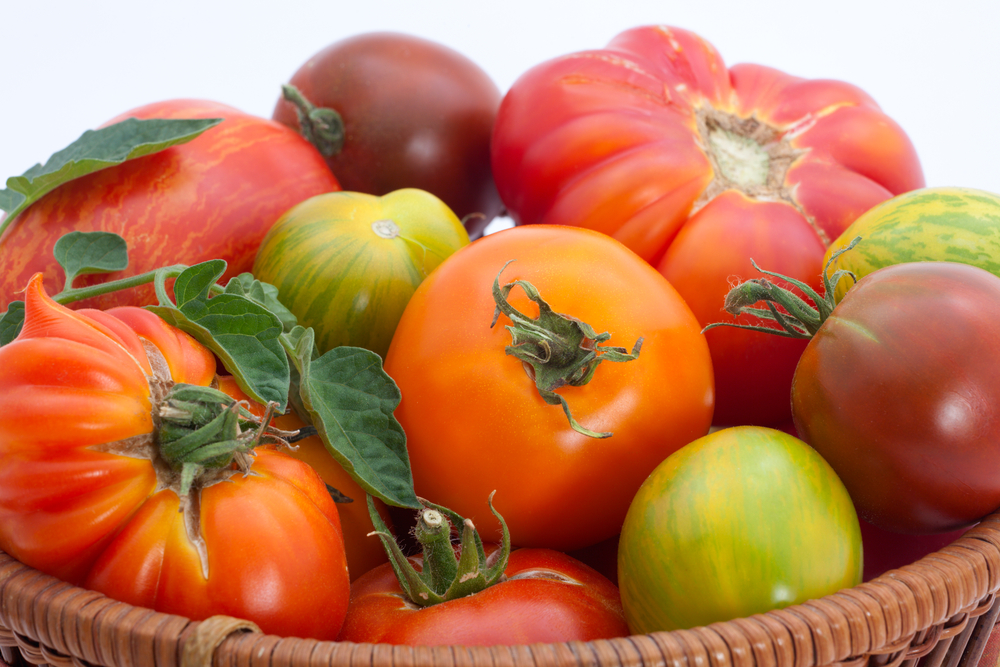
Choosing ripe fruits and vegetables is essential for maximizing flavor in your dehydrated snacks. Fruit ripeness directly affects sweetness, juiciness, and overall taste, so select produce that’s fully ripe but not overripe. When possible, opt for seasonal produce, as it tends to be fresher and more flavorful. Ripe fruit will yield a richer, more vibrant flavor after dehydration, making your snacks more enjoyable. Look for fruits that are firm but yield slightly to gentle pressure, with vivid colors and a fragrant aroma. Avoid produce with blemishes or signs of spoilage. By choosing perfectly ripe, seasonal produce, you ensure your dehydrated snacks will be naturally sweet, flavorful, and satisfying without added sugars or artificial flavorings. Additionally, selecting freshly harvested produce can significantly improve the dehydration outcome by preserving maximum nutrients and flavor. Proper storage techniques are also crucial, as they help maintain the produce’s optimal freshness and flavor until dehydration. Using appropriate storage methods can further extend freshness and prevent spoilage before dehydration.
Seasonal Vegetable Choices
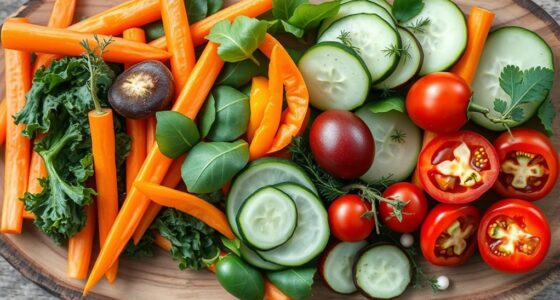
Opting for seasonal vegetables guarantees you get the freshest, most flavorful produce for your dehydrated snacks. Choosing the right seasonal vegetable varieties depends on harvest timing, which assures peak flavor and nutrient density. When vegetables are in season, they’re at their best taste and texture, making your snacks more vibrant. Focus on vegetables like zucchini, bell peppers, carrots, tomatoes, and cucumbers during their peak harvest periods. Using seasonal produce also reduces the need for preservatives and enhances natural sweetness. Keep an eye on local harvest calendars to select vegetables at their prime. This approach guarantees your dehydrated snacks taste fresh and lively, avoiding the dullness that comes with out-of-season produce. Seasonal produce also supports local agriculture and reduces environmental impact. Additionally, selecting in-season vegetables can help you avoid supply chain issues that often affect out-of-season items, ensuring consistent quality and availability. Incorporating seasonal vegetables into your recipes can elevate the overall flavor profile and nutritional value of your snacks. Consuming fresh, in-season produce can also help maximize the retention of nutrients during dehydration, resulting in more nutritious snacks. Moreover, understanding harvest timing can help you plan your dehydrating process more effectively.
Optimal Dehydration Timing
Timing is crucial when dehydrating fruits and vegetables because harvesting or selecting produce at its peak ripeness guarantees maximum flavor and nutrient retention. Proper dehydration duration ensures your snacks retain their vibrant flavor without becoming overly dry or losing essential qualities. To maximize flavor retention, choose produce that’s perfectly ripe; underripe or overripe items can compromise taste. Additionally, piercing care during dehydration can help improve airflow and drying consistency. Ensuring the correct dehydration environment can also impact the preservation of flavor and nutrients. The table below highlights ideal conditions:
| Fruit/Vegetable | Optimal Dehydration Duration | Flavor Tips |
|---|---|---|
| Apples | 6-8 hours | Use cinnamon for extra zest |
| Tomatoes | 8-10 hours | Slice thin for even drying |
| Mangoes | 10-12 hours | Check texture for softness |
Adjust times based on thickness and moisture content for the best results. Moreover, selecting produce with high flavor quality can significantly enhance your dehydrated snacks, especially when considering the timing of harvest, which directly affects flavor intensity. Properly timing your harvest or selection process is a key step in achieving maximum flavor preservation.
How to Prepare and Season Ingredients for Better Taste
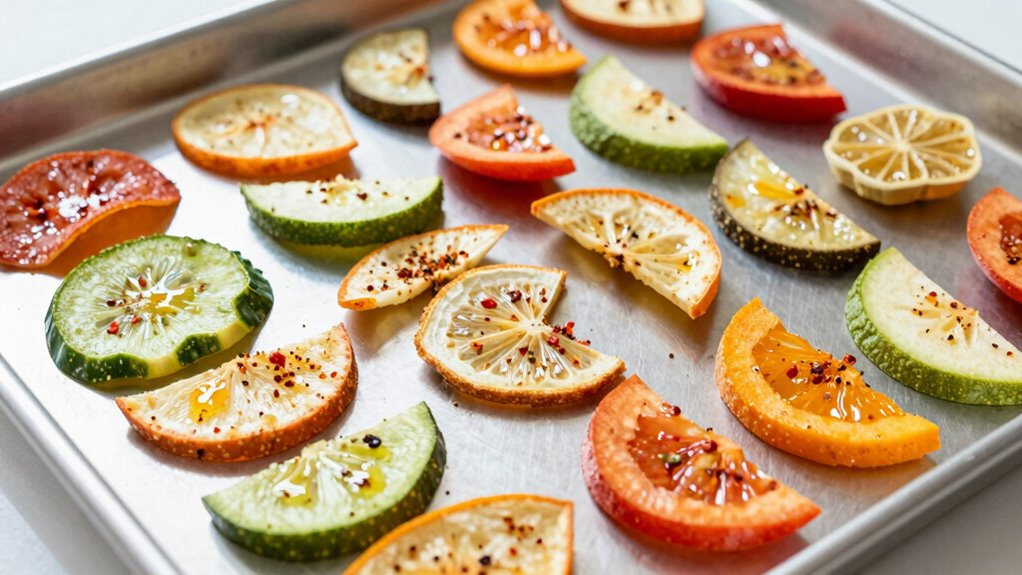
Start by selecting fresh, high-quality ingredients to guarantee the best flavor. Use proper seasoning techniques, such as even coating or marinating, to enhance taste. Adjust dehydration settings to preserve seasonings and achieve ideal texture. Embracing artistic expression during preparation can also inspire more flavorful and creative snack options. Incorporating local ingredients when possible can further elevate the flavor profile of your dehydrated snacks.
Selecting Fresh Ingredients
Choosing fresh, high-quality ingredients is key to making delicious dehydrated snacks. Fresh ingredients guarantee better flavor, texture, and longer shelf life, which is essential for snack quality and safety. When sourcing ingredients, prioritize local or trusted suppliers to assure freshness and avoid preservatives. Look for vibrant colors, firm textures, and ripeness to maximize flavor and nutrient content. Proper ingredient selection helps eliminate the need for extensive seasoning later. Consider seasonal produce for prime taste and availability. Always check for signs of spoilage or bruising before purchasing. Remember, high-quality ingredients set the foundation for tasty, nutritious snacks that won’t taste like cardboard. Quality sourcing and freshness directly influence the final product’s flavor, shelf life, and overall appeal.
- Vibrant color and firmness
- Seasonal availability
- Trusted ingredient sourcing
- No bruises or spoilage
- Ripe and fresh produce
Proper Seasoning Techniques
Once you’ve selected fresh, high-quality ingredients, proper seasoning can elevate their natural flavors and create a more delicious dehydrated snack. To achieve the best results, focus on seasoning consistency—distributing spices and herbs evenly ensures each bite is flavorful. Use a light hand at first; you can always add more, but it’s hard to fix over-seasoning. Layer flavors gradually to build complexity—start with a base of salt or lemon juice, then add spices like paprika or cumin for depth. Toss ingredients thoroughly to ensure even coating, which promotes consistent flavor throughout. Remember, seasoning is about enhancing, not overpowering, the natural taste. With mindful seasoning techniques, your dehydrated snacks will boast rich, appealing flavor profiles that keep everyone coming back for more.
Optimal Dehydration Settings
To maximize flavor and texture in your dehydrated snacks, establishing the right dehydration parameters from the start is essential. Precise dehydration settings ensure even drying, preserving nutrients and enhancing flavor. Aim for consistent temperature control, typically between 115-125°F (46-52°C), to prevent over-drying and maintain raw qualities. Adjust dehydration time based on ingredient thickness and moisture content for ideal flavor optimization. Use a fan or airflow system to improve dehydration precision and avoid mold or spoilage. Regularly check texture and moisture levels during the process to fine-tune settings. Properly seasoned ingredients also dehydrate better, locking in flavors without bitterness. By mastering these settings, you’ll create snacks that are crispy, flavorful, and free from that cardboard taste.
- Consistent temperature control
- Adjust based on ingredient thickness
- Use airflow for even drying
- Monitor moisture levels regularly
- Fine-tune dehydration time
Setting Your Dehydrator for Crispy, Delicious Snacks
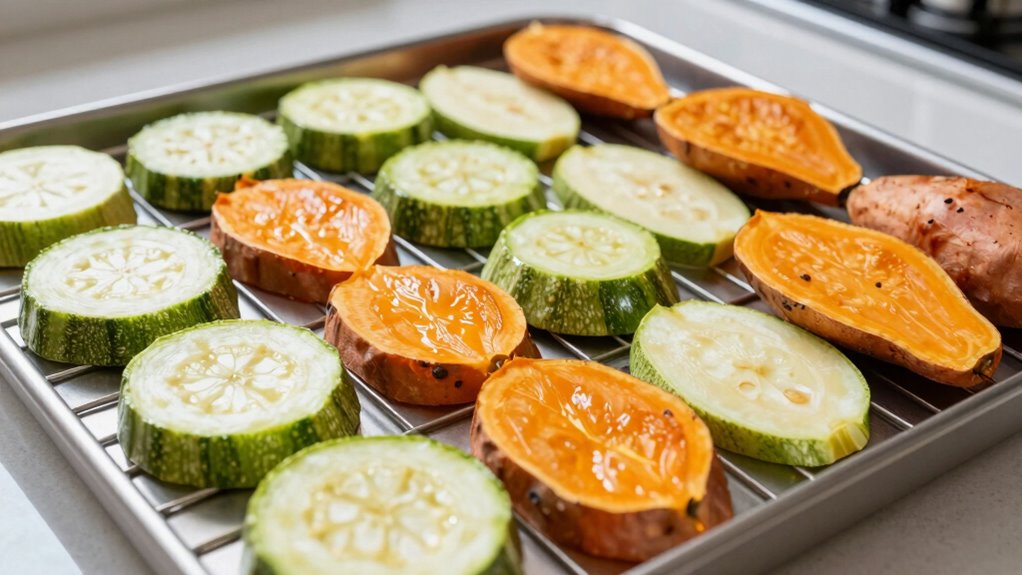
Setting your dehydrator at the right temperature is essential for achieving crispy, snack-worthy results. Typically, a temperature between 115°F and 125°F works best, allowing moisture to evaporate without cooking the food. This setting promotes texture enhancement, giving your snacks that satisfying crunch. Keep an eye on seasoning balance to ensure flavors develop fully during dehydration; too high a temperature can burn seasonings or cause uneven taste. If you want extra crispiness, you might slightly increase the temperature towards the end of drying, but avoid exceeding 135°F to keep snacks raw. Consistent airflow and proper spacing also contribute to even dehydration. With these adjustments, your snacks will turn out perfectly crispy, flavorful, and true to their raw roots.
Common Mistakes That Make Raw Snacks Taste Bland: And How to Avoid Them
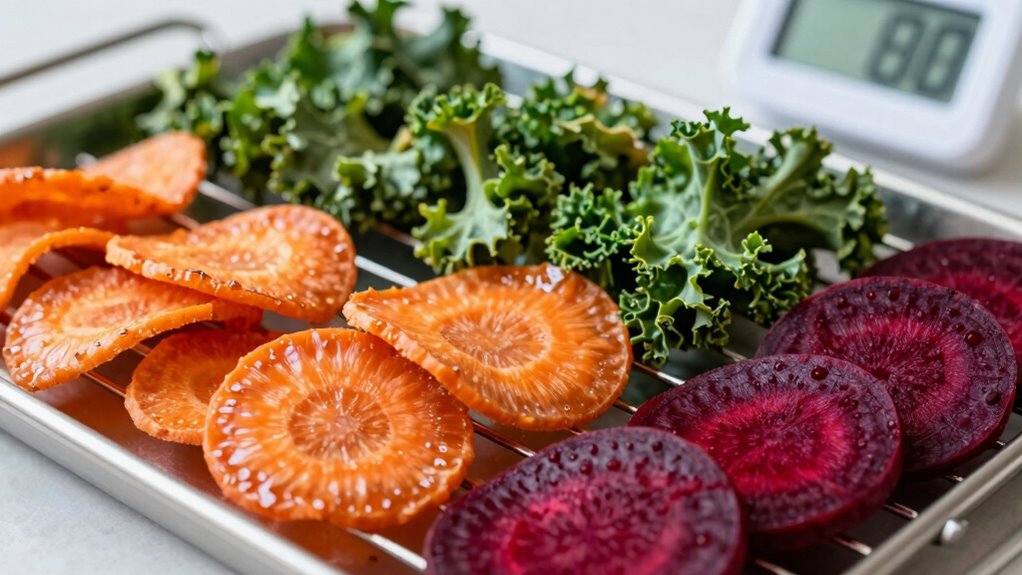
One common mistake that can leave your raw snacks tasting bland is over-dehydrating them or drying at too low a temperature, which prevents flavors from developing fully. When you ignore proper timing and temperature, you risk flavor masking and losing the snack’s natural taste. Additionally, failing to balance texture can make snacks either too chewy or too dry, dulling the overall experience. To avoid this, keep these tips in mind:
- Use ideal temperature settings to enhance flavor extraction
- Avoid over-drying, which can mask subtle flavors
- Incorporate ingredients that boost flavor complexity
- Adjust dehydration time based on snack thickness
- Check snacks periodically to prevent overly dry textures
Balancing texture and flavor ensures your raw snacks stay vibrant and delicious, not bland.
Creative Flavor Combinations to Elevate Your Raw Snacks
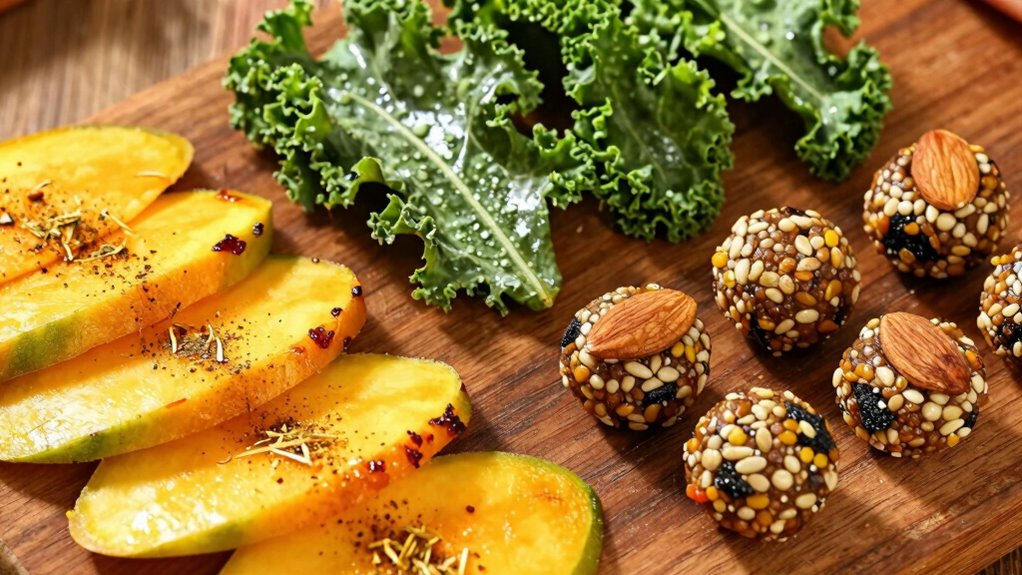
Elevating your raw snacks with creative flavor combinations can turn simple treats into unforgettable bites. Experiment with flavor pairings like sun-dried tomatoes with basil and garlic, or cacao with sea salt and chili powder. Spice blends such as curry powder, smoked paprika, or a touch of cumin add depth and complexity. Combining sweet and savory elements, like honey with cracked black pepper or coconut with lime and chili, can surprise your palate. Don’t be afraid to mix herbs and spices to craft unique profiles tailored to your taste. These flavor pairings and spice blends enhance dehydration without overpowering natural ingredients. With a little creativity, you’ll transform basic raw snacks into vibrant, flavorful creations that keep you coming back for more.
How to Store and Keep Your Dehydrated Snacks Fresh
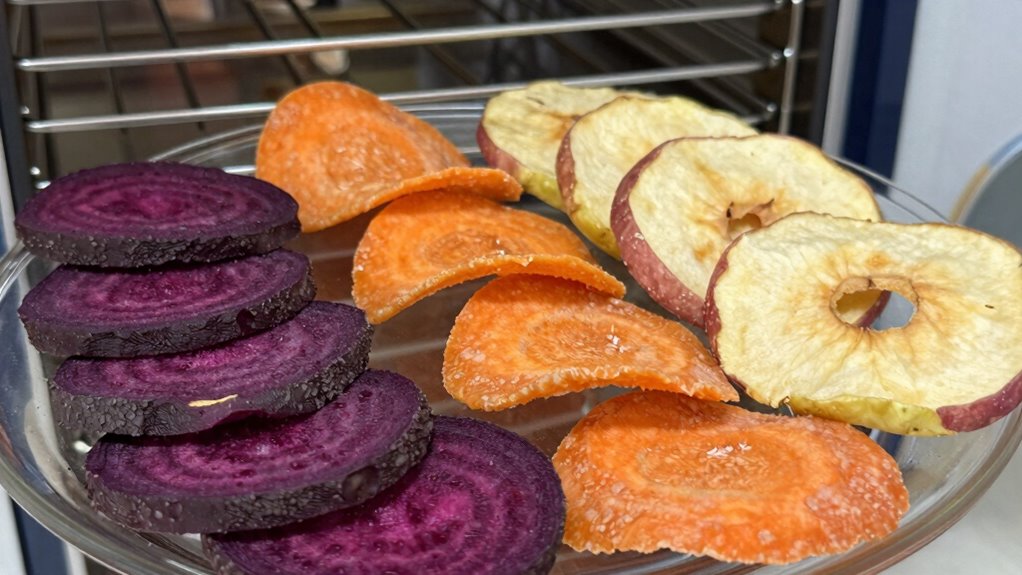
After experimenting with vibrant flavors and unique spice blends to enhance your raw snacks, it’s important to focus on proper storage to maintain their freshness and quality. To ensure your dehydrated snacks stay crisp and flavorful, follow these storage tips for optimal freshness preservation:
Store your dehydrated snacks in airtight, cool, dark places for maximum freshness and flavor.
- Keep snacks in airtight containers to prevent moisture absorption
- Store in a cool, dark place away from sunlight
- Use vacuum-sealed bags for long-term storage
- Avoid humidity and temperature fluctuations
- Label containers with the date to track freshness
Troubleshooting: What to Do When Your Snacks Taste Like Cardboard?

When your dehydrated snacks taste like cardboard, it’s usually a sign that they need better flavor enhancement or improved dehydration techniques. To fix this, try adding natural flavor boosters like herbs, spices, or a splash of citrus before dehydrating. Also, verify your snacks are evenly dehydrated to improve texture. Uneven moisture can cause a bland, chewy outcome. Here’s a quick guide:
| Issue | Solution |
|---|---|
| Lack of flavor | Add seasonings or marinades before drying |
| Uneven dehydration | Adjust drying time and temperature |
| Too chewy or tough | Slightly reduce dehydration time |
| Bland taste | Incorporate flavor enhancement methods |
| Poor texture | Experiment with thickness and slicing |
Focusing on flavor enhancement and texture improvement helps your snacks taste vibrant and satisfyingly crisp.
Frequently Asked Questions
Can I Dehydrate Different Fruit and Vegetable Mixes Together?
Yes, you can dehydrate different fruit blending and vegetable combinations together. Just make certain that the pieces are cut evenly for consistent drying. Mixing fruits and vegetables can create tasty, colorful snacks, but be mindful of their moisture content and drying times. Keep similar textures together to prevent over-drying some ingredients while others remain moist. This way, you’ll get evenly dried, delicious snacks without compromising flavor or texture.
What Is the Ideal Humidity Level for Dehydrating Snacks?
The ideal humidity level for dehydrating snacks is around 10-15%. Proper humidity control guarantees optimal drying by preventing excess moisture, which can cause mold or spoilage. You should monitor your dehydrator’s humidity settings regularly and adjust as needed. Maintaining this level helps your snacks become evenly dried, preserving flavor and nutrients without over-drying or leaving them too moist. This balance is key to perfect dehydrated snacks.
How Do I Prevent Sticking or Clumping During Dehydration?
To prevent sticking and clumping during dehydration, spread your snacks in a single, even layer on the dehydrator trays. Use parchment paper or silicone mats if possible, which help with clumping prevention. Avoid overcrowding the trays, and turn or rotate the items periodically for even drying. Ensuring proper airflow and not overloading your dehydrator will also considerably reduce sticking, resulting in perfectly dried, non-clumpy snacks.
Are There Specific Seasonings That Work Best With Dehydrated Snacks?
Think of seasonings as the orchestra that enhances your snack’s flavor harmony. For dehydrated snacks, try bold seasonings like smoked paprika, chili powder, or garlic powder for depth, and pair them with herbs like basil or oregano for freshness. A friend once used lemon zest and cumin on dried fruit, creating a perfect flavor boost. These seasoning pairings elevate your snacks, making every bite a delightful flavor enhancement.
How Long Can Homemade Dehydrated Snacks Be Stored Safely?
You can typically store homemade dehydrated snacks safely for about 1 to 3 months if kept in an airtight container in a cool, dark, and dry place. To prevent spoilage, make certain they’re thoroughly dried and avoid moisture exposure. Label your snacks with storage dates, and check for signs of spoilage like mold or off-odor before enjoying. Proper storage lifespan and spoilage prevention keep your snacks fresh and safe longer.
Conclusion
Now that you know how to dehydrate fruits and veggies like a pro, your snacks will taste as vibrant as a garden in full bloom. Avoid blandness by seasoning well and setting your dehydrator just right. Think of your snacks as a canvas—your flavor combinations and techniques are the paint. With these tips, you’ll turn simple ingredients into crispy, flavorful treats that don’t taste like cardboard, making healthy snacking a delicious adventure.