
Adding sprouted pulses to your raw salads boosts their flavor, crunch, and nutrition. You’ll enjoy more easily digestible proteins, fiber, and a variety of vitamins, all while keeping the salad fresh and vibrant. Sprouting release nutrients and reduces antinutrients, making your meal healthier overall. Plus, raw sprouts preserve delicate enzymes and nutrients, offering a wholesome, quick meal. Stay with us to discover simple tips for perfectly sprouted pulses and delicious salad ideas.
Key Takeaways
- Incorporate sprouted pulses for added crunch, flavor, and nutritional boost in raw salads.
- Use rinsed and sprouted pulses directly in salads to maximize nutrient retention.
- Combine sprouts with fresh vegetables, herbs, and vinaigrette for vibrant, wholesome meals.
- Choose different pulse varieties to diversify taste, texture, and nutrient profile.
- Prepare salads without cooking to preserve delicate enzymes and maximize health benefits.

Raw salads with sprouted pulses are a nutritious and vibrant way to enjoy fresh, wholesome ingredients. Incorporating sprouted pulses into your salads not only amps up the flavor but also delivers impressive nutrition benefits. Sprouted pulses, like lentils, chickpeas, or mung beans, are seeds that have begun to germinate, unbarriering their full potential to boost your health. When you consume sprouted pulses raw, you get more easily digestible proteins, increased fiber, and a wealth of vitamins and minerals that might be less accessible in their unsprouted form. This makes them a smart choice for anyone looking to maximize nutrient intake with minimal effort.
To truly harness the nutrition benefits of sprouted pulses, mastering sprouting techniques is essential. Proper sprouting involves rinsing your seeds thoroughly, soaking them in water for a specified time—usually 8 to 12 hours—and then draining and rinsing them regularly over the next few days. You’ll want to keep the sprouts in a well-ventilated container, away from direct sunlight, to encourage healthy germination. When done correctly, sprouting not only enhances nutrient availability but also reduces antinutrients that can interfere with mineral absorption. Using clean, sanitized equipment during sprouting is critical to prevent mold or bacterial growth, ensuring your sprouts are safe to eat raw.
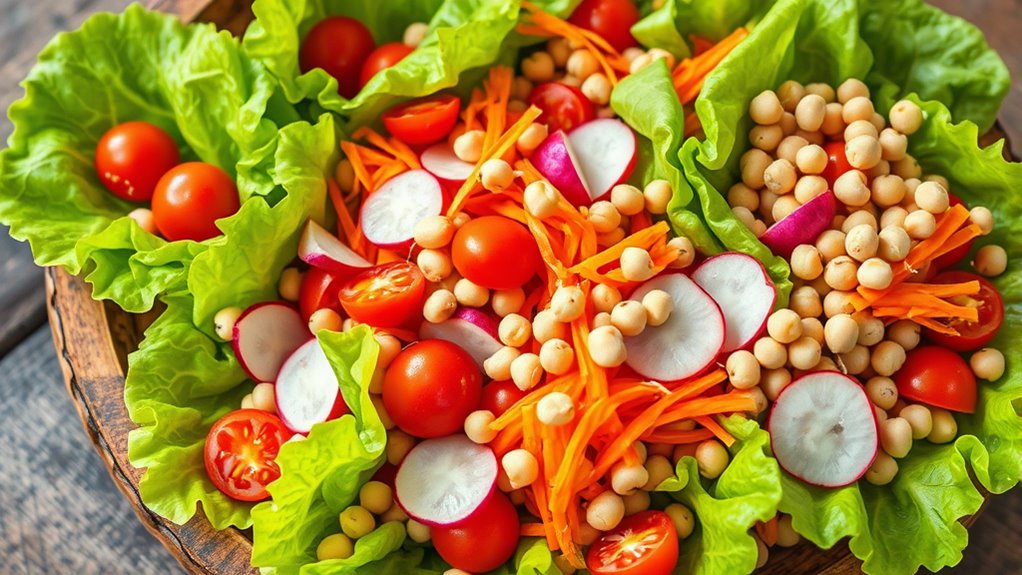
Once your sprouts are ready, incorporating them into salads is straightforward. Their crunchy texture and fresh flavor elevate the overall dish, adding a layer of complexity and freshness that cooked ingredients often lack. Toss sprouted pulses with crisp vegetables, herbs, and a light vinaigrette for a meal that’s both satisfying and nourishing. The beauty of raw salads with sprouted pulses lies in their simplicity—there’s no need for cooking, which preserves delicate nutrients and enzymes, making your meal more nutritious. Plus, the versatility allows you to experiment with different pulse varieties and flavor combinations, keeping your salads exciting and varied.
Frequently Asked Questions
How Long Do Sprouted Pulses Stay Fresh in Salads?
Sprouted pulses in salads stay fresh for about 1 to 3 days. To maximize their shelf life, store your salads in an airtight container in the fridge. Use storage tips like keeping them at a consistent cold temperature and avoiding excess moisture, which can cause spoilage. For the best taste and texture, consume your raw salads with sprouted pulses within this timeframe.
Can I Prepare Sprouted Pulses in Advance for Salads?
Sure, you can prepare sprouted pulses in advance for salads—just don’t forget the golden rule of sprouted pulse storage: keep them airtight and chilled. Salad preparation tips suggest rinsing thoroughly and storing in a sealed container to maintain freshness. This way, you avoid the tragic fate of soggy, wilted sprouted pulses turning your masterpiece into a limp disaster. So prep ahead, but treat those sprouts like royalty!
Are There Specific Pulses That Work Best for Raw Salads?
You’ll find that pulse varieties like mung beans, lentils, chickpeas, and adzuki beans work best for raw salads. These pulses have mild flavors and firm textures that hold up well when sprouted, allowing you to create exciting flavor combinations. Their versatility makes them perfect for adding crunch and nutrition. Plus, they’re easy to prepare in advance, so you can enjoy fresh, vibrant salads anytime without sacrificing taste or texture.
How Do I Prevent Sprouts From Spoiling Quickly?
To prevent sprouts from spoiling quickly, store them properly by rinsing and draining thoroughly, then keep them in an airtight container in the refrigerator. Use storage tips like placing a paper towel inside to absorb excess moisture. Watch for spoilage signs such as a slimy texture or sour smell. Regularly check your sprouts and consume them within 2-3 days for freshness and safety.
What Are Common Flavor Pairings With Sprouted Pulses?
Like a painter blending colors, you can create delightful flavor combinations with sprouted pulses by pairing them with fresh herbs, tangy citrus, or spicy accents. Think of texture contrasts—crisp radishes, crunchy nuts, and creamy avocados—that make each bite exciting. These combinations enhance the natural nutty flavor of sprouted pulses and add complexity, making your salads vibrant and satisfying. Experiment freely to discover your perfect flavor harmony.
Conclusion
Incorporating raw salads with sprouted pulses into your meals boosts your energy and digestion naturally. For example, imagine Sarah, who started adding sprouted lentil salads to her lunch daily. Within weeks, she felt more vibrant and noticed better gut health. Just like her, you can enjoy fresh, nutrient-packed salads that keep you feeling great. So, give it a try—your body will thank you for making healthier, crunchy, sprouted pulses a regular part of your diet.