Choosing raw foods supports a greener diet by reducing energy used in processing, cooking, and transportation. You’ll lower water consumption and packaging waste since raw produce typically needs less washing and packaging. Eating locally sourced, raw foods also cuts emissions linked to long-distance shipping and supports sustainable farming practices. Making this switch can help you minimize your environmental footprint while enjoying nutritious meals—discover how embracing raw foods can benefit both you and the planet.
Key Takeaways
- Consuming raw foods reduces energy use in processing, cooking, and transportation, lowering overall carbon emissions.
- Locally sourced raw produce minimizes food miles and supports sustainable, eco-friendly farming practices.
- Raw foods require less water and packaging, conserving resources and decreasing environmental pollution.
- Eating raw preserves nutrients and promotes diets aligned with environmental conservation efforts.
- Minimal processing of raw foods leads to less waste and reduces plastic pollution from packaging.
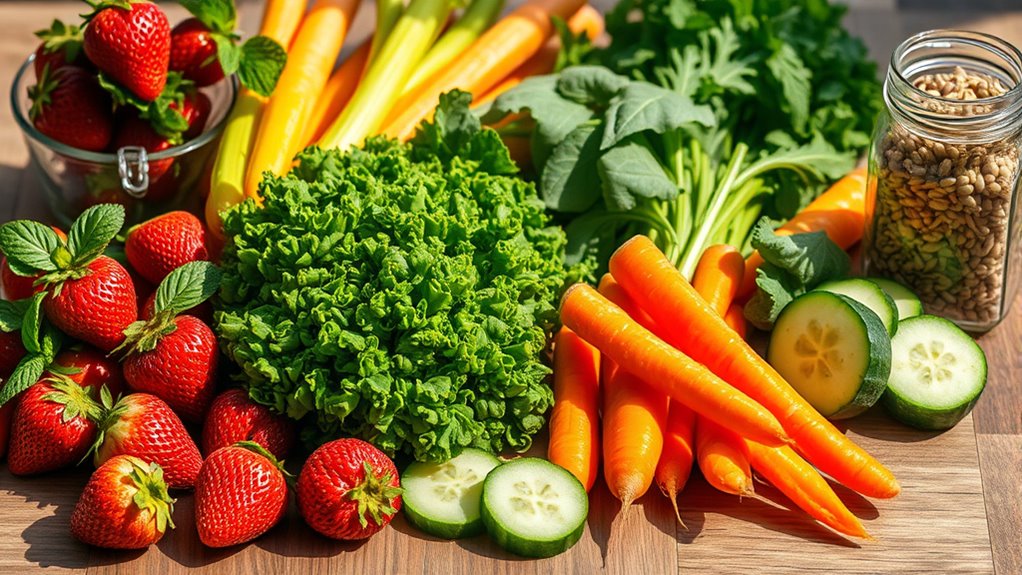
Eating raw foods can considerably reduce your environmental impact since they require less energy for processing and cooking. When you choose raw over heavily processed meals, you’re cutting down on the energy used in transportation, manufacturing, and kitchen appliances. This directly affects food miles—the distance your food travels from farm to plate—and helps lower your carbon footprint. By selecting fresh, locally sourced produce, you minimize the fuel emissions associated with long-distance shipping, which is a significant contributor to greenhouse gases. Additionally, raw foods often have a smaller water footprint because they typically involve fewer steps in production. Crops harvested and eaten raw usually require less water than those processed into packaged or cooked products, which often involve washing, boiling, or other water-intensive procedures. Supporting sustainable farming practices through raw food choices further enhances environmental benefits. When you focus on raw foods, you’re also supporting sustainable farming practices that prioritize efficiency and conservation. Many raw foods, such as fruits and vegetables, can be grown with minimal water use and fewer chemical inputs, especially when sourced locally. This reduces the strain on water resources and encourages farms to adopt more eco-friendly techniques. Furthermore, because raw foods are less processed, they tend to retain more nutrients, which means you’re getting more health benefits per unit, making your diet not only greener but also more nutritious. Choosing raw foods can also help you avoid packaging waste, another important aspect of sustainability. Many processed foods come wrapped in plastic or other single-use materials that end up in landfills or oceans. Raw produce often requires little to no packaging, especially if you buy from farmers’ markets or direct sources. This reduces plastic pollution and the energy needed to produce and dispose of packaging materials.
Frequently Asked Questions
How Does Raw Food Consumption Impact Local Food Economies?
You support local farmers and boost local economies when you consume raw foods from nearby sources. This promotes direct food distribution, reducing reliance on long supply chains and lowering carbon footprints. By choosing raw, locally-sourced produce, you help keep money within your community, sustain local agriculture, and encourage sustainable practices. Your choices can make a meaningful difference in strengthening local food economies and promoting a greener, more resilient food system.
Are Raw Foods More Environmentally Sustainable Than Cooked Foods?
Imagine fresh fruits and vegetables bursting with life on your plate—that’s raw food for you. You’ll find that raw foods often require less food processing and energy consumption, making them more environmentally sustainable than cooked foods. By skipping cooking, you reduce energy use and emissions, helping the planet. So, embracing raw foods can be a simple, impactful way to lower your ecological footprint while enjoying vibrant, nutrient-rich meals.
What Are the Challenges of Sourcing Raw Foods Sustainably?
You face challenges sourcing raw foods sustainably because organic certification can be costly and hard to obtain, limiting access to truly eco-friendly options. Additionally, seasonal availability restricts your choices, forcing you to rely on imports or less sustainable methods. These obstacles make it tough to consistently select raw foods that align with eco-conscious values, but staying informed and supporting local farmers can help you overcome some of these hurdles.
How Do Raw Diets Affect Food Waste Reduction?
You can make a real difference by choosing raw diets, as they promote waste minimization through food preservation. Since raw foods often have a shorter shelf life, you’ll need to be mindful of storage and consumption, reducing spoilage and waste. By planning meals carefully, you keep food fresh longer, which helps cut down on unnecessary waste. Remember, a stitch in time saves nine, so stay proactive to minimize food waste effectively.
Can Raw Foods Contribute to Global Food Security?
Yes, raw foods can contribute to global food security by preserving nutrients, which means you get more nutritional value from less food. By maintaining traditional culinary practices, raw diets also support local farming and reduce energy-intensive processing. This approach encourages sustainable consumption, minimizes waste, and helps guarantee that nutritious food reaches more people worldwide, ultimately strengthening food security for vulnerable populations.
Conclusion
By choosing raw foods, you’re not just eating healthier—you’re helping the planet stay green. Your simple act can reduce energy use and cut down on waste, making a real difference. Think of it as your own personal ‘crusade’ for sustainability, like a modern-day Robin Hood for Earth. So, next time you shop, remember: a raw, green diet isn’t just trendy, it’s a powerful way to protect your planet’s future—no flux capacitor needed.