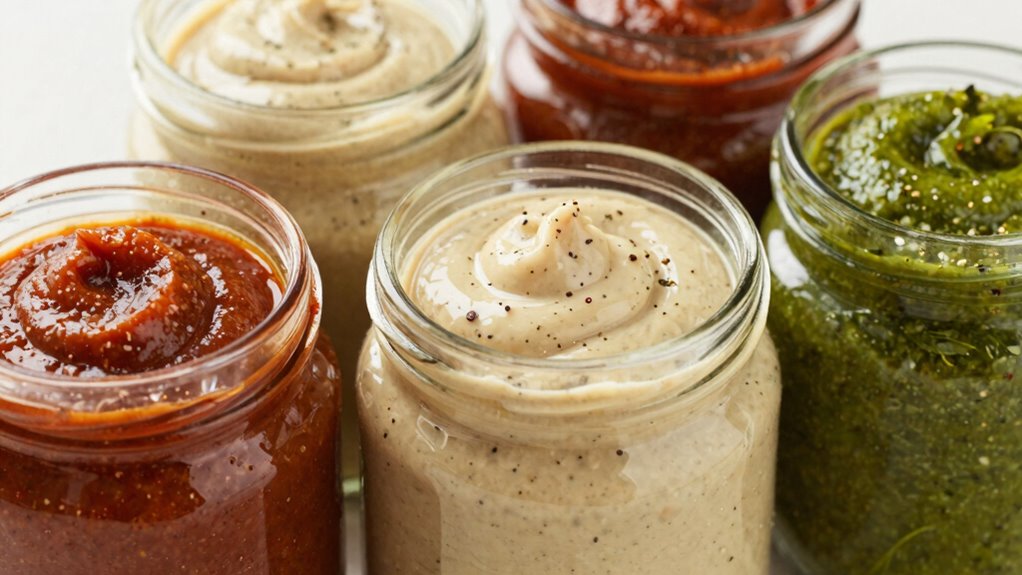

To create raw dressings that taste like restaurant sauces, blend soaked cashews or sunflower seeds with lemon juice or apple cider vinegar for a tangy, creamy base. Add garlic, nutritional yeast, and herbs like dill or parsley for depth, and boost smoky flavors with smoked paprika or roasted red peppers. Using whole ingredients guarantees bold flavor and nutritional value. Keep experimenting with these simple tips, and you’ll discover how to craft delicious, plant-based dressings that mimic your favorites.

Get kitchen staples and gadgets delivered free with Prime
- Fast, free delivery on millions of items
- Prime Video, Amazon Music and more included
- Member-only deals all year
Key Takeaways
- Use soaked cashews or sunflower seeds blended with lemon juice, garlic, and herbs for creamy, tangy restaurant-like flavors.
- Incorporate smoky spices like smoked paprika or chipotle peppers to emulate smoky restaurant sauces.
- Add nutritional yeast and fresh herbs such as dill or parsley for cheesy, herbaceous notes.
- Use high-quality ingredients like tahini, avocado, or coconut milk for rich, plant-based creaminess.
- Balance acidity with lemon or apple cider vinegar and include a touch of maple syrup or agave for depth and sweetness.
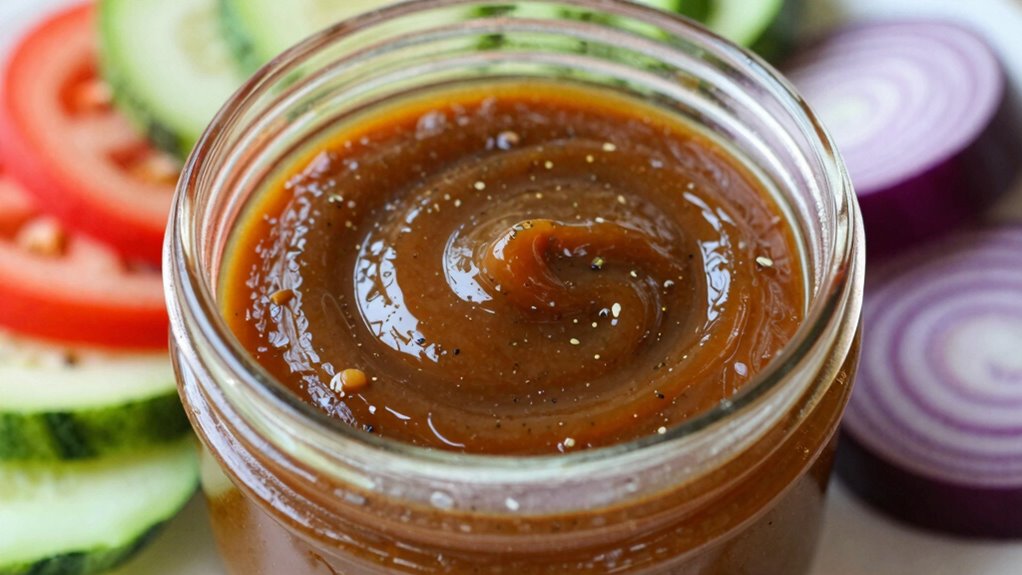
If you love the bold flavors of restaurant sauces but want a healthier, raw alternative, you’re in luck. Creating raw dressings that mimic the rich, savory taste of your favorite restaurant sauces is easier than you might think, especially when you explore vegan alternatives and homemade recipes. These options let you enjoy the same depth of flavor without the processed ingredients or added sugars typical of store-bought dressings. Plus, they’re quick to make, customizable, and packed with nutrients, making them a perfect choice for health-conscious eaters.
Start by thinking about the core flavors you want to replicate. Many restaurant sauces are creamy, tangy, or smoky, so your homemade recipes should focus on those profiles. For creamy textures, blend soaked cashews or sunflower seeds with lemon juice or apple cider vinegar, garlic, and a touch of nutritional yeast for that cheesy umami flavor. This creates a vegan alternative that’s both smooth and rich, mimicking classic creamy dressings like ranch or Caesar. For tangy, vinaigrette-style dressings, combine fresh lemon or lime juice with olive oil, dijon mustard, and a hint of maple syrup or agave for sweetness. Add herbs like dill, basil, or parsley to boost flavor and mimic restaurant-style herbaceous notes.
Create creamy, tangy, or smoky dressings using nuts, fresh juices, herbs, and spices for a flavorful, healthy, raw alternative.
If you’re craving smoky or spicy flavors, incorporate ingredients like smoked paprika, chipotle peppers in adobo, or cayenne pepper into your homemade recipes. These ingredients bring depth and complexity that can rival traditional sauces. The key is balancing these bold flavors with the acidity and creaminess to create a dressing that truly tastes like a restaurant sauce. For example, blending roasted red peppers with garlic, olive oil, and a splash of balsamic vinegar can produce a smoky, sweet dressing reminiscent of some restaurant classics. Incorporating whole, plant-based ingredients** not only enhances the flavor but also supports biodiversity and sustainable food practices, aligning with eco-friendly choices. Using raw, unprocessed foods** ensures that your dressings retain maximum nutrients and flavor. Additionally, experimenting with different flavor combinations can help you craft unique dressings tailored to your preferences.
Vegan alternatives are abundant, so you don’t have to compromise on flavor or ethics. You can use plant-based ingredients like tahini, coconut milk, or avocado to add richness and creaminess. The versatility of these ingredients makes it easy to craft dressings that suit your taste buds while staying raw and healthy. Moreover, choosing whole foods over processed ingredients helps you maintain the nutritional integrity of your dressings. The best part is that you don’t need a long list of complex ingredients—just a handful of fresh, whole foods blended together creates a dressing that’s as flavorful as anything you’d find in a restaurant. Once you get the hang of these simple homemade recipes, you’ll never want to go back to store-bought dressings again.
raw vegan salad dressing blender
As an affiliate, we earn on qualifying purchases.
As an affiliate, we earn on qualifying purchases.
Frequently Asked Questions
Can Raw Dressings Be Stored Without Refrigeration?
Raw dressings generally need refrigeration to maintain temperature stability and guarantee safety. Without refrigeration, their shelf life decreases quickly, and bacteria can grow, risking spoilage. If you want to store raw dressings without refrigeration, use preservatives or acidify the ingredients to slow bacterial growth. However, for peak freshness and safety, it’s best to keep raw dressings chilled and consume them within a few days.
Are Raw Dressings Suitable for All Dietary Restrictions?
Raw dressings are like open books—adaptable to many dietary restrictions. They can suit your needs if you seek vegan options or gluten-free considerations, but always check ingredients closely. Some raw dressings contain hidden animal products or gluten, so read labels carefully. With a little mindfulness, you can enjoy raw dressings that align with your diet, turning your meals into a canvas where every ingredient is a deliberate brushstroke.
How Long Do Raw Dressings Stay Fresh?
Raw dressings typically stay fresh for about 3 to 7 days when stored properly in the refrigerator. To maximize shelf life and maintain flavor enhancement, always keep them in airtight containers and use clean utensils. The freshness depends on ingredients like fresh herbs and citrus, which can affect spoilage. Always check for signs of spoilage, such as sour smell or separation, before using raw dressings.
Can Raw Dressings Be Used as Marinades?
Yes, raw dressings can be used as marinades, enhancing your dish with their vibrant flavors. Think of it as a secret weapon for flavor pairing, adding depth and richness. Just keep in mind, the health benefits stay intact when you marinate wisely—use in moderation and avoid over-soaking. This approach lets you enjoy both the taste and nutritional perks, transforming simple ingredients into culinary delights.
Do Raw Dressings Contain Any Hidden Allergens?
Yes, raw dressings can contain hidden ingredients that may cause allergy concerns. Many store-bought dressings include additives, preservatives, or allergens like soy, nuts, or gluten, which aren’t always clearly labeled. Always read the ingredient list carefully to identify any hidden ingredients that might trigger allergies. If you have specific allergy concerns, consider making your own raw dressing at home to control what goes into it and avoid potential hidden allergens.
Conclusion
Now that you know how easy it is to whip up raw dressings that taste just like your favorite restaurant sauces, why settle for store-bought when fresh is so simple? With a few simple ingredients and a little creativity, you can elevate your salads and sandwiches to restaurant-quality. Isn’t it rewarding to create something delicious and healthy right in your own kitchen? Give these recipes a try and enjoy the flavor boost!
Halloween Picks
halloween
As an affiliate, we earn on qualifying purchases.