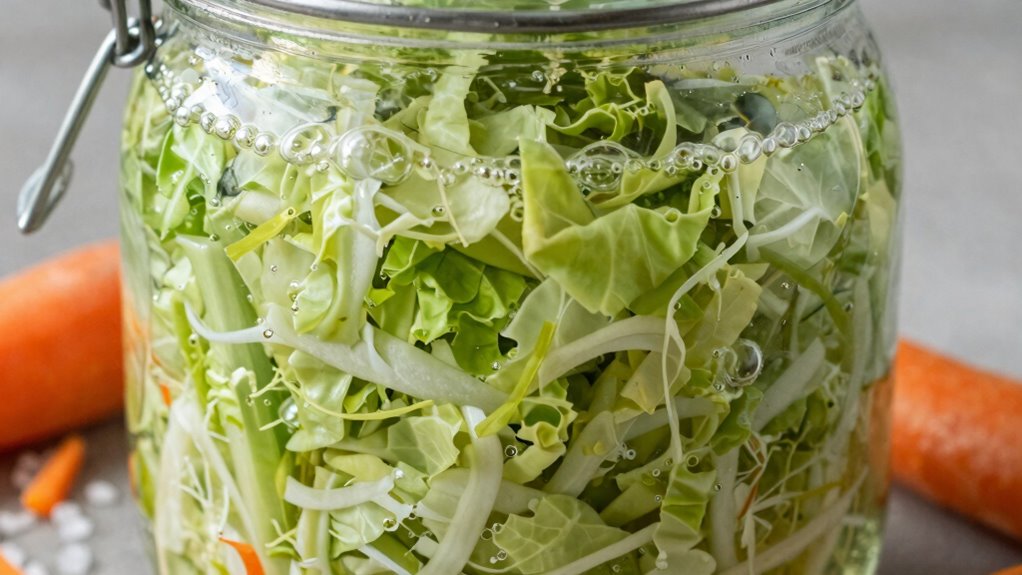

To start making easy kraut, simply shred fresh cabbage and massage it with salt to draw out water, creating a natural brine. Keep the cabbage submerged in the brine using a weight or small jar, and store it at room temperature for a few days to a week. Regularly check that it stays submerged and skim off any mold. Once it reaches your preferred sourness, refrigerate it. Keep going, and you’ll reveal even more tips for delicious fermentation success.

Get kitchen staples and gadgets delivered free — and shop member deals
- Fast, free delivery on millions of items
- Access to Prime Big Deal Days deals on October 6–7
- Prime Video, Amazon Music and more included
Key Takeaways
- Use fresh cabbage and salt to naturally create a brine through massaging, ensuring a safe fermentation environment.
- Keep the cabbage submerged under brine with a weight to prevent spoilage and promote beneficial bacteria growth.
- Ferment at room temperature for several days, monitoring daily and removing surface mold or foam.
- Transfer to the fridge once desired sourness develops to slow fermentation and extend shelf life.
- Proper hygiene and cleanliness are essential for safe, successful fermentation and probiotic benefits.
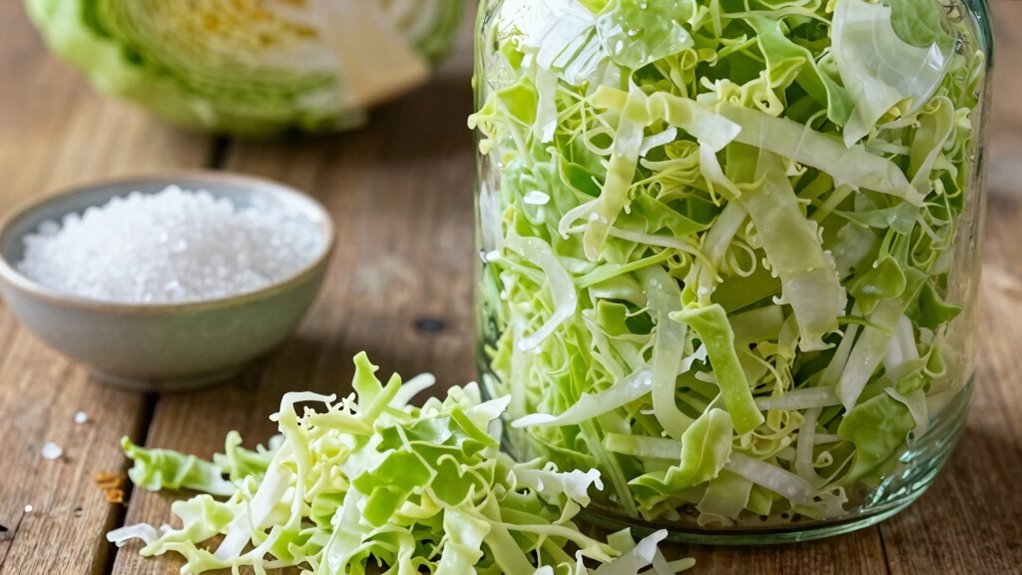
Are you curious about how to start fermenting raw foods at home? If so, you’re about to discover an easy way to incorporate healthy, probiotic-rich foods into your diet. Raw fermentation, especially making simple kraut, is a straightforward process that offers numerous health benefits. You’ll find that once you get the hang of it, it’s both rewarding and fun. Plus, understanding fermentation safety is key to making sure your creations are both delicious and safe to eat. When you ferment properly, you harness the probiotic benefits that support your digestive health and boost your immune system, all while enjoying a tangy, crunchy snack.
Discover how simple homemade kraut can boost your health and add delicious probiotics to your diet.
To start, all you need are fresh cabbage, salt, and a clean jar. The salt is crucial because it draws out water from the cabbage and creates an environment where good bacteria can thrive. As you massage the salt into the shredded cabbage, you’ll notice it releases water, forming a natural brine. This brine acts as a barrier, preventing unwanted bacteria from taking hold and ensuring fermentation safety. It’s important to keep the cabbage submerged in the brine during the process, so use a weight or a small, clean jar to hold everything down. This step is essential to prevent mold or spoilage, which can happen if the vegetables are exposed to air. Additionally, maintaining proper fermentation conditions is vital for successful and safe probiotic cultivation. Creating the right environment involves controlling factors like temperature and cleanliness, which are important for fermentation safety. Ensuring a clean environment and appropriate temperature helps foster the growth of beneficial bacteria. Proper hygiene practices are also essential to avoid contamination and ensure a successful fermentation.
Once your cabbage is submerged and covered, you simply let it sit at room temperature for a few days to a week. During this time, beneficial bacteria naturally present on the cabbage start to convert sugars into lactic acid. This fermentation process not only preserves the cabbage but also enhances its probiotic benefits. You’ll notice the flavor deepening and the texture becoming more tender as fermentation progresses. It’s a good idea to check your kraut daily, ensuring it remains submerged and removing any surface mold or foam that might appear. Remember, proper fermentation safety means being vigilant about cleanliness and controlling the environment to prevent contamination. Familiarizing yourself with fermentation safety tips can help you avoid common pitfalls and produce better results.
When your kraut reaches the desired sourness, transfer it to the fridge to slow down the fermentation. It will stay good for several weeks, and the flavor will develop even more over time. Making kraut at home is a simple, cost-effective way to enjoy the health perks of probiotics. Plus, it’s a satisfying process that connects you to traditional food practices. With just a little effort and attention to fermentation safety, you can enjoy fresh, homemade raw ferments that boost your gut health and add vibrant flavors to your meals. Once you see how easy it is, you’ll be hooked on creating your own probiotic-rich foods at home.
As an affiliate, we earn on qualifying purchases.
Frequently Asked Questions
How Long Does Homemade Kraut Last Without Refrigeration?
Homemade kraut can last about 1 to 2 weeks without refrigeration if stored properly. For fermentation safety, keep it in a cool, dark place and make sure it’s submerged in brine to prevent spoilage. Use storage tips like using airtight jars and checking for mold or off smells regularly. Once the fermentation slows or the kraut develops an off odor, it’s best to refrigerate it to prolong freshness and guarantee safety.
Can I Use Any Type of Cabbage for Fermentation?
You can use different cabbage varieties for fermentation, but some work better depending on your preferences. Green cabbage is classic for its crunch and mild flavor, while red cabbage adds vibrant color and a slightly different taste. Napa cabbage is softer and ideal if you prefer a more delicate texture. Choose based on your fermentation preferences, considering crunchiness, flavor, and color. Experimenting with varieties lets you find the perfect kraut for your palate.
What Are Common Signs of Spoiled Fermented Vegetables?
You’ll know your fermented vegetables are spoiled if you see mold growth or a foul smell, which indicates a risk of botulism. Also, watch for slimy textures or discoloration. While a little bubbling is normal, persistent or unusual bubbles can signal spoilage. Trust your senses—if it smells off or looks suspicious, it’s safer to discard the batch to avoid health risks.
Do I Need Special Equipment to Start Fermenting at Home?
You don’t need fancy equipment to start fermenting at home—just basic fermentation tools like a jar, weight, and a cloth cover. But, if you want to keep your fermented goods fresh longer, mastering storage techniques is key. Keep your jars in a cool, dark place, and make certain they’re sealed properly. This simple setup helps you safely enjoy delicious, probiotic-rich ferments without extra fuss or investment.
How Can I Flavor My Kraut Beyond Basic Salt?
You can flavor your kraut beyond basic salt by experimenting with flavor combinations and spice infusions. Add ingredients like garlic, caraway seeds, or cumin for a savory kick. For a spicy twist, try red pepper flakes or ginger. You might also incorporate herbs like dill or bay leaves. These options allow you to customize your kraut, making it uniquely flavorful while still maintaining the natural fermentation process.
Conclusion
As you continue your fermentation journey, remember that each jar is a seed of patience and discovery. Like the gentle tide shaping the shore, your efforts will carve out flavors and health, transforming simple ingredients into vibrant life. Embrace the ebb and flow, knowing that with every bubbling jar, you’re nurturing a tradition—an ancient dance of nature and nurture. Keep fermenting, keep growing; your kitchen is now a garden of possibilities.
Halloween Picks
halloween
As an affiliate, we earn on qualifying purchases.