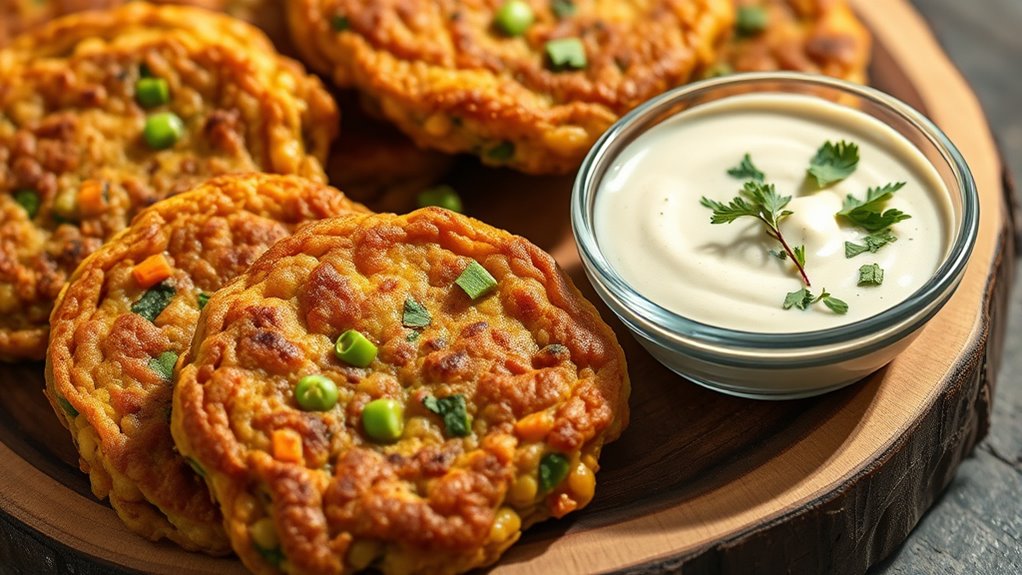

Pulse and vegetable fritters with dip are a tasty, nutritious snack or appetizer that combines plant-based proteins, fiber, and vibrant vegetables for a satisfying bite. You can blend cooked pulses with chopped vegetables, then fry or bake them until crispy. Serve with flavorful dips like yogurt, spicy salsa, or tahini to enhance the experience. If you want to discover tips for perfecting the texture and flavor, keep exploring for more helpful ideas.
Key Takeaways
- Combine blended pulses with chopped colorful vegetables to create a nutrient-dense batter.
- Fry or bake the fritters until crispy and golden-brown for optimal texture.
- Serve with flavorful dips like yogurt-based sauces, spicy salsas, or tahini for enhanced taste.
- Use high smoke point oils during frying to achieve a crisp exterior without burning.
- Garnish and present with dips to elevate the snack’s visual appeal and flavor profile.

If you’re looking for a tasty and nutritious snack or appetizer, pulse and vegetable fritters with dip are an excellent choice. These fritters combine wholesome ingredients like pulses—such as lentils, chickpeas, or black beans—and fresh vegetables, offering a flavorful way to boost your nutrient intake. They’re versatile, easy to prepare, and perfect for sharing at gatherings or enjoying as a quick bite. The key to making delicious fritters lies in understanding their nutritional benefits and mastering effective cooking techniques that bring out their best qualities.
When it comes to nutritional benefits, pulse and vegetable fritters pack a punch. Pulses are rich in plant-based protein, fiber, and essential minerals like iron and magnesium, which help support your energy levels and digestive health. Vegetables add vitamins, antioxidants, and extra fiber, making these fritters a well-rounded snack that promotes satiety and sustained energy. Incorporating a variety of colorful vegetables not only enhances flavor but also increases the antioxidant content, which is great for your immune system. Because these ingredients are nutrient-dense, they serve as a healthier alternative to heavily processed snacks, helping you maintain balanced nutrition while indulging in something tasty. Including mindfulness practices during preparation can help you better appreciate the nourishing qualities of your ingredients and prevent overeating.
Cooking techniques are vital to achieving perfect fritters. The process begins with preparing a smooth batter by blending pulses—either pre-cooked or canned—and finely chopped vegetables. To guarantee the fritters hold together during frying or baking, you may add a binding agent like eggs or a flaxseed mixture if you prefer a vegan option. When frying, use medium heat and oil with a high smoke point, such as vegetable or sunflower oil, to achieve a crispy exterior without excessive oil absorption. Alternatively, baking the fritters at a moderate temperature allows for a healthier, less greasy result while still developing a satisfying texture. Properly handling the batter—making sure it’s thick enough to hold shape—helps prevent spreading and results in evenly cooked fritters with a golden-brown crust. Additionally, flipping the fritters halfway through cooking ensures uniform browning and crispiness on both sides.
Pairing your fritters with a flavorful dip enhances their appeal and adds an extra layer of taste. Whether it’s a tangy yogurt-based sauce, a spicy salsa, or a creamy tahini dressing, the right dip balances the fritters’ savory flavors and encourages you to savor every bite. With a little attention to your cooking techniques and an emphasis on nutritious ingredients, you can create pulse and vegetable fritters that are both delicious and healthful, satisfying your craving for a satisfying snack or appetizer that fuels your body with essential nutrients.
Frequently Asked Questions
Can These Fritters Be Made Gluten-Free?
Yes, you can make these fritters gluten-free by using gluten-free flours like rice, chickpea, or almond flour. Just guarantee you’re using certified gluten-free ingredients to avoid cross-contamination concerns. You might need to adjust the liquid ratio since different flours behave differently, but with a little experimentation, you’ll get delicious, crispy fritters that suit a gluten-free diet perfectly.
How Long Can Leftovers Be Stored Safely?
You can store leftovers safely for up to 3-4 days, following proper food safety and storage guidelines. Keep the fritters in an airtight container in the refrigerator to prevent bacteria growth. Reheat them thoroughly before eating to guarantee safety. If you want to keep them longer, consider freezing, but consume within 1-2 months for ideal quality. Always check for signs of spoilage before reheating and eating.
Are These Fritters Suitable for Freezing?
Yes, you can freeze pulse and vegetable fritters. Follow freezing tips by letting the fritters cool completely before wrapping them tightly in plastic wrap or foil. Store them in an airtight container or freezer bag to prevent freezer burn. For best quality, follow storage guidelines and consume within 2-3 months. When ready to eat, reheat in the oven or microwave for a fresh-tasting snack or meal.
What Are Some Alternative Dipping Sauces?
You can try various dipping sauce trends like spicy sriracha mayo or tangy tzatziki for a fresh twist. For unique sauce flavor combinations, experiment with honey mustard, garlic yogurt, or avocado lime. These options not only complement the fritters but also keep your dipping game exciting. Feel free to mix and match ingredients based on your taste preferences to elevate the overall flavor experience.
Can I Use Canned Vegetables Instead of Fresh?
Sure, you can use canned vegetables instead of fresh—because who doesn’t love a shortcut that screams “I forgot to shop”? Just remember, canned veggies often come pre-cooked and salty, unlike fresh ones that require a quick rinse and chop. Fresh vs. canned isn’t a battle you need to fight—just know that canned veggies save time but might compromise on texture and flavor. Your call, chef!
Conclusion
Now that you’ve mastered pulse and vegetable fritters with dip, imagine serving them at your next gathering—everyone will rave about your delicious, healthy creation. For example, Sarah tried this recipe for her family dinner, and her kids couldn’t get enough. It’s easy, tasty, and perfect for any occasion. So, go ahead, get creative with your ingredients, and enjoy the compliments that follow. Your homemade fritters will become everyone’s new favorite!