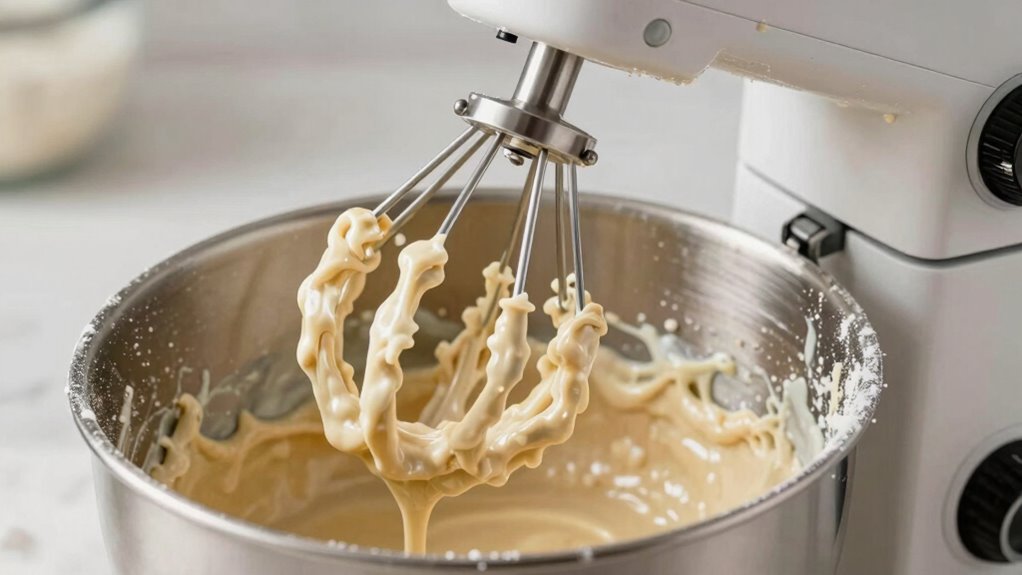

Heavy dough can strain your mixer, causing overheating, gear damage, or motor burnout if you don’t take precautions. To prevent this, use the right attachments, work in smaller batches, and mix at low speeds, gradually increasing. Dividing large portions and taking breaks helps reduce overload. Upgrading to a commercial mixer may also be necessary for frequent heavy doughs. Keep these tips in mind, and you’ll protect your equipment while achieving perfect results. More useful advice follows to keep your mixer in top shape.
Key Takeaways
- Use heavy-duty mixers or commercial equipment designed for dense doughs to prevent motor strain and damage.
- Divide large, heavy dough batches into smaller portions for easier handling and reduced load on the mixer.
- Choose appropriate attachments like spiral or C-shaped hooks to distribute force evenly and protect the motor.
- Gradually add water and incorporate techniques like resting periods to manage dough elasticity and prevent overloading.
- Regularly maintain and monitor your mixer’s performance to identify signs of wear and determine when an upgrade is necessary.
How Heavy Dough Can Damage Your Mixer: And Why It Matters
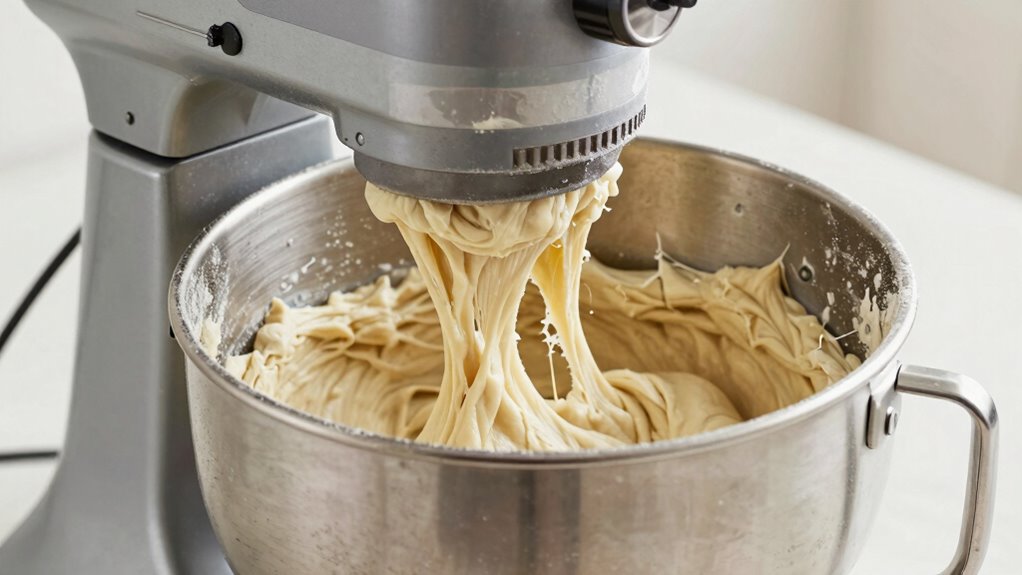
Heavy dough can put significant strain on your mixer’s motor and components, especially if it’s not designed for such thick mixtures. When you knead heavy dough, you’re encouraging dough elasticity and gluten development, which makes the dough stronger and more resilient. However, this increased elasticity also means the dough resists movement, forcing your mixer to work harder. Over time, this extra effort can cause overheating, wear out the motor, or damage the gears. If your mixer struggles to handle dough with high gluten development, it’s a sign that the mixture is too heavy for your appliance. Recognizing these limits helps you prevent costly repairs and prolongs your mixer’s lifespan. Properly managing dough weight guarantees maximum performance and prevents unnecessary damage. Understanding dough elasticity is crucial for maintaining your mixer’s longevity and ensuring consistent baking results. Being aware of mixer motor capacity can help you choose the right settings and avoid overload. Additionally, understanding motor strain factors can guide you in selecting appropriate mixing techniques and speeds to reduce stress on your appliance. A good rule of thumb is to monitor the mixing resistance, which can indicate when the dough is too heavy for your current setup.
How to Spot When Your Mixer Is Struggling With Heavy Dough

Recognizing when your mixer is struggling with heavy dough is essential to preventing damage. Pay attention to dough consistency—if it becomes overly thick or stiff, your mixer may be overexerting itself. You’ll notice increased mixer vibrations as it works harder to knead dense dough. Sudden jolts or excessive shaking indicate the motor is under strain. Also, listen for unusual noises, such as grinding or straining sounds, which signal the mixer is struggling. If the motor feels hot or the vibration persists despite reducing speed, it’s a sign to stop and reassess. Being aware of these signs helps you take action before serious damage occurs, ensuring your mixer stays in good shape and continues to handle heavy dough effectively. Additionally, persistent AI-powered monitoring can help detect strain early and prevent costly repairs.
Choosing the Right Attachments for Heavy, Dense Doughs
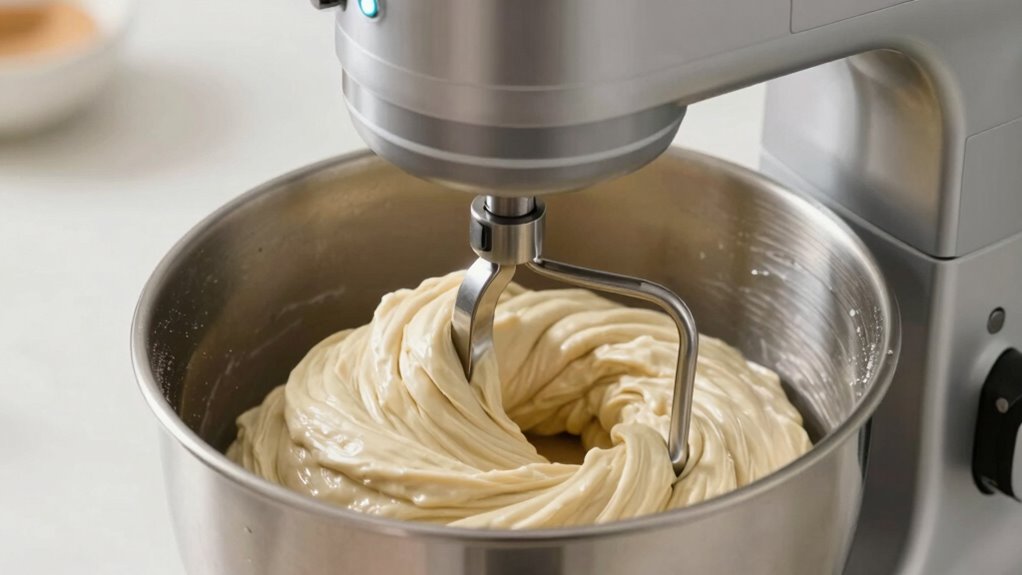
Choosing the right attachments can make all the difference when working with dense, heavy doughs. A dough hook is indispensable because it promotes better gluten development, which is crucial for structure and elasticity. For heavy doughs, opt for a spiral or C-shaped hook, as these designs handle high dough hydration levels more effectively, guaranteeing thorough mixing without overloading your mixer. Using the proper attachment helps distribute force evenly, preventing strain on your motor. When selecting attachments, consider the dough’s hydration; wetter doughs require more robust tools to develop gluten properly. This not only improves the dough’s texture but also reduces the risk of motor burnout. Ultimately, the right attachment ensures consistent mixing, better gluten development, and less wear on your equipment.
Simple Tips to Prepare Heavy Doughs Without Overloading Your Mixer

To prevent overloading your mixer when working with dense doughs, it’s essential to make strategic adjustments during the mixing process. Start by managing dough hydration; adding water gradually helps maintain a manageable consistency, reducing strain on your mixer. Proper yeast activation also matters—ensure your yeast is fully activated before mixing, which prevents uneven dough development that can make mixing harder. Divide large batches into smaller portions and mix in stages to avoid putting too much stress on your appliance. Use low-speed settings initially to incorporate ingredients gently, then gradually increase speed. Additionally, employing heat buffering techniques can help control the dough temperature, making it easier to work with heavy doughs. These steps help distribute the load evenly, making it easier to handle heavy doughs without risking damage to your mixer.
How to Mix Heavy Doughs Properly and Protect Your Appliance

Mixing heavy doughs requires a careful approach to guarantee your appliance stays protected and the dough turns out well. Start by adjusting dough hydration; too much water can make the dough stick and strain your mixer, so keep it balanced. Use low speed initially to incorporate ingredients gently, preventing motor overload. Pay attention to yeast activity; well-activated yeast creates a more manageable dough, reducing the need for excessive mixing. Don’t rush the process—allow the dough to develop gluten properly before increasing speed. Consider mixing in stages: combine dry ingredients first, then add liquids gradually. This approach reduces stress on your mixer and ensures a smooth, well-developed dough, safeguarding your appliance while achieving excellent results.
Alternative Ways to Handle Heavy-Dough Baking Without Wrecking Your Mixer
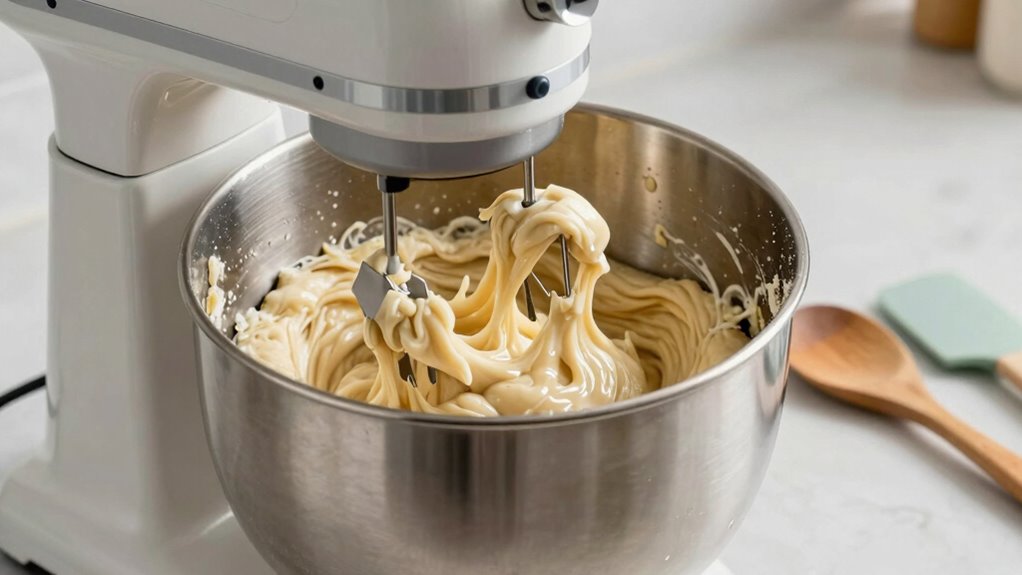
To avoid damaging your mixer, try mixing heavy doughs manually when possible, using your hands or a sturdy spoon. Using the right equipment, like a heavy-duty bowl or a dough scraper, can also make the process easier and safer. Additionally, splitting large batches into smaller portions helps reduce strain and makes handling much more manageable. Incorporating generative AI in entertainment techniques can even inspire creative baking ideas for complex doughs. Paying attention to DIY safety tips ensures you stay safe while working with heavy ingredients, preventing accidents or equipment damage. Being aware of fundamentals for first-time players can help you build confidence in handling various dough textures and consistencies.
Manual Mixing Techniques
When your mixer struggles with heavy dough, switching to manual techniques can save your equipment and guarantee consistent results. To handle dense dough effectively, focus on kneading by hand to better control dough elasticity and yeast activation. Use your palms and fingers to stretch and fold the dough, developing gluten naturally. This method allows you to feel when the dough becomes smooth and elastic. Visualize the process with this table:
| Step | Action | Result |
|---|---|---|
| 1 | Push and fold | Builds gluten structure |
| 2 | Rest period | Improves dough elasticity |
| 3 | Gentle kneading | Ensures even yeast activation |
Manual kneading offers precision, preventing overworking and preserving dough quality.
Use Appropriate Equipment
If your mixer struggles with heavy dough, switching to the right equipment can make all the difference. Use a heavy-duty stand mixer designed for thick, dense doughs to prevent damage and guarantee consistent mixing. Consider alternative tools like a bread machine or a sturdy hand kneader for very stiff doughs. Ingredient substitutions, like replacing some flour with vital wheat gluten, can lighten the load without compromising texture. Adjust your baking temperature to help the dough develop more easily, reducing strain on your equipment. Using the proper equipment and techniques not only protects your mixer but also improves your baking results. Remember, investing in the right tools and adapting your process keeps your kitchen efficient and your equipment intact.
Divide and Conquer
Breaking up heavy dough into smaller portions is one of the most effective ways to prevent strain on your mixer. Smaller batches reduce the load, making it easier to manage dough elasticity without overworking your motor. Divide the dough evenly to guarantee consistent mixing and avoid uneven stress on the machine. If your mixer tends to struggle, check its calibration—an improperly calibrated mixer can make handling heavy dough more difficult. By working with manageable portions, you allow your mixer to operate efficiently and preserve its lifespan. You can also alternate between mixing and resting periods, giving your machine a break. This approach minimizes the risk of motor burnout and helps achieve well-developed dough without sacrificing quality or equipment longevity.
When to Upgrade or Use Commercial Mixers for Heavy Doughs
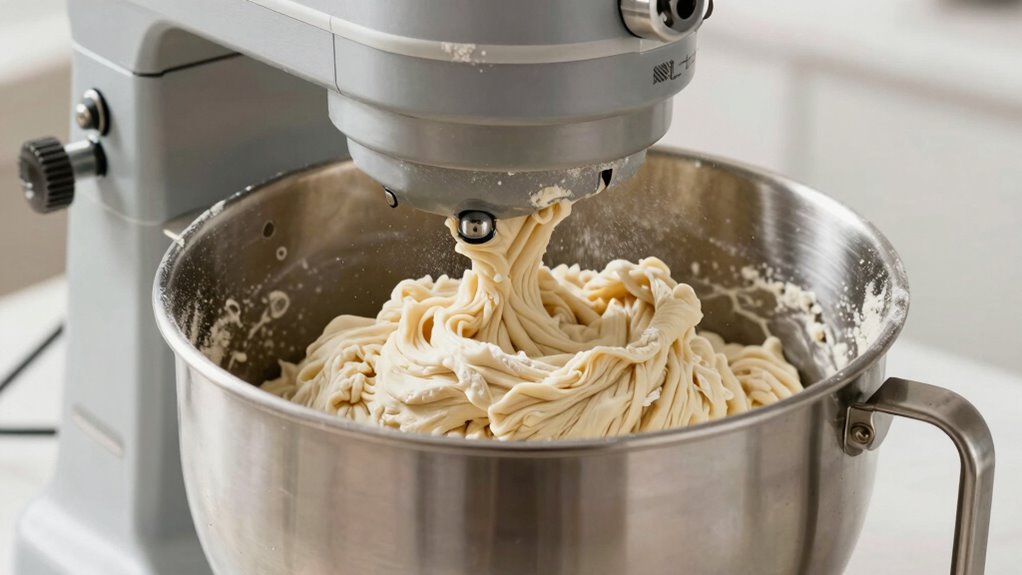
Knowing the signs that indicate it’s time to switch to a commercial mixer can save you from frustrating breakdowns and damaged equipment. If your dough consistently struggles with dough consistency or your mixer slows down under heavy loads, it’s a clear sign you need commercial equipment. Heavy doughs tax standard mixers, risking motor burnout and uneven mixing. Consider upgrading when you notice frequent overheating, motor noise, or inconsistent results. A commercial mixer offers the power and durability needed for dense, heavy doughs, ensuring uniformity and efficiency. Additionally, understanding the importance of contrast ratio can help you evaluate the performance of your equipment and ensure optimal mixing results. Paying attention to piercing care and hygiene can also prevent potential contamination that might affect your ingredients and equipment longevity.
Frequently Asked Questions
What Are the Signs My Mixer Is Overheating From Heavy Dough?
If your mixer is overheating from heavy dough, you’ll notice it struggles with dough consistency and slows down or sparks. You might feel the motor heat up or smell burning. Keep an eye on the mixer capacity—if you’re overloading it, overheating is likely. To prevent this, don’t push your mixer beyond its limits, and give it breaks to cool down during heavy kneading sessions.
Can Using a Lower Speed Protect My Mixer From Damage?
Using a lower speed can indeed protect your mixer from damage, especially when handling heavy dough. Slower speed settings reduce stress on the motor, helping prevent overheating and wear. Investigating this theory reveals that motor protection relies heavily on appropriate speed choices. By keeping the mixer at a lower speed when mixing dense ingredients, you extend its lifespan and avoid costly repairs, ensuring your equipment works efficiently for years to come.
How Often Should I Inspect My Mixer for Wear and Tear?
You should inspect your mixer for wear and tear at least once a month, especially if you’re working with heavy dough. Regular mixer maintenance helps you catch issues early, ensuring the dough consistency stays ideal without damaging your machine. Keep an eye on moving parts, belts, and blades, and listen for unusual noises. Proper inspections help prevent breakdowns, prolong your mixer’s lifespan, and keep your dough processing smooth and efficient.
Are There Specific Brands Better Suited for Heavy Doughs?
Think of brand comparisons as choosing between a sturdy tank and a delicate bicycle. For heavy doughs, opt for heavy-duty models from brands like KitchenAid, Hobart, or Kenwood, known for their durability. These brands design mixers with powerful motors and robust build quality, making them ideal for tough baking tasks. Investing in a heavy-duty model guarantees your mixer handles heavy doughs without breaking a sweat, saving you time and money in the long run.
Is It Safe to Manually Knead Heavy Dough Instead of Mixing?
Yes, manual kneading is safe and often better for heavy doughs. Hand mixing allows you to control the pressure and avoid overloading your mixer, which can damage the motor. When dough is too heavy, manual kneading helps prevent wear on your equipment while giving you a tactile feel for the dough’s consistency. Just be patient and use proper technique to guarantee thorough mixing without straining yourself.
Conclusion
To keep your mixer running smoothly, it’s essential to avoid overloading it with heavy doughs. Did you know that improper mixing can lead to motor burnout, costing hundreds in repairs? By choosing the right attachments, preparing your dough properly, and knowing when to upgrade, you can extend your appliance’s lifespan. Don’t let heavy dough wreck your mixer—use these tips to bake confidently and keep your equipment in top shape for years to come.