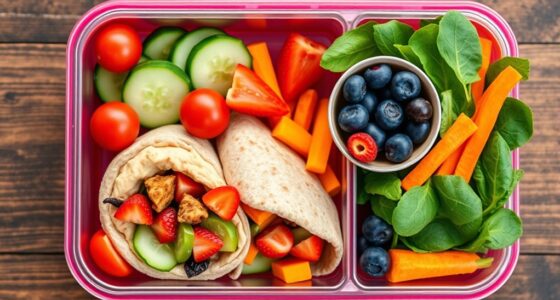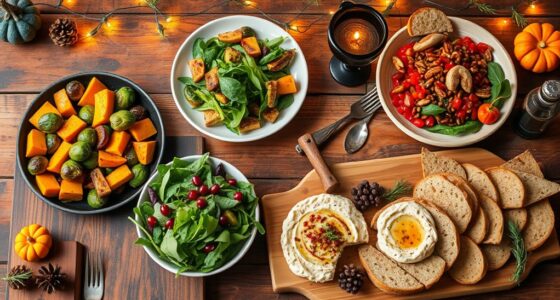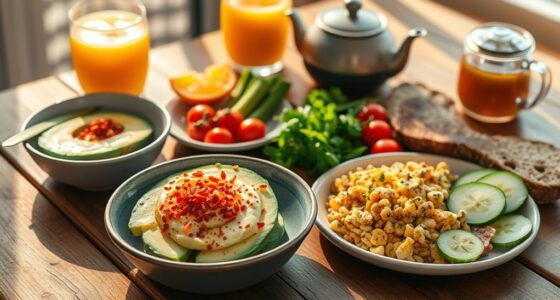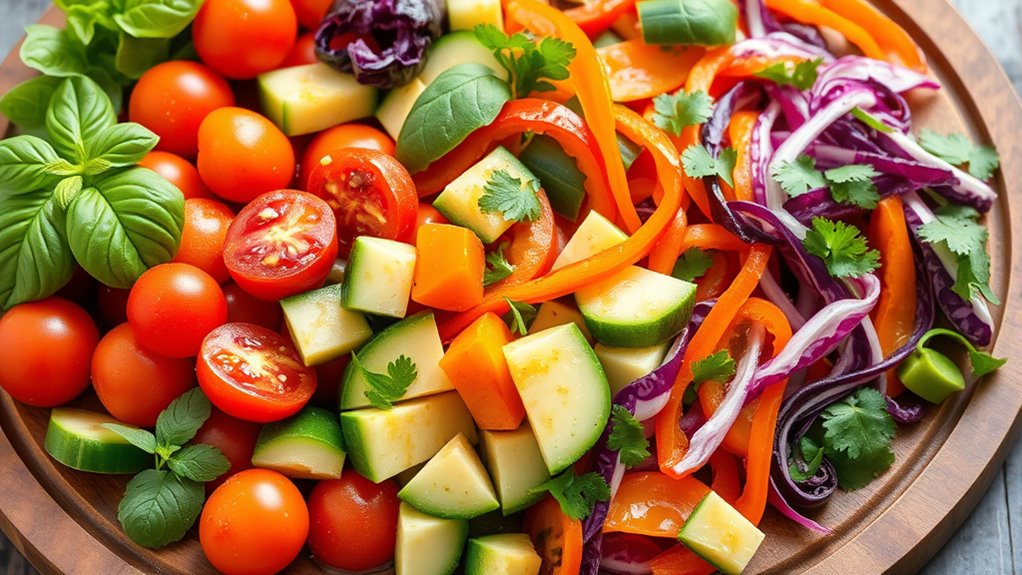
Colorful, nutrient-packed vegetarian salads combine vibrant vegetables, hearty legumes, and healthy fats like avocado and nuts to boost your energy and health. By including greens such as spinach or kale, along with bright peppers, carrots, and berries, you get a wide range of vitamins, minerals, and antioxidants. Fresh herbs and flavorful dressings enhance taste and presentation, making every meal enjoyable. Keep exploring for tips on creating beautiful, nourishing salads that satisfy your taste buds and support your well-being.
Key Takeaways
- Incorporate colorful vegetables, legumes, nuts, and seeds for a nutrient-dense, fiber-rich, and antioxidant-rich salad.
- Use healthy fats like avocado, nuts, and seeds to enhance nutrient absorption and add flavor depth.
- Include protein sources such as chickpeas, tofu, or black beans to support muscle health and satiety.
- Enhance presentation with vibrant ingredients, thoughtful arrangement, and edible flowers for visual appeal and mindful eating.
- Add fresh fruits and raw ingredients to retain maximum nutrients and natural sweetness, boosting overall vitality.
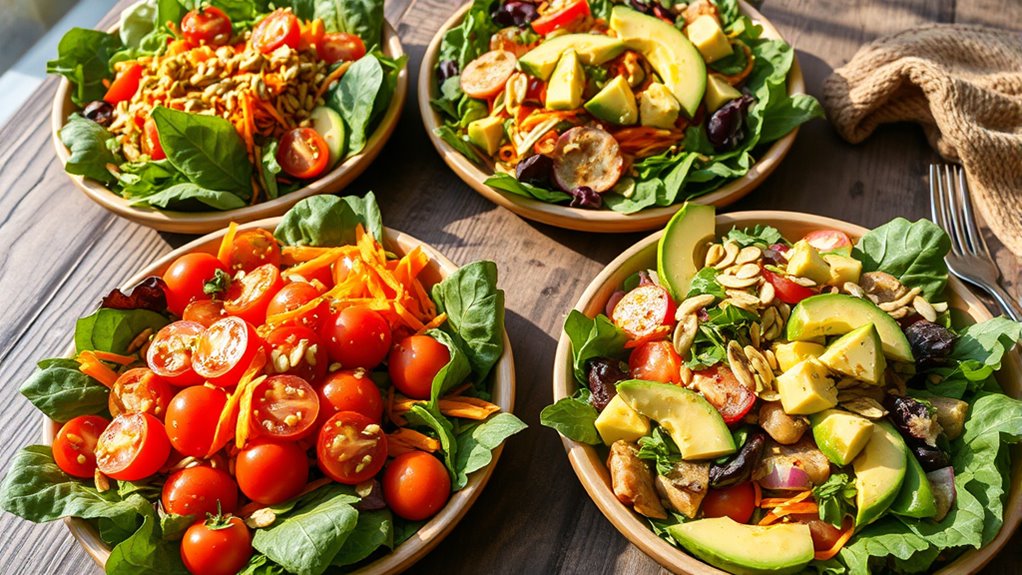
Vegetarian salads are a vibrant and healthy way to enjoy fresh ingredients while nourishing your body. When you prepare a salad packed with colorful vegetables, legumes, nuts, and seeds, you’re giving yourself a nutrient-dense meal that fuels your day. One of the best ways to elevate your salad experience is by exploring a wide range of dressing varieties. From tangy vinaigrettes to creamy tahini drizzles, the right dressing can enhance flavors and add a layer of depth that makes your salad truly memorable. Experimenting with different dressings not only keeps your meals interesting but also allows you to incorporate healthy fats, herbs, and spices that contribute to your overall well-being.
Salad presentation plays an essential role in making your meal visually appealing and enticing. When you thoughtfully arrange your ingredients, you create a plate that’s as beautiful as it is nutritious. For example, layering vibrant greens with bright cherry tomatoes, crunchy cucumbers, and colorful bell peppers makes the salad pop visually. You can also add visual interest by tossing ingredients gently or arranging them artfully. Incorporating edible flowers, fresh herbs, or sliced fruits can further elevate the look, encouraging you to savor each bite with anticipation. Remember, a well-presented salad invites you to enjoy your meal fully, making the act of eating a more pleasurable and mindful experience.
Thoughtfully arranging colorful ingredients elevates your salad’s visual appeal and enjoyment.
To maximize the nutrient value, focus on adding a variety of plant-based ingredients. Leafy greens like spinach, kale, and arugula provide fiber, vitamins, and minerals. Combine these with protein-rich options such as chickpeas, black beans, or tofu, which support muscle health and keep you feeling full longer. Incorporate healthy fats through avocado slices, nuts, and seeds, which help your body absorb fat-soluble vitamins. Including colorful vegetables like carrots, beets, and bell peppers ensures a broad spectrum of antioxidants, promoting overall health. Additionally, understanding the importance of raw food principles can inspire you to include minimally processed ingredients that retain maximum nutrients. Fruits such as berries, oranges, or apples add natural sweetness and extra vitamins. When you combine these ingredients thoughtfully, you create a balanced meal that supports your energy levels and immune system.
Ultimately, making your vegetarian salads nutrient-packed is about balancing flavors, textures, and colors while paying attention to presentation and dressing options. With a little creativity, you can craft salads that are not only nourishing but also visually appealing, encouraging you to eat more greens and variety. Whether you’re preparing a quick lunch or a beautiful dinner centerpiece, focusing on dressing varieties and salad presentation helps turn a simple dish into a delightful, healthful experience.
Frequently Asked Questions
How Can I Make Salads More Filling Without Meat?
To make salads more filling without meat, add hearty grains like quinoa or brown rice, which boost fiber and protein. Incorporate hearty legumes such as chickpeas or lentils for extra sustenance. You can also include healthy fats like avocado or nuts to increase satiety. Consider creating grain bowls with a variety of these ingredients, layering textures and flavors for a satisfying, nutrient-rich meal that keeps you full longer.
What Are Some Good Plant-Based Protein Sources for Salads?
Did you know plant-based proteins can make your salads more satisfying? Tofu cubes are a great choice; they provide about 10 grams of protein per 100 grams. Lentil sprouts are also excellent, offering around 9 grams of protein per cup. Incorporate these into your salads for a filling boost, and you’ll enjoy a nutritious, protein-packed meal that keeps you energized and satisfied longer.
Are There Any Gluten-Free Vegetarian Salad Options?
Yes, you can enjoy gluten-free vegetarian salads by including gluten-free grains like quinoa, rice, or millet. Add vegetarian-friendly toppings such as roasted vegetables, nuts, seeds, and fresh fruits for extra flavor and nutrients. These options guarantee your salad remains both satisfying and safe for gluten sensitivities. You’ll find plenty of tasty, colorful combinations that meet your dietary needs while keeping your meal wholesome and delicious.
How Do I Keep Salads Fresh Longer?
Your salad can stay fresh longer than you’d imagine if you follow these freshness tips. Store your salad in an airtight container, keeping the dressing separate until you’re ready to eat. Use paper towels to absorb excess moisture, preventing sogginess. Keep the salad in the fridge’s crisper drawer for ideal Salad storage. These simple steps help maintain crunch and vibrant flavors, making every bite as fresh as the first.
What Are Some Unique Vegetarian Salad Dressings?
You can try unique vegetarian salad dressings like vegan dressings and creamy vinaigrettes to elevate your salads. For vegan options, blend tahini with lemon juice, garlic, and a touch of maple syrup for a rich, nutty flavor. Alternatively, make a creamy vinaigrette with avocado, olive oil, and balsamic vinegar for a smooth, tangy twist. These dressings add flavor and variety, making your salads more exciting and satisfying.
Conclusion
Eating these nutrient-packed vegetarian salads offers vibrant health benefits, fueling your body with essential vitamins and minerals. Yet, they remind you that nourishment isn’t just about nutrients—it’s about taking time to enjoy fresh, colorful ingredients. In a world rushing past, these salads invite you to slow down and savor simplicity. Because sometimes, the most vibrant health comes not just from what you eat, but from the mindful moments you create around your plate.