Microgreens and sprouts are tiny plants packed with a punch of vitamins, minerals, and antioxidants that can boost your health. You can easily grow them at home using simple methods like trays, jars, or hydroponic systems, requiring minimal space and equipment. With proper care—like consistent moisture and light—you’ll have nutrient-dense greens in just a few days to weeks. Keep exploring to discover how you can grow and enjoy these powerful superfoods yourself.
Key Takeaways
- Microgreens and sprouts are miniature plants packed with high levels of vitamins C, E, K, and essential minerals.
- They can be easily grown indoors or outdoors using soil, trays, or jars, with minimal equipment.
- Proper watering, lighting, and care maximize their nutrient density and healthy growth.
- Harvesting microgreens early preserves their peak nutritional content and enhances flavor and color.
- Incorporating microgreens and sprouts into meals boosts nutrition, adds flavor, and offers quick, fresh harvests year-round.
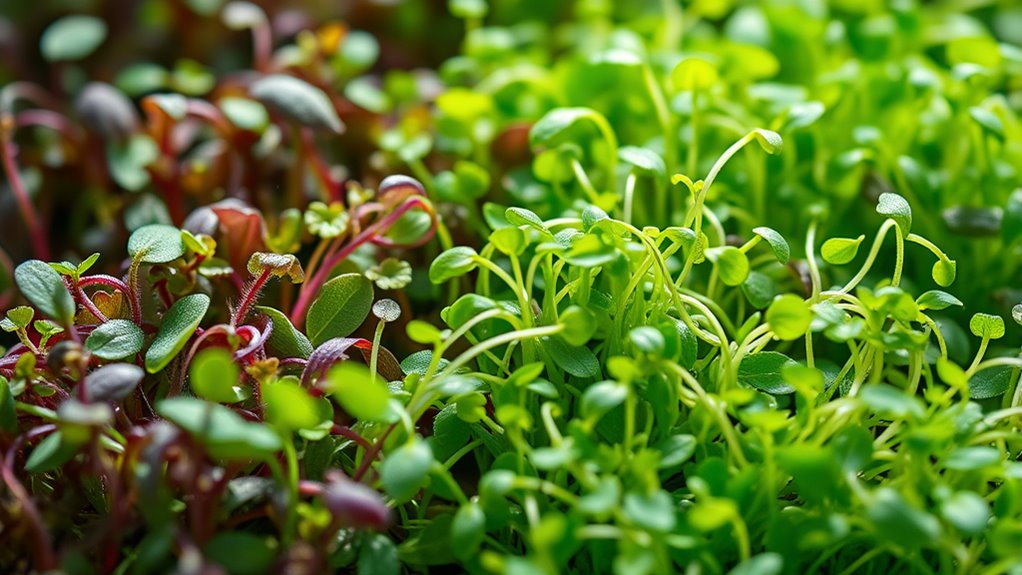
Have you ever wondered how tiny greens can pack such a nutritional punch? Microgreens and sprouts are small but mighty additions to your diet, offering a concentrated source of vitamins, minerals, and antioxidants. To get the most out of these nutrient-dense plants, understanding their growing techniques is essential. Growing microgreens is surprisingly simple and flexible—you can do it indoors or outdoors, using trays, soil, or even hydroponic systems. The key is providing consistent moisture, proper light, and a warm environment. Sprouts, on the other hand, are usually grown in jars or sprouting trays, requiring only water and a draining setup. Both methods are quick, often taking just a week or two from planting to harvest, making them an accessible way to boost your nutrition regularly.
Tiny greens grow easily indoors or outdoors with simple methods, offering quick, nutrient-packed harvests.
When you master the proper growing techniques, you maximize the nutritional benefits of your microgreens and sprouts. For microgreens, make certain you use high-quality soil or a suitable growing medium, and sow seeds densely but carefully to prevent overcrowding. Keep the soil moist but not waterlogged, and place the trays under bright, indirect sunlight or under grow lights. With consistent care, you’ll notice tiny plants sprouting within days, ready to be harvested when they develop their first true leaves. Sprouts, meanwhile, require minimal equipment—just rinse your seeds daily and keep them in a dark, warm place until sprouts appear. Once they grow a few inches, you can expose them to light to develop their chlorophyll, enhancing their nutrient profile.
The nutritional benefits of microgreens and sprouts are impressive considering their size. They contain higher concentrations of vitamins such as C, E, and K, along with essential minerals like iron, magnesium, and zinc. Many microgreens, including basil, radish, and sunflower, provide antioxidants that help combat free radicals, supporting your overall health. Because they are harvested so early, these tiny plants retain a high level of nutrients that might diminish in mature greens. Incorporating microgreens and sprouts into your meals is easy—they add flavor, crunch, and color to salads, sandwiches, smoothies, and more. Their compact size makes them an ideal addition for those looking to increase their vegetable intake without taking up much space or time.
In short, by mastering simple growing techniques, you reveal the full nutritional potential of microgreens and sprouts. These tiny plants deliver big health benefits, making them a smart, convenient choice for anyone eager to improve their diet. With minimal effort, you can enjoy fresh, nutrient-rich greens year-round, transforming your meals into vibrant, health-boosting creations.
Frequently Asked Questions
How Long Do Microgreens Typically Last After Harvest?
Microgreens usually last about 5 to 7 days after harvest when stored properly. To preserve their freshness, you should store them in an airtight container or a breathable bag in the refrigerator. Keep them dry and avoid crushing to prevent spoilage. Regularly check for any signs of wilting or spoilage, and consume them promptly to enjoy their peak flavor and nutritional value. Proper harvest storage is key to maintaining their quality.
What Are the Best Lighting Conditions for Sprout Growth?
Think of your sprouts as delicate dancers seeking the perfect spotlight. You should provide high light intensity, around 200-300 µmol/m²/sec, to energize their growth. Keep the light duration steady at 12-16 hours daily, mimicking natural sunlight. Avoid sudden changes in light conditions, as this can cause stress. Consistent, bright lighting helps your sprouts flourish, turning tiny shoots into vibrant, nutritious greens.
Can Microgreens Be Grown Indoors Year-Round?
Yes, you can grow microgreens indoors year-round with proper indoor gardening techniques. Guarantee they receive adequate light, ideally from grow lights if natural sunlight is limited, and maintain consistent temperature and humidity levels. Using containers with good drainage helps prevent mold. With the right setup, you can enjoy fresh microgreens any season, making year-round cultivation easy and rewarding right in your home.
Are There Any Microgreens That Are Toxic if Misused?
Microgreens can be incredibly nutritious, but some pose toxicity risks if misused. For instance, certain microgreens like wild or exotic varieties may contain toxins harmful if consumed in excess. Always guarantee safe consumption by sourcing from reputable suppliers and properly identifying plants. While most microgreens are safe, avoid eating any unfamiliar species to prevent potential health issues. Staying cautious protects you from risking your health on what seems like a tiny plant.
How Do Microgreens Compare Nutritionally to Mature Vegetables?
Microgreens pack more nutritional density than mature vegetables, so you get more vitamins, minerals, and antioxidants in a smaller portion. Their antioxidant levels are particularly higher, helping your body fight free radicals more effectively. When you include microgreens in your diet, you’re choosing a concentrated source of nutrients that can boost your health quickly. Just make sure to handle and store them properly to maximize their benefits and avoid any contamination.
Conclusion
So, when you harness the power of microgreens and sprouts, you’re not just eating tiny plants—you’re fueling your body with a supercharged explosion of nutrients that could make your energy soar to the stratosphere. Imagine transforming your meals into vibrant, flavor-packed gardens that not only look stunning but also turn you into a health superhero overnight. Don’t underestimate the tiny—because these miniature marvels pack enough punch to change your life in the blink of an eye!