Your juicer’s yield isn’t just about the quality of your produce—it’s influenced by how you prepare ingredients, your machine’s settings, and regular maintenance. Ripe, fresh produce, proper chopping, and correct adjustments help maximize output. Using dull blades or overloading the machine reduces efficiency, while cleaning and setup also play crucial roles. If you want to get the most juice from each use, understanding these factors will help you boost your results every time.
Key Takeaways
- Produce ripeness and freshness significantly impact juice yield, with ripe fruits providing more juice.
- Juicer type and technology determine extraction efficiency, affecting overall output.
- Proper ingredient preparation, like cutting produce into manageable pieces, enhances juice extraction.
- Juicer settings and speed adjustments based on produce softness or hardness optimize yield.
- Regular equipment maintenance, including blade sharpening and cleaning, ensures maximum extraction performance.
What Factors Affect Your Juicer Yield?
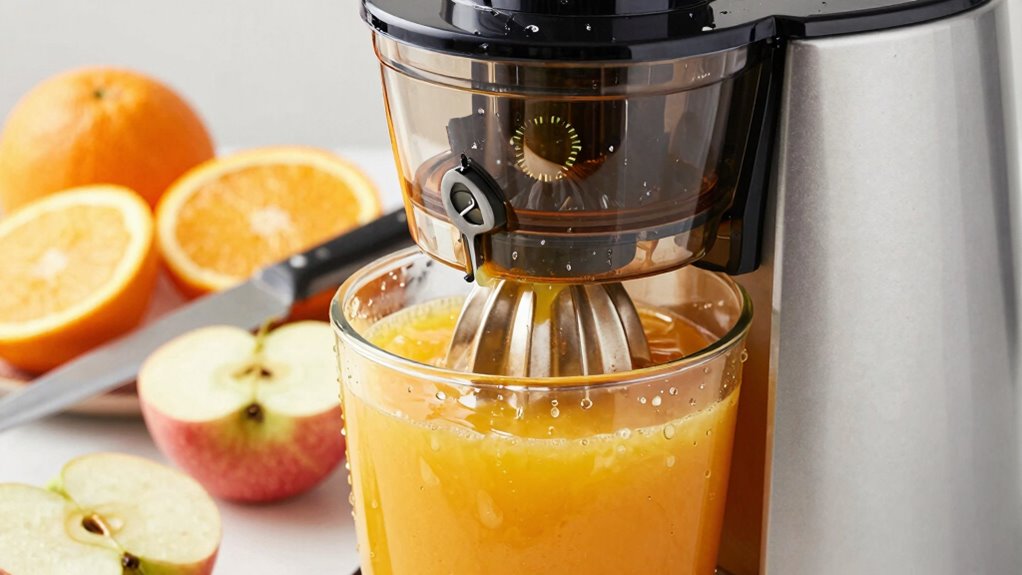
Several factors can influence how much juice your machine produces, so understanding them helps you get the most out of your juicer. One key aspect is nutrient retention, which depends on the juicer’s speed and how quickly it extracts juice without degrading vitamins and enzymes. Proper pulp management also plays a role; too much pulp can clog the machine and reduce juice flow, while removing too little can decrease clarity and yield. Additionally, the type of produce and its ripeness affect how efficiently juice is extracted. Ensuring produce is fresh and well-prepared allows your juicer to work preferably, maximizing both nutrient retention and juice output. Incorporating advanced technology can also help monitor and optimize your juice-making process over time. Moreover, understanding the efficiency of different juicer types can help you choose the best machine for your needs and improve overall yield. Factors like motor power and build quality further impact extraction performance, especially with tougher produce.
How to Prepare Produce for Maximum Juicing
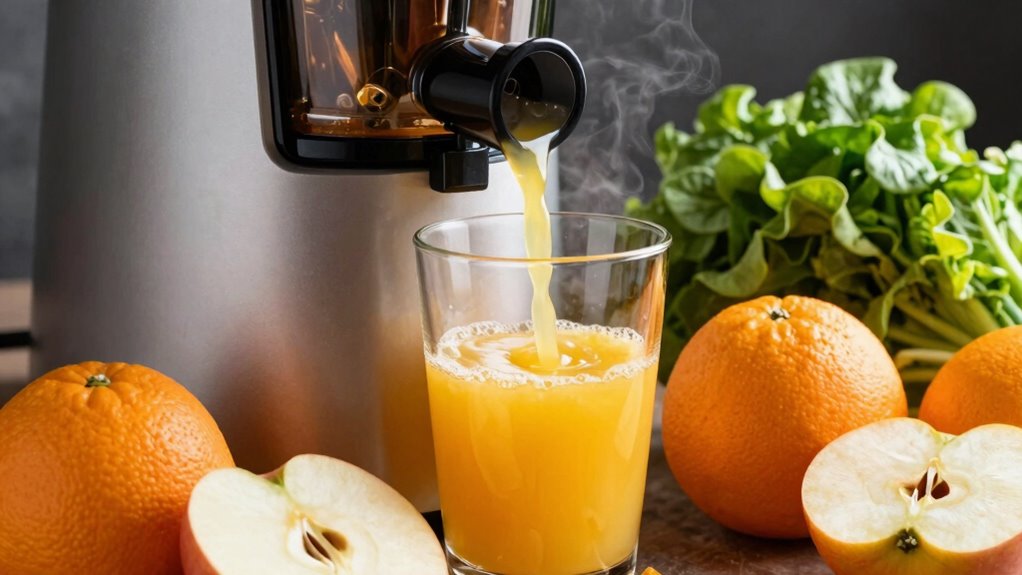
To maximize your juicing yield, start by thoroughly washing all produce to remove dirt, pesticides, and bacteria. Proper fruit selection is essential; choose ripe, fresh fruits that are free from bruises or mold, as they yield more juice and better flavor. When it comes to storage methods, keep produce in a cool, dry place or refrigerate according to the type—berries and leafy greens last longer in the fridge, while tropical fruits like pineapples and mangoes stay fresh at room temperature briefly. Proper storage prevents spoilage and maintains produce quality, ensuring you get the most juice from each item. Additionally, using electric tools such as a quality juicer can significantly increase your extraction efficiency and overall yield. Before juicing, remove stems, seeds, or pits if necessary, and cut produce into manageable pieces to make the extraction process smoother and more efficient. Incorporating proper preparation techniques and maintaining a clean juicing environment can further enhance your juicing results and maximize output, especially when selecting the right produce and equipment. Being aware of net worth growth hacks can motivate you to invest in better tools and storage solutions that improve your overall juicing experience and yield.
How to Choose the Best Juicer for Your Needs?
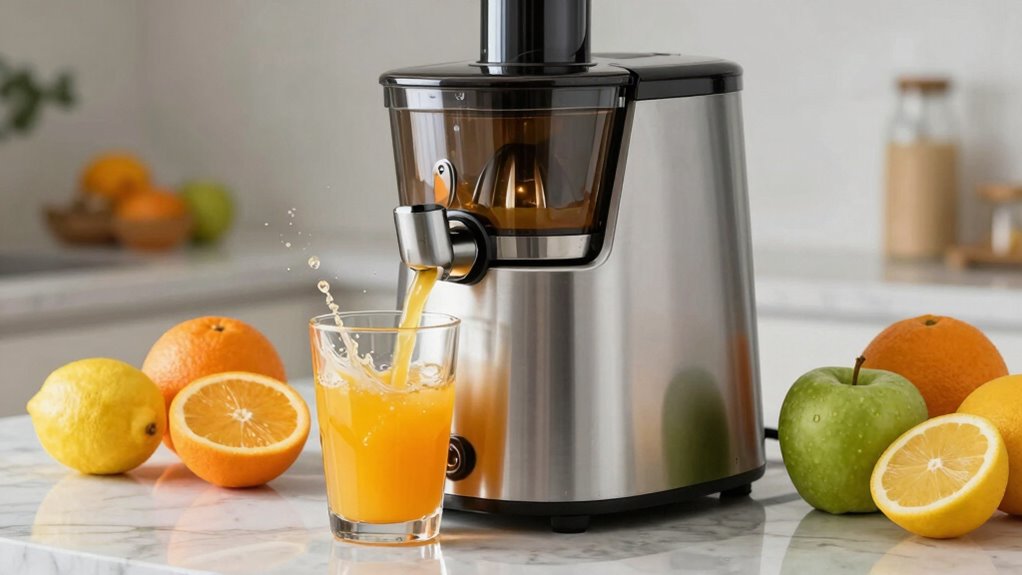
Are you unsure which juicer suits your lifestyle and needs? To choose the best one, consider how important juice consistency is to you. Do you prefer smooth, pulp-free juice or a bit of pulp for texture? Pulp management features can help control the amount of pulp in your juice, making it more tailored to your taste. Think about the types of produce you’ll juice most often—hard vegetables or soft fruits—and select a juicer designed for those. Ease of cleaning and noise level are also key factors. If you want quick results with minimal fuss, a centrifugal juicer might be ideal. For higher juice yield and better pulp control, a masticating juicer could be the better choice. Additionally, exploring energy-efficient models can help reduce power consumption and support sustainable living. Understanding the juicing process and how it impacts yield can help you make more informed decisions. Recognizing the importance of creative storytelling can also enhance your overall experience by making juicing more enjoyable and engaging. Opting for models that incorporate advanced technology can further enhance juice extraction efficiency and quality. Match these features to your routine for optimal juicing satisfaction.
Juicing Techniques That Help You Get More Juice?
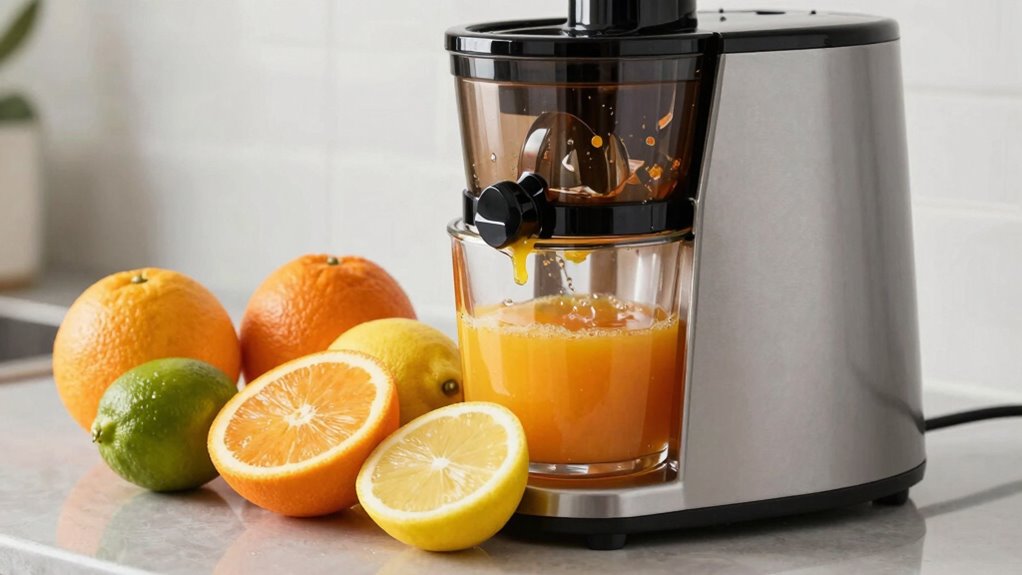
To maximize your juice yield, focus on applying proper techniques during extraction and preparing your fruits and vegetables correctly. Using the right pressure and speed can make a big difference, and trimming or peeling produce can reduce waste. Small adjustments in your approach can help you get the most juice out of every batch. Additionally, understanding the importance of content categorization can optimize your juicing process by ensuring you select the best produce for extraction. Being aware of material quality can also influence the efficiency of your juicing, as fresher and higher-quality produce often yields more juice. Moreover, paying attention to user preferences can help you customize your process for better results. Recognizing juice extraction efficiency can further help you refine your techniques to improve yield and quality. Proper piercing care and hygiene practices can also prevent contamination that might affect juice quality and safety.
Proper Technique Application
Applying proper juicing techniques can considerably boost your yield, ensuring you extract the maximum amount of juice from each piece of produce. Start with ingredient freshness—fresh produce releases more juice and offers better flavor. Free Floating Before juicing, inspect your equipment and perform regular maintenance, such as cleaning and checking for worn parts, to keep your juicer operating efficiently. Use firm, ripe fruits and vegetables, and cut them into manageable sizes that fit your juicer’s feed chute. Avoid overstuffing the machine, which can reduce efficiency. Also, apply even, consistent pressure when feeding produce into the juicer to maximize extraction. By maintaining your equipment and selecting fresh ingredients, you’ll get more juice without needing extra effort or produce. Regularly servicing your juicer can prevent performance issues and prolong its lifespan. Additionally, understanding juice extraction principles can help you optimize your technique for better results. Incorporating knowledge of water’s role in juicing can further improve your efficiency, as water content affects juice yield and quality. Recognizing that technological advancements continually enhance juicing efficiency can motivate you to upgrade or maintain your equipment regularly.
Optimal Preparation Methods
Maximizing your juice yield starts with proper preparation of your ingredients. First, choose fruit that’s ripe; ripe fruit contains more juice and nutrients. Second, store your produce correctly—keep fragile items like berries in airtight containers and root vegetables in a cool, dark place to prevent spoilage. Third, wash your ingredients thoroughly to remove dirt and bacteria, which can affect juicing efficiency. Fourth, consider pre-cutting or chopping fruits into smaller pieces to reduce strain on your juicer and extract more juice. Proper fruit ripeness and storage methods directly influence juice quantity and quality. When your ingredients are fresh and well-preserved, your juicer can work more efficiently, giving you more juice with less waste. Additionally, understanding juice extraction efficiency can help you optimize your process and get the most out of every fruit. Ensuring optimal leverage of equipment features can further improve your juice yield and minimize wastage.
Common Mistakes That Reduce Your Juicer’s Efficiency?
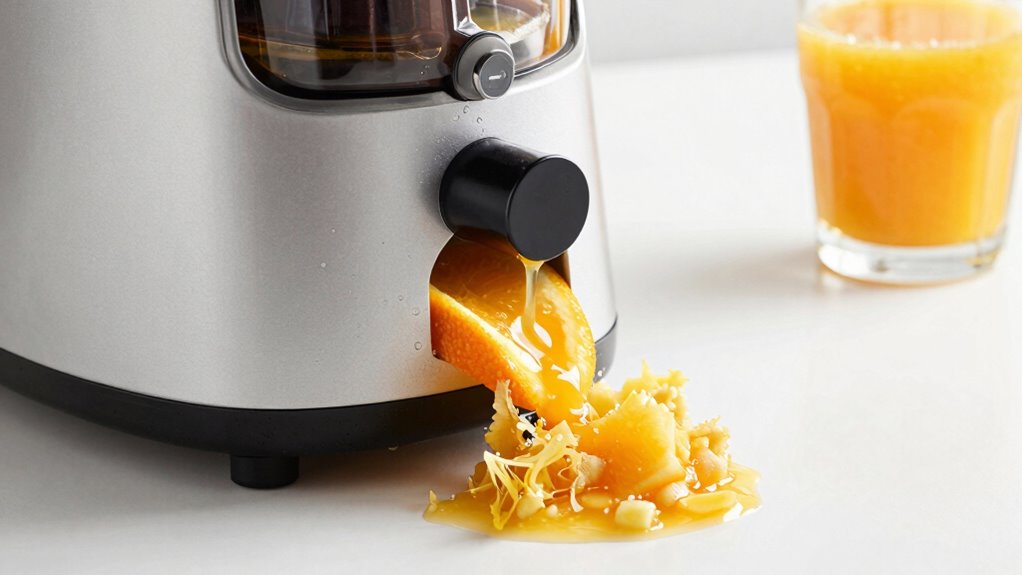
One common mistake that can considerably reduce your juicer’s efficiency is failing to prepare your ingredients properly. Overprocessing produce, such as pushing too hard or forcing produce through the juicer, can damage the machine and decrease juice output. Additionally, using dull blades is a frequent error; dull blades struggle to cut and extract juice effectively, leading to lower yields and more strain on the motor. If you don’t cut produce into manageable pieces or ignore the sharpness of your blades, your juicer has to work harder, producing less juice and potentially shortening its lifespan. Proper preparation and regular maintenance of blades are essential for maintaining ideal efficiency and maximizing your juice yield. Avoid these mistakes to keep your juicer functioning smoothly.
Tips to Optimize Your Juicer Setup for Maximum Yield?
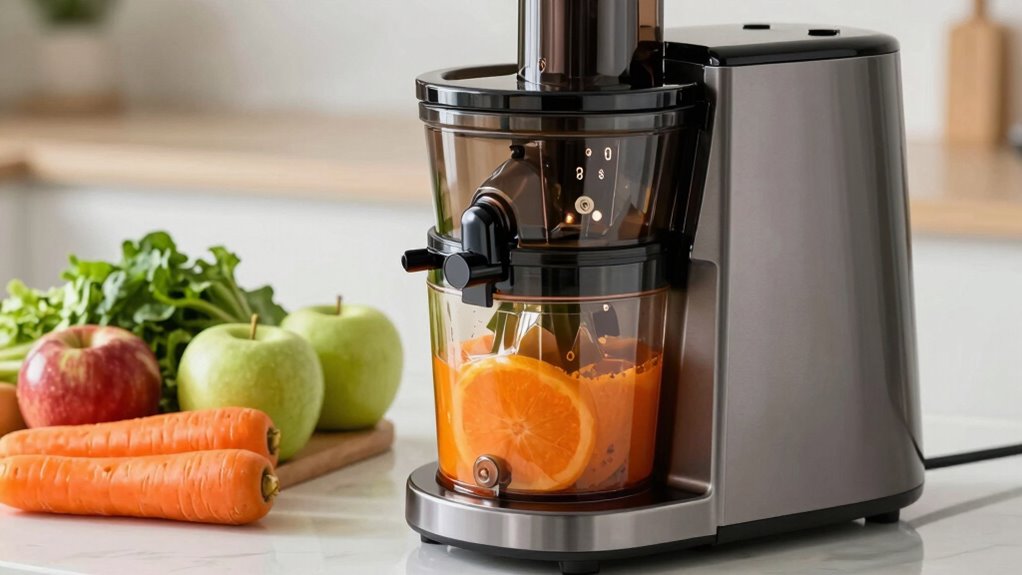
To get the most juice from your setup, start by choosing the right accessories and positioning your juicer on a stable, flat surface. Proper setup boosts fruit preservation and simplifies juicer maintenance. Here are some tips:
- Use a wide-mouthed hopper to minimize prep time and reduce fruit damage.
- Ensure your juicer’s pulp container is securely in place to prevent leaks and maintain efficiency.
- Regularly clean and inspect blades and filters to avoid buildup that hampers juice extraction.
- Adjust settings for softer or harder fruits to maximize output and preserve fruit nutrients.
Following these steps helps you extract maximum juice, reduce waste, and keep your juicer functioning smoothly over time. Proper setup is key to consistent, high-yield juicing.
Frequently Asked Questions
How Does the Type of Produce Impact Juicer Efficiency?
The type of produce considerably impacts your juicer efficiency. Ripe produce yields more juice and is easier to process, boosting output. Additionally, consider juicer compatibility; some produce, like leafy greens or hard vegetables, work better with specific machines. Using produce at ideal ripeness ensures maximum juice extraction, while choosing a compatible juicer prevents jams and reduces waste. Adjust your choices based on these factors for the best results.
Can Cleaning Methods Improve or Hinder Juicer Output?
Think of your juicer as a garden; regular cleaning routines and sanitation practices keep it thriving. Proper cleaning guarantees pulp buildup and ensures smooth operation, boosting output. If you neglect sanitation, residue can clog the machine, reducing juice yield and quality. So, by maintaining a consistent cleaning routine, you help your juicer perform at its best, maximizing every drop while preventing future issues.
Does Ambient Temperature Influence Juicing Performance?
Ambient influence and temperature effects do impact your juicing performance. Higher temperatures can cause your juicer parts to overheat, reducing efficiency and leading to lower yields. Conversely, cooler environments help maintain ideal performance, preventing overheating and ensuring your juicer works smoothly. So, keeping your juicing area at a moderate temperature helps maximize output and prolongs your juicer’s lifespan. Pay attention to ambient influence for better, consistent results.
How Does the Age or Wear of a Juicer Affect Yield?
As your juicer ages, expect a 15-20% drop in yield due to worn blades and declining motor efficiency. Over time, dull blades struggle to extract juice fully, and a less efficient motor can’t maintain high speeds. This combination results in less juice and more pulp. Regularly sharpening blades and servicing your juicer helps restore performance, ensuring you maximize output and enjoy fresher, more nutritious juice every time.
Are There Specific Storage Techniques to Preserve Produce Freshness for Juicing?
You can maximize freshness preservation by following simple storage tips like keeping produce in the crisper drawer or airtight containers. Store fruits and vegetables separately to prevent spoilage, and avoid washing them until you’re ready to juice. Keep produce at the right temperature, usually in the fridge, to slow down spoilage. Proper storage techniques help maintain vibrant flavors and nutrients, ensuring your juicing ingredients stay fresh longer and yield the best results.
Conclusion
Ultimately, understanding the nuances of nutrition and the nuances of your juicer can markedly boost your bounty. By balancing basics with better techniques and avoiding blunders, you’ll maximize your mighty maximum yield. Remember, preparation, patience, and proper setup are your secret weapons. So, stay sharp, streamline your steps, and savor the sweet satisfaction of sensational, succulent juice—because small adjustments can lead to spectacular sips every single time.