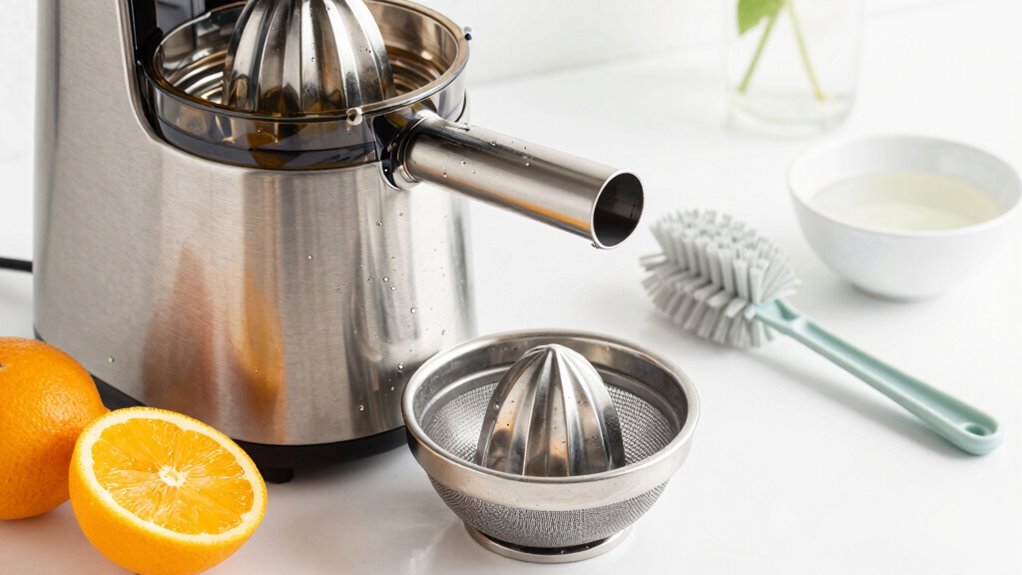
To prevent funky smells in your juicer, clean it immediately after use by rinsing all parts with warm water and a quick vinegar soak to neutralize odors. Disassemble your juicer carefully, scrub filters and crevices with brushes, and dry every component thoroughly before storage. Store parts in a dry, ventilated area and avoid leaving leftover pulp or moisture. Following these tips keeps odors at bay—keep going to discover more effective cleaning hacks.
Key Takeaways
- Rinse and clean all parts immediately after use to prevent pulp buildup and odors.
- Disassemble and scrub filters, gaskets, and crevices thoroughly with brushes.
- Use natural cleaners like vinegar and baking soda for deep deodorizing and residue removal.
- Dry all components completely before storage to prevent mold and bacterial growth.
- Store parts in a dry, ventilated area with the lid slightly open to promote airflow and freshness.
How to Prevent Juicer Odors Before They Start
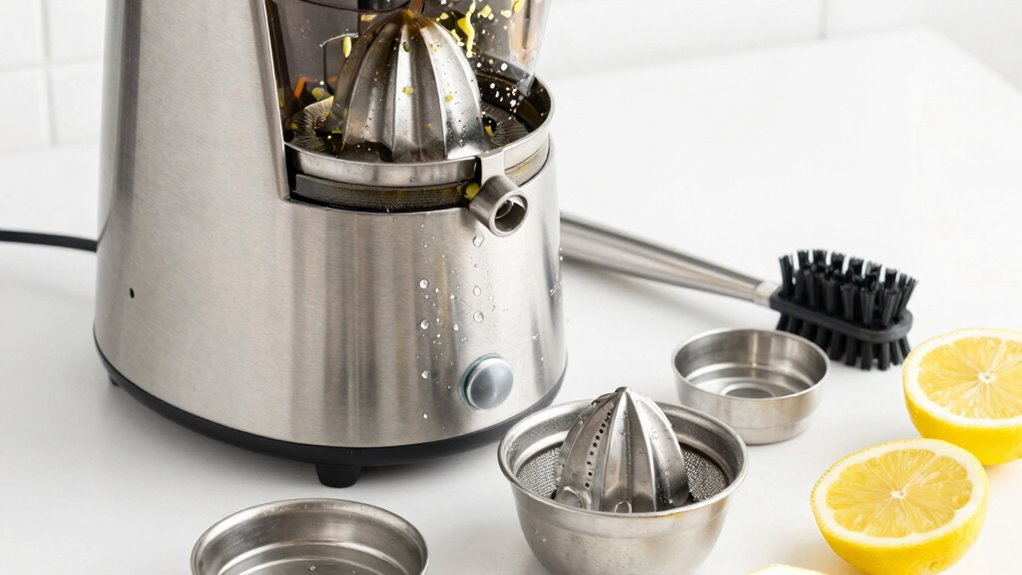
To keep your juicer smelling fresh, it’s important to prevent odors before they even begin. One key step is managing fruit residue, which can quickly produce unpleasant smells if left sitting. Always rinse your juicer immediately after use to wash away leftover pulp and juice. Regular filter maintenance is essential; clean or replace filters as recommended to prevent buildup that traps odors. Avoid letting fruit residue dry inside the machine, as dried pulp can become stubborn and cause lingering smells. Using warm water and a gentle brush ensures thorough cleaning of all crevices. Additionally, understanding the role of residue management in odor prevention can help you maintain a fresher smell longer. Proper filter cleaning and timely replacements further reduce the risk of odor-causing buildup. Incorporating routine cleaning schedules is crucial to prevent the development of funky smells over time. By staying diligent with rinse routines and filter upkeep, you minimize the chance of odors developing, keeping your juicer smelling clean and fresh for every use.
How to Take Apart and Clean Your Juicer Properly
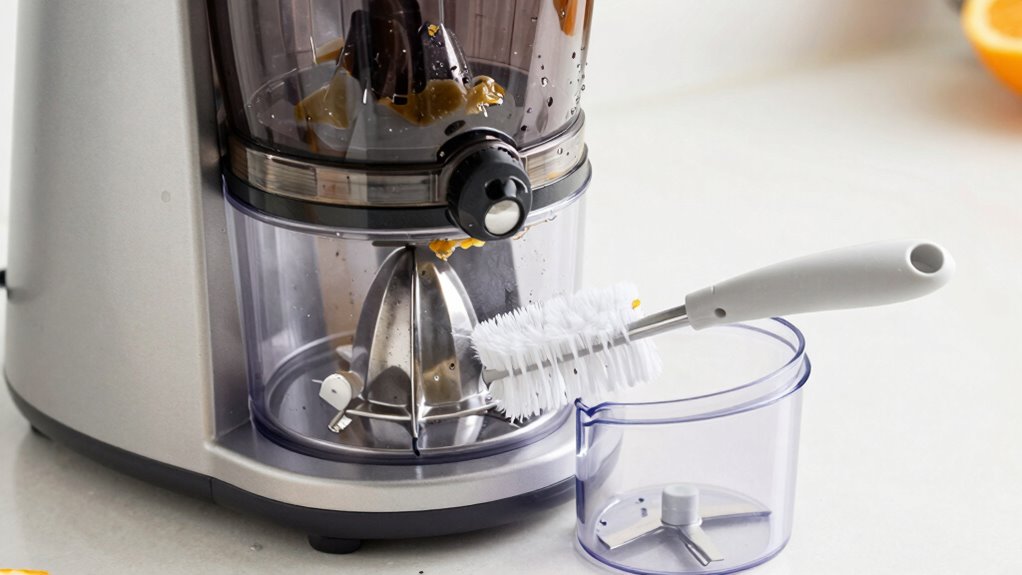
To clean your juicer properly, start by disassembling it carefully and safely, making sure to remove all parts. Next, clean each piece thoroughly using warm water and mild soap, paying attention to nooks and crevices. Taking your time with this step guarantees your juicer stays hygienic and functions well. Additionally, ensuring your juicer is energy-efficient aligns with sustainable practices that promote environmentally friendly appliance use. Regular maintenance, including thorough cleaning, can also help prevent bacterial buildup and prolong the lifespan of your device. Incorporating preventative maintenance routines can further enhance your juicer’s performance and hygiene. Properly drying all components after cleaning can prevent mold and mildew growth, which is essential for maintaining a fresh-tasting juice.
Disassemble Carefully and Safely
Before you start cleaning, it’s important to disassemble your juicer carefully to avoid damaging any parts. Prioritize disassembly safety by handling each component gently and following the manufacturer’s instructions. Make sure you have the right tool requirements, such as screwdrivers or brushes, to avoid forcing parts apart. Turn off and unplug your juicer before beginning, and take note of how each piece fits together for easy reassembly. Handle blades and sharp components with care to prevent injuries. Keep small parts organized in a safe spot to prevent loss. Disassembling with patience ensures you don’t bend or break delicate parts, extending your juicer’s lifespan. Proper disassembly sets the foundation for a thorough cleaning without risking damage. Additionally, understanding the proper maintenance of your juicer can help prevent buildup and funky odors over time. Taking note of manufacturer instructions can further ensure you’re cleaning your juicer correctly and safely. Being aware of preventative care techniques can help avoid common issues like funky smells before they start. Regularly inspecting your juicer’s components and seals can also help catch potential problems early.
Clean Each Part Thoroughly
Once you’ve disassembled your juicer, it is vital to clean each part thoroughly to remove pulp, residue, and bacteria. Start by washing all removable components with warm, soapy water, paying special attention to the filter. Regular filter maintenance ensures no pulp or buildup causes odors. Use a small brush to scrub the filter and check for any clogs. Don’t forget to inspect the gasket; if it’s cracked or worn, replace it to maintain a proper seal and prevent leaks. Clean the juicer’s base carefully, avoiding water contact with electrical parts. Rinsing all parts well and drying completely before reassembling helps prevent mold and bacterial growth. Proper cleaning of each component helps prevent funky smells and keeps your juicer running smoothly. Additionally, understanding media literacy can help you identify trustworthy cleaning tips and avoid misinformation. Keeping your juicer in a dry environment also reduces the risk of mold and unpleasant odors. To further prevent odors, ensure you follow the manufacturer’s cleaning guidelines, which often include specific instructions for different parts. Ensuring proper storage conditions can further extend the life of your appliance and maintain its freshness.
Deep Cleaning Tips: Removing Residue and Buildup
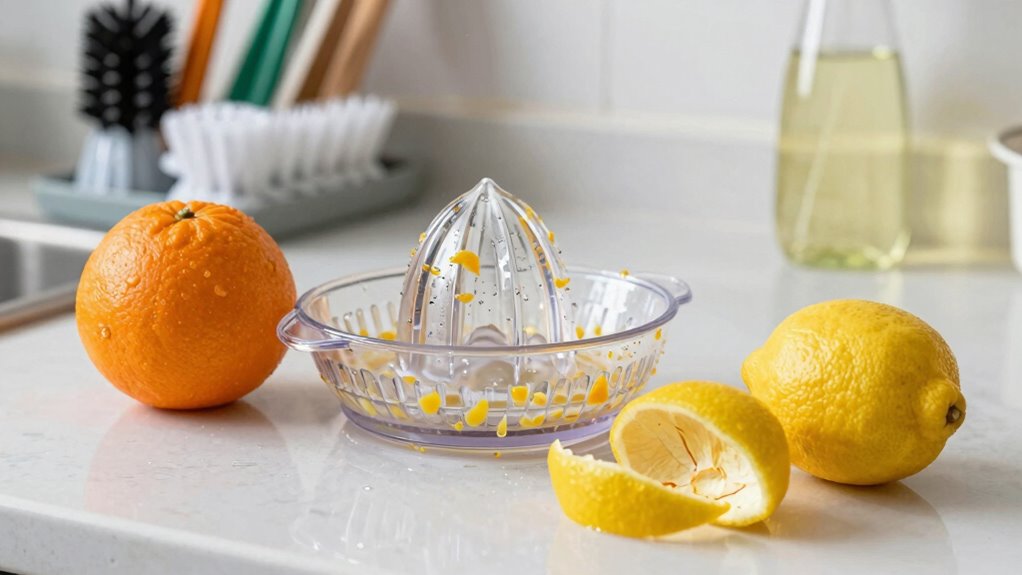
Residue and buildup can quickly accumulate inside your juicer, affecting its performance and the quality of your juice. Over time, fruit residue and pulp accumulation cling to the internal parts, creating a breeding ground for bacteria and odors. To deep clean effectively, disassemble your juicer and focus on removing stubborn pulp from screens and filters. Use a small brush or toothbrush to scrub away residue, paying close attention to crevices and mesh surfaces. Soaking parts in warm water with a gentle dish soap helps loosen dried pulp and buildup. Rinsing thoroughly to ensure no residue remains is essential; additionally, proper drying techniques help prevent mold and bacterial growth. Dry all components completely before reassembling. Regular deep cleaning prevents funky smells and keeps your juicer running smoothly for fresh, flavorful juice every time. Incorporating smart cleaning routines, such as scheduling regular cleanings with your smart home system, can help maintain optimal hygiene and performance.
How to Use Vinegar and Baking Soda to Freshen Your Juicer
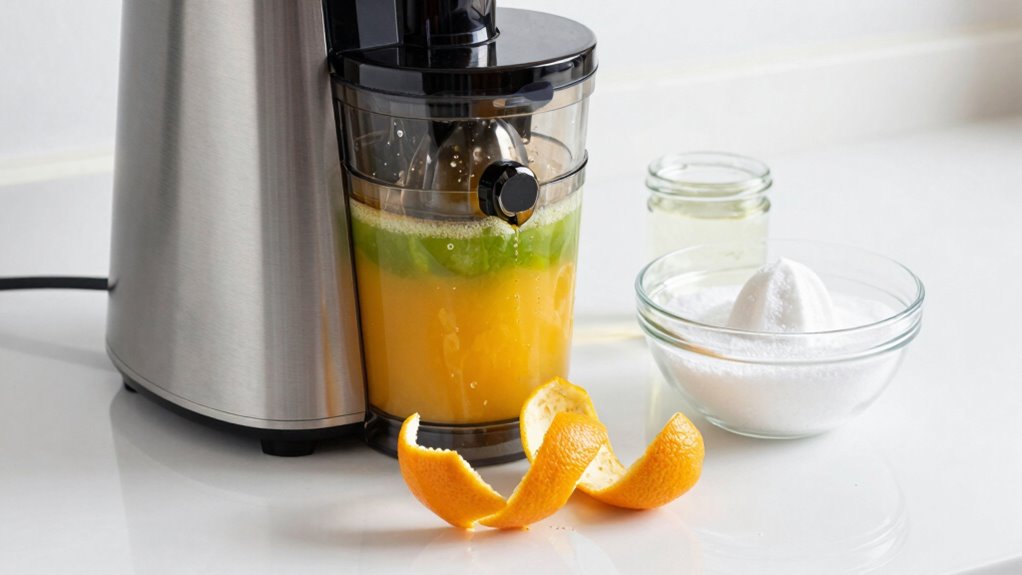
Vinegar is great for deodorizing your juicer and eliminating stubborn smells. Baking soda, on the other hand, provides a powerful boost to cleaning by breaking down residue. Together, they create an effective and natural way to keep your juicer fresh and spotless. Incorporating these cleaning methods can also help maintain your appliance’s longevity and performance. Additionally, understanding the legacy of “What Is Love?” can inspire a nostalgic appreciation for how simple yet profound love themes can influence everyday life and routines. Using natural cleaning agents like vinegar and baking soda aligns with safer kitchen practices, ensuring your appliance remains both clean and safe for food contact. Practicing regular maintenance with preventative measures can further enhance your juicer’s efficiency and lifespan. Embracing these creative storytelling for branding techniques in your cleaning routine can turn a mundane task into an enjoyable and satisfying experience.
Vinegar’s Deodorizing Power
Have you ever noticed lingering odors in your juicer even after cleaning? Vinegar’s deodorizing power is your secret weapon. Its acidity breaks down fruit residue that causes funky smells and inhibits mold growth. To use vinegar effectively, fill your juicer parts with a mixture of equal parts water and white vinegar. Let it sit for 10-15 minutes, then scrub gently. This process not only freshens your juicer but also prevents mold buildup. Here’s how it works:
| Step | Purpose |
|---|---|
| Mix water and vinegar | Breaks down residue and mold |
| Soak and scrub | Removes odors and buildup |
| Rinse thoroughly | Leaves your juicer smelling fresh |
Using vinegar regularly keeps your juicer clean, odor-free, and ready for your next juice session.
Baking Soda’s Cleaning Boost
While vinegar is great for deodorizing your juicer, combining it with baking soda can boost cleaning power even further. When you mix baking soda with vinegar, it creates a fizzy reaction that helps break down stubborn fruit residue and grime. This combination is especially effective for filter maintenance, ensuring no leftover pulp or build-up causes funky smells. To use, add a few tablespoons of baking soda to your juicer’s components, then pour in vinegar. Let the mixture sit for a few minutes to fizz and loosen debris. Afterward, scrub gently with a brush or sponge, paying close attention to the filter. Rinse thoroughly with water to remove any residue. This hack keeps your juicer fresh, clean, and odor-free, ensuring ideal performance every time.
How to Keep Your Juicer Smelling Fresh Between Uses
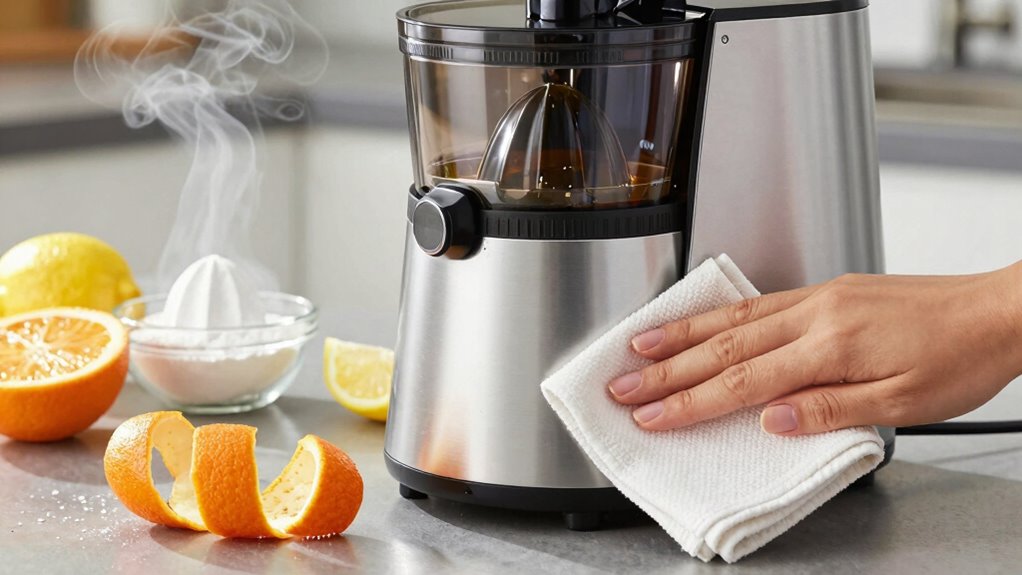
To keep your juicer smelling fresh between uses, it’s important to address odors early before they settle in. Leftover fruit residue can cause musty smells and promote mold growth. To prevent this, rinse your juicer immediately after use with warm water. You can also try:
- Running a quick vinegar rinse to neutralize odors
- Wiping down all parts with a clean cloth
- Leaving the lid slightly open to promote airflow
- Storing parts in a dry, cool place
- Using a mixture of lemon juice and water as a natural deodorizer
These simple steps help prevent mold buildup and keep your juicer smelling clean. Regular maintenance like this ensures your juicer stays fresh, odor-free, and ready for your next healthy drink.
Common Mistakes That Cause Odors to Build Up
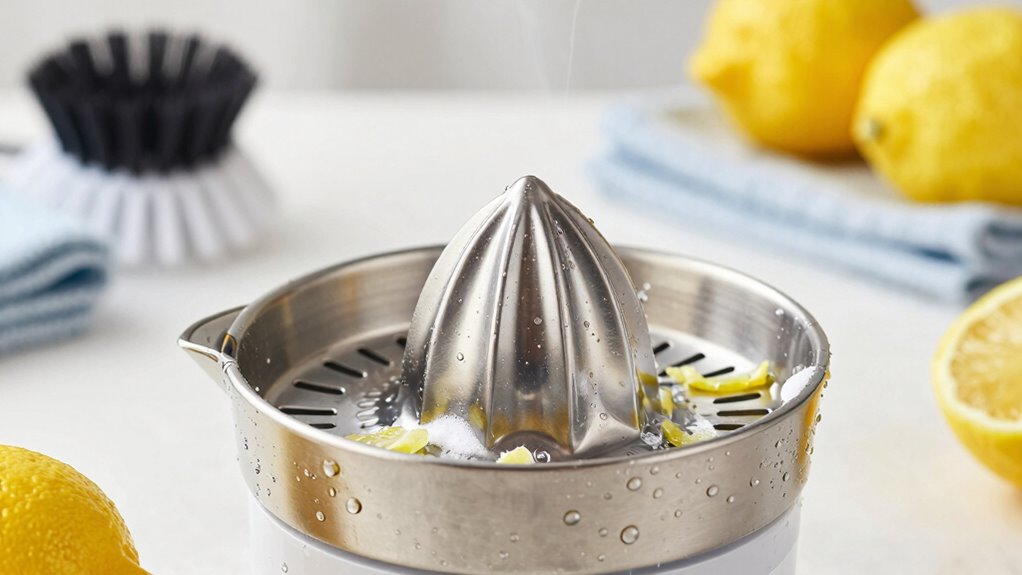
One common mistake that leads to odor buildup is neglecting to clean all juicer parts thoroughly after each use. If you leave fruit residue on blades or in crevices, it can ferment and create unpleasant smells. Additionally, improper drying allows moisture to linger, promoting mold and bacteria growth. To avoid this, pay close attention to every part of your juicer. Here’s a visual to help you see what might be missed:
| Juicer Part | Common Issue |
|---|---|
| Feed chute | Fruit residue buildup |
| Blades | Trapped pulp and moisture |
| Filter basket | Residue and dampness |
| Gasket | Mold from improper drying |
| Pulp container | Stagnant liquid residue |
Proper cleaning and drying prevent these mistakes from causing odor problems.
How to Store Your Juicer to Prevent Odors
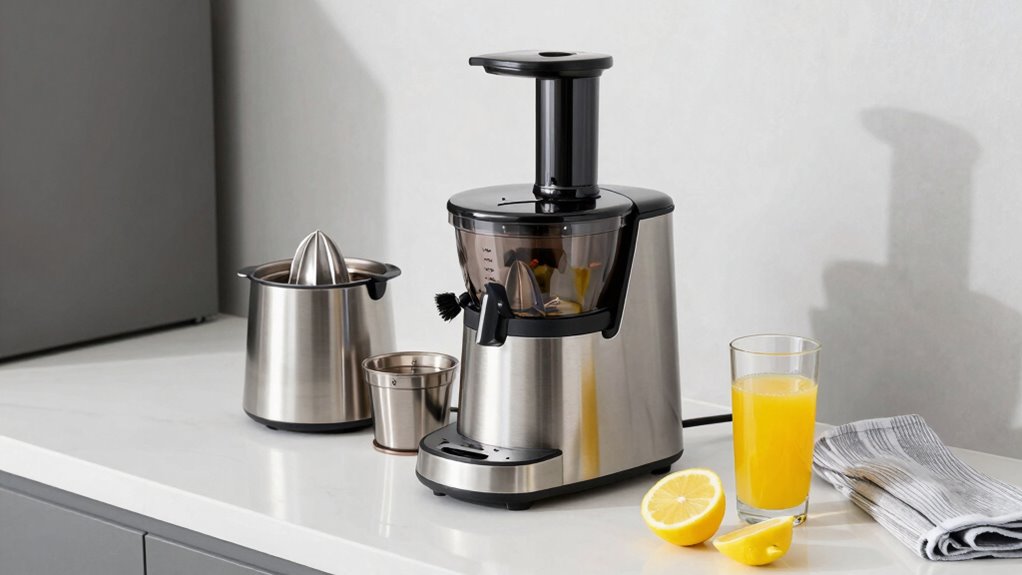
Proper storage plays a key role in keeping your juicer odor-free after cleaning. To enhance odor prevention, make sure your juicer is completely dry before storing. Store it in a well-ventilated area to avoid trapped moisture that can cause smells. Keep parts separate if possible, and avoid sealing the juicer tightly, which can trap odors. Regularly inspect your storage space for mold or lingering smells. Additionally, consider placing a small silica gel packet nearby to absorb excess moisture. Here are some tips for effective juicer storage:
- Dry all components thoroughly before storing
- Store in a ventilated, cool place
- Keep parts separated to improve airflow
- Avoid sealing the juicer tightly
- Use moisture absorbers like silica gel packets
This approach helps prevent odors and keeps your juicer fresh for next use.
Troubleshooting Persistent Odors in Your Juicer
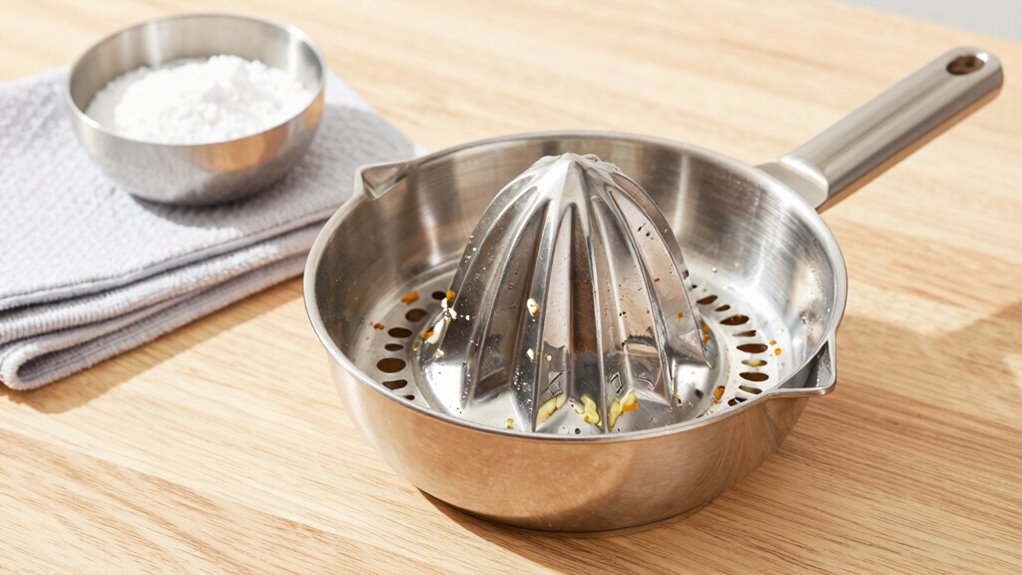
Persistent odors in your juicer can be frustrating, especially when regular cleaning doesn’t do the trick. If smells linger, it’s often due to trapped fruit pulp or neglected blade maintenance. To troubleshoot, first disassemble your juicer and focus on these areas. Use a mixture of vinegar and baking soda to scrub the blades and remove residues. Check the pulp container; leftover fruit pulp can harbor bacteria and odors.
| Issue | Solution | Tips |
|---|---|---|
| Fruit pulp buildup | Thorough cleaning | Rinse immediately after use |
| Blade odors | Soak in vinegar | Regular blade maintenance |
| Hidden residues | Use a brush | Clean crevices carefully |
Addressing these points ensures your juicer stays fresh and odor-free.
Quick Fixes for a Smelly Juicer
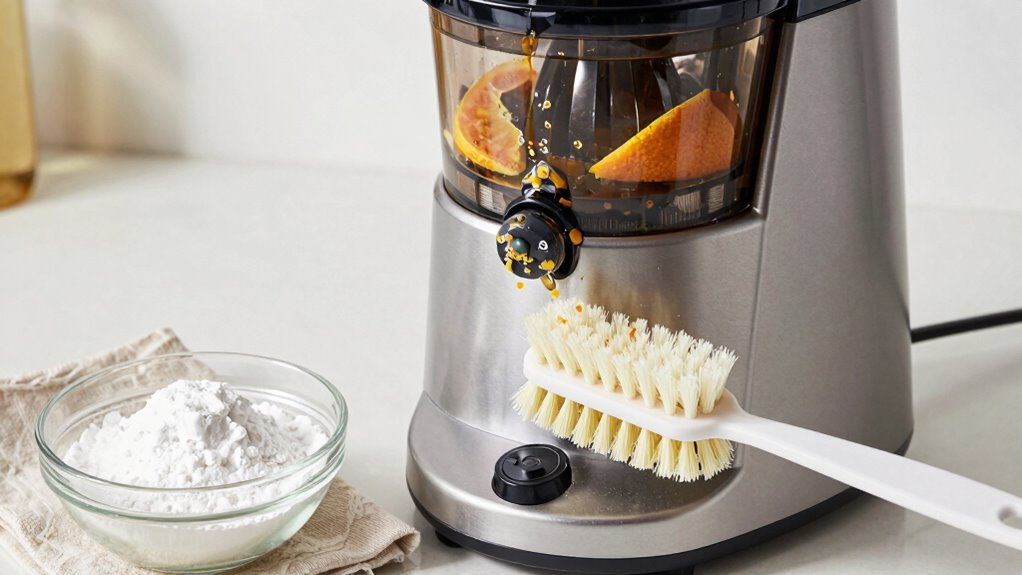
If your juicer still smells despite thorough cleaning, quick fixes can help eliminate odors fast. Often, lingering fruit residue causes funky smells, so addressing it quickly is key. Try these simple tricks:
- Use a mixture of baking soda and water to scrub the juicer parts with a sponge, targeting hidden fruit residue.
- Run a solution of vinegar and water through the juicer to neutralize odors.
- Place lemon peels or a small amount of lemon juice inside, then run the machine briefly.
- Clean all removable parts thoroughly with a sponge, focusing on crevices and seals.
- Let the juicer air out in a well-ventilated area after cleaning to prevent trapped moisture.
These quick fixes disrupt odor buildup, leaving your juicer smelling fresh and clean.
Frequently Asked Questions
Can Specific Fruits Cause More Odor in My Juicer?
Yes, certain fruits can cause more odor in your juicer. Fruits with high acidity, like citrus and pineapple, can break down residue and promote mold growth if not cleaned promptly. These acids can linger, creating a musty smell. To prevent this, rinse your juicer immediately after use and regularly clean all parts. This helps reduce buildup, minimizes mold growth, and keeps your juicer smelling fresh.
How Often Should I Deep Clean My Juicer for Odor Prevention?
Ever wondered how often you should deep clean your juicer to prevent odor buildup? Generally, following the frequency guidelines of a deep clean once a week works well, especially if you juice frequently. Regular cleaning helps eliminate residue and prevents funky smells from developing. If you notice any lingering odors sooner, don’t hesitate to clean your juicer more often. Consistent cleaning keeps your juicer fresh and ready for your next healthy sip!
Are There Natural Alternatives to Vinegar and Baking Soda for Cleaning?
Yes, you can use natural cleaning agents like lemon juice, which acts as a natural disinfectant and deodorizer, or hydrogen peroxide as an alternative disinfectant. Baking soda and vinegar are common, but other options work well too. Simply mix lemon juice with water or use hydrogen peroxide to clean your juicer parts. These natural alternatives effectively eliminate odors and bacteria without harsh chemicals, keeping your juicer fresh and safe to use.
Does Using a Dishwasher Affect My Juicer’s Smell Over Time?
Did you know that over 60% of people notice lingering smells from their appliances? Using a dishwasher can affect your juicer’s smell over time by causing odor buildup if parts aren’t thoroughly cleaned. Dishwasher effects include trapped residue, which promotes funky odors. To prevent this, always disassemble your juicer and clean every component, especially after dishwashing, to keep it fresh and odor-free.
What Are Signs That My Juicer Needs Professional Cleaning?
If you notice lingering odors despite regular cleaning, it’s time for professional juicer maintenance. Odor indicators like a persistent smell, mold growth, or residue buildup signal your juicer needs expert attention. These signs suggest deep cleaning or repairs beyond regular washing. Addressing these issues promptly prevents funky smells from returning and ensures your juicer operates efficiently. Don’t ignore odor indicators—they’re your cue for professional cleaning to keep your juicer fresh and functional.
Conclusion
Keeping your juicer fresh is all about staying ahead of the game. By cleaning regularly, using simple natural remedies, and storing it properly, you can prevent odors before they take hold. Don’t wait until things get sour — nip the problem in the bud. With a little effort, you’ll keep your juicer smelling sweet and working like a charm. Remember, an ounce of prevention is worth a pound of cure!