To make your produce last longer, store fruits and vegetables in the fridge’s crisper drawers, which offer controlled humidity and stable temperatures. Avoid putting produce in the door, where temperature fluctuations speed up spoilage. The top shelf is great for herbs and ready-to-eat fruits, while the coldest zone benefits leafy greens and berries. Understanding how temperature and humidity affect different produce helps you keep it fresher longer—there’s more to learn about optimizing your fridge layout.
Key Takeaways
- Crisper drawers with controlled humidity extend produce freshness by slowing ripening and spoilage.
- The fridge door has temperature fluctuations, making it unsuitable for storing delicate produce.
- The top shelf offers a stable, cool environment ideal for herbs and ready-to-eat fruits.
- Proper humidity and temperature management in drawers prevent mold, dehydration, and over-ripening.
- Storing ethylene-producing fruits separately helps delay spoilage and prolong produce shelf life.
Where to Store Fruits and Vegetables in Your Fridge: A Zone-by-Zone Guide
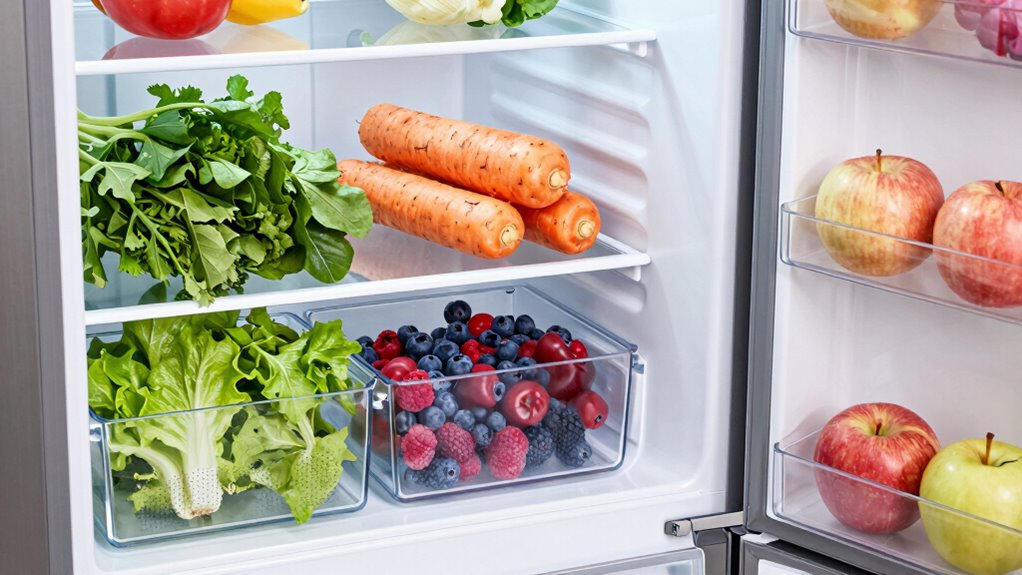
To keep your fruits and vegetables fresh for longer, it’s important to store them in the right zones of your fridge. Certain areas help slow down fruit ripening and prevent produce spoilage. The crisper drawers are ideal because their controlled humidity slows the ripening process, keeping produce fresher. Keep fruits like berries, apples, and grapes in these zones, as they are sensitive to moisture and ethylene gas. Vegetables such as leafy greens and broccoli also benefit from this environment. Proper storage techniques are essential for extending shelf life and maintaining quality. Avoid overcrowding to allow proper air circulation, which helps maintain freshness. Storing produce properly not only extends shelf life but also preserves flavor and texture. Understanding which zone suits each type of produce is key to reducing waste and enjoying fresher, tastier fruits and vegetables for longer. For optimal results, consider how the fridge’s internal design influences temperature and humidity levels, further enhancing produce preservation. Additionally, being aware of ethylene gas production helps prevent premature spoilage of sensitive produce. Knowing how to manage humidity levels in different fridge zones can also significantly impact produce longevity.
Why the Fridge Door Isn’t the Best Place for Produce

Although the fridge door is a convenient spot for frequently used items, it’s not ideal for storing produce. The door experiences frequent temperature fluctuations due to opening and closing, which can lead to uneven cooling. This makes fridge door storage a poor choice for delicate produce, as it increases the risk of produce spoilage. Fruits and vegetables need a consistent, cooler environment to stay fresh longer, and the door’s higher temperatures can cause them to ripen and decay faster. Relying on the fridge door for produce can shorten their lifespan, wasting food and money. To keep your produce fresher, store it in the main compartments where temperatures are more stable and controlled. Proper storage conditions are essential for maintaining produce quality and extending freshness. Using temperature stability as a critical factor can significantly improve how long your produce stays fresh. Additionally, understanding the ideal humidity level for different types of produce can further enhance their shelf life. Maintaining the correct air circulation within the fridge also helps prevent excess moisture buildup that can cause spoilage. For optimal preservation, it’s also important to consider proper ventilation, which helps maintain consistent conditions inside the fridge.
The Top Shelf: Perfect for Fresh Herbs and Ready-to-Eat Fruits

The top shelf is ideal for keeping fresh herbs and ready-to-eat fruits easily accessible. It helps maintain their flavor longer and prevents them from wilting or spoiling quickly. By placing these items here, you guarantee they stay fresh and ready to enjoy whenever you need them. Additionally, understanding art care principles can help you organize and preserve your produce more effectively. Proper storage techniques can further extend the freshness of your items and reduce waste. Recognizing the importance of product lifespan can assist you in planning your meals more efficiently. Employing appropriate temperature control is essential for maintaining optimal freshness and preventing spoilage. Implementing performance cookies can provide valuable insights into how your storage methods impact produce longevity.
Optimal for Fresh Herbs
Have you ever wondered where the best spot for fresh herbs is in your fridge? The top shelf is ideal for herb preservation because it maintains a consistent temperature that keeps herbs fresh longer. When it comes to fresh herb storage, avoid the crisper drawer, which can be too humid and cause herbs to spoil quickly. Instead, place herbs upright in a glass of water or wrapped loosely in a damp paper towel. This method helps retain moisture and prevents wilting. Keep herbs away from direct airflow to avoid dehydration. By choosing the top shelf for your fresh herbs, you ensure they stay vibrant and flavorful, making your herbs last longer and keeping your dishes tasting their best.
Keeps Fruits Ready
Ever wonder where to keep your ready-to-eat fruits so they stay fresh and convenient? The top shelf is ideal because it’s less exposed to temperature fluctuations, helping you prevent unnecessary fruit ripening. When fruits ripen too quickly, they’re more prone to produce spoilage, reducing their lifespan. Placing ready-to-eat fruits here slows down ripening, keeping them crisp and fresh longer. Plus, since this shelf is easy to access, you can grab your fruits quickly for snacks or recipes. Avoid stacking heavy items on top, which can bruise or damage delicate produce. Keeping fruits in this zone minimizes handling and exposure, ensuring they stay appealing and ready whenever you need them. Additionally, maintaining a consistent temperature on this shelf can help preserve freshness and extend the fruit’s quality. This simple placement aligns with food storage best practices, helping you enjoy fresh, flavorful fruits for days longer. Proper temperature regulation in this zone is essential for maximizing shelf life.
Maintains Flavor Longer
Placing fresh herbs and ready-to-eat fruits on the top shelf helps preserve their flavor longer because this zone maintains a more stable temperature. A consistent environment minimizes the chances of temperature fluctuations that can weaken flavor preservation and reduce taste retention. When your produce stays at an ideal, steady temperature, it retains its natural aroma and freshness, ensuring each bite or sip tastes as intended. The top shelf’s gentle, uniform cooling helps prevent produce from drying out or becoming overly chilled, which can degrade flavor. Additionally, proper piercing care and hygiene can prevent spoilage that affects produce quality. By storing these items here, you maximize their taste retention, keeping them flavorful and vibrant longer. This strategic placement allows you to enjoy fresh, flavorful herbs and fruits without sacrificing their natural essence prematurely.
The Drawers: Best Storage Spots for Your Vegetables and Fruits
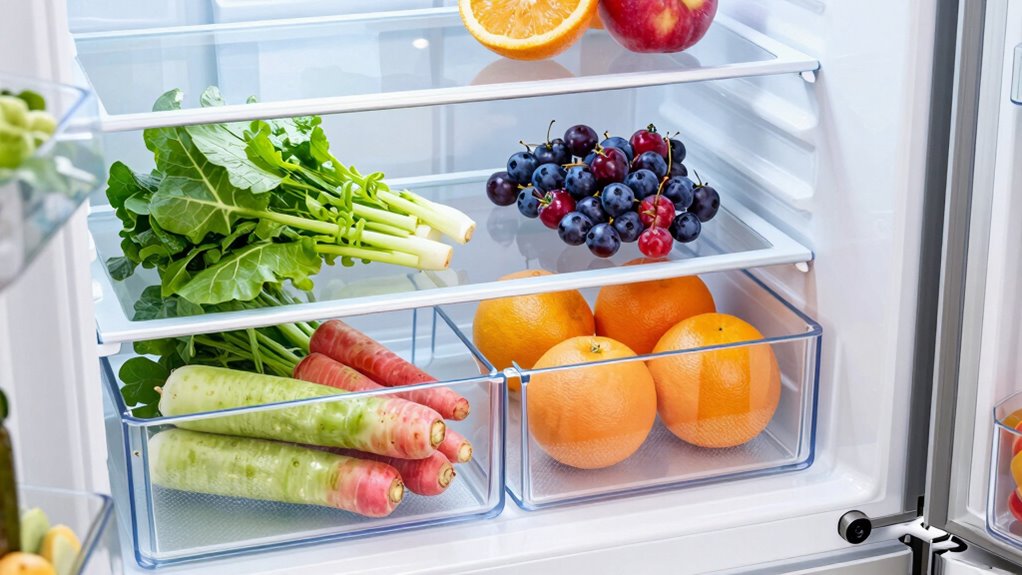
Your fridge drawers are ideal for maintaining the right humidity levels to keep produce fresh longer. Keeping temperatures consistent prevents premature ripening and spoilage. Proper storage in these spots helps protect your fruits and vegetables from unnecessary ripening and waste. Additionally, understanding security zone info can help you better organize your fridge to enhance storage efficiency. Implementing a whole-house filtration system can also improve the quality of your stored produce by reducing contaminants and extending freshness. Being aware of food safety tips can further help prevent spoilage and ensure your produce remains healthy and safe to eat. Incorporating antioxidant-rich juices into your diet can support overall health and boost immunity. Moreover, adjusting humidity levels using smart fridge technology can optimize storage conditions for different types of produce.
Optimal Humidity Levels
Maintaining the right humidity levels in your fridge drawers is essential for keeping fruits and vegetables fresh longer. Proper humidity slows down dehydration and inhibits mold growth. Use higher humidity for leafy greens and berries, which prefer moisture, and lower humidity for fruits like apples and citrus to prevent excess moisture. Imagine this setup:
| Vegetables & Fruits | Humidity Level | Ideal Condition |
|---|---|---|
| Leafy greens | High | Keep crisp and fresh |
| Berries | High | Prevent mold, ethanol buildup |
| Apples | Low | Reduce spoilage |
| Citrus | Low | Minimize mold risk |
| Carrots | High | Maintain crunch |
Balancing humidity prevents ethanol buildup, which can accelerate decay, and reduces mold development, ensuring your produce stays fresher longer.
Temperature Consistency
Consistent temperature in your fridge drawers is crucial for preserving the freshness and quality of your fruits and vegetables. Temperature fluctuations and inconsistent cooling can cause spoilage and reduce shelf life. To maintain ideal conditions:
- Avoid frequently opening the drawers to prevent sudden temperature changes.
- Keep the fridge’s temperature set between 35-40°F (1.6-4.4°C) for steady cooling.
- Regularly check for signs of uneven cooling, such as cold spots or warmer areas, and adjust accordingly.
Preventing Fruit Ripening
To slow down the ripening process and keep fruits fresh longer, maintaining proper storage in the right drawers of your fridge is essential. Certain fruits emit ethylene gas, which accelerates ripening and causes spoilage. Store ethylene-producing fruits like apples and bananas separately from sensitive produce to prevent ethylene buildup. Using ripening inhibitors in your fridge drawers can also help delay over-ripening.
| Ethylene Producers | Sensitive Fruits |
|---|---|
| Apples | Berries |
| Bananas | Leafy greens |
| Tomatoes | Citrus |
| Pears | Carrots |
| Peaches | Broccoli |
The Coldest Zone: Which Produce Benefits From Extra Chill
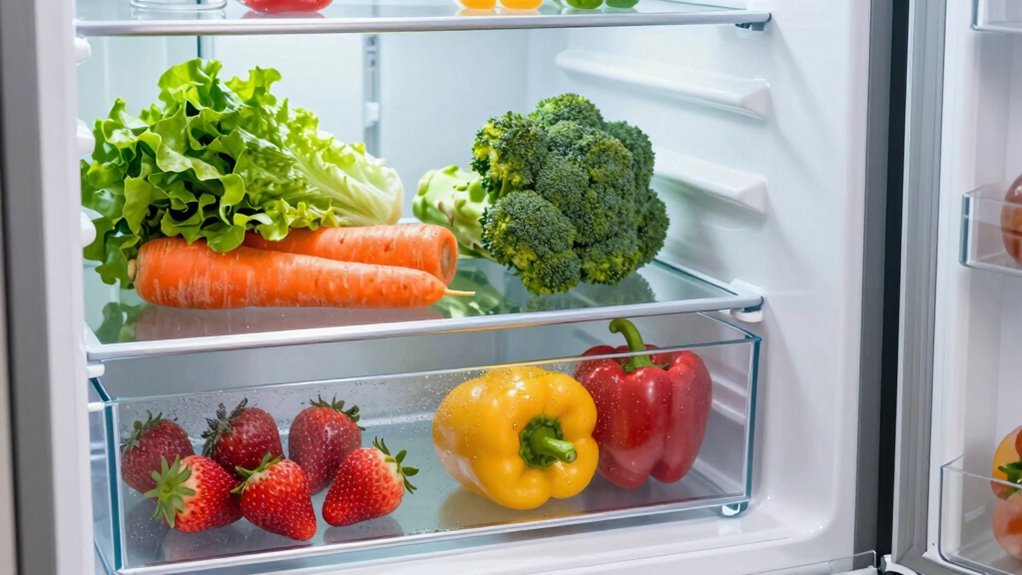
Have you ever wondered why some produce tastes better when stored in the coldest part of your fridge? That’s because certain items benefit from extra chill, especially in the coldest temperature zones. These zones offer ideal humidity control, helping prevent moisture loss and spoilage. When you place delicate produce here, you extend freshness and flavor.
Consider these items for the coldest zone:
- Leafy greens like lettuce and spinach
- Berries and grapes
- Fresh herbs such as cilantro and parsley
Storing these in the coldest zone ensures they stay crisp longer. Just ensure you use the right humidity control, as too much moisture can promote mold, even in temperature zones. This targeted approach helps maximize produce longevity.
How Temperature and Humidity Affect Your Produce’s Freshness
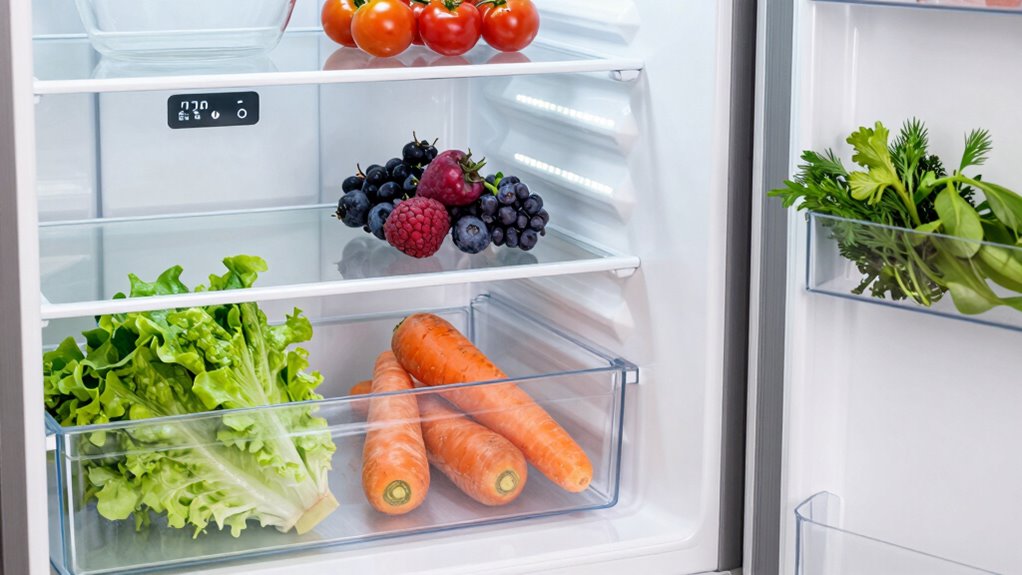
Proper temperature and humidity levels play an essential role in maintaining your produce’s freshness. When you control humidity, you help prevent moisture loss or excess, which can cause produce to wilt or rot. Adjusting humidity control in your fridge ensures fruits and vegetables stay crisp longer. Temperature balance is equally vital; keeping produce at the right temperature slows down ripening and decay. Too warm, and bacteria thrive; too cold, and some items freeze or spoil prematurely. By managing both temperature and humidity, you create ideal conditions that extend freshness and reduce waste. Remember, each type of produce responds differently, so tailoring humidity control and temperature balance to specific items maximizes their shelf life and flavor.
Organizing Your Fridge for Maximum Produce Longevity
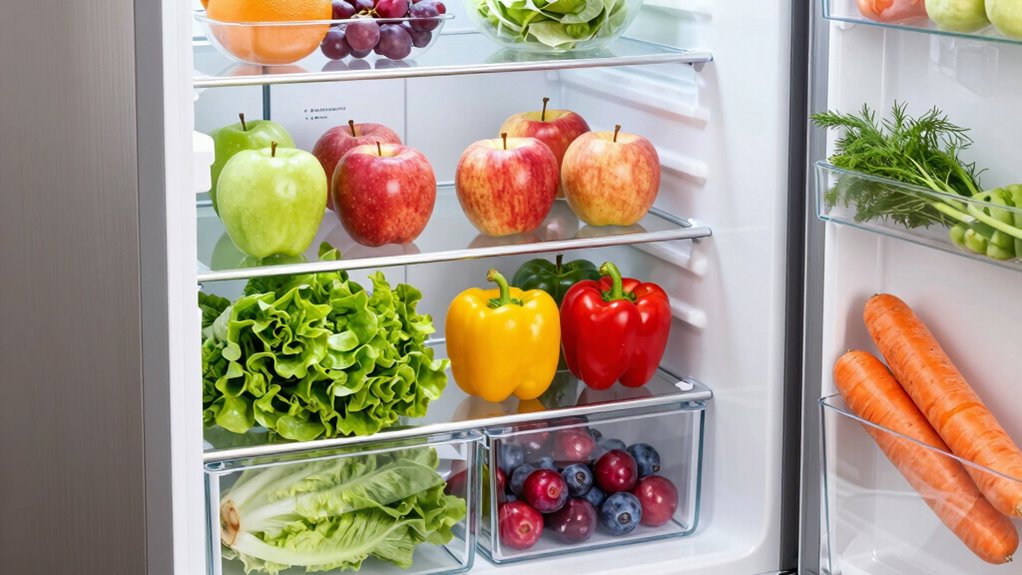
Organizing your fridge effectively can considerably extend the freshness of your produce. Proper arrangement helps maintain ideal temperature and humidity, supporting food safety and simplifying meal prep. To maximize produce longevity, consider these steps:
- Designate specific zones for different produce types, keeping leafy greens separate from fruits that emit ethylene.
- Use drawers or bins to group similar items, reducing cross-contamination and spoilage.
- Place frequently used items at the front for easy access, encouraging regular checks for freshness and reducing waste.
Common Mistakes That Shorten Produce Shelf Life
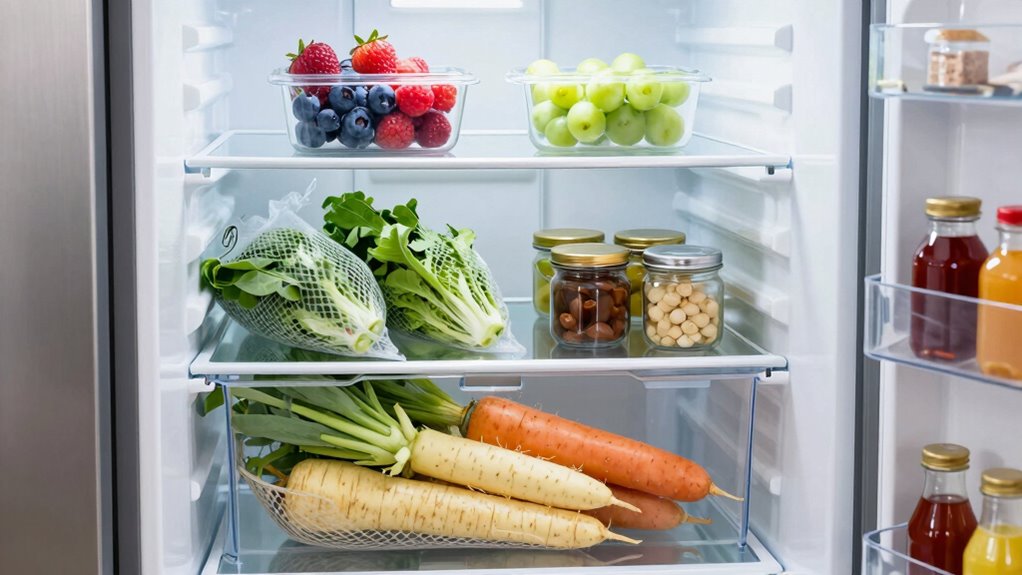
One common mistake that shortens produce shelf life is storing fruits and vegetables together without considering their ethylene production. Ethylene gas, produced by ripening fruits, can accelerate the ripening process of nearby produce, causing spoilage sooner. This mishandling leads to uneven produce ripening and quick deterioration. Additionally, poor moisture control plays a significant role; excess moisture encourages mold and rot, while too little causes dehydration and shriveling. Many people forget to keep produce in properly ventilated areas or containers that regulate humidity. To avoid these mistakes, separate ethylene-producing fruits from vegetables, and ensure your produce is stored in environments that balance moisture levels. Correct handling preserves freshness and extends shelf life, saving you time and money.
Adjusting Your Fridge Settings to Keep Produce Fresh Longer
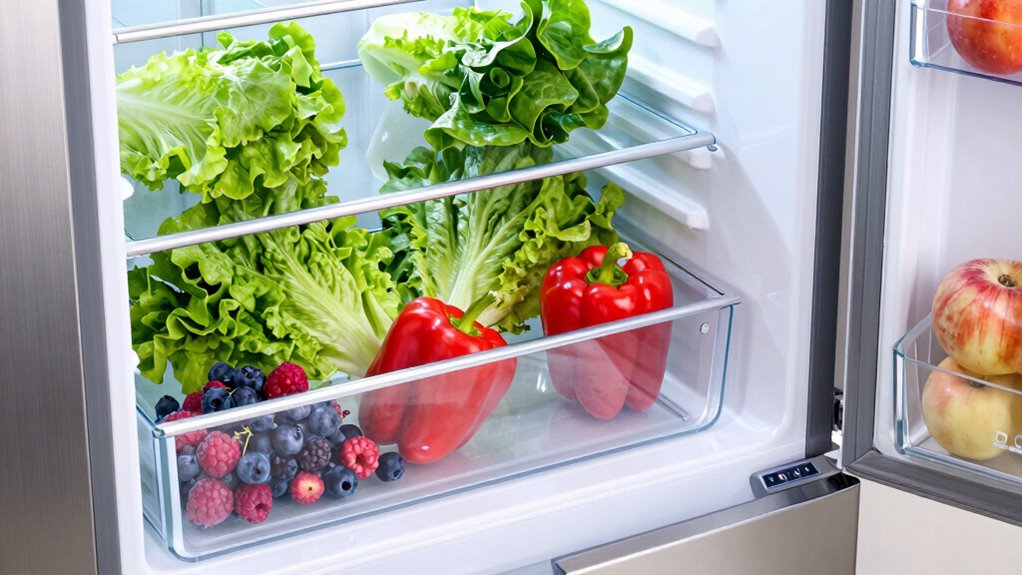
Adjusting your fridge settings can substantially extend the freshness of your produce. The key is maintaining the right fridge temperature to slow down produce ripening and spoilage. Set your fridge to around 37°F (3°C) for ideal preservation. Here are three tips to help you fine-tune your settings:
- Regularly check and calibrate your fridge thermometer for accuracy.
- Use the crisper drawer’s humidity controls to regulate moisture, preserving produce longer.
- Avoid overcrowding, which can hinder air circulation and cause uneven cooling, leading to faster ripening.
Frequently Asked Questions
How Do I Know Which Fridge Zone Is Best for My Specific Produce?
You can determine the best fridge zone for your produce by checking the temperature control and humidity levels. For fruits and vegetables that need higher humidity, place them in crisper drawers set to humidity controls. Leafy greens thrive in high humidity, while berries prefer low humidity. Keep temperature consistent—most produce lasts longer between 32°F and 40°F—so adjust your fridge’s zones accordingly to maximize freshness.
Can Storing Produce in Different Zones Extend Its Shelf Life Significantly?
Storing produce in different temperature zones can dramatically extend its shelf life, turning your fridge into a produce-preserving powerhouse. By placing items in zones with precise temperature control and humidity regulation, you’ll keep fruits and veggies fresher for days or even weeks longer. Imagine your produce lasting so long it feels like a grocery store miracle—this is the power of optimizing fridge zones for maximum freshness.
Are There Any Produce Items That Shouldn’T Be Stored in the Fridge at All?
Some produce items, like bananas, tomatoes, and potatoes, shouldn’t be stored in the fridge at all because cold temperatures can spoil their flavor and texture. For ideal fruit storage and vegetable preservation, keep these items at room temperature. This way, you prevent them from becoming mushy or losing their taste. Always check specific storage recommendations for each fruit or vegetable to guarantee they stay fresh longer.
How Often Should I Reorganize My Fridge to Maximize Produce Freshness?
You should reorganize your fridge at least once a week to maximize produce freshness. Regular fridge maintenance and produce rotation help prevent spoilage—studies show that proper storage can extend produce life by up to 50%. Keep an eye on ripening and spoilage signs, and move older items to the front for quicker use. This routine keeps your fridge efficient and your produce fresher longer.
Does Wrapping Produce Affect Its Longevity in Various Fridge Zones?
Wrapping produce can markedly impact its longevity in different fridge zones. Proper produce wrapping helps control moisture and ethylene buildup, which slows spoilage. In colder, crisper zones, wrapping preserves freshness longer by preventing dehydration. Conversely, in warmer zones, loose wrapping may allow better air circulation, reducing mold. So, choose your produce wrapping based on the fridge zone to maximize freshness and extend shelf life effectively.
Conclusion
By mastering the micro-movements of your fridge zones, you’ll maximize your produce’s potency and prolong its perfection. Store smartly, set settings suitably, and steer clear of common mistakes to keep fruits fresh and vegetables vibrant. With a little know-how and mindful management, you’ll master the art of maintaining produce’s peak. So, simplify your storage strategy, stay savvy, and savor the freshness that stays longer, thanks to your smart, structured fridge zones.