To keep raw meat safe, store it separately from other foods in airtight containers or tightly sealed bags, and place it on the bottom fridge shelf to prevent drips. Keep it at or below 40°F (4.4°C), and freeze if not used soon. Always handle raw meat with clean hands, and use separate cutting boards for meat and produce. Proper storage and handling reduce contamination risks—you’ll discover more tips as you continue exploring safe practices.

Get kitchen staples and gadgets delivered free with Prime
- Fast, free delivery on millions of items
- Prime Video, Amazon Music and more included
- Member-only deals all year
Key Takeaways
- Store raw meat separately in airtight containers on the bottom fridge shelf at or below 40°F (4.4°C).
- Thaw frozen meat in the refrigerator or cold water, not at room temperature.
- Use separate cutting boards for raw meat and produce to prevent cross-contamination.
- Wash hands thoroughly after handling raw meat to reduce bacterial spread.
- Clean and sanitize fridge shelves and containers regularly to prevent bacterial buildup.
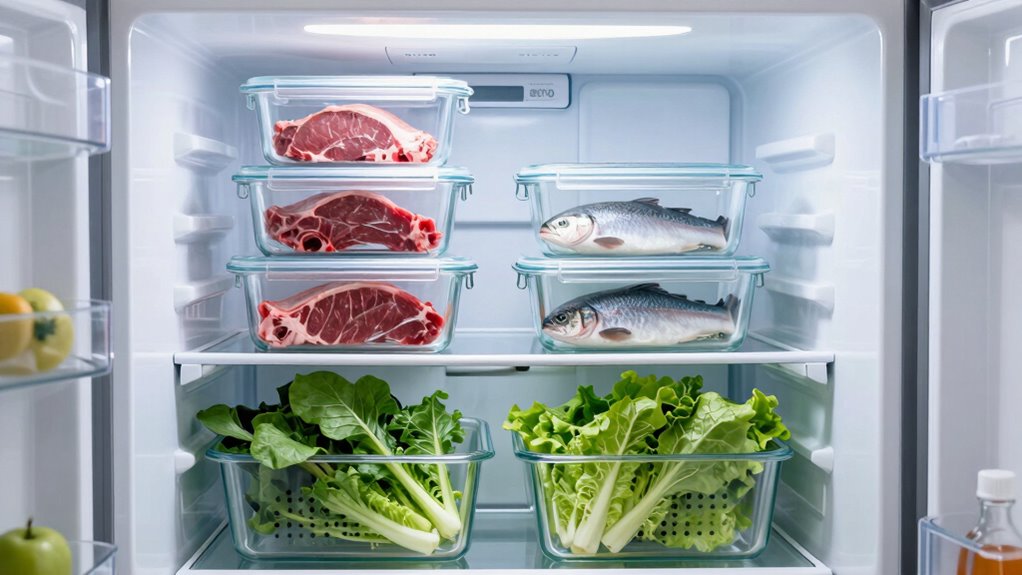
Eating raw foods can be healthy and flavorful, but it also comes with certain food safety risks that you need to be aware of. Proper storage is essential to minimize these risks, especially when it comes to raw meat and produce. When storing raw meat, always keep it separate from other foods to prevent cross contamination. Use airtight containers or tightly sealed plastic bags to contain raw meat and prevent its juices from leaking onto other items in your fridge. Placing raw meat on the bottom shelf is a good practice because it reduces the chance of drips contaminating foods stored below. This is especially important when you’re concerned with cross contamination prevention, which is key to keeping your kitchen safe. Additionally, maintaining proper temperature control ensures that bacteria do not multiply rapidly, further safeguarding your food. Temperature control is crucial for raw foods. Keep raw meat at or below 40°F (4.4°C) in the refrigerator. If you don’t plan to use it within a couple of days, consider freezing it. Proper freezing not only extends shelf life but also kills some bacteria that might be present. When you’re thawing frozen meat, do so in the fridge or using cold water, never at room temperature, to prevent bacterial growth. Once thawed, don’t leave raw meat out for too long; always cook or refrigerate it promptly. Your refrigerator’s organization plays an essential role in food safety and can help prevent accidental cross contamination. Keep raw meats in the coldest part and away from ready-to-eat foods like salads or cooked dishes. This separation is key in cross contamination prevention because it minimizes the risk of bacteria transferring from raw meat to foods you plan to eat raw or after cooking. Use separate cutting boards for raw meat and produce, and wash your hands thoroughly after handling raw meat. This simple step greatly reduces the chances of cross contamination, which can lead to foodborne illnesses. When storing leftovers or prepared raw foods, store them in airtight containers and consume them within recommended time frames. Label containers with dates to keep track of freshness. Remember that bacteria can multiply quickly at improper storage temperatures, so don’t leave raw or cooked raw foods out at room temperature for long periods. Regularly clean your fridge, especially shelves and drawers, to prevent any bacterial buildup. Keeping your storage area clean and organized helps prevent cross contamination and keeps your raw foods safe to eat.
airtight food storage containers for raw meat
As an affiliate, we earn on qualifying purchases.
As an affiliate, we earn on qualifying purchases.
Frequently Asked Questions
How Long Can Raw Foods Be Safely Stored in the Refrigerator?
You can safely store raw foods in your refrigerator typically for 1 to 2 days to prevent bacteria growth and guarantee proper food preservation. Fresh meats like poultry and seafood should be used sooner, within one day, while other raw foods like vegetables can last a bit longer. Always keep your refrigerator at or below 40°F, and store raw foods in sealed containers to minimize bacteria growth and maintain safety.
What Is the Ideal Temperature for Raw Food Storage?
Did you know that improper temperature control causes 90% of foodborne illnesses? To keep raw foods safe, maintain a consistent temperature of 32°F to 39°F (0°C to 4°C) in your refrigerator. Temperature fluctuations can compromise food safety protocols, encouraging bacterial growth. Always use a reliable thermometer, avoid overloading your fridge, and check temperatures regularly to guarantee your raw foods stay fresh and safe to eat.
Can I Store Raw Meats and Vegetables Together?
You shouldn’t store raw meats and vegetables together because of cross contamination risks. To prevent this, use storage separation techniques like placing raw meats on the bottom shelf of your refrigerator and keeping vegetables above them. This way, juices from raw meats won’t drip onto vegetables, reducing contamination. Always guarantee proper packaging and clean storage containers to maintain food safety and keep your raw foods safe to eat.
How Often Should I Clean My Raw Food Storage Containers?
You should clean your raw food storage containers after every use to maintain storage hygiene and prevent cross-contamination. Regular container maintenance is essential, so wash them with hot, soapy water and rinse thoroughly. If containers hold raw meats, consider sanitizing them weekly with a vinegar or bleach solution. Proper cleaning guarantees your food stays safe and fresh, reducing the risk of bacterial growth and keeping your kitchen hygienic.
Are There Specific Storage Rules for Raw Seafood?
Think of raw seafood as a delicate flower, needing gentle care. You should store raw seafood on the bottom shelf of your fridge to prevent cross-contamination. Keep it at or below 40°F, and use airtight containers, following proper storage tips. Always consume it within 1-2 days, and check for any signs of spoilage. Proper storage safeguards your health and preserves the freshness of your raw seafood.
Conclusion
Storing your raw foods properly isn’t just about freshness—it’s about protecting your health. Did you know that raw meat and seafood can harbor bacteria that cause serious illnesses? In fact, the CDC estimates that foodborne illnesses affect one in six Americans annually. By following simple storage rules, you reduce your risk and enjoy your raw diet with confidence. Keep safety top of mind, and your raw eating journey will be both delicious and safe.
Fall Picks
fall essentials
As an affiliate, we earn on qualifying purchases.