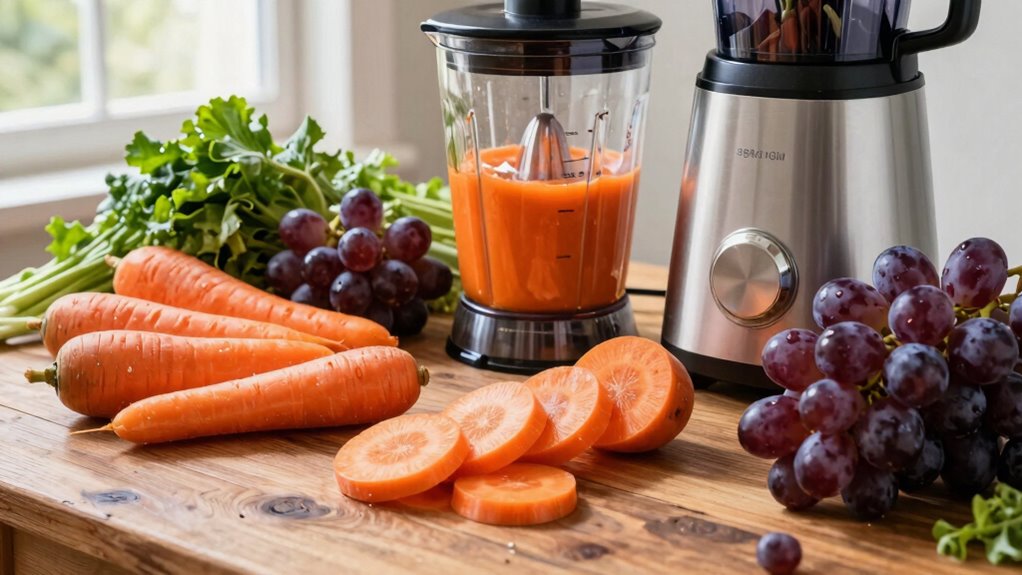
If you’re aiming to maximize fiber intake, blending is your best option since it retains the entire fruit or vegetable, including pulp and skin. Juicing quickly delivers concentrated nutrients but often strips away fiber unless you add pulp back or include fiber-rich ingredients like chia seeds. Supplements can help fill gaps, but whole foods are most effective. To learn more about balancing juicing and blending for ideal fiber, keep exploring these helpful tips.

Get kitchen staples and gadgets delivered free with Prime
- Fast, free delivery on millions of items
- Prime Video, Amazon Music and more included
- Member-only deals all year
Key Takeaways
- Blend whole fruits and vegetables to retain fiber and maximize digestive benefits.
- Juice when quick nutrient absorption is needed, but add pulp to preserve fiber.
- Incorporate fiber-rich ingredients like seeds or oats into blending for enhanced fiber intake.
- Use juice for concentrated vitamins, but rely on blending for sustained fiber and fullness.
- Supplement with fiber if dietary intake from whole foods and smoothies isn’t sufficient.
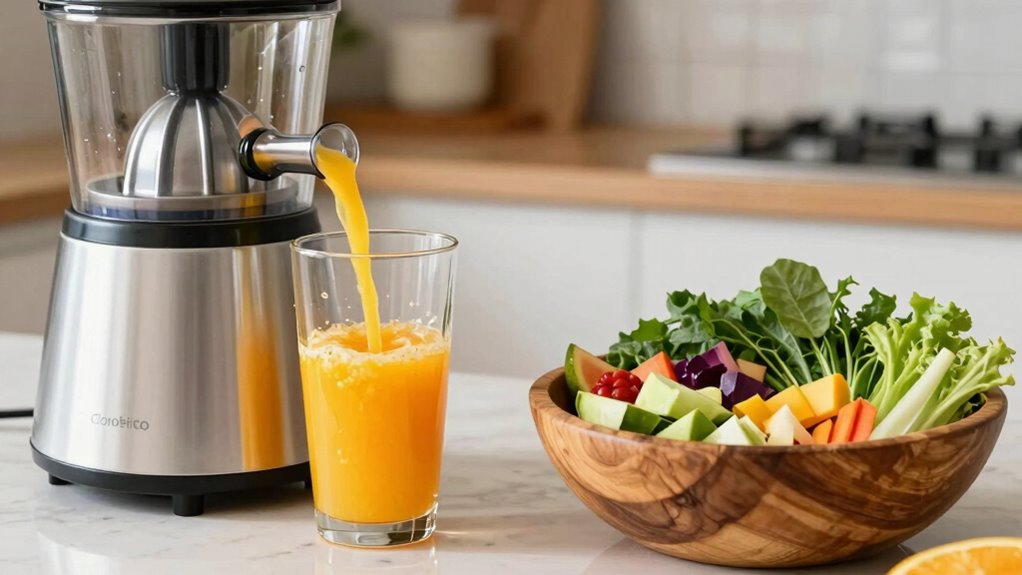
Have you ever wondered why fiber is such an essential part of a healthy diet? It’s because fiber plays a key role in fiber digestion, helping your digestive system run smoothly and efficiently. When you include enough fiber in your meals, you support regular bowel movements, prevent constipation, and even lower your risk of certain chronic diseases. But with so many ways to incorporate fiber—through whole foods, fiber supplements, or juicing—knowing when to juice and when to blend can make a big difference in how much fiber you actually get.
Juicing is popular because it quickly delivers a concentrated dose of vitamins and minerals from fruits and vegetables. However, it often strips away the fiber, especially if you remove the pulp. That means you miss out on a lot of the benefits fiber provides for digestion. If your goal is to boost fiber intake, juicing alone might not be the best choice unless you add back some pulp or include fiber-rich ingredients like chia seeds or flaxseeds. Alternatively, fiber supplements can be a convenient way to guarantee you meet your daily fiber needs without changing your diet considerably. These supplements come in various forms—powders, capsules, or chewables—and are especially helpful if you have difficulty consuming enough fiber through food alone. Just keep in mind that fiber supplements should complement a diet rich in whole foods, not replace them entirely. Incorporating fiber-rich foods is essential for sustained health benefits, as they naturally provide a wide array of nutrients alongside fiber.
Blending, on the other hand, preserves the fiber from fruits and vegetables because you’re consuming the entire ingredient, not just the juice. When you blend, you retain the pulp and skin, which are packed with fiber that aids digestion and helps regulate blood sugar levels. This makes smoothies an excellent option for increasing fiber intake. You get the added benefit of a more satisfying and filling beverage, which can help curb overeating and support healthy weight management. Plus, blending allows you to incorporate a variety of fiber-rich ingredients such as oats, nuts, and seeds, further enhancing your fiber digestion. Additionally, whole foods are naturally rich in fiber, making them the most effective source for maintaining a balanced diet. Including a diverse range of these foods can maximize your overall fiber intake and nutritional profile.
Ultimately, the choice between juicing, blending, or using fiber supplements depends on your health goals and preferences. If you’re seeking maximum fiber intake, blending whole fruits and vegetables is your best bet. If convenience is key, fiber supplements can fill in the gaps. Just remember, whole foods should always be your primary source of fiber, with supplements and juices serving as complementary options. By understanding when to juice and when to blend, you can optimize your fiber consumption and enjoy better digestion and overall health.
high speed blender for whole fruits and vegetables smoothies
As an affiliate, we earn on qualifying purchases.
As an affiliate, we earn on qualifying purchases.
Frequently Asked Questions
Can Juicing Remove All Beneficial Nutrients From Fruits and Vegetables?
Juicing can lead to some nutrient loss, especially water-soluble vitamins like vitamin C, but it retains most beneficial nutrients. However, juicing often removes fiber, which is essential for digestion and blood sugar control. Blending keeps fiber intact, preserving nutrients and promoting fullness. So, while juicing offers quick nutrient intake, blending ensures you get all the fiber and nutrients, making it a better choice for overall health.
Is Blending Better for Weight Loss Than Juicing?
Blending is generally better for weight loss because it keeps the fiber, helping you feel full longer. Think of it as hitting two birds with one stone—preserving fiber and enjoying diverse flavor combinations and textures. Juicing removes fiber, which can lead to quick hunger. If you prefer a thicker, more satisfying drink, blending is your best bet. It’s a simple way to stay full and energized while reaching your weight loss goals.
How Does Fiber Impact Blood Sugar Levels After Consuming Juice or Smoothies?
Fiber slows down sugar absorption, so after consuming juice or smoothies, it helps prevent sugar spikes. If you blend fruits with fiber-rich ingredients like seeds or vegetables, you support better digestive health and keep blood sugar levels steady. Juicing removes much fiber, leading to quicker sugar absorption and potential spikes. As a result, blending is generally better for maintaining stable blood sugar and promoting digestive well-being.
Are There Specific Fruits or Vegetables Better Suited for Juicing or Blending?
Oh, sure, go ahead and juice those high-sugar fruits like pineapples and grapes—because who needs fiber, right? For maximum fiber retention, blend fibrous vegetables like kale and carrots with hearty fruits such as apples and berries. Use fruit combinations that balance sweetness and acidity, and vegetable pairings that add texture and nutrients. Remember, the secret lies in choosing fruits and vegetables that complement each other for a healthful, fiber-rich drink.
Does Blending Preserve More Antioxidants Compared to Juicing?
Blending generally preserves more antioxidants compared to juicing because it keeps the entire fruit or vegetable, including the fiber. Fiber retention is higher in blended drinks, which also helps slow digestion and stabilize blood sugar levels. Juicing removes most fiber, causing some antioxidants to degrade faster. If you want maximum antioxidant preservation and fiber intake, blending is your best choice, especially for nutrient-rich smoothies.
Conclusion
Choosing between juicing and blending lets you control your fiber intake, shaping your health journey. Juicing strips away fiber, offering quick nutrients but less fullness, while blending keeps every fiber-rich bit, fueling your digestion and keeping you satisfied longer. Think of juicing as a swift spark of energy, and blending as a steady, nourishing fire. By understanding when to juice and when to blend, you harness the power of fiber, turning your daily routine into a vibrant, health-boosting ritual.
Halloween Picks
halloween
As an affiliate, we earn on qualifying purchases.