
TL;DR
Noah Pinsonnault, a reviews analyst in the Good Housekeeping Institute’s Home Care & Cleaning Lab, says it is generally fine to leave dirty dishes in a dishwasher overnight. He advises scraping off large food scraps, using the rinse cycle if a load will wait, and not leaving dishes for more than a day.
Dirty dishes can generally stay in the dishwasher overnight without requiring an immediate wash, according to Noah Pinsonnault, a reviews analyst in the Good Housekeeping Institute’s Home Care & Cleaning Lab. His advice is to scrape off large food scraps, use the rinse cycle if the machine will remain partly full, and avoid letting unwashed dishes sit for more than a day.

Get kitchen staples and gadgets delivered free with Prime
- Fast, free delivery on millions of items
- Prime Video, Amazon Music and more included
- Member-only deals all year
Pinsonnault said an overnight wait is usually not a problem, particularly for dishes loaded after dinner. The concern, he said, is less about one night than about leaving food-covered dishes in a closed dishwasher for several days. He described the appliance as a poor place for long-term storage of unwashed dishes.
According to Pinsonnault, food residue in a closed, damp dishwasher can encourage bacteria and mold growth, contribute to unpleasant odors and attract pests. The report does not say that these outcomes are inevitable after one night; its guidance distinguishes an ordinary overnight delay from keeping dirty dishes in the appliance for an extended period.
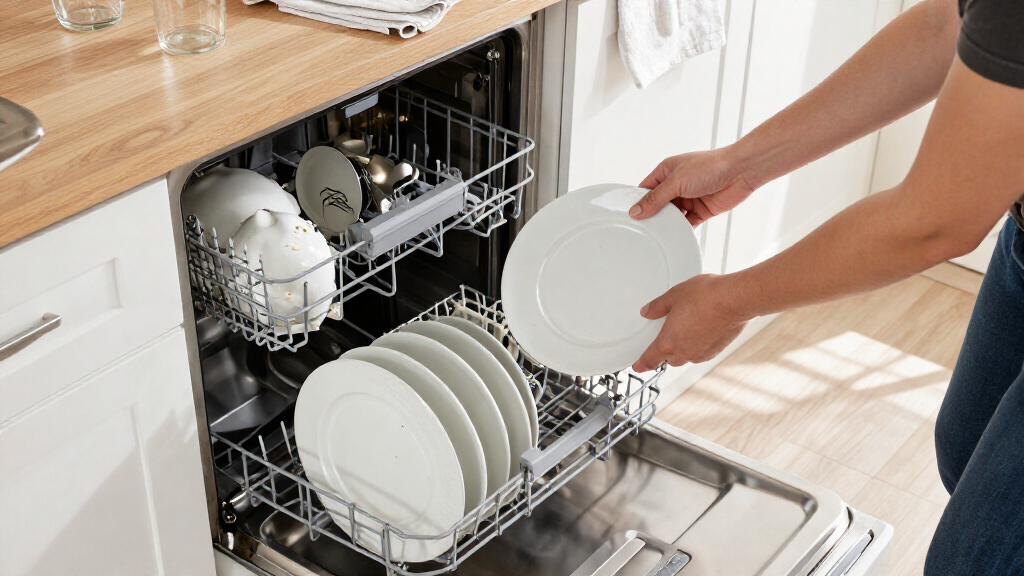
For a half-full load, Pinsonnault recommends scraping away large pieces of food rather than rinsing every dish before loading it. If the load is not ready to wash, he says the dishwasher’s rinse cycle can help remove residue and limit odors while the household waits. His rule of thumb is to start a full load, or run the wash once about 24 hours have passed.
How to Delay a Wash Without Odors
The guidance addresses a routine household choice: whether to run a partly loaded dishwasher or wait until there are enough dishes for a full cycle. Pinsonnault’s advice suggests that waiting until morning is generally acceptable, while setting a practical limit on how long food residue should remain in the machine.
That distinction may help households avoid both unnecessary immediate washing and leaving scraps in a damp, enclosed space for days. The report offers a simple interim step—the rinse cycle—but does not quantify water or energy savings, or compare different dishwasher models. Its recommendation is practical household advice, not a measured assessment of environmental or health outcomes.
Products Worth Considering

KitchenAid 13-Cup Food Processor, KFP1318, Contour Silver

Cuisinart 14-Cup Food Processor, 720-Watt, Stainless Steel (DFP-14BCNY)

KitchenAid 5-Ply Stainless Steel Roasting Pan with Removable Rack, 15 x 11.5 in
As an affiliate, we earn on qualifying purchases.
The Advice Behind the Overnight Rule
The report focuses on what to do when the dishwasher is not full after dinner. Pinsonnault’s answer separates short delays from prolonged storage: an overnight wait is generally fine, but a dishwasher should not become a place where unwashed dishes are kept for most of the week.
His suggested sequence is to scrape large food pieces into the waste, load the dishes without pre-rinsing, and use a rinse cycle if the machine will be waiting. Once there is a full load—or roughly a day has passed—he recommends starting the wash. The source identifies Pinsonnault as a reviews analyst in the Institute’s Home Care & Cleaning Lab and notes his background in environmental research, laboratory water analysis and environmental monitoring.
Limits of the Household Guidance
The source does not provide test results showing how quickly bacteria, mold, odors or pests develop under specific conditions. It also does not compare outcomes by room temperature, humidity, dishwasher design, food type or how thoroughly dishes were scraped. The 24-hour limit is presented as Pinsonnault’s rule of thumb, not as a threshold established by a study described in the report.
The advice is not a guarantee that every dishwasher will remain odor-free overnight, nor does the report address unusually soiled dishes or specific health concerns. It does not identify a separate risk threshold for households with particular vulnerabilities. Readers with a persistent odor or a machine that is not draining or rinsing properly may need guidance specific to the appliance; the supplied report does not cover troubleshooting or repairs.
A Simple Plan for the Next Load
For a typical evening load, Pinsonnault’s steps are straightforward: scrape off large scraps, load the dishes, and wait until the machine is full if desired. If the dishes will sit while the household waits, run the rinse cycle, then start a wash within about a day or when the load is ready.
The report gives no later follow-up or additional research timetable. Its advice leaves households with a practical boundary: an overnight pause is generally fine, but days of food residue in a closed dishwasher are the situation to avoid.
Key Questions
Can I leave dirty dishes in the dishwasher overnight?
Yes. Noah Pinsonnault of the Good Housekeeping Institute says it is generally fine to leave dishes overnight, particularly when they were loaded after dinner.
How long should dirty dishes sit in the dishwasher?
Pinsonnault’s rule of thumb is not to leave them for more than a day. He advises starting the wash once the dishwasher is full or roughly 24 hours have passed.
Should I rinse dishes before putting them in the dishwasher?
The report says dishes do not need a full pre-rinse, but Pinsonnault recommends scraping off large food pieces before loading them.
What if the dishwasher is only half full?
If you would rather wait for a full load, Pinsonnault says to use the dishwasher’s rinse cycle to wash away residue and help limit odors while the dishes wait.
Why not leave dirty dishes for several days?
Pinsonnault says residue in a closed, damp dishwasher can encourage bacteria and mold growth, cause unpleasant smells and attract pests. The report does not say those effects are certain after a particular number of hours.
Source: rss