As a raw food cook, you know that controlling your dehydrator’s temperature is essential to preserving nutrients, flavor, and texture. Staying between 105°F and 115°F prevents nutrient loss and keeps enzymes active, ensuring your food remains truly raw. It also prevents mold and spoilage, making your food safer. Adjusting temps for different foods guarantees even drying and the perfect crunch. If you keep these principles in mind, you’ll create healthier, tastier raw snacks—there’s more to uncover.

Get kitchen staples and gadgets delivered free with Prime
- Fast, free delivery on millions of items
- Prime Video, Amazon Music and more included
- Member-only deals all year
Key Takeaways
- Proper temperature control preserves enzymes and nutrients, maintaining the raw food’s nutritional integrity.
- It prevents cooking, ensuring foods stay raw while safely drying out moisture.
- Correct temperatures optimize flavor, texture, and appearance without over-drying or spoilage.
- Consistent heat regulation enhances dehydration efficiency and reduces mold or bacterial growth risks.
- Precision in temperature settings ensures even drying and high-quality, nutrient-rich raw foods.
raw food dehydrator with temperature control
As an affiliate, we earn on qualifying purchases.
As an affiliate, we earn on qualifying purchases.
What Is the Ideal Temperature Range for Raw Food Dehydration?
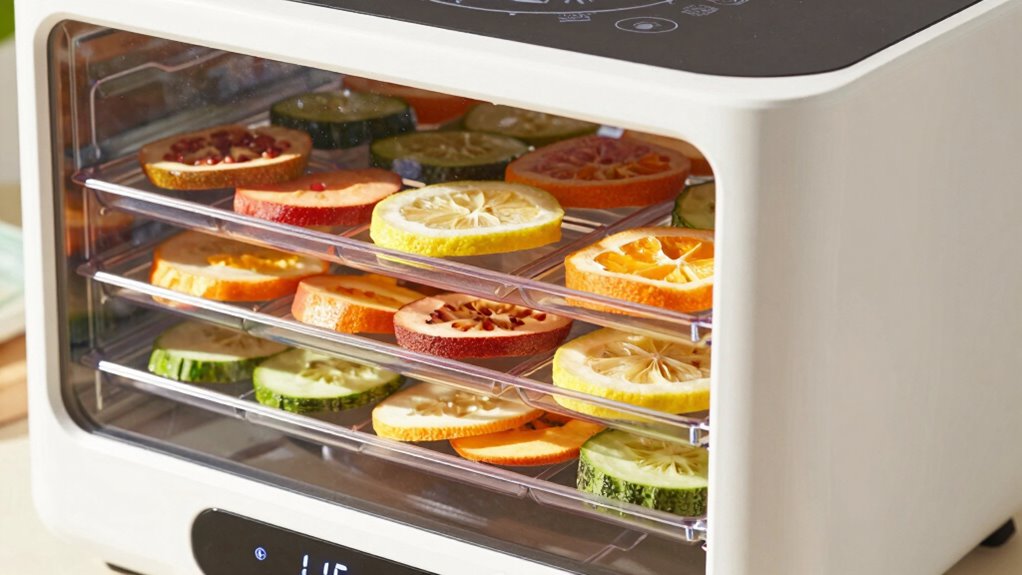
To preserve the nutrients and enzymes in raw foods, maintaining the right dehydration temperature is crucial. The ideal temperature range for raw food dehydration typically falls between 105°F and 115°F (40°C to 46°C). Staying within this range allows you to enhance flavor without cooking or destroying essential nutrients. Proper temperature control also improves texture, making foods chewy, crisp, or pliable, depending on the desired outcome. If you go too high, you risk compromising enzyme activity and nutrient content. Conversely, too low may result in longer drying times, which can affect flavor and texture consistency. By keeping your dehydrator within this range, you guarantee your raw foods retain their natural taste, vibrant textures, and nutritional integrity, creating delicious, nutrient-rich snacks. Maintaining the correct dehydrator temperature ensures optimal preservation of nutrients and enzymes, which is essential for effective raw food dehydration. Additionally, understanding the temperature range helps prevent microbial growth and spoilage during the dehydration process. Proper temperature control is also vital to effectively manage the dehydration environment, which can influence both safety and quality.
How Does Temperature Affect Nutrient Retention?

When you keep your dehydrator at the right temperature, you help preserve essential enzymes and vitamins that support your health. Too high a temperature can cause nutrient loss, reducing the food’s nutritional value. Finding the ideal temperature also ensures efficient dehydration without damaging nutrients. Additionally, controlling temperature can help minimize nutrient degradation, maintaining the food’s quality and nutritional benefits. Proper temperature regulation is especially important in regions with diverse climate conditions, as it can impact the effectiveness of dehydration processes. Monitoring dehydrator settings regularly can further optimize nutrient retention and overall food quality. Understanding the impact of temperature on nutrients can guide you in setting the most appropriate dehydrator temperature for your specific foods.
Preserves Enzymes and Vitamins
Temperature plays a crucial role in preserving the enzymes and vitamins in your dehydrated foods. When you keep the temperature low enough, you help retain these nutrients, which are sensitive to heat. Proper temperature control guarantees your food maintains its nutritional value and flavor enhancement, making it more enjoyable and healthful. Additionally, maintaining an ideal temperature supports microbial safety without compromising essential nutrients. Using a natural filtration system can further enhance water quality in natural pools, contributing to a healthier environment for your backyard.
Maintaining the right temperature also helps prevent nutrient loss, ensuring your foods stay as nutritious as possible. Keeping temperatures around 105°F to 115°F to maximize enzyme and vitamin retention is recommended because heat-sensitive nutrients can be destroyed at higher temperatures. Higher temperatures can destroy heat-sensitive nutrients. Proper dehydration slows nutrient degradation. Balancing temperature enhances flavor while ensuring safety.
Prevents Nutrient Loss
Maintaining the right dehydration temperature is essential for preventing nutrient loss in your foods. If the temperature gets too high, sensitive nutrients like vitamins can break down, reducing their health benefits. Keeping the temperature *ideal* helps preserve these nutrients, ensuring your raw foods retain their nutritional value. Proper temperature control also enhances flavor, making your snacks more appealing without compromising nutrients. Additionally, it supports texture modification, allowing you to achieve the desired crispness or chewiness without degrading delicate nutrients. When you dehydrate at the right temperature, you avoid excessive heat that could cause nutrient degradation, ensuring your foods stay as nutritious as possible. Electric power from bike generators can be used to precisely control dehydration temperatures, further helping to preserve nutrients. This careful balance helps you enjoy flavorful, nutrient-rich snacks that support your healthy eating habits.
Optimizes Dehydration Efficiency
Adjusting your dehydrator’s temperature carefully can markedly boost efficiency by speeding up the drying process without sacrificing quality. Proper temperature settings help retain nutrients and flavor, making your raw foods more vibrant and tasty. When you optimize dehydration, you improve energy efficiency, using less power for quicker results. Maintaining an ideal temperature prevents over-drying, which can diminish flavor and nutrient content. Additionally, selecting the appropriate temperature can help preserve the color accuracy of your foods, ensuring they look as appealing as they taste.
Why Temperature Control Is Key to Food Safety and Preventing Mold?
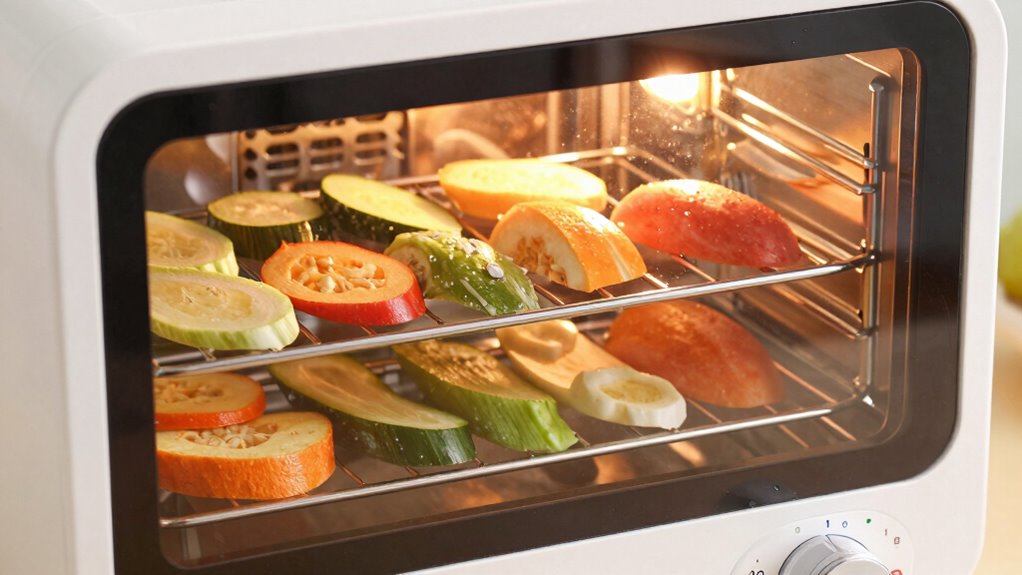
Controlling the dehydrator’s temperature is essential for ensuring your food stays safe and mold-free. When you keep the temperature within the right range, you prevent mold spores from thriving, which is vital for microbial safety. Too low, and moisture might linger, creating a breeding ground for bacteria and mold. Too high, and you risk cooking or damaging the food’s flavor, undermining its freshness. Proper temperature control also enhances flavor, locking in natural tastes without risking spoilage. By maintaining consistent heat, you minimize the chance of contamination, making your dehydrated foods safer to store and eat. Additionally, environmental impact considerations can influence your choice of dehydration methods, as some techniques may use energy more efficiently. Understanding temperature regulation is crucial for achieving optimal results and ensuring food safety during dehydration. Maintaining the ideal temperature range also supports cultural significance, as traditional methods often emphasize specific temperature controls to preserve authenticity and safety. Ultimately, precise temperature regulation isn’t just about quality; it’s about protecting your health and ensuring your raw foods stay free from unwanted molds. Monitoring temperature stability is also crucial for preventing water retention, which can promote mold growth during dehydration. Ensuring your dehydrator maintains consistent temperature levels is key to preventing microbial growth, which can compromise food safety.
How Temperature Influences Food Texture and Crunchiness?
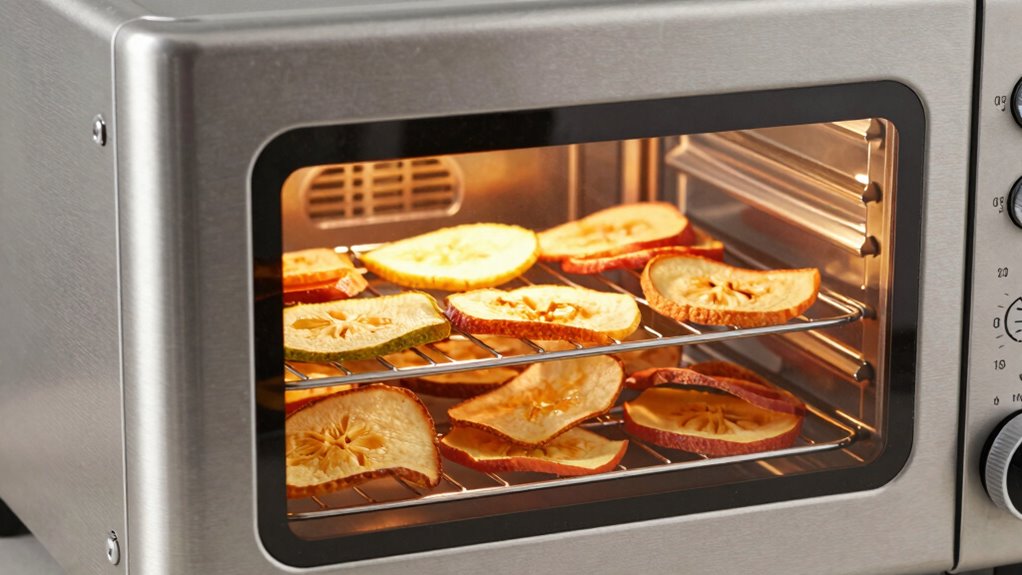
Temperature plays a crucial role in determining the final texture and crunchiness of your dehydrated foods. When you set the right temperature, you regulate moisture loss, which directly affects how crispy or tender your snacks become. Higher temperatures speed up moisture evaporation, creating crunchiness, while lower temps preserve a softer texture. Proper temperature management also enhances flavor, as it prevents over-drying that can dull taste. If you keep the temperature too low, your food may remain chewy or soggy, losing its ideal crunch. Conversely, too high a temp can cause uneven dehydration or burnt edges. By maintaining precise temperature control, you guarantee consistent, flavorful results with the perfect texture and crunch. Controlling temperature is essential for achieving the desired dehydration outcome. Additionally, understanding regional flavors can help you tailor dehydration techniques to preserve unique taste profiles, and being aware of food safety considerations ensures your dehydrated snacks remain safe to eat. Properly calibrated dehydrators with temperature controls can help prevent these issues and improve overall results. To optimize results, it’s also important to consider dehydration time, which works hand-in-hand with temperature to achieve the ideal texture.
What Are the Best Dehydrator Settings for Raw Fruit Leathers and Snacks?
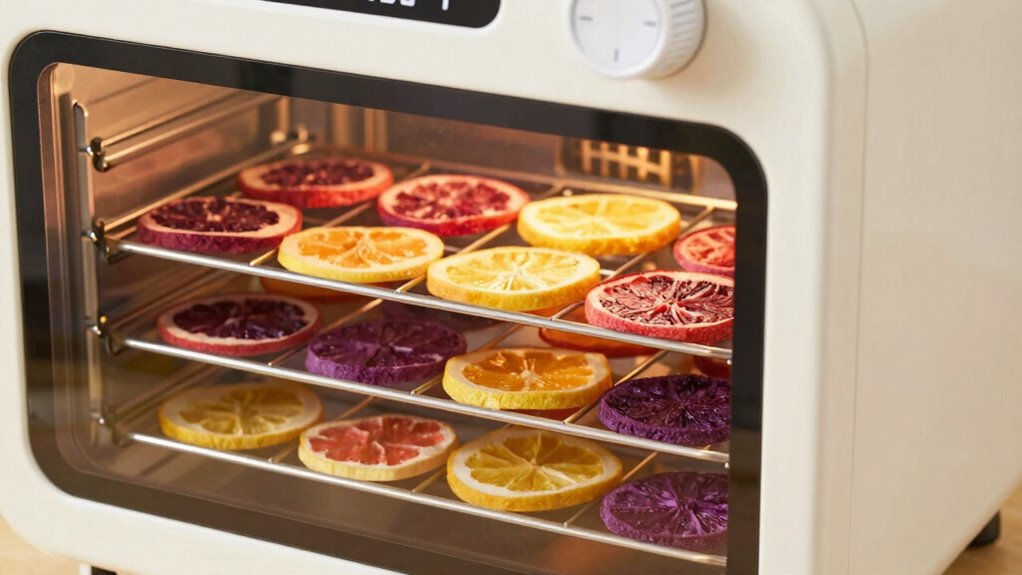
To make perfect raw fruit leathers and snacks, you should aim for a dehydrator temperature between 135°F and 145°F. This range helps preserve nutrients while preventing overheating that can degrade quality. Proper settings guarantee your snacks have the right texture without sacrificing flavor or nutritional value. Choosing the right temperature is crucial for maintaining the optimal balance of enzymes and vitamins during dehydration. Using a dehydrator with well-maintained components ensures consistent heat distribution, which is essential for evenly drying your snacks.
Optimal Temperature Range
When preparing raw fruit leathers and snacks, setting your dehydrator to the right temperature is essential for preserving nutrients and achieving the desired texture. The ideal temperature range is between 105°F and 115°F (40°C – 46°C). Staying within this range helps enhance flavor and ensures your snacks stay raw and nutrient-rich. Temperatures above 118°F can compromise raw qualities and affect flavor profiles. Consistent temperature control also promotes dehydrator maintenance, preventing overheating that could damage the device.
- Maintain a steady temperature to maximize flavor enhancement
- Keep within the 105°F–115°F range for raw integrity
- Avoid overheating to protect dehydrator components
- Adjust based on snack type for best results
Preserving Nutrients Effectively
Maintaining the maximum nutritional value in your raw fruit leathers and snacks depends heavily on selecting the right dehydrator settings. To preserve nutrients effectively, set your dehydrator around 115°F to 125°F. This temperature range minimizes nutrient loss while allowing gentle dehydration. It also promotes flavor enhancement, making your snacks more vibrant and tasty without cooking off delicate vitamins. Using consistent, low heat improves energy efficiency, since you won’t need to run the dehydrator longer or at higher temps. Regularly monitoring the temperature ensures you stay within the *ideal* range, preventing nutrient degradation. By fine-tuning your settings, you maximize nutrient retention, enhance flavor, and *maximize* energy use, ensuring your raw snacks remain as nutritious and delicious as intended.
Ensuring Proper Texture
Achieving the right texture in your raw fruit leathers and snacks depends heavily on selecting specific dehydrator settings. To enhance flavor and create desirable texture variation, set your dehydrator to a low temperature, around 135°F (57°C). This gentle heat preserves enzymes while preventing over-drying. Use these tips for ideal results:
- Maintain consistent temperature throughout the process
- Adjust drying time based on thickness and moisture content
- Rotate trays for even dehydration
- Use a timer to avoid over-drying, which can make snacks tough
These settings help you control texture, ensuring your fruit leathers remain pliable and flavorful, while snacks stay crisp without losing nutrients. Proper temperature management is key to achieving the perfect balance between flavor enhancement and desired texture variation.
How to Adjust Your Dehydrator for Different Raw Foods?
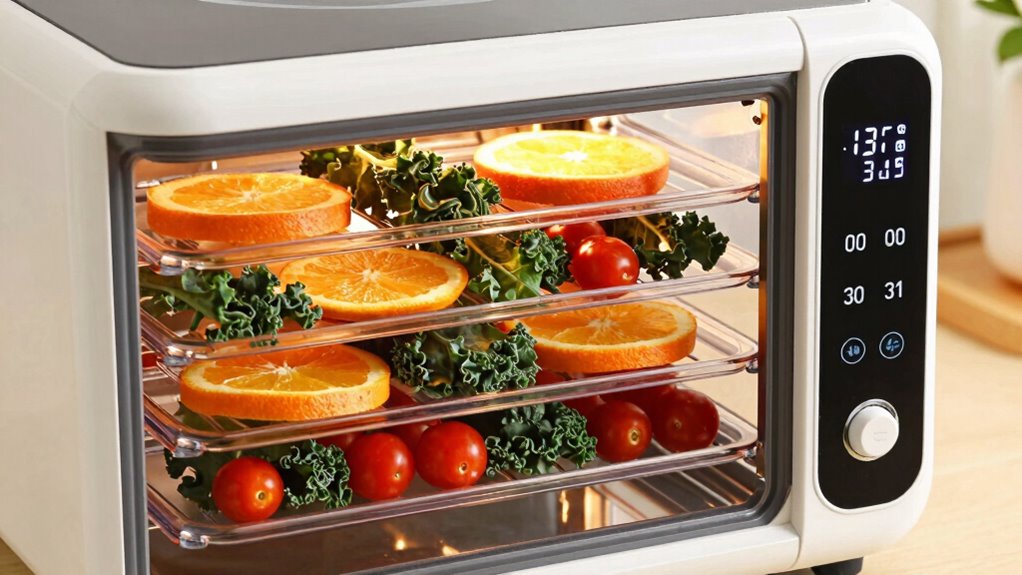
Adjusting your dehydrator for different raw foods is essential to preserve their texture, flavor, and nutritional value. To optimize flavor pairing, set the temperature based on each food’s moisture content and density. For example, delicate fruits like berries require lower temperatures around 135°F to maintain their vibrant flavor and prevent over-drying. Firmer vegetables or herbs might need slightly higher temps for thorough drying. When it comes to food presentation, consistent dehydration ensures uniform texture and appearance, making your dishes more appealing. Keep in mind that certain foods benefit from gradual temperature adjustments to retain their natural flavors. By customizing the temperature settings, you enhance both the sensory qualities and visual appeal of your raw creations.
Troubleshooting Common Temperature Fluctuations in Your Dehydrator?
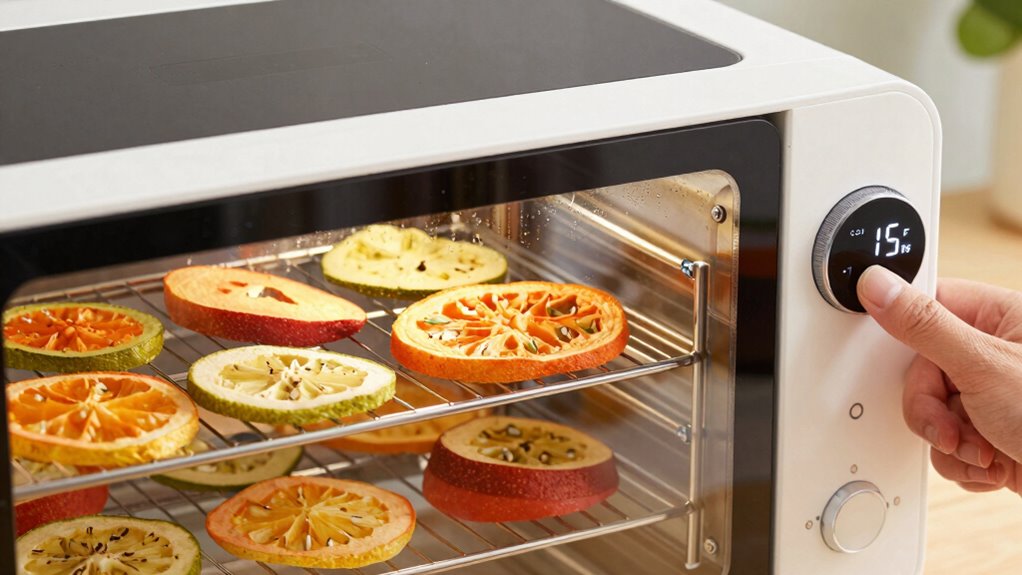
Temperature fluctuations in your dehydrator can disrupt the drying process and compromise your food’s quality. To troubleshoot, first check if the heating element or thermostat is functioning properly. Confirm your kitchen organization is ideal—placing the dehydrator away from drafts or direct sunlight helps maintain consistent temperatures. Sometimes, loading food unevenly causes hot spots, so rearrange items for even drying. You might also want to verify that your dehydrator’s fan is working efficiently. Fluctuations can affect flavor pairing by altering moisture content, so keeping a stable temperature enhances flavor development. Regularly calibrate your device, and consider using a thermometer to monitor accuracy. These steps help maintain steady temperatures, ensuring your raw foods dry evenly and retain their best flavor and texture.
Tips for Monitoring and Maintaining Consistent Dehydrator Temperatures?
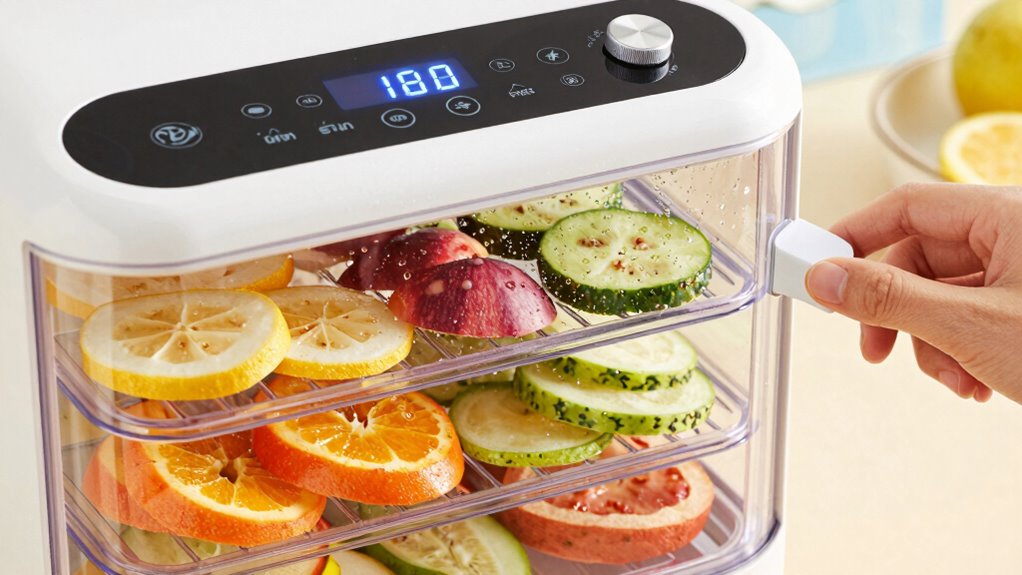
Monitoring and maintaining consistent dehydrator temperatures requires some simple, proactive steps. First, use a reliable thermometer to check the internal temperature regularly, guaranteeing your settings match actual conditions. Consistent temperature control enhances flavor enhancement by preventing over-drying or uneven dehydration. Keep your dehydrator clean and well-maintained, as debris or dust can cause fluctuations. Regular dehydrator maintenance includes inspecting fans, vents, and heating elements to ensure they’re functioning properly. Avoid opening the door frequently during dehydration, as this can cause temperature drops. If you notice fluctuations, consider adjusting the thermostat or repositioning trays for even heat distribution. These habits help keep your dehydrator running smoothly, producing high-quality raw foods with prime flavor and texture.
How to Optimize Dehydrator Use for Maximum Raw Food Quality?
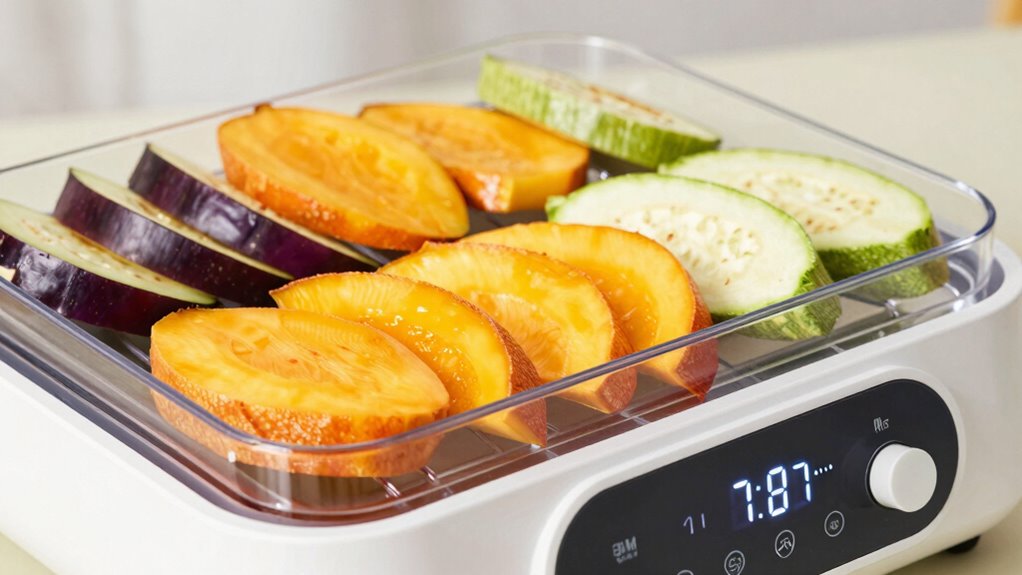
To maximize the quality of your raw foods, focus on optimizing your dehydrator’s settings and procedures from the start. Proper temperature control ensures flavor enhancement and faster dehydration without compromising raw integrity. Keep the dehydrator at consistent, ideal temperatures—generally between 105°F and 115°F—to preserve enzymes and nutrients. Use thin, uniform slices to promote even dehydration and prevent spoilage. Regularly check and rotate trays to boost dehydration speed. Additionally, consider adjusting airflow for better moisture removal. By fine-tuning these aspects, you’ll produce raw foods that are flavorful, crisp, and nutrient-rich. Remember, patience and attention to detail are key to achieving maximum raw food quality with your dehydrator.
Frequently Asked Questions
How Do Different Dehydration Temperatures Affect Enzymes in Raw Foods?
Different dehydration temperatures impact enzyme activity in raw foods by either preserving or destroying them. Lower temperatures, around 105°F, support enzyme activation and nutrient retention, helping keep foods raw and nutrient-rich. Higher temperatures, above 118°F, can deactivate enzymes and reduce nutrient levels, diminishing the raw food’s benefits. By controlling temperature, you guarantee enzymes stay active, maximizing nutrient retention and preserving the food’s natural enzymes essential for digestion and health.
Can Temperature Fluctuations Cause Bacterial Growth in Raw Dehydrated Foods?
Temperature fluctuations can indeed cause bacterial growth in raw dehydrated foods, risking food safety. When temperatures rise above safe levels, bacteria can multiply rapidly, even in dehydrated foods that seem stable. To prevent this, you should monitor your dehydrator’s temperature closely, keep it consistent, and avoid fluctuations. Proper food safety practices help guarantee your raw foods stay safe and healthy, minimizing the risk of bacterial growth during dehydration.
What Is the Impact of Dehydration Temperature on Flavor Preservation?
A stitch in time saves nine—so maintaining proper dehydration temperature preserves flavor. When you keep the temperature just right, you enhance texture and retain natural flavors, avoiding over-drying or flavor loss. Too high, and you risk burning delicate notes; too low, and flavors may not develop fully. By controlling temperature, you guarantee better flavor retention and texture enhancement, making your raw foods both delicious and nutritious.
Are There Specific Temperature Guidelines for Dehydrating Herbs and Greens?
You should aim for a dehydrator temperature of around 95°F to 115°F when dehydrating herbs and greens. This range helps preserve herb potency by maintaining essential oils and nutrients, while keeping greens crisp and vibrant. Staying within this temperature range prevents the loss of flavor and crucial compounds, ensuring your herbs stay potent and greens retain their desirable texture. Always monitor and adjust based on your specific dehydrator and ingredient thickness.
How Does Altitude Influence Temperature Settings for Raw Food Dehydration?
Imagine you’re baking bread at high altitude—things cook faster, right? Similarly, altitude affects your dehydrator’s temperature calibration, often requiring adjustments. Higher altitudes mean lower boiling points, so you might need to increase your dehydrator’s temperature slightly to maintain consistent drying. An altitude adjustment guarantees your raw foods dehydrate evenly, preventing spoilage or under-drying. Always check your dehydrator’s guidelines for specific altitude recommendations to keep your raw creations perfect.
Conclusion
Maintaining the right dehydrator temperature is as vital as tuning a fine instrument—you want everything to harmonize perfectly. By staying vigilant and adjusting settings as needed, you guarantee your raw foods retain their nutrients, texture, and flavor. Think of your dehydrator as a gentle gardener, nurturing each piece to reach its best without overdoing it. When you master temperature control, you’ll enjoy delicious, healthy snacks that are truly worth the effort.
NFL season / tailgating Picks
team gear
As an affiliate, we earn on qualifying purchases.