To keep your meal prep safe and fresh, always store cooked foods at or below 40°F and hot foods above 140°F. Use shallow containers for quick cooling and label everything with dates and reheating instructions. Keep raw meats separate to avoid cross-contamination, wash your hands, and check your fridge’s temperature regularly. Proper storage, handling, and organization help prevent spoilage and keep your meals delicious. Keep going for more helpful tips to master your meal prep safety.

Get kitchen staples and gadgets delivered free with Prime
- Fast, free delivery on millions of items
- Prime Video, Amazon Music and more included
- Member-only deals all year
Key Takeaways
- Store cooked foods at or below 40°F and reheat to 165°F to ensure safety and prevent bacterial growth.
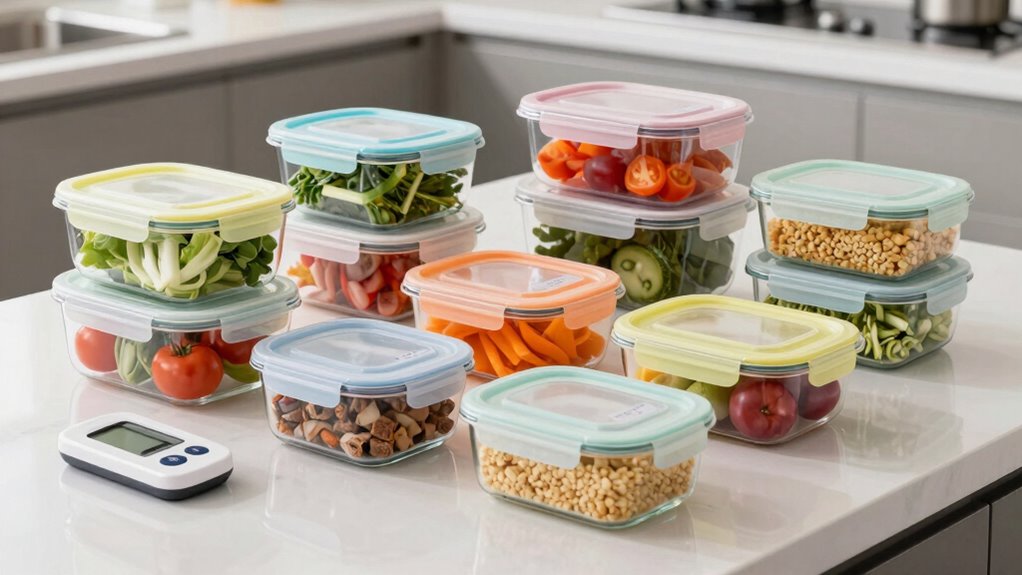
- Use shallow, airtight containers for quick cooling and to maintain food freshness.
- Label all meals with date, contents, and reheating instructions to optimize safety and reduce waste.
- Keep raw meats separate from ready-to-eat foods to prevent cross-contamination.
- Regularly verify refrigerator temperature and practice consistent storage habits for optimal safety.
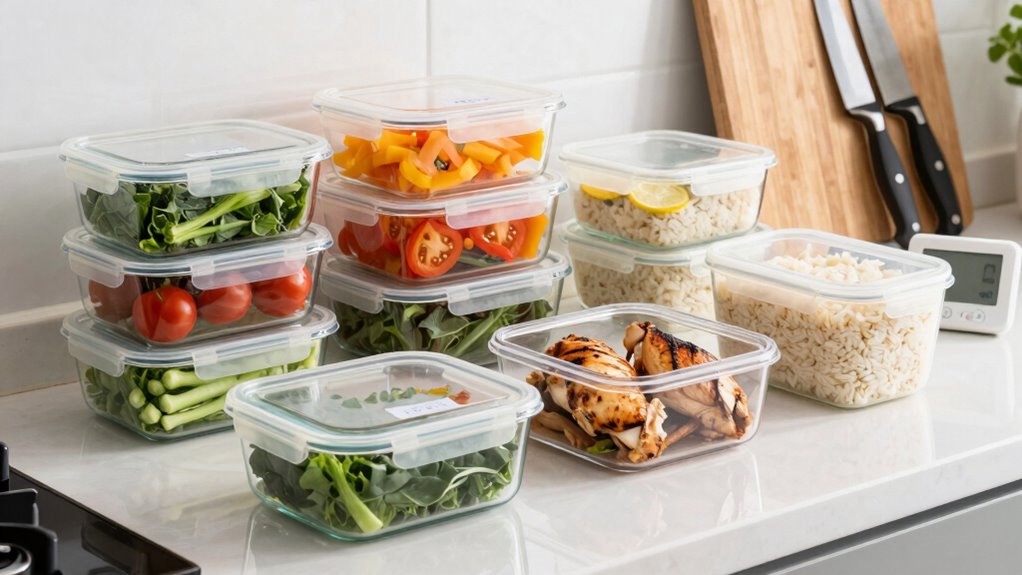
Meal prepping can save you time and money, but only if you store and handle your food properly. When it comes to food safety, maintaining the proper temperature is critical. Bacteria grow rapidly between 40°F and 140°F, so you need to verify your cooked foods are cooled quickly and stored at or below 40°F. Use a reliable food thermometer to check your refrigerator’s temperature regularly. Keep hot foods hot by maintaining them above 140°F, especially if you’re preparing meals in advance. Using shallow containers helps food cool faster, reducing the risk of bacterial growth. When reheating leftovers, make sure they reach an internal temperature of 165°F to kill any lingering bacteria. Proper temperature control isn’t just about avoiding illness; it also preserves the quality and flavor of your meals. Additionally, proper temperature maintenance plays a vital role in food safety and quality. Ensuring your refrigerator is set to the correct storage temperature helps prevent spoilage and keeps your food safe for longer. Labeling techniques are equally important when storing meal prep. Clear labels help you keep track of when each item was made, so you consume foods within their safe window. Use waterproof markers or labels to write the date of preparation and the contents. This way, you can easily identify what needs to be eaten first, reducing waste and ensuring freshness. Also, consider including reheating instructions on your labels if needed. Proper labeling prevents confusion and makes your meal prep routine more efficient. It’s a simple habit that can save you from accidentally consuming spoiled food or wasting perfectly good leftovers. When storing your prepped meals, use airtight containers to prevent contamination and moisture loss. Glass containers with secure lids are preferable because they don’t stain or retain odors like plastic might. Always allow hot foods to cool slightly before sealing and refrigerating; sealing hot foods can raise the fridge temperature and promote bacterial growth. Keep raw meats separate from other foods to avoid cross-contamination, and always wash your hands before handling prepared meals. Consistently practicing these storage and safety habits minimizes risks and keeps your meals fresh longer.
airtight food storage containers
As an affiliate, we earn on qualifying purchases.
As an affiliate, we earn on qualifying purchases.
Frequently Asked Questions
How Long Can Cooked Meals Be Safely Stored in the Fridge?
You can safely store cooked meals in the fridge for up to 3 to 4 days, ensuring meal freshness and preventing spoilage. To maximize storage duration, keep your food in airtight containers and maintain your fridge at or below 40°F (4°C). Always check for signs of spoilage before eating. Proper storage helps retain flavor, texture, and safety, making your meal prep both delicious and worry-free.
Can I Freeze Meals With Sauces or Dressings?
Yes, you can freeze meals with sauces or dressings, but beware—sauce freezing can turn your dish into a flavor fortress or a watery mess if not done right. Use airtight containers for dressing storage, and leave some space for expansion. Thick sauces freeze better than watery dressings, so consider adjusting recipes. Properly stored, your meals will stay delicious, flavor-packed, and ready to heat up whenever you crave a quick, tasty bite.
What Are the Signs of Spoiled Meal Prep Containers?
You can tell if meal prep containers are spoiled by checking for changes in container labels, like expired dates or unusual markings. Odor detection is key—if you notice a sour or off smell when opening the container, discard the food. Also, look for any container warping, discoloration, or leaks. These signs indicate the meal may be unsafe to eat, so always trust your senses and err on the side of caution.
Is It Safe to Reheat Food Multiple Times?
Reheating food multiple times isn’t recommended because it can increase the risk of bacteria growth. Follow the reheating guidelines to guarantee safety, such as heating food evenly to 165°F. Use food reheating tips like stirring food during reheating and avoiding reheating leftovers more than once. Always check for signs of spoilage before reheating, and if in doubt, discard to prevent foodborne illnesses.
How Do I Prevent Cross-Contamination During Meal Prep?
To prevent cross-contamination during meal prep, you should practice proper hygiene by washing your hands thoroughly before handling food. Use separate cutting boards and utensils for raw meats and vegetables. Choose container materials like glass or BPA-free plastic that are easy to clean and won’t harbor bacteria. Always clean and sanitize countertops and tools between tasks, ensuring each food item stays safe and uncontaminated throughout the process.
Conclusion
Now that you’ve got the basics down, you’re all set to master meal prep storage and food safety. Remember, a little prep goes a long way, so stay organized and keep an eye on expiration dates. When you handle food with care, you’re not just avoiding waste—you’re making your meals safer and tastier. It’s all about playing it smart and keeping the ball rolling. With practice, these habits will become second nature, and your kitchen will thank you!
Halloween Picks
halloween
As an affiliate, we earn on qualifying purchases.