
To keep your herbs vibrant and flavorful while dehydrating, choose healthy, fresh herbs at their peak and handle them gently. Use low-temperature drying methods like air drying in cool, dark spots or oven drying at the lowest heat to prevent color fading. Store dried herbs in airtight, light-resistant containers in a cool, dark place. For more tips on retaining color and flavor during dehydration, continue exploring proven techniques and expert advice.
Key Takeaways
- Harvest herbs at their peak to ensure vibrant color and maximum flavor before drying.
- Use low heat and proper airflow during dehydration to preserve essential oils and pigmentation.
- Dry herbs in shaded, well-ventilated areas or at low oven temperatures to prevent fading and flavor loss.
- Store dried herbs in airtight, opaque containers away from light, heat, and moisture to maintain color and aroma.
- Avoid overcrowding herbs during drying to ensure even moisture removal and prevent mold or spoilage.
Why Should You Dehydrate Herbs?
Dehydrating herbs offers many benefits that make it a worthwhile process. It helps preserve herb nutrition, ensuring you retain crucial vitamins and minerals longer than fresh herbs. When you dry herbs properly, you lock in their flavor and aroma, making them available year-round. Using effective drying techniques, such as air drying or using a dehydrator, prevents mold and preserves color and potency. Proper drying techniques also help maintain the color retention of herbs, which is essential for their visual appeal in cooking. Dehydration also reduces the space needed for storage and eliminates waste, allowing you to enjoy your herbs longer without spoilage. Additionally, understanding the air circulation process during dehydration can significantly improve the quality of dried herbs. Plus, dried herbs are easy to grind into powders or crush for seasoning, making cooking more convenient. Overall, dehydrating herbs is a practical way to extend their shelf life while maintaining their essential qualities.
How Do You Choose the Best Herbs for Drying?
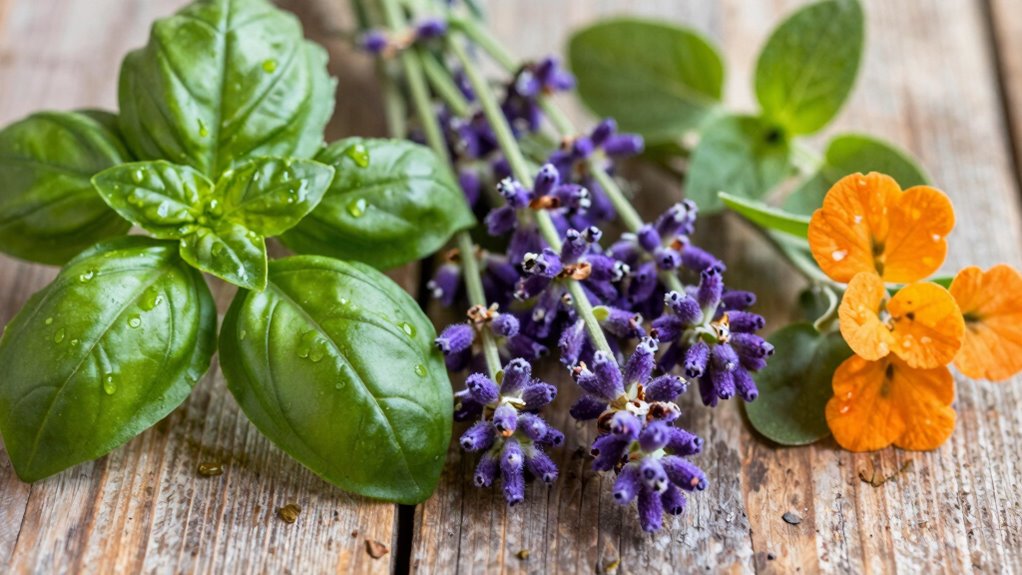
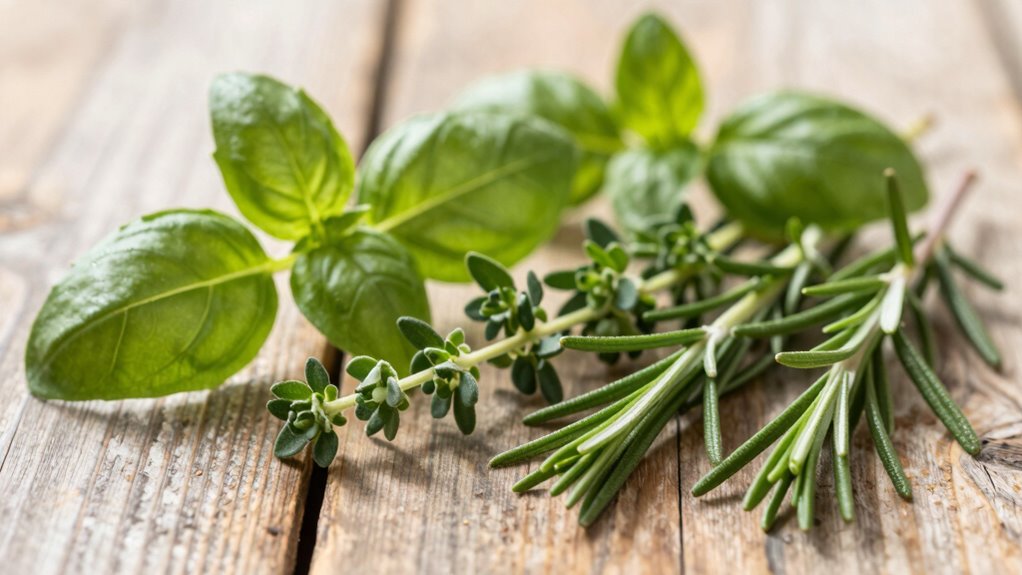
Choosing the best herbs for drying starts with selecting healthy, fresh plants that haven’t been damaged by pests or disease. Herb freshness is key because herbs at their peak flavor and color will dehydrate more effectively. Look for vibrant leaves with no browning or wilting. Before drying, inspect for signs of spoilage or pests, as damaged herbs won’t dry well or preserve flavor. Consider your intended drying technique; some herbs hold up better when harvested at certain stages—like flowering for basil or just before bud formation for thyme. Using fresh, healthy herbs ensures better retention of aroma, color, and flavor after dehydration. Proper selection sets the foundation for successful drying and flavorful, long-lasting herbs. Additionally, vetted quality herbs from reputable sources can help ensure optimal preservation of their appearance and taste. When harvesting, it’s also beneficial to consider harvest timing to maximize flavor and potency in your dried herbs. Ensuring proper harvesting techniques can further influence the final quality of your herbs after drying. For example, avoiding piercings on herbs may help prevent contamination during the drying process. Employing appropriate drying methods tailored to each herb type can also improve overall preservation.
Which Dehydration Method Is Best for Herbs? (Air Drying, Oven, or Dehydrator)
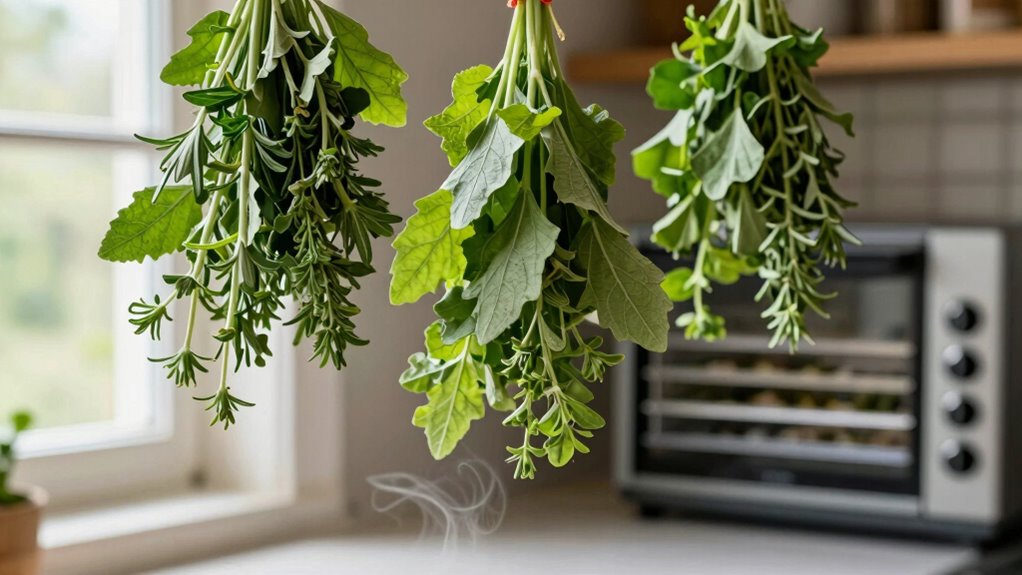
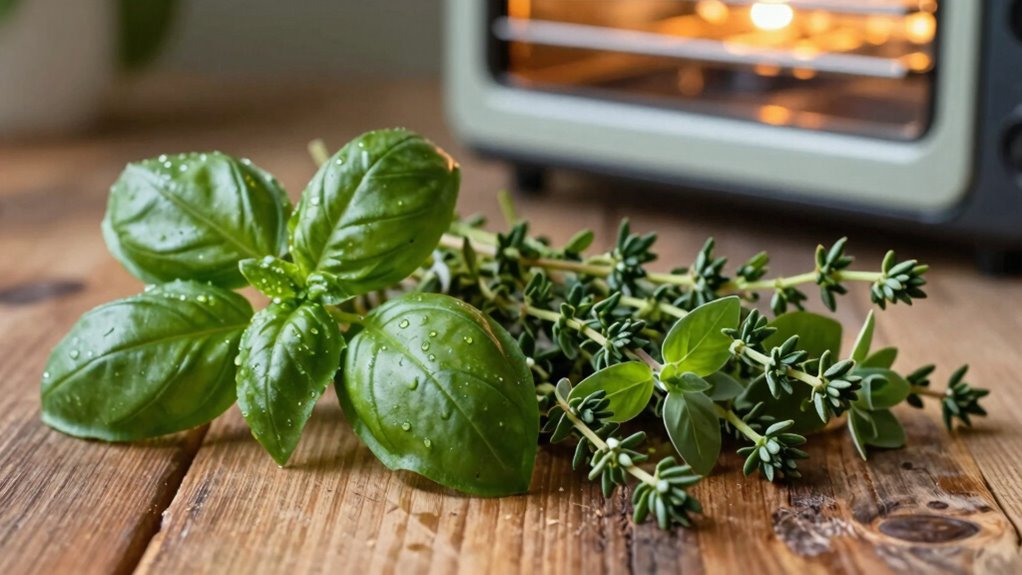
When it comes to drying herbs, selecting the right method depends on your goals, available equipment, and the herbs you’re drying. Air drying is ideal if you want a gentle process that preserves color and flavor, especially for hardy herbs like thyme or rosemary. It’s simple: hang herbs upside down in a well-ventilated area away from direct sunlight. Oven drying is faster and works well if you need quick results. Set your oven to the lowest temperature—around 100°F (38°C)—and keep the door slightly open to allow moisture to escape. Both methods can effectively dehydrate herbs, but your choice depends on how much time you have and the equipment at hand. Consider your preferences for flavor, color, and convenience when choosing between air drying and oven drying.
How Do You Properly Prepare Herbs Before Dehydrating?

Before you start drying herbs, proper preparation guarantees the best flavor and appearance in your final product. Begin by preparing leaves carefully, removing any damaged or wilted parts. Gently rinse the herbs to eliminate dirt or bugs, but avoid soaking them, as excess moisture can cause mold. After washing, pat the leaves dry with a clean towel or use a salad spinner to remove excess water. Next, trim stems to remove woody or thick sections that won’t dry evenly. This step helps ensure faster, more uniform dehydration. Be gentle during trimming to avoid bruising or tearing leaves. Proper preparation preserves the herbs’ vibrant color and fresh flavor, making your dehydrated herbs more appealing and aromatic once dried. Additionally, understanding plant physiology can be useful if you plan to set up a dedicated drying space or move your herbs frequently. To optimize your drying process, consider dehydration methods that best suit your herbs and space. Knowing how different herb types respond to dehydration can further improve your results and help maintain their color and flavor.
How Does Dehydrating Preserve Herb Color and Flavor Naturally?
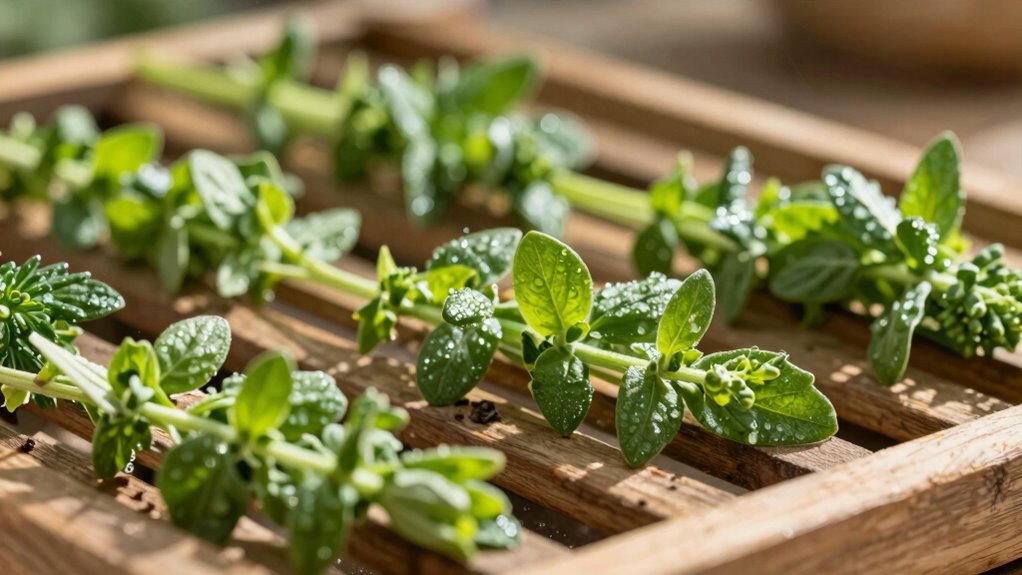
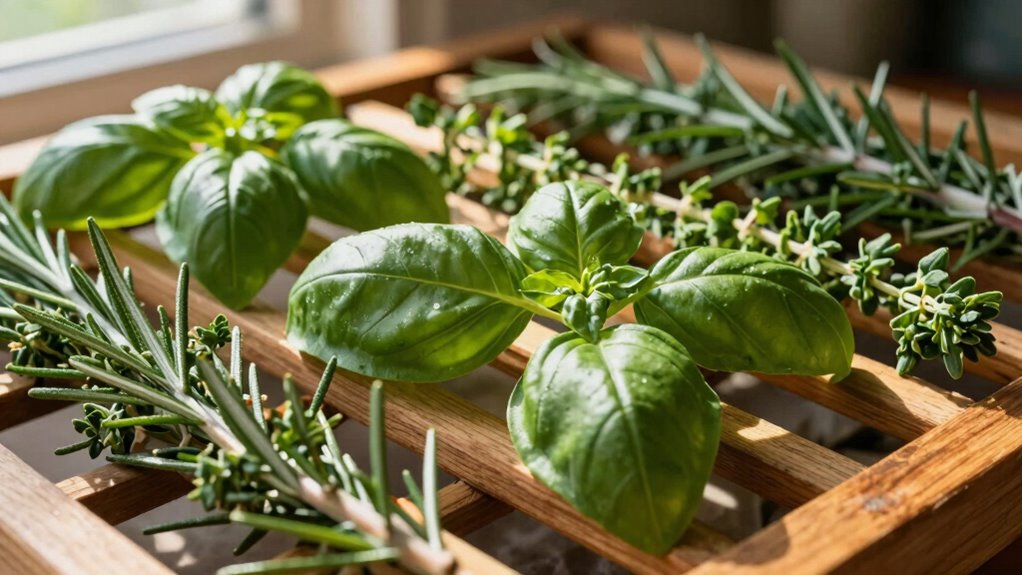
Dehydrating herbs naturally preserves their vibrant color and fresh flavor by locking in essential oils and pigments before they can degrade. This process maintains herb pigmentation and enhances flavor retention. As you dry herbs, the removal of moisture slows down enzyme activity and microbial growth, which helps preserve their original qualities. Imagine herbs hanging upside down, their colors intensifying as moisture escapes, and aromatic oils becoming concentrated. You can picture:
- Bright green leaves retaining their vivid hue
- Rich, fragrant oils locked within the herb’s structure
- The natural pigments staying vibrant longer than with other preservation methods
Understanding the dehydration process helps you appreciate how it preserves herbs effectively. Additionally, using Suprem fabric in the drying environment can help maintain optimal airflow and temperature, further protecting the herbs’ color and flavor. Proper storage conditions are key to extending the shelf life and quality of dried herbs. For best results, controlling humidity levels during drying can prevent mold and ensure even dehydration. Maintaining a consistent drying environment is crucial, as fluctuations can impact the preservation quality. This natural dehydration process ensures your herbs stay colorful and flavorful, ready to enhance your dishes long after harvest.
How Can You Keep Herb Colors Bright During Drying?
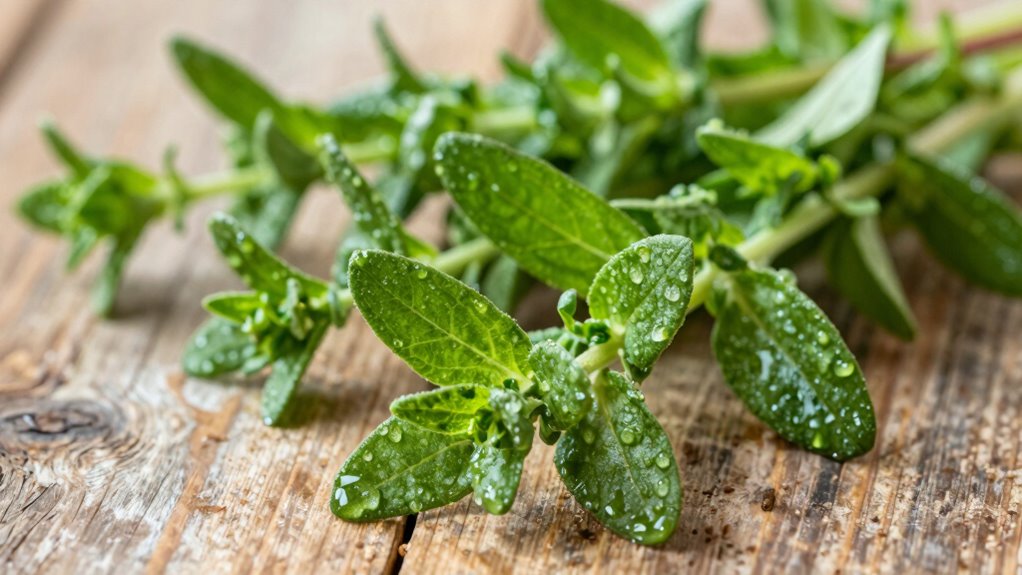
To keep herb colors bright during drying, it’s essential to regulate environmental factors that cause pigment loss. Exposure to direct sunlight can fade herb pigmentation, so avoid drying herbs in bright, direct light. Instead, use a well-ventilated, dark space or indirect light environment. Maintaining low temperatures also helps preserve vibrant colors, as high heat can accelerate pigment breakdown. Employing gentle drying techniques, such as hanging herbs upside down in a shaded area or using a dehydrator set at a low temperature, minimizes color loss. Proper airflow prevents mold and maintains even drying, which helps lock in herb pigmentation. Additionally, understanding tool safety when handling drying equipment can prevent accidents and ensure a smooth process. Proper temperature and airflow management are crucial for optimal herb preservation, ensuring your herbs retain their bright hues and fresh appearance during the drying process. Controlling these factors is key to preventing color fading and maintaining the herbs’ visual appeal. Using proper drying methods can significantly improve your herb preservation results and keep colors vibrant. Moreover, understanding the weight of wind turbine blades can help in designing drying setups that optimize airflow and temperature control, further enhancing herb color retention.
How Do You Store Dried Herbs for Long-Term Freshness?
Storing dried herbs properly is essential to preserving their flavor, aroma, and potency over time. To maximize herb storage and guarantee long-term flavor retention, keep herbs in airtight containers away from light, heat, and moisture. This prevents degradation and preserves their vibrant qualities. For ideal storage, consider these options:
- Dark glass jars with tight-fitting lids that block light
- Airtight metal or plastic containers stored in a cool, dark pantry
- Small jars to keep herbs fresh and prevent unnecessary exposure each time you use them
Additionally, utilizing smart storage solutions such as temperature monitoring can help maintain optimal conditions and extend freshness even further. Proper humidity control is also crucial in preventing mold and maintaining herb quality over extended periods, especially when combined with effective sealing techniques to minimize exposure to air.
What Are Common Problems When Dehydrating Herbs and How Can You Fix Them?

While proper storage helps maintain dried herbs’ quality, the dehydration process itself can sometimes present challenges. One common problem is moisture issues, which can cause mold or spoilage if herbs aren’t thoroughly dried. To fix this, ensure herbs are evenly spread out and dried at the right temperature, avoiding overcrowding. Another issue is color fading, which occurs when herbs are exposed to excessive heat or direct sunlight during drying. To prevent this, dry herbs in a cool, dark place and use a controlled dehydration method. If herbs look dull or faded, consider low-temperature drying or quick processing to preserve their vibrant color. Addressing these problems guarantees your herbs stay fresh, flavorful, and visually appealing.
Frequently Asked Questions
How Long Do Dehydrated Herbs Typically Last?
Dehydrated herbs typically last about 1 to 3 years if stored properly. You should keep herb storage in airtight containers, away from light, heat, and moisture to maximize shelf life. Over time, herbs may lose potency and flavor, so it’s best to check periodically. For the best results, label your containers with dates, and use older herbs first to enjoy their full aroma and taste.
Can I Rehydrate Dried Herbs for Cooking?
You can definitely rehydrate dried herbs for cooking; think of it as waking up their flavor. To do so, soak them in warm water for about 15 minutes, then drain. Proper herb storage helps preserve flavor retention, making rehydration effective. Keep in mind, rehydrated herbs may not be as vibrant as fresh, but they still add great aroma and taste to your dishes. Just give them a little time to soak up their new life.
Are There Any Herbs That Shouldn’T Be Dehydrated?
You should avoid dehydrating herbs that are toxic or have potential herb toxicity risks, like certain wild or medicinal herbs, as they can become unsafe when dried. Also, some herbs are unsuitable for drying using traditional methods, such as those with high moisture content or delicate leaves that lose flavor or color easily. Always research specific herbs beforehand to guarantee safe and effective dehydration, preventing spoilage or health hazards.
How Do I Prevent Mold During Dehydration?
Think of mold prevention as guarding a delicate garden; you must control the drying environment carefully. Keep your herbs in a well-ventilated, dry space with low humidity, and avoid moisture buildup. Use a fan or desiccant if needed, and make certain herbs are thoroughly dry before storage. Regularly check your herbs during drying, and you’ll shield them from mold, preserving their flavor and vibrant color.
What Are Eco-Friendly Ways to Dehydrate Herbs?
You can use sustainable drying methods like air drying in well-ventilated spaces or using solar dehydrators, which harness sunlight and save energy. Avoid plastic and choose natural materials for racks. After drying, compost leftover herbs instead of discarding them. This eco-friendly approach reduces waste and supports sustainability. By opting for these methods, you’re conserving resources and minimizing environmental impact while preserving your herbs effectively.
Conclusion
By mastering the methods of drying herbs, you’ll maintain their vibrant colors and fresh flavors long after harvest. Proper preparation, careful drying, and smart storage keep your herbs bright and beautiful. Don’t let dullness dampen your delight—diligently dew your herbs and enjoy their enduring essence. With a little patience and practice, you’ll produce perfectly preserved herbs that provide flavor and flair year-round. Keep cultivating your culinary confidence—create, conserve, and celebrate your savory stash!