Many myths about vegan nutrition are simply false. You can get all essential nutrients like protein, B12, and calcium from plant sources or fortified foods, as long as you plan well. Healthy fats and carbohydrates are abundant in nuts, seeds, and oils. Vegan diets aren’t boring or restrictive but vibrant and satisfying. If you want to discover how plant-based eating can be balanced, complete, and nutritious, keep exploring these facts.
Key Takeaways
- Well-planned vegan diets provide all essential nutrients, including protein, vitamins, and minerals, dispelling the myth of nutritional inadequacy.
- Vegan sources like fortified foods and supplements ensure adequate vitamin B12 intake, countering misconceptions about deficiency.
- Healthy fats from plant foods such as nuts, seeds, and oils are abundant in vegan diets, debunking ideas of fat scarcity.
- Vegan diets are diverse and flavorful, proving they are not boring or overly restrictive with proper meal planning.
- Properly balanced vegan diets are nutritionally complete and sustainable, emphasizing informed choices over limitations.
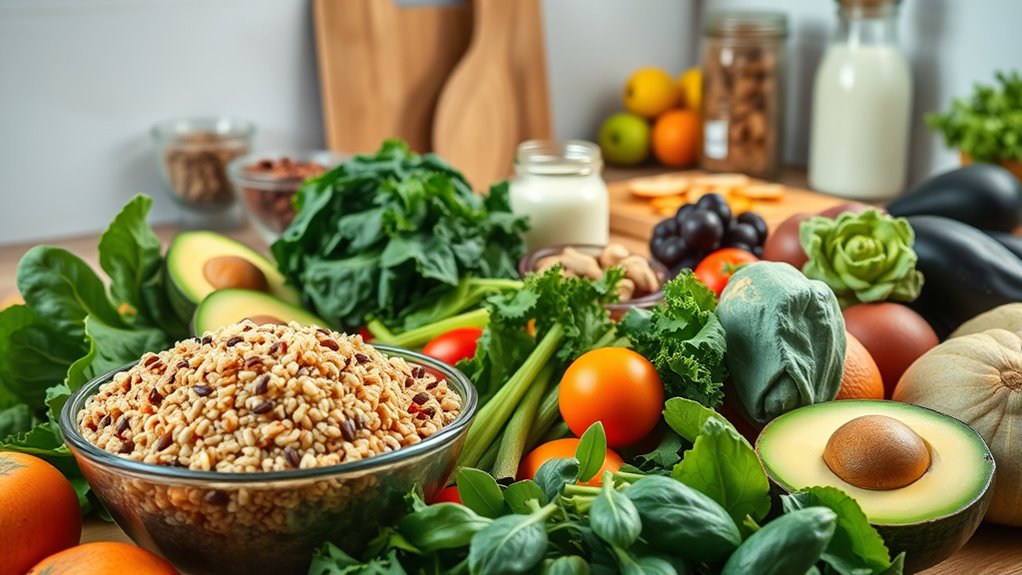
Many people believe that a vegan diet can’t provide all the nutrients your body needs, but this is a common myth. This misconception often stems from widespread plant based misconceptions about vegan diets lacking essential nutrients. In reality, a well-planned vegan diet can be rich in vitamins, minerals, fiber, and protein, just like omnivorous diets. The key is understanding vegan diet facts and making informed choices. For example, many assume vegans can’t get enough protein, but plant-based sources like beans, lentils, tofu, tempeh, and quinoa provide ample amounts of this crucial nutrient. It’s not about quantity alone; the variety of plant foods ensures you receive all essential amino acids.
Another common plant based misconception is that vegans are always deficient in vitamin B12, which isn’t true if you’re aware of vegan diet facts. While B12 is naturally found in animal products, vegans can obtain it from fortified foods or supplements. Many overlook the importance of planning and education, which allows vegans to meet all their nutritional needs without animal products. Calcium is another nutrient people worry about, assuming plant sources like leafy greens and fortified plant milks aren’t enough. But in truth, many vegetables like collard greens, bok choy, and broccoli are high in calcium, and fortified plant milks provide a reliable alternative. Once you understand vegan diet facts, it becomes clear that calcium intake can be easily maintained on a plant-based diet.
Some skeptics think that vegans lack healthy fats, but plant-based sources such as avocados, nuts, seeds, and olive oil are rich in beneficial fats. These fats are essential for brain health, hormone production, and overall wellbeing. The misconception that vegans are limited to carbs is also false; a balanced vegan diet includes healthy fats and proteins, ensuring you get a well-rounded intake of nutrients. Additionally, people often assume vegan diets are boring or restrictive, but with a bit of creativity, you can enjoy a diverse, flavorful array of foods that support your health. Incorporating nutrient-dense plant foods can further enhance a balanced vegan diet and help dispel misconceptions.
Understanding vegan diet facts dispels these myths and shows that a plant-based approach can be nutritionally complete and sustainable. It’s not about restrictions or deficiencies—it’s about making smart, informed choices. When you know what to include, you realize that a vegan diet can be just as nourishing, satisfying, and diverse as any other. These truths help you see that vegan nutrition isn’t limited by plant based misconceptions; instead, it’s empowered by knowledge.
Frequently Asked Questions
Can Vegans Get Enough Omega-3 Fatty Acids?
Yes, you can get enough omega-3 fatty acids on a vegan diet. Focus on omega-3 sources like flaxseeds, chia seeds, walnuts, and hemp seeds, which provide ALA, a plant-based form. You can also consider supplement options like algal oil, which supplies EPA and DHA directly. Incorporating these into your daily routine helps guarantee you’re meeting your essential omega-3 needs effectively.
Are Plant-Based Proteins Sufficient for Muscle Building?
Think of plant-based proteins as the sturdy bricks in your muscle-building castle. They may not always come as complete sets, but when you combine diverse plant proteins, you build a strong, resilient structure. You can absolutely achieve muscle growth with plant protein, as long as you include a variety of sources like beans, lentils, and grains. Stay consistent, and your muscles will flourish on this plant-powered foundation.
How Do Vegans Prevent Iron Deficiency?
To prevent iron deficiency, you should focus on enhancing iron absorption from plant-based sources like beans, spinach, and fortified cereals. Consume vitamin C-rich foods such as citrus or peppers alongside these sources, as vitamin C boosts iron absorption. Avoid drinking tea or coffee during meals, since tannins can inhibit iron uptake. Incorporating these strategies guarantees your body efficiently absorbs iron from your vegan diet, reducing deficiency risks.
Is Vegan Vitamin B12 Supplementation Necessary?
Did you know that around 52% of vegans might be deficient in vitamin B12? You need to know that relying solely on animal-based sources isn’t an option for vegans, making supplement necessity essential. B12 supplements are highly recommended because plant-based sources don’t provide enough of this important nutrient. Taking a supplement guarantees you maintain healthy nerve function and red blood cell production, preventing deficiency and supporting overall well-being.
Can Vegans Meet Calcium Requirements Without Dairy?
Yes, vegans can meet calcium requirements without dairy by choosing dairy alternatives like fortified plant milks, tofu, and leafy greens. These foods enhance calcium absorption, ensuring your body gets enough. Incorporate foods rich in calcium regularly, and consider fortified options to support bone health. With careful planning, you can easily reach your daily calcium goals without relying on dairy products.
Conclusion
So, now that you’ve seen through these vegan nutrition myths, maybe it’s time to toss out those outdated stereotypes. Who knew plants could be so powerful, right? With a little knowledge, you’ll be armed to confidently tell anyone that a vegan diet isn’t just for rabbits. So go ahead, embrace the green side—your body and your taste buds will thank you. After all, who needs meat when you’ve got the mighty mighty broccoli?