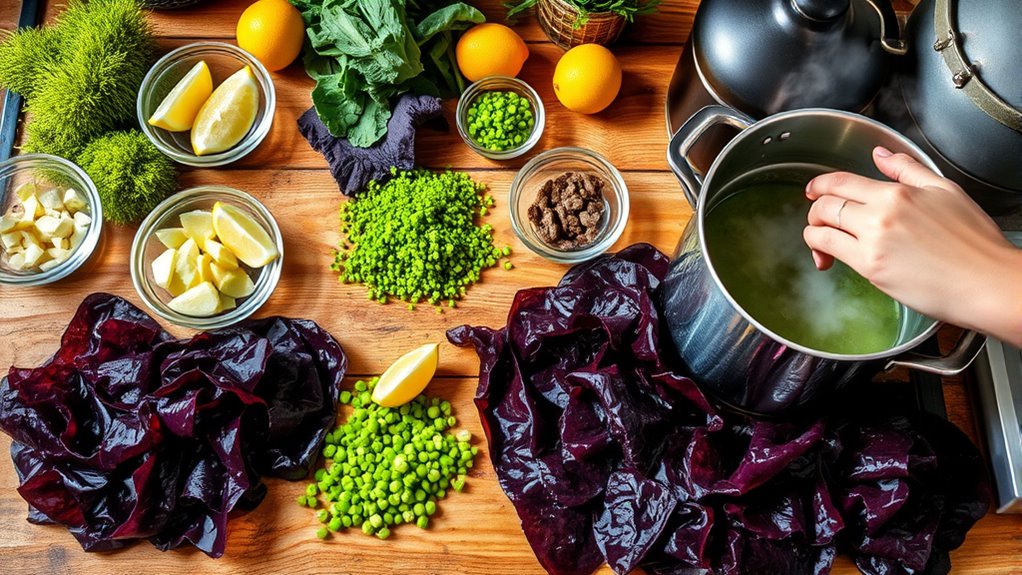

Cooking with sea moss and algae as a vegetarian is simple and offers many health benefits. You can blend sea moss gel into smoothies, soups, or sauces to boost nutrition and improve texture. Dried algae like spirulina or kelp can be sprinkled into salads or used as seasoning. Start with small amounts to find the right flavor balance and explore creative ways to incorporate these ingredients into your meals. Keep exploring to discover more tasty ideas.
Key Takeaways
- Incorporate sea moss gel into smoothies, soups, or sauces to boost nutrition and improve texture.
- Sprinkle dried algae like spirulina over salads or blend chlorella into beverages for added health benefits.
- Use sea moss as a natural thickener in plant-based dishes without overpowering flavors.
- Pair sea moss and algae with herbs, citrus, and spices to enhance taste and maintain balance.
- Start with small amounts and experiment to find enjoyable ways to include these ingredients in vegetarian meals.
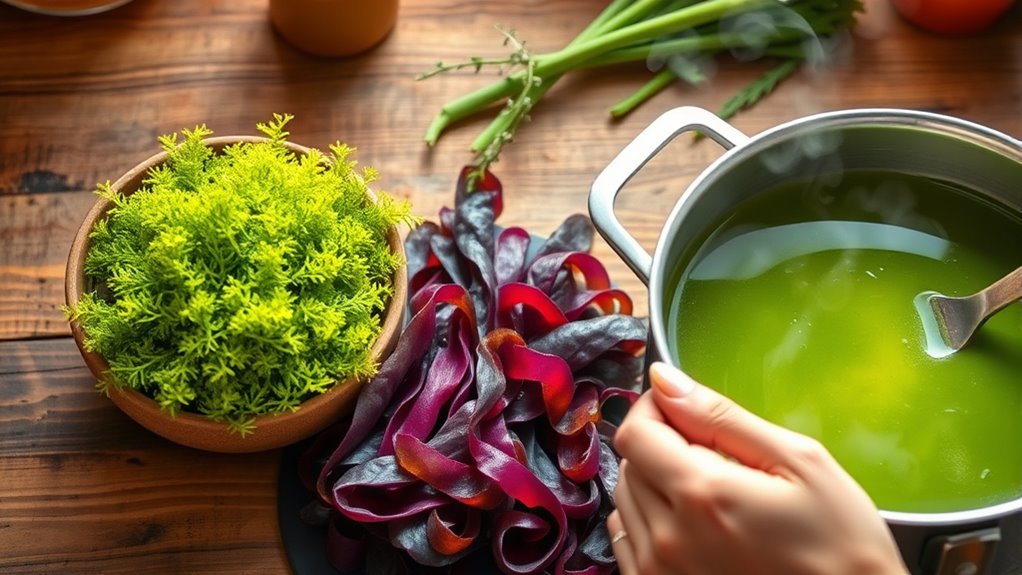
If you’re a vegetarian looking to boost your nutrition, incorporating sea moss and algae into your cooking is a smart choice. These nutrient-dense ingredients can elevate your meals, adding both flavor and health benefits. One of the easiest ways to do this is by exploring different sea moss recipes that suit your taste and dietary needs. You can blend sea moss gel into smoothies, soups, or even homemade sauces. It acts as a natural thickener and enhances the texture without overpowering the dish’s flavor. Since sea moss has a mild, slightly salty taste, it blends seamlessly into a variety of vegetarian dishes, making it versatile for breakfast, lunch, or dinner.
Incorporate sea moss and algae into vegetarian meals for added flavor and nutrition.
Incorporating algae into your meals also accesses a wide array of nutritional benefits. Algae, such as spirulina, chlorella, and kelp, are packed with essential nutrients like vitamins A, C, E, and K, along with minerals like iron, magnesium, and calcium. These nutrients support immune function, promote healthy skin, and boost energy levels. The Algae nutritional benefits extend to their high antioxidant content, which helps combat oxidative stress and supports overall wellness. By adding algae to your diet, you’re not only enriching your meals with flavor but also nourishing your body with a potent superfood.
You can incorporate algae into your cooking in many creative ways. Sprinkle dried spirulina powder into salads or mix it into dressings for a vibrant green boost. Chlorella tablets can be blended into smoothies or dissolved in water for a quick nutrient punch. Kelp, with its natural umami flavor, works well as a seasoning or added to vegetable broths for depth. These options make it easy to incorporate algae into your daily routine without requiring complex preparation.
When experimenting with sea moss recipes and algae, focus on balancing flavors. The natural saltiness of sea moss complements fresh herbs, citrus, and spices, while algae adds earthy, oceanic notes. Combining these ingredients can create nutrient-rich bowls, dips, or spreads that are both delicious and nourishing. Remember, the key is moderation—start with small amounts to see how your taste buds and digestion respond. As you become more comfortable integrating sea moss and algae into your meals, you’ll find new ways to enjoy their health benefits without sacrificing flavor or variety.
Frequently Asked Questions
Can Sea Moss and Algae Be Used in Desserts?
Yes, you can definitely use sea moss and algae in desserts. They add unique textures and nutrients, making them perfect for dessert recipes like puddings, smoothies, and jellies. You can experiment with flavor variations by blending them into fruit-based treats or sweetening with natural ingredients. Incorporating sea moss and algae not only enhances the health benefits but also introduces an exciting twist to your dessert creations.
Are There Any Allergies Related to Sea Moss or Algae?
You should know that about 1-2% of people allergic to shellfish might experience allergy symptoms from sea moss or algae due to cross reactivity concerns. These allergies can cause symptoms like itching, swelling, or difficulty breathing. If you’re allergic to seafood, it’s wise to consult your doctor before trying sea moss or algae. Always start with a small amount to test for any adverse reactions.
How Long Does It Take to See Health Benefits?
You might start noticing health benefits from sea moss and algae within a few days to a few weeks, depending on your body’s response. The health timeline varies, but consistent intake often leads to improved energy, digestion, and immune support over 2 to 4 weeks. Keep in mind, individual factors influence the duration benefits, so patience and regular consumption are key to experiencing the full health benefits.
Can Sea Moss and Algae Be Stored Long-Term?
Imagine sea moss and algae as tiny treasure chests—worthy of long-term storage. They can last several months if you use proper storage methods. Keep dried versions in an airtight container in a cool, dark place, extending shelf life. Refrigerate or freeze fresh or soaked forms to preserve nutrients. With good storage methods, you’ll keep your oceanic superfoods fresh and ready whenever you need a health boost.
Are There Any Taste Differences Between Various Algae Types?
You’ll notice taste profiles differ among algae varieties; some are milder, while others have a stronger, oceanic flavor. For example, nori offers a slightly sweet, umami taste, whereas wakame has a subtle, briny flavor. These taste differences come from the specific algae varieties and their cultivation methods. Experimenting helps you discover which flavors suit your recipes best, making your vegetarian dishes more flavorful and diverse.
Conclusion
Now that you’ve discovered the vibrant world of sea moss and algae, imagine the endless possibilities awaiting your kitchen. Will you harness their power to create a nutrient-packed smoothie or a savory seaweed stir-fry? The choice is yours, and the secret ingredients hold the promise of new flavors and health benefits. Get ready to uncover a culinary adventure that might just change the way you see plant-based cooking forever. Are you prepared to take the plunge?