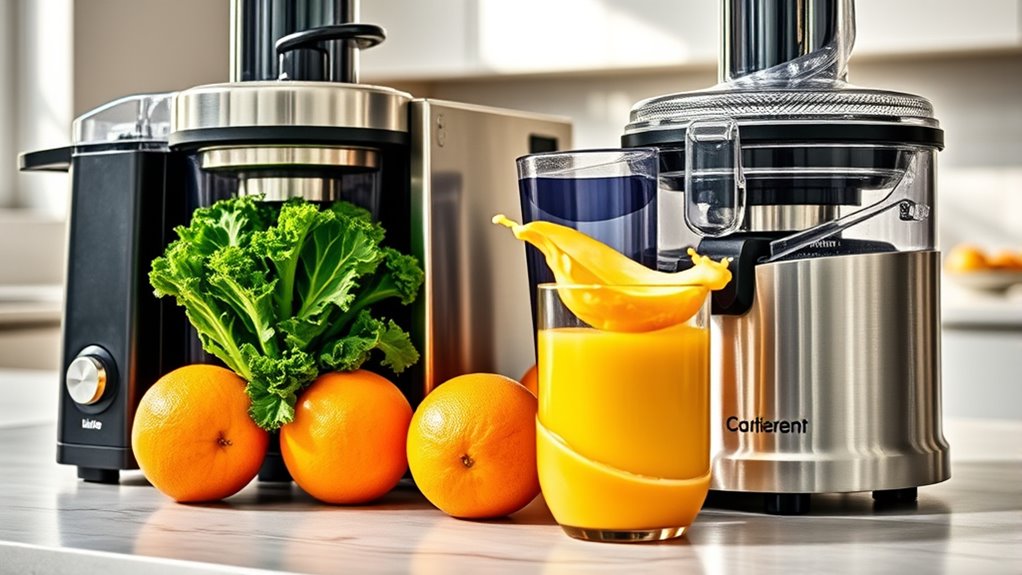

If you’re choosing between cold-pressed and centrifugal juicers, you’ll find cold-press models produce higher-quality juice that preserves more nutrients, enzymes, and flavor, but they can be messier and take longer to clean. Centrifugal juicers are faster and easier to use, making them great for quick results, but they might degrade some nutrients and yield less juice from leafy greens. To understand which fits your needs best, explore the detailed pros and cons below.

Get kitchen staples and gadgets delivered free with Prime
- Fast, free delivery on millions of items
- Prime Video, Amazon Music and more included
- Member-only deals all year
Key Takeaways
- Cold-pressed juicers preserve more nutrients and flavor due to slow crushing, while centrifugal juicers generate heat that may degrade nutrients.
- Cold-pressed models produce higher juice yields, especially from leafy greens; centrifugal juicers offer faster, more convenient operation.
- Cold-pressed machines have more parts and require thorough cleaning, whereas centrifugal juicers are quicker to clean with fewer components.
- Cold-pressed juicers tend to be more durable and last longer with proper maintenance; centrifugal models may need more frequent repairs.
- Centrifugal juicers are ideal for quick, everyday use, while cold-pressed juicers are better for nutrient-rich, high-quality juice extraction.

When choosing a juicer, understanding the differences between cold-pressed and centrifugal models is essential. These options impact your juice extraction process, the quality of the juice, and how much effort you’ll need to put into machine maintenance. Cold-pressed juicers, also known as masticating juicers, operate slowly by crushing and pressing fruits and vegetables to extract juice. This slow operation minimizes heat and oxidation, helping preserve nutrients, enzymes,, and flavor. As a result, you typically get a higher yield of juice with a richer taste. On the other hand, centrifugal juicers spin at high speeds, using a rapidly rotating blade to shred produce and then separate juice from pulp via centrifugal force. This process is fast, making it ideal for quick juice preparation, but it can generate heat, which may degrade some nutrients.
Choosing between cold-pressed and centrifugal juicers depends on your priorities for juice quality and convenience.
From a juice extraction standpoint, cold-pressed juicers usually outperform centrifugal models in efficiency. They extract more juice from the same amount of produce, especially leafy greens and wheatgrass, which centrifugal juicers often struggle with. This means you’ll waste less produce and get more nutritious juice per use. However, machine maintenance differs considerably between the two. Cold-pressed juicers tend to have more parts, such as augers and pressing screens, that require thorough cleaning after each use. While this can seem time-consuming, it’s necessary to prevent pulp buildup and ensure ideal performance. Centrifugal juicers are generally easier to clean because they have fewer parts and are designed for quick disassembly. Nonetheless, their blades and mesh screens can be tricky to clean thoroughly, especially if pulp dries or gets stuck.
Durability and long-term use are also considerations. Cold-pressed juicers, despite being more involved in cleaning, tend to last longer because they have fewer fast-moving parts that wear out quickly. Centrifugal models, with their high-speed motors and blades, may require more frequent maintenance or replacement over time. When you’re choosing between the two, think about how often you plan to juice and how much time you’re willing to dedicate to cleaning and maintenance. If you prefer a healthier, nutrient-rich juice and don’t mind spending a little extra time cleaning, a cold-pressed juicer could be your best bet. Conversely, if you want quick results with minimal fuss, a centrifugal juicer might suit you better. Additionally, understanding the power consumption of each model can help you select appliances that are energy-efficient and cost-effective in the long run.
Ultimately, your decision hinges on balancing juice extraction quality, machine maintenance, and convenience. Both types have their advantages, but understanding these key differences helps you pick the right one for your lifestyle and health goals.
As an affiliate, we earn on qualifying purchases.
Frequently Asked Questions
Which Juicer Type Preserves More Nutrients Over Time?
You’ll find that cold-pressed juicers preserve more nutrients over time because they minimize oxidation, thanks to slow, gentle pressing. This oxidation prevention keeps vitamins and enzymes intact longer, making your juice more nutrient-rich even after a few hours. Centrifugal juicers, on the other hand, introduce more air and heat during fast spinning, which can degrade nutrients quickly. So, if nutrient retention is your priority, cold-pressed juicers are the better choice.
Are Cold-Pressed Juicers More Energy-Efficient Than Centrifugal Ones?
You’ll find cold-pressed juicers sip energy like a gentle stream, making them more energy-efficient than centrifugal models that burn through power like a rushing river. Their slower operation reduces energy consumption and minimizes environmental impact, helping you stay eco-friendly. If you’re aiming for a greener kitchen, cold-pressed juicers are your quiet, sustainable allies, using less energy while delivering nutritious juice without making a loud splash.
How Does Noise Level Differ Between the Two Juicer Types?
You’ll notice that centrifugal juicers tend to be noisier than cold-pressed ones. Their sound levels are higher because they operate with fast-spinning blades, creating a loud, whirling noise. Cold-pressed juicers run more quietly, thanks to their slow, gentle pressing process. If noise comparison is important to you, a cold-pressed juicer offers a quieter experience, making it ideal for early mornings or shared spaces where sound levels matter.
Can Both Juicers Handle Leafy Greens Effectively?
Surprisingly, both juicers handle leafy greens, but don’t expect the same juicing efficiency. Cold-pressed juicers excel at extracting juice from leafy greens because they gently press, preserving nutrients. Centrifugal juicers, while faster, struggle a bit with leafy greens due to their high-speed spinning, which can lead to more waste. So, if you’re serious about leafy greens, the cold-pressed is your best friend—though the centrifugal might surprise you.
What Is the Typical Lifespan of Each Juicer Type?
You’ll find that cold-pressed juicers generally last longer, often around 10-15 years, thanks to their durability and slower operation. In contrast, centrifugal juicers typically have a shorter lifespan of about 5-10 years due to more wear and tear. Maintenance requirements also differ: cold-pressed models need regular cleaning of their slow motors, while centrifugal juicers require more frequent blade upkeep. Proper care extends each juicer’s lifespan considerably.
Conclusion
So, whether you choose a cold-pressed or centrifugal juicer, it’s like finding that perfect piece of juice that just fits your lifestyle. Sometimes, the best choice feels like a happy coincidence—an unexpected delight that makes your mornings brighter. Whichever you pick, remember it’s about enjoying fresh, vibrant juice that fuels your day. After all, life’s little surprises often come in the form of a glass of good juice.
NFL season / tailgating Picks
team gear
As an affiliate, we earn on qualifying purchases.