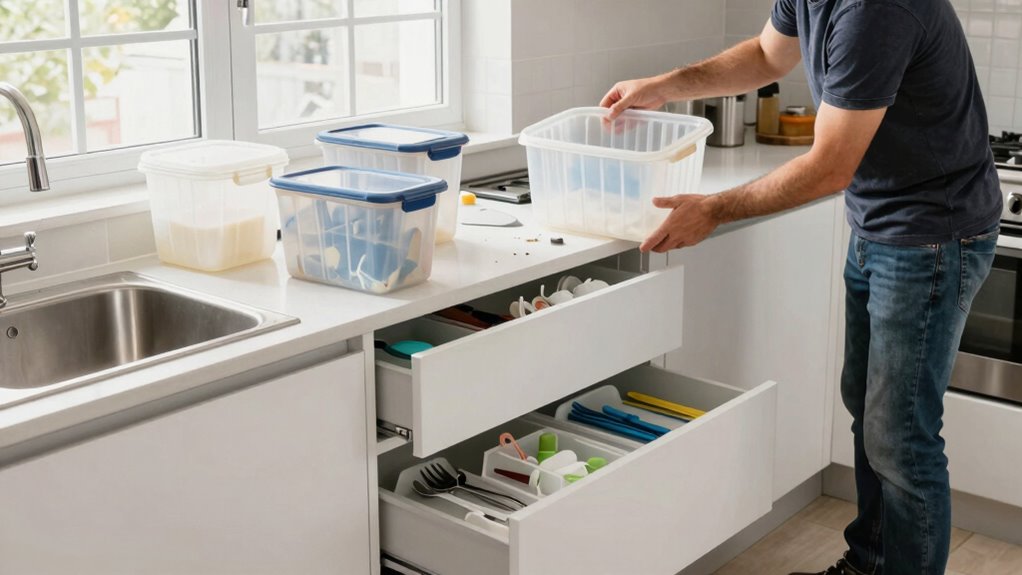

To build a plastic-lite kitchen, start by replacing common plastic offenders like food storage containers, cutting boards, and utensils with eco-friendly options such as glass, stainless steel, or reclaimed wood. Swap plastic wrap for reusable beeswax wraps and opt for compostable dishware. Choose appliances with minimal plastic parts and support brands committed to sustainability. Making these changes reduces chemical exposure and waste. Keep exploring to discover more smart, eco-conscious choices for a greener kitchen.

Get kitchen staples and gadgets delivered free with Prime
- Fast, free delivery on millions of items
- Prime Video, Amazon Music and more included
- Member-only deals all year
Key Takeaways
- Identify common plastic kitchen items like storage containers, utensils, and cookware to target for replacement.
- Choose sustainable materials such as glass, stainless steel, or reclaimed wood over traditional plastics.
- Opt for appliances with minimal plastic parts, energy efficiency, and eco-friendly manufacturing credentials.
- Prioritize high-quality, durable products from brands transparent about sourcing and sustainability practices.
- Incorporate reusable, compostable, and biodegradable alternatives to reduce overall plastic waste.

Building a plastic-lite kitchen is an excellent way to reduce environmental impact while maintaining functionality. When you choose to substitute common plastic offenders, you’re making a conscious decision to prioritize sustainability and lower your carbon footprint. The first step is to look at the materials that dominate your kitchen. Traditional plastics, used in everything from storage containers to utensils, are often made from petroleum-based products that take centuries to decompose. Instead, opt for sustainable materials such as bamboo, glass, stainless steel, or reclaimed wood. These options not only last longer but also contribute less to landfill waste. By selecting eco-friendly materials, you’re creating a space that aligns with your values and promotes environmental health.
Next, focus on swapping out appliances that rely heavily on plastics for eco-friendly alternatives. Many appliances in the kitchen, like toasters, blenders, and coffee makers, contain plastic components that can leach chemicals into food or beverages over time. Look for brands that prioritize sustainability, offering models with minimal plastic parts or those made from recycled or biodegradable materials. Additionally, choose appliances with energy-efficient features to reduce your overall electricity use. This not only benefits the planet but also lowers your utility bills. Incorporating eco-friendly appliances demonstrates your commitment to greener living and sets a practical example for others. Being aware of sustainable manufacturing practices can help guide your purchasing decisions and ensure your choices support ethical production.
Replacing the worst offenders in your kitchen isn’t just about swapping materials; it’s also about thinking long-term. Durable, high-quality items made from sustainable materials tend to last much longer than their plastic counterparts, meaning you won’t have to replace them as often. This reduces waste and makes your kitchen more sustainable overall. When you shop, prioritize brands that emphasize transparency about their sourcing and manufacturing processes. This way, you ensure that your choices support ethical production and environmentally responsible practices. Understanding the importance of sustainable materials helps you make better-informed decisions that benefit both your home and the environment. Being aware of environmentally responsible practices can also guide your purchasing choices and encourage brands to improve their sustainability efforts. Additionally, consider researching certifications like Fair Trade or Organic to further verify the sustainability of your products. Incorporating eco-conscious shopping habits can further enhance your efforts toward a greener kitchen.
Finally, consider incorporating other eco-conscious choices like compostable dishware, reusable storage containers, and eco-friendly cleaning products. These small adjustments, combined with your switch to sustainable materials and eco-friendly appliances, create a kitchen that’s both functional and environmentally responsible. Choosing eco-friendly options can significantly reduce your household waste and chemical exposure. Building a plastic-lite kitchen isn’t about sacrificing convenience; it’s about making smarter, more sustainable choices that benefit the planet and your health. When you replace the worst offenders with thoughtful, eco-friendly options, you’re not only reducing waste but also inspiring others to follow suit. This mindful approach helps create a more sustainable future, one kitchen at a time.
eco-friendly glass food storage containers
As an affiliate, we earn on qualifying purchases.
As an affiliate, we earn on qualifying purchases.
Frequently Asked Questions
Are Plastic Alternatives as Durable as Traditional Materials?
Plastic alternatives can be quite durable, but it depends on the material comparison and durability factors. You’ll find that some, like bamboo or composite materials, withstand daily wear and tear well, comparable to traditional options. However, others may require more care or have lower resistance to heat, moisture, or scratches. So, evaluate the specific plastic substitute’s strengths and weaknesses to verify it meets your kitchen’s durability needs.
How Do Plastic Alternatives Impact Overall Kitchen Safety?
Plastic alternatives often improve kitchen safety by reducing food safety risks linked to chemical leaching. Many are made from safer materials like glass or stainless steel, which don’t release harmful chemicals into your food. This minimizes potential health hazards. While some plastics may contain BPA or phthalates, choosing safer options decreases chemical leaching. Overall, switching to these alternatives makes your kitchen a safer environment for preparing and storing food.
What Are the Cost Differences When Replacing Plastic Items?
When replacing plastic items, you’ll find that the cost comparison varies based on material quality and brand. Generally, eco-friendly alternatives like glass or stainless steel cost more upfront but save money long-term by lasting longer and being safer. For budget planning, consider the initial investment versus durability and safety benefits. While plastic replacements might be pricier initially, they often reduce replacement frequency, making your overall kitchen spending more economical over time.
Can Plastic-Lite Kitchens Be Environmentally Sustainable?
Yes, plastic-lite kitchens can be environmentally sustainable. You can enhance sustainability by participating in recycling programs, ensuring plastic waste gets reused responsibly. Additionally, choosing biodegradable options for kitchen items reduces landfill impact and promotes eco-friendliness. By prioritizing these strategies, you decrease plastic pollution and support a greener lifestyle, making your kitchen not only functional but also environmentally conscious.
How Long Do Plastic Replacements Typically Last?
Plastic replacements made from eco-friendly materials typically last 10 to 20 years, depending on usage and maintenance. You can extend their lifespan by choosing durable options and following proper care guidelines. Recycling options are available for many eco-friendly materials, helping you reduce waste at the end of their life. By selecting high-quality, sustainable options, you guarantee your kitchen remains functional and environmentally conscious for years to come.
Conclusion
By swapping out those top ten plastic offenders, you’re not just creating a healthier kitchen—you’re making a smarter choice for the planet. Think about how much waste you can reduce and how much better your home will feel without that constant plastic presence. Isn’t it time you took control and built a space that aligns with your values? Embrace these changes and enjoy a more sustainable, beautiful kitchen you’ll love spending time in.
NFL season / tailgating Picks
team gear
As an affiliate, we earn on qualifying purchases.