If space and ease of access matter to you, a tilt-head mixer is a great choice because it’s compact and easier to handle and clean. But if you need more power and stability for heavy-duty baking or large batches, a bowl-lift mixer will work better despite being bulkier. Your kitchen style and budget also influence your pick—more stylish and versatile options tend to be bowl-lift models, while affordable, user-friendly ones are tilt-head. Keep exploring to find the perfect fit for your kitchen.
Key Takeaways
- Tilt-head mixers are compact, ideal for small kitchens with limited counter space and easier to store.
- Bowl-lift mixers are better for heavy doughs and large batches, offering greater stability and motor power.
- Tilt-head models provide easier access for ingredient addition and cleaning, suiting casual bakers and versatile tasks.
- Bowl-lift mixers tend to be more expensive, durable, and compatible with a wider range of heavy-duty attachments.
- Choose based on your baking volume, space constraints, and whether you prioritize versatility or heavy-duty performance.
What Are the Main Differences Between Bowl‑Lift and Tilt‑Head Mixers?
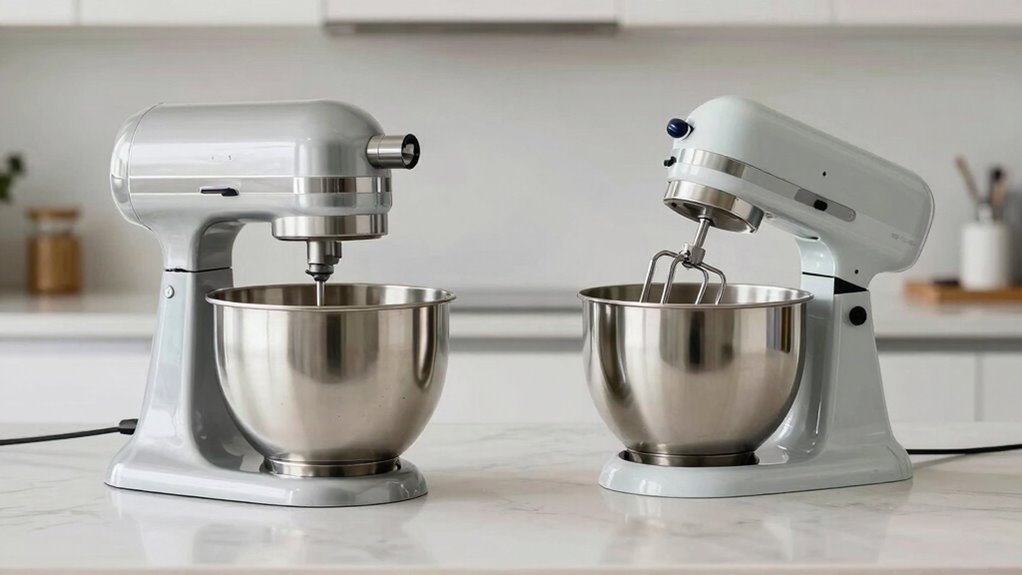
The main differences between bowl-lift and tilt-head mixers lie in their design and how you access the bowl. With a bowl-lift mixer, you raise the bowl to meet the attachment arm, making it more stable for heavy-duty tasks. Tilt-head models, on the other hand, allow you to tilt the head back for easy access to the bowl and attachments. When choosing, consider attachment options—bowl-lift mixers often offer more variety for commercial or heavy-duty use, while tilt-heads are versatile for home baking. Color choices also matter; tilt-head models frequently come in a wider range of colors to match your kitchen decor, whereas bowl-lift mixers tend to have more neutral finishes. Both styles impact how you work, but your preferences for access, attachments, and aesthetics will guide your choice. Additionally, the convenience of access can significantly influence your workflow, especially when frequently changing attachments or cleaning. Considering the design features can help determine which mixer best suits your kitchen setup and your specific baking needs.
Which Mixer Is Better for Small Kitchens or Limited Space?
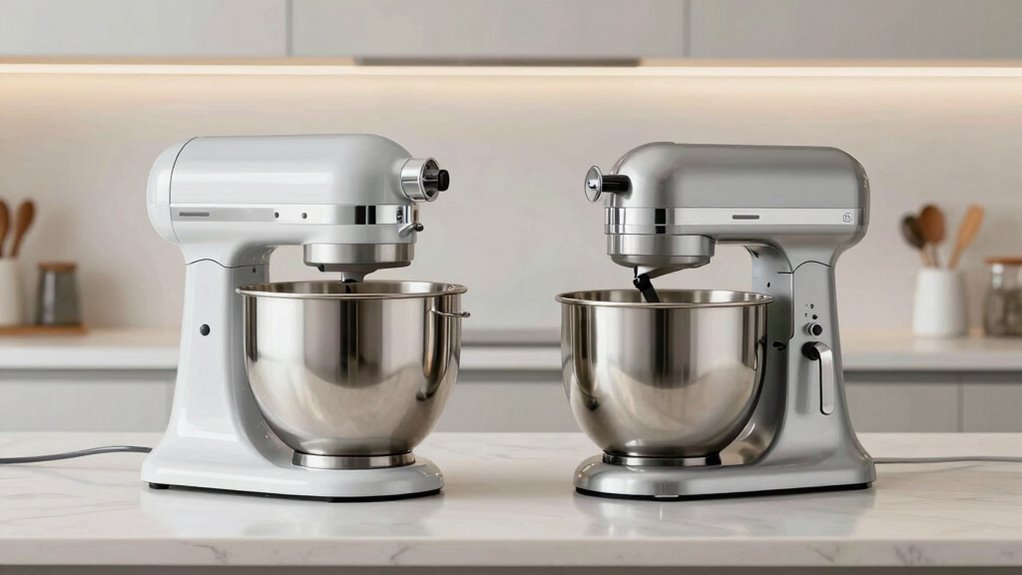
If you have limited space in your kitchen, choosing the right mixer depends on its size and how easily it fits into your setup. Consider how much room the mixer needs for storage and how portable it is for moving around. Also, think about how simple it is to handle and set up, so you can work efficiently without clutter.
Space Efficiency and Size
When space is limited in your kitchen, choosing the right mixer becomes essential. A compact design helps reduce countertop clutter, making your workspace feel more open. Tilt‑head mixers tend to be smaller and more streamlined, fitting easily on tight countertops and leaving more room for other appliances. Bowl‑lift models are often bulkier, requiring more cabinet space and potentially overcrowding your limited area. If you prefer a cleaner, minimalist look, a tilt‑head mixer can be a better fit. However, if you need a powerful machine without sacrificing too much space, some bowl‑lift models are designed with a more compact footprint. In small kitchens, prioritizing size and layout compatibility will help you select the mixer that best complements your limited space. Additionally, considering space efficiency can help optimize your kitchen workflow and storage options, especially when choosing appliances designed with compact footprints in mind.
Storage and Portability Options
Choosing a mixer that fits easily into your small kitchen often comes down to its storage and portability features. Both bowl‑lift and tilt‑head mixers offer different storage solutions and portability options. Tilt‑head mixers tend to be more compact and easier to store since their heads fold back, reducing the space needed. This makes them ideal if you have limited cabinet space or need to move the mixer frequently. Bowl‑lift models are generally larger and heavier, which can be a challenge for storage and portability. However, some models come with convenient handles or built-in cord wraps that make moving and storing easier. Additionally, understanding product design measures can help you choose appliances that are easier to handle and store. For example, compact design features can significantly improve storage options. Considering ergonomic handling can further streamline the process of moving and storing your mixer. Ultimately, if space-saving and easy storage are priorities, a tilt‑head mixer might be the better choice for your small kitchen.
Ease of Handling and Setup
For small kitchens or limited space, ease of handling and setup are crucial factors to contemplate. A mixer with a compact footprint makes countertop placement simpler and less cluttered. Tilt‑head mixers typically offer better user ergonomics because you can easily lift the head for quick access and ingredient addition without moving the entire unit. This convenience reduces setup time and makes operation smoother, especially if you need to frequently add ingredients or switch attachments. Bowl‑lift models tend to be bulkier and may require more effort to position or adjust, which can be cumbersome in tight spaces. Overall, if space is at a premium, choosing a mixer that’s lightweight, easy to maneuver, and simple to set up will considerably improve your user experience. Additionally, airflow and stability considerations can influence your choice, as models with better airflow and stability tend to be more suitable for small or confined environments. Incorporating space-saving design features can further enhance usability in limited areas, making your kitchen more functional and efficient. Moreover, selecting a compact and lightweight mixer can help maximize your kitchen’s available surface area and ease storage when not in use. Proper ventilation can also prevent overheating and prolong the lifespan of your mixer in smaller kitchens.
How Do Bowl‑Lift and Tilt‑Head Mixers Handle Heavy Doughs?
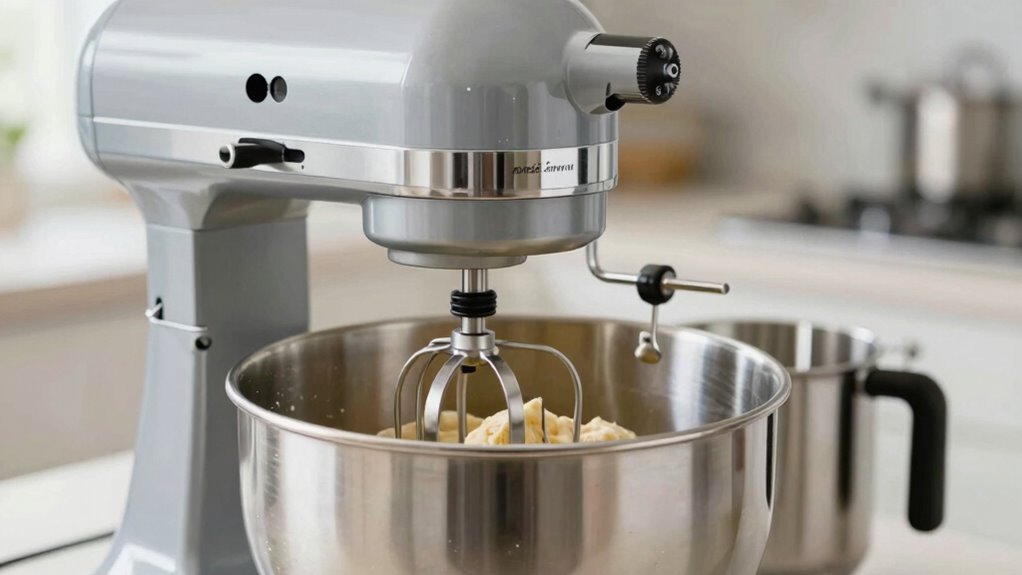
Bowl‑lift and tilt‑head mixers each have their strengths when it comes to handling heavy doughs, but their performance can differ markedly. During dough kneading, the motor strength of each mixer plays a vital role. Bowl‑lift models often have larger motors, giving them an edge when working with dense, heavy doughs like bread or pizza. The sturdy bowl and lifting mechanism provide stability, ensuring consistent kneading without strain. Tilt‑head mixers typically have slightly lower motor power, which can limit their ability to handle very heavy or thick doughs over extended periods. If you frequently knead dense doughs, a bowl‑lift mixer might serve you better, offering the power and stability needed for effective dough kneading without overtaxing the motor.
Are Tilt‑Head Mixers Easier to Use and Clean?
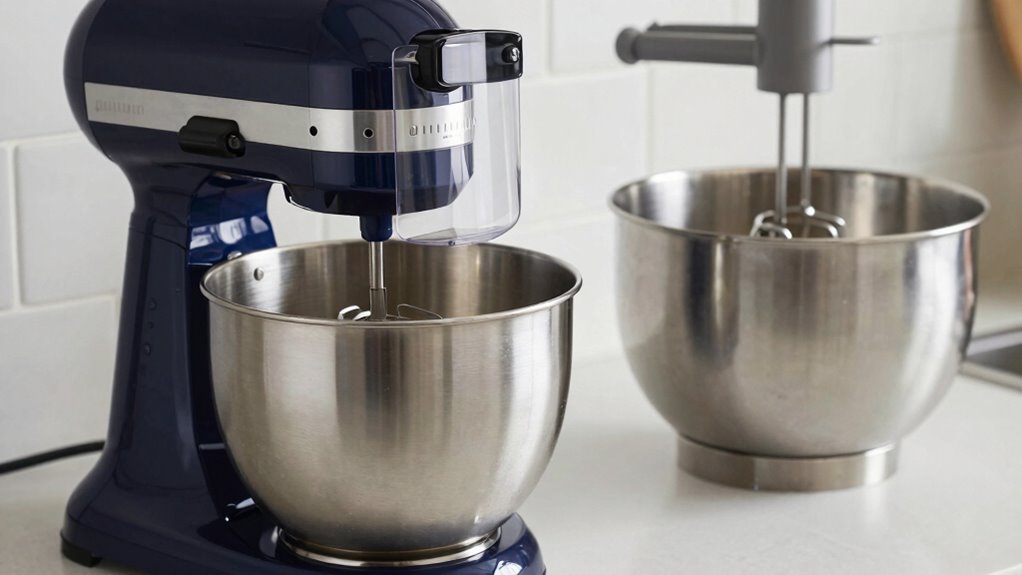
Tilt‑head mixers are generally easier to use and clean because their design allows for quick access to the mixing bowl and attachments. The ergonomic design means you can easily lift the head, giving you straightforward access to clean the bowl and swap attachments without hassle. This feature reduces the effort needed during maintenance, making it more convenient for regular use. Additionally, the open design means you can wipe down surfaces quickly and reach all areas without obstacles. Unlike bowl‑lift models, tilt‑head mixers typically require less effort to disassemble for cleaning. This simplicity enhances maintenance ease, saving you time and effort while keeping your mixer in top condition. Moreover, the design accessibility plays a significant role in making tilt‑head mixers more user-friendly and easier to maintain, especially if you prefer straightforward cleaning routines. The ease of cleaning also minimizes the buildup of residues, ensuring better hygiene. Furthermore, the maintenance process is generally quicker, which can extend the lifespan of your mixer with proper care. Incorporating regular cleaning routines can help prevent bacterial growth, promoting healthier food preparation.
What Are the Cost Differences Between Bowl‑Lift and Tilt‑Head Mixers?
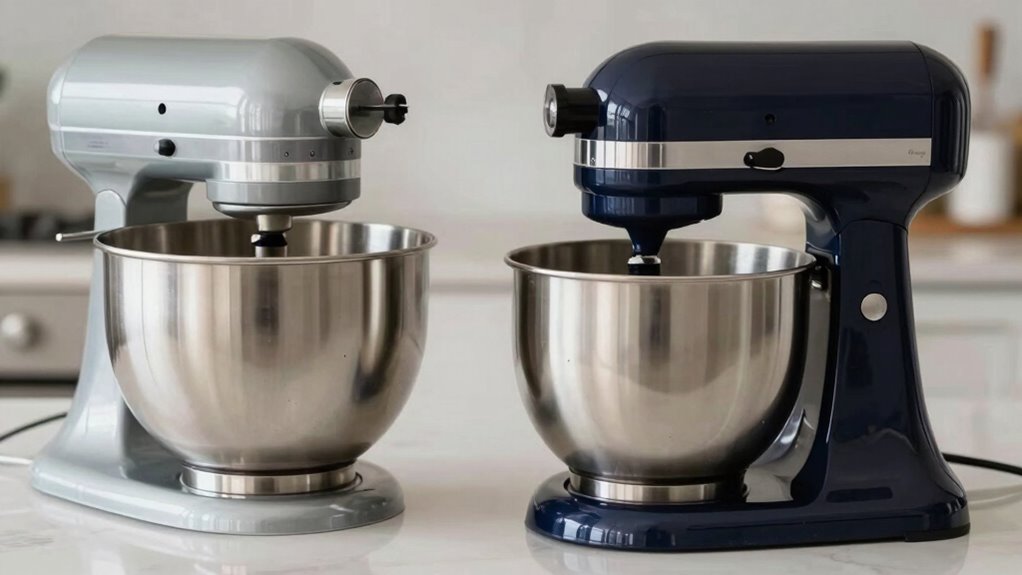
Generally, tilt‑head mixers tend to be more affordable than bowl‑lift models, making them a popular choice for home bakers on a budget. The price difference often reflects brand reputation, with well-known brands offering higher-quality mixers at a premium. Bowl‑lift models typically cost more due to their larger capacity, sturdier build, and advanced features. When comparing costs, consider warranty coverage, as more reputable brands usually provide longer or more comprehensive warranties, protecting your investment. While cheaper models may save you money upfront, they might lack durability or reliable customer support. Additionally, professional services available from manufacturers can influence the overall value and support you receive after purchase. Understanding manufacturer reputation can help you choose a mixer that offers better long-term reliability. Ultimately, your choice depends on your budget, the brand’s reputation, and the warranty coverage offered, ensuring you get a mixer that balances cost with quality and reliability.
Which Mixer Offers More Versatility and Attachments?
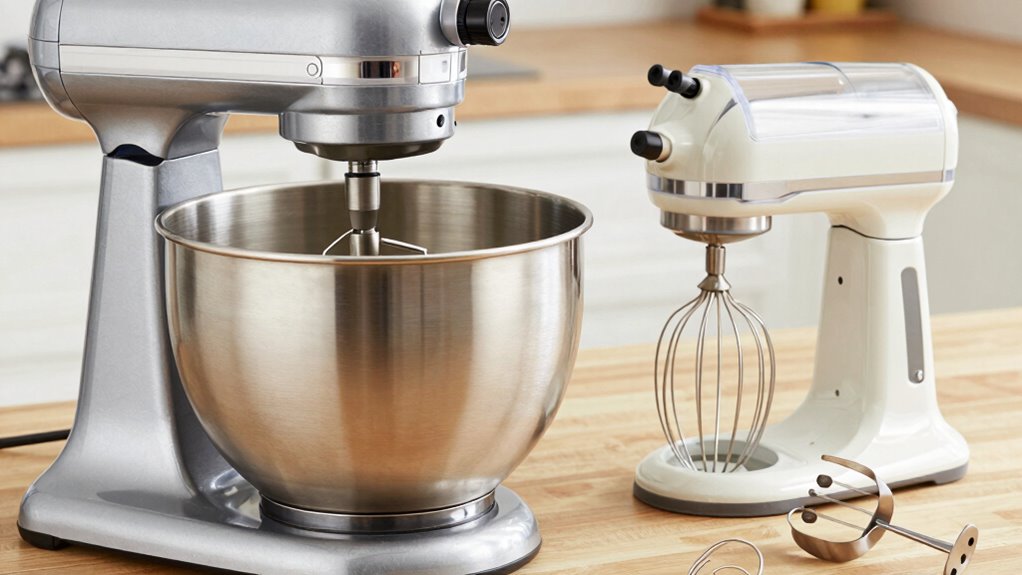
When it comes to versatility and attachments, tilt-head mixers often provide more options for customization. They generally support a wider range of attachment options, such as pasta makers, meat grinders, and spiralizers, expanding your creative possibilities. This versatility allows you to tackle various kitchen tasks beyond mixing dough or batter. Additionally, tilt-head mixers often feature more accessible attachment ports, making switching tools easier. While motor power varies, tilt-head models tend to have robust motors suitable for handling diverse attachments. In contrast, bowl‑lift mixers usually focus on stability and large-batch mixing but may have limited attachment options. If you want a mixer that adapts to different culinary needs, tilt-head models typically offer greater versatility and expandability.
How Do You Choose the Right Mixer Based on Your Baking Habits?
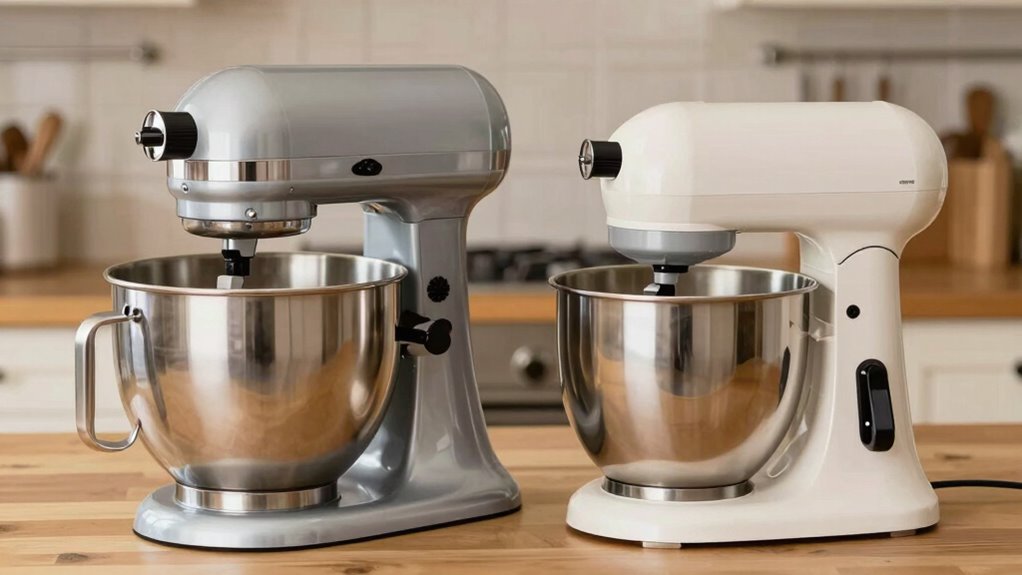
When choosing a mixer, think about how often you bake and what types of recipes you make most often. If you bake large batches or complex treats, you’ll want a model that handles heavy doughs and high volumes easily. Consider your typical recipe complexity and volume to find the right mix of power and capacity for your needs. Additionally, if you enjoy exploring diverse regional culinary traditions, selecting a versatile mixer can help you achieve authentic results.
Baking Frequency and Types
Your baking habits heavily influence which mixer is best suited for your needs. If you bake often or make large batches, a sturdy bowl-lift mixer might be the right choice, especially since it offers better stability and power. For occasional baking or simple recipes, a tilt-head mixer could be sufficient and more convenient. Think about color options to match your kitchen decor, and consider warranty coverage to safeguard long-term peace of mind. Additionally, understanding auditory processing can help you select a mixer with features that minimize noise, making your baking environment more comfortable. Here are some ways your habits guide your decision:
- Frequent baking with heavy doughs? Opt for a bowl-lift for durability.
- Baking small treats occasionally? A tilt-head mixer keeps it simple.
- Want variety? Look for color options that match your style.
- Prioritize warranty coverage for lasting confidence in your investment.
Recipe Complexity and Volume
Choosing the right mixer depends heavily on the complexity and volume of your recipes. If you often bake large batches or dense doughs, a bowl-lift mixer with a powerful motor and sturdy design aesthetics is ideal. It can handle heavy mixtures without strain and offers better stability during extended use. For simpler recipes or smaller quantities, a tilt-head mixer might suffice, providing easier access and a more compact footprint. Noise levels can vary between models; heavier-duty mixers tend to be louder, so consider your tolerance if noise is a concern. Additionally, think about how often you bake and the types of recipes you prefer. Matching your baking habits with the mixer’s capacity and design ensures efficiency and comfort in your kitchen. Moreover, water resistance features in some mixers can enhance durability and longevity, especially if you frequently clean your appliance or work in a damp environment.
What Are the Pros and Cons of Bowl‑Lift and Tilt‑Head Mixers?
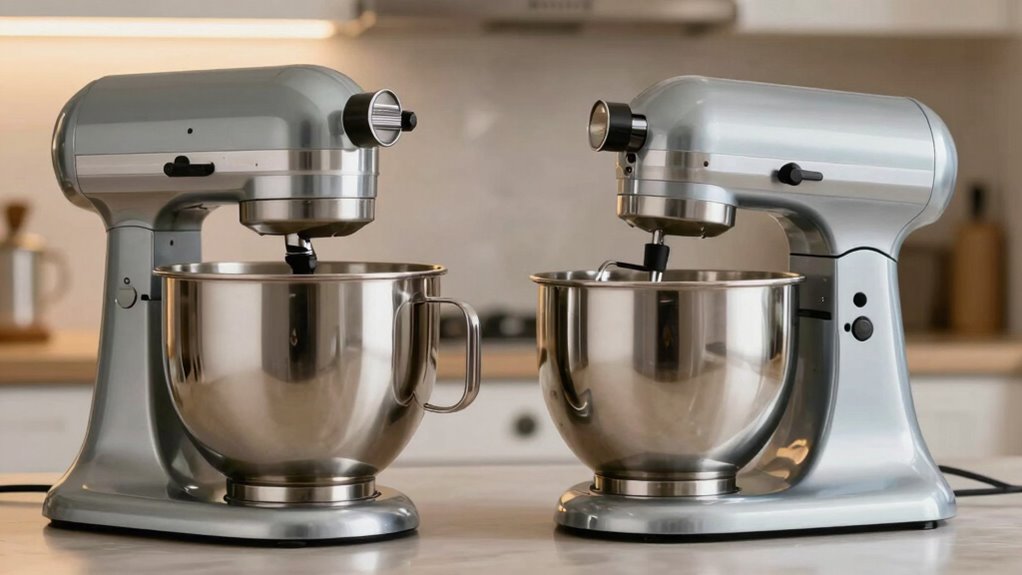
Bowl‑lift and tilt‑head mixers each have distinct advantages and drawbacks that can influence your decision. With bowl‑lift models, you often get higher motor power, making it easier to handle heavy doughs, but they tend to be louder, which might bother you. Tilt‑head mixers are usually quieter and more user-friendly, especially when adding ingredients, but they may have slightly less motor power for tough mixes. Consider these factors: 1. Powerful motor for heavy-duty baking tasks 2. Lower noise levels for a quieter kitchen experience 3. Ease of access—tilt-heads allow quick ingredient addition 4. Stability and durability—bowl‑lifts often handle larger volumes better. Additionally, understanding the cryptid mysteries and folklore surrounding mysterious creatures can add an intriguing layer to your curiosity about the unknown. Your choice depends on your baking needs and how much noise you’re willing to tolerate.
Which Mixer Suits Different Kitchen Styles and Budgets?
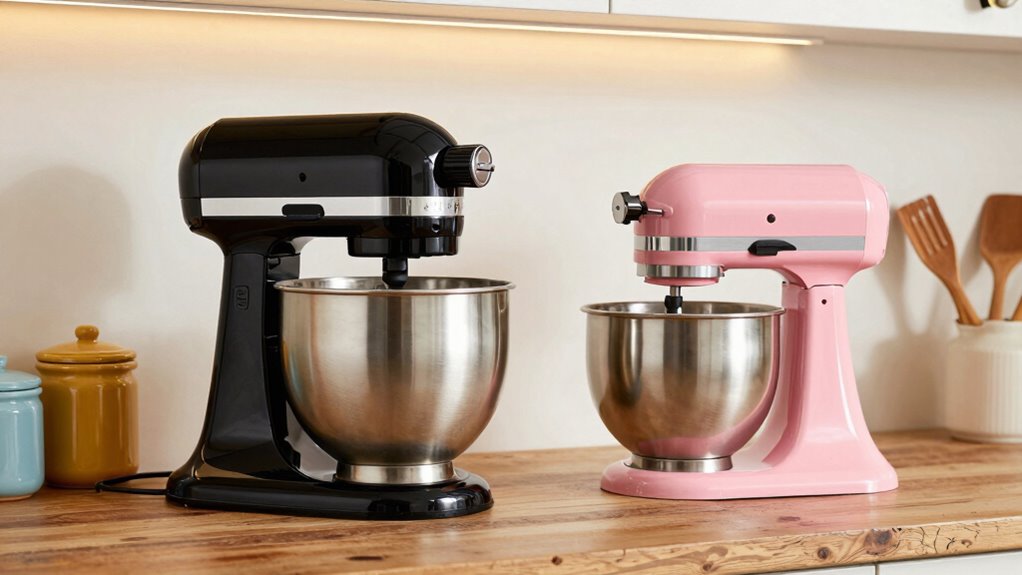
When selecting a mixer that fits your kitchen’s style and your budget, it’s important to contemplate both aesthetics and cost. Your choice should complement your kitchen decor while offering reliable appliance durability. Budget-friendly mixers often feature simple designs and may lack advanced features, but they’re perfect for casual cooks. Mid-range options balance style and function, providing better durability and a variety of colors to match your decor. High-end mixers boast sleek, professional looks and superior build quality, fitting upscale kitchens. Here’s a quick overview:
| Budget Range | Kitchen Decor Compatibility | Appliance Durability |
|---|---|---|
| Low | Basic, functional | Moderate |
| Mid | Stylish, customizable | Good |
| High | Professional, aesthetic | Excellent |
| Premium | Luxurious, statement piece | Long-lasting |
Frequently Asked Questions
How Loud Are Bowl-Lift Versus Tilt-Head Mixers During Operation?
Bowl-lift mixers tend to be a bit louder than tilt-head models during operation, mainly due to their larger motors and sturdier build. The sound comparison shows that bowl-lift mixers generate more noise, especially at higher speeds, but it’s usually manageable. If noise levels concern you, a tilt-head mixer might be quieter and more suitable for open kitchens or shared spaces. Consider your environment and noise sensitivity when choosing between the two.
Which Mixer Is More Energy-Efficient for Daily Baking?
Just like a wise owl values energy efficiency, a tilt-head mixer often uses less energy for daily baking. Its design typically consumes less power, making it more power efficient over time. While bowl-lift mixers are powerful, they tend to use slightly more energy during extended use. For regular baking, choosing a tilt-head model helps save on energy consumption without sacrificing performance.
Can Both Types of Mixers Handle Large Batch Recipes Comfortably?
Both mixers can handle large batch recipes comfortably, but capacity concerns matter. A bowl-lift mixer typically offers a larger bowl, making it ideal for bigger batches, while a tilt-head mixer may have a slightly smaller capacity. You’ll want to adjust mixing speed carefully to avoid splattering or under-mixing. So, if you often bake in large quantities, a bowl-lift model might be the better choice for your needs.
Are Replacement Parts and Repairs More Accessible for One Type?
They say “an ounce of prevention is worth a pound of cure,” and when it comes to replacements, accessibility of replacement parts and repair ease vary. Tilt-head mixers often have more readily available parts and are easier to repair because of their simpler design, making maintenance straightforward. Bowl-lift models might require more effort to find parts and repair, but it depends on the brand and availability.
How Do the Warranties Typically Compare Between Bowl-Lift and Tilt-Head Models?
You’ll find that warranty coverage often varies between bowl-lift and tilt-head models, with some brands offering longer or more extensive coverage for tilt-head mixers due to their simpler repair accessibility. Generally, tilt-head models tend to have easier repair accessibility, making warranty claims smoother. Check the specific manufacturer’s warranty details to understand what’s covered, how long it lasts, and whether repairs or replacements are included, so you can choose the best option for your needs.
Conclusion
Choosing between a bowl-lift and tilt-head mixer depends on your space, baking needs, and budget. For example, if you have a small kitchen, a tilt-head mixer offers easy access and storage. However, if you often bake large batches or heavy doughs, a bowl-lift might be more durable. Consider your baking habits and space to find the perfect fit—your ideal mixer will make your baking experience smoother and more enjoyable.