To start upcycling ugly produce, look for imperfect fruits and vegetables at farmers markets or local stores, where prices are often lower. Use these items creatively in soups, smoothies, or roasting, as appearance doesn’t affect taste. Properly store and preserve your produce to extend freshness. Don’t forget to compost scraps to reduce waste while supporting your garden. Keep exploring tips and ideas—it’ll help you turn grocery challenges into eco-friendly habits.

Get kitchen staples and gadgets delivered free with Prime
- Fast, free delivery on millions of items
- Prime Video, Amazon Music and more included
- Member-only deals all year
Key Takeaways
- Shop at farmers markets for discounted, imperfect produce and ask vendors about cosmetic flaws.
- Use misshapen or overripe produce in cooking, baking, smoothies, or pickling to maximize usability.
- Properly store and preserve produce to extend shelf life and reduce waste.
- Compost food scraps like vegetable peels, eggshells, and coffee grounds to enrich garden soil.
- View imperfect produce as an eco-friendly opportunity to save money, reduce waste, and promote sustainability.
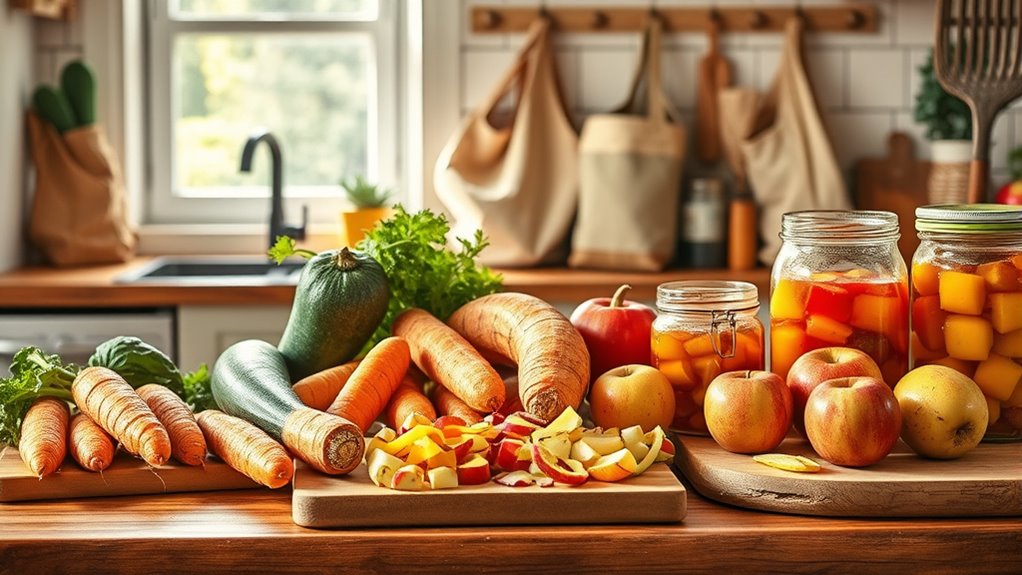
If you’ve ever passed by a pile of imperfect fruits and vegetables and wondered what to do with them, you’re not alone. Many people overlook these produce items because they look less appealing, but they hold plenty of potential. Upcycling ugly produce is not only a smart way to reduce waste but also an opportunity to get creative in the kitchen. Farmers markets are a great place to find these imperfect fruits and vegetables at a lower price. Vendors often sell cosmetically challenged produce that’s still perfectly edible, giving you a chance to save money and help reduce food waste. When shopping, don’t hesitate to ask vendors about their “imperfect” selections—they’re usually happy to sell these items at a discount. Once you bring the produce home, it’s essential to think about storage and preservation. Proper storage extends the life of your produce, giving you more time to decide how to use it.
If some of your leftover peels or scraps seem too small or odd to eat, consider composting tips to manage your kitchen waste responsibly. Composting turns food scraps into rich soil, which you can use in your garden or potted plants. This practice helps reduce the amount of waste sent to landfills and promotes healthier soil. To start composting, keep a bin in your kitchen for vegetable scraps, eggshells, coffee grounds, and other organic waste. Make sure to turn your compost regularly to aerate it and speed up decomposition. Remember, balance is key—add dry materials like shredded newspaper or leaves along with moist scraps to maintain the right moisture level. Composting is a simple, eco-friendly step that complements your efforts to upcycle produce by reducing waste and nurturing your garden.
Back in the kitchen, you can transform ugly produce into delicious meals or snacks. For example, misshapen carrots or potatoes can be roasted or turned into soups, while overripe fruits are perfect for smoothies, jams, or baking. Don’t let appearances fool you; flavor and nutrition remain intact despite imperfect looks. You might also experiment with pickling vegetables or drying herbs from your produce. The key is to get creative and view these items as opportunities rather than obstacles. Upcycling ugly produce is about making the most of what you have, saving money, and helping the environment. With a little effort and some smart shopping at farmers markets, you can turn what many see as waste into wonderful, tasty dishes. Plus, by composting your scraps, you close the loop, making your food habits more sustainable and eco-friendly.
As an affiliate, we earn on qualifying purchases.
Frequently Asked Questions
How Long Does Upcycled Produce Stay Fresh?
Upcycled produce typically stays fresh for about 3 to 7 days, depending on the type and storage techniques you use. To maximize freshness preservation, store your produce in the fridge in airtight containers or breathable bags. Keep delicate items like berries in the crisper drawer, and avoid washing them until you’re ready to use. Proper storage techniques help extend the lifespan of your upcycled produce and reduce waste.
Are There Safety Concerns With Eating Ugly Produce?
There are generally no safety concerns with eating ugly produce if you handle it properly. Always wash it thoroughly to remove dirt and microbes, which helps prevent microbial growth. Check for signs of spoilage like mold or a sour smell. Proper storage also plays a role in food safety. If it looks, smells, and feels fine after cleaning, it’s safe to enjoy, just like regular produce.
Can Upcycling Be Scaled for Commercial Use?
Yes, upcycling can be scaled for commercial use through large-scale operations that focus on efficiency and sustainability. You can implement processes that handle vast quantities of ugly produce, reducing waste and promoting commercial sustainability. By partnering with farms and suppliers, you streamline sourcing and develop innovative products. This approach helps you meet consumer demand for eco-friendly options while making a meaningful environmental impact on a broader scale.
What Tools Are Essential for Upcycling Produce?
Imagine wielding a steady hand and a sharp knife, turning rough produce into treasures. You’ll need a reliable chef’s knife to master knife skills, ensuring clean cuts and safety. Container options like bowls and storage jars help organize your creations and keep them fresh. These essential tools empower you to transform ugly produce into delicious meals or snacks, making upcycling both fun and sustainable for your kitchen adventures.
How Do I Store Upcycled Produce Properly?
To store upcycled produce properly, follow simple storage tips like keeping fruits and vegetables in the right temperature and humidity conditions. Use airtight containers or breathable bags to preserve freshness, and consider preservation methods like freezing or pickling for longer storage. Regularly check your produce for spoilage, and organize your storage space to prevent bruising. Proper storage helps maintain quality and reduces waste, making your upcycling efforts more successful.
Conclusion
Remember, beauty is only skin deep, and with a little creativity, even the ugliest produce can shine. Upcycling not only reduces waste but also turns imperfections into delicious, nutritious meals. As the saying goes, “One man’s trash is another man’s treasure.” So, don’t be discouraged by looks—embrace the challenge and transform those odd-looking fruits and veggies into culinary delights. Your efforts help the planet and your palate alike. Happy upcycling!
NFL season / tailgating Picks
team gear
As an affiliate, we earn on qualifying purchases.