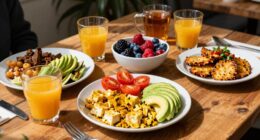
To start with plant-based meal planning, focus on simple staples like grains, beans, vegetables, fruits, nuts, and seeds. Prepare ingredients ahead of time, such as batch-cooking grains and roasting vegetables for quick meals. Shop smart by sticking to the perimeter of the store and choosing versatile, budget-friendly items. Planning your meals around seasonal produce and using spices keeps things interesting. Once you get the basics down, you’ll discover how easy and rewarding plant-based eating can be.

Get kitchen staples and gadgets delivered free — and shop member deals
- Fast, free delivery on millions of items
- Access to Prime Big Deal Days deals on October 6–7
- Prime Video, Amazon Music and more included
Key Takeaways
- Start with simple, whole-food ingredients like grains, vegetables, fruits, nuts, seeds, and legumes.
- Plan and prep meals ahead, batch cooking grains and chopping vegetables for quick assembly.
- Shop mainly around the store perimeter—produce, nuts, and grains—to avoid processed foods.
- Incorporate variety with colorful vegetables, fruits, herbs, and plant proteins to ensure balanced nutrition.
- Keep a stocked pantry of versatile ingredients to make quick, healthy, plant-based meals easily.
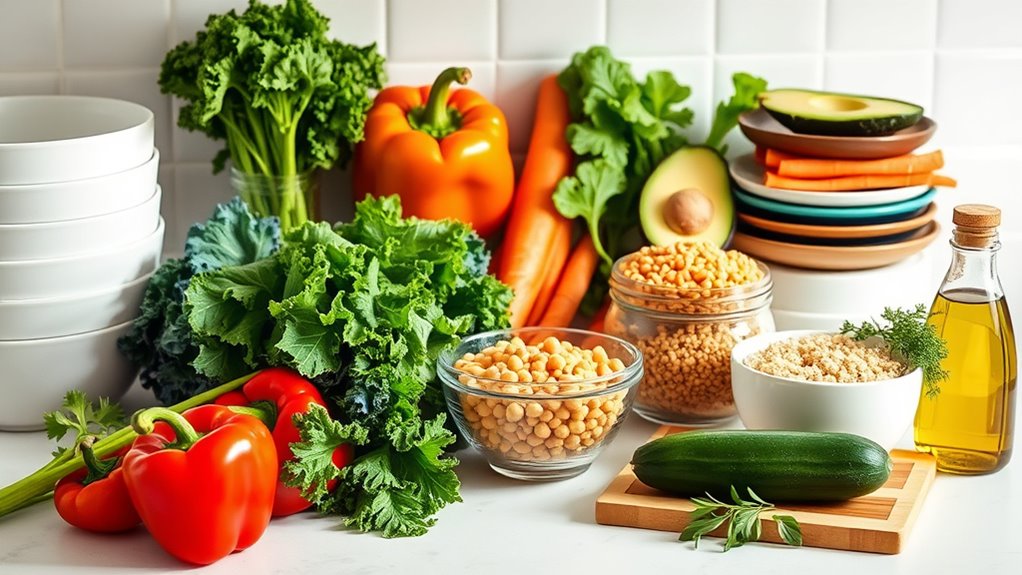
Starting a plant-based meal plan can seem overwhelming at first, but with a little guidance, it becomes much simpler. The key is to start small, focus on essentials, and develop routines that make cooking and shopping easier. Meal prep tips are your best friend here; preparing ingredients or entire meals in advance saves time and keeps you on track. For example, you can cook a large batch of grains like rice or quinoa at the beginning of the week, then store them in portioned containers. Chopping vegetables ahead of time or roasting a variety of root vegetables and storing them in the fridge can make quick meals much more accessible. These small steps help you avoid the temptation of reaching for less healthy options when you’re hungry and pressed for time.
Grocery shopping strategies are equally important. Begin by creating a simple shopping list that includes staple plant-based ingredients: beans, lentils, oats, nuts, seeds, fresh or frozen vegetables, fruits, and whole grains. Stick to the perimeter of the store where fresh produce, nuts, and grains are typically located, and avoid the middle aisles filled with processed foods. When shopping, look for sales or bulk options to save money and ensure you always have versatile ingredients on hand. Planning your meals around what’s in season or on sale helps you stay flexible and budget-conscious.
As you build your plant-based meals, focus on variety to prevent boredom and ensure you’re getting a broad spectrum of nutrients. Incorporate different colors of vegetables and fruits, explore new herbs and spices, and try various plant proteins like tofu, tempeh, or chickpeas. When meal prepping, consider batch cooking versatile dishes like stir-fries, salads, or grain bowls that can be customized with different toppings and dressings. This not only keeps your meals interesting but also simplifies your weekly routine.
plant-based meal prep containers
As an affiliate, we earn on qualifying purchases.
As an affiliate, we earn on qualifying purchases.
Frequently Asked Questions
How Can I Ensure I Get Enough Protein on a Plant-Based Diet?
To guarantee you get enough protein on a plant-based diet, focus on incorporating diverse plant protein sources like beans, lentils, tofu, tempeh, quinoa, and nuts. These foods are rich in plant-based protein and provide essential amino acids. Mix different sources throughout your day to meet your protein needs. Planning balanced meals with a variety of these options helps you stay energized and healthy without missing out on crucial nutrients.
Are There Any Common Nutritional Deficiencies to Watch Out For?
You should watch out for common deficiencies like vitamin B12 and iron deficiency. Since B12 mainly comes from animal products, consider fortified foods or supplements. Iron from plant sources is less absorbable, so include iron-rich foods like spinach and beans, and pair them with vitamin C-rich foods to boost absorption. Regularly check your levels with your healthcare provider to stay on top of these nutrients and prevent deficiencies.
How Do I Handle Eating Out or Social Gatherings?
When dining out or attending social gatherings, you should communicate your plant-based preferences politely, respecting dining etiquette. Look for restaurants with plant-based options or suggest bringing a dish to share. For social meal ideas, consider veggie platters, salads, or plant-based finger foods that suit the occasion. This way, you enjoy the event without sacrificing your dietary goals, and others can join in the healthy, eco-friendly choices.
What Are Affordable Plant-Based Ingredients and Meal Options?
You can enjoy budget-friendly produce like carrots, potatoes, and seasonal greens, which are easy on your wallet and versatile in meals. Stock up on pantry staples like rice, beans, and lentils—they’re affordable, filling, and adaptable. These ingredients let you create delicious, plant-based dishes without overspending, making healthy eating both accessible and enjoyable. Keep your pantry stocked, and you’ll always have a tasty, economical meal option ready to go.
How Can I Transition Smoothly Without Feeling Deprived?
To shift smoothly without feeling deprived, focus on meal prep tips that make plant-based meals enjoyable and satisfying. Incorporate flavor enhancement through herbs, spices, and flavorful sauces to keep dishes exciting. Gradually introduce new ingredients, and don’t be afraid to experiment with different textures and tastes. This approach helps you stay motivated, reduces cravings for familiar foods, and makes your plant-based journey feel more natural and fulfilling.
Conclusion
Now that you’re armed with the basics of plant-based meal planning, imagine what’s next. Will you discover new flavors, or unveil hidden health benefits? The journey has just begun, and every meal is a step toward a more vibrant, sustainable you. Don’t stop here—there’s a world of delicious possibilities waiting to be explored. Are you ready to take the leap and see where plant-based eating can truly take you? The adventure starts now.
Fall Picks
fall essentials
As an affiliate, we earn on qualifying purchases.